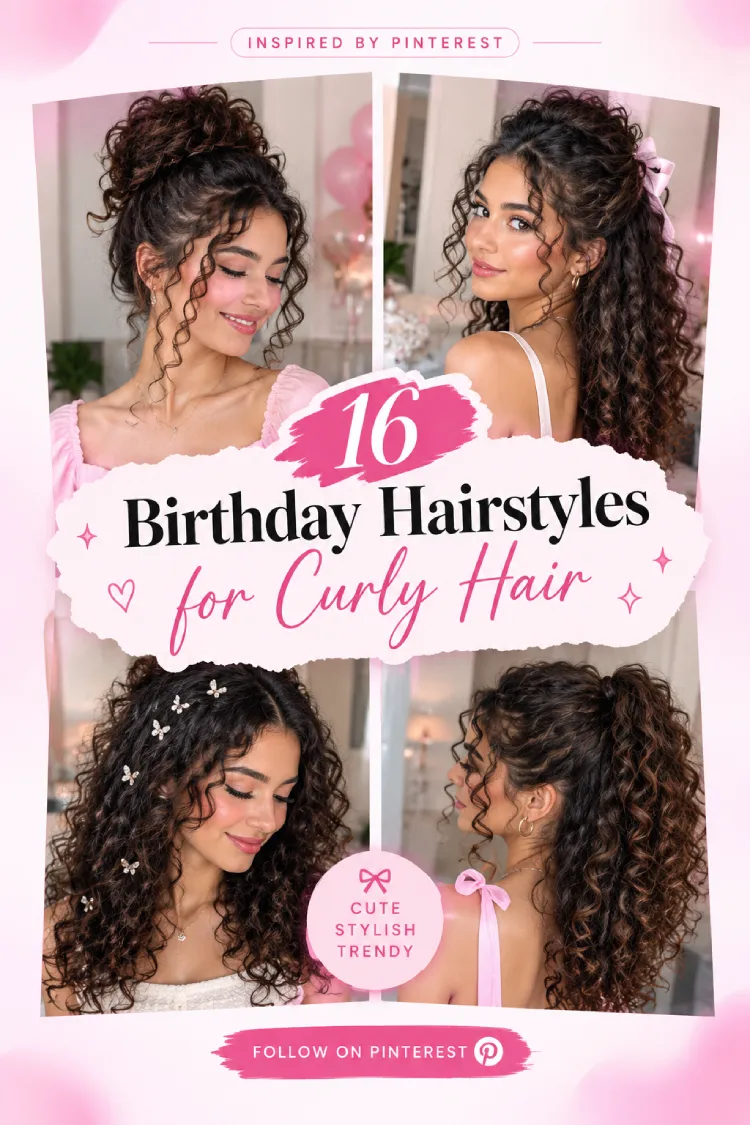
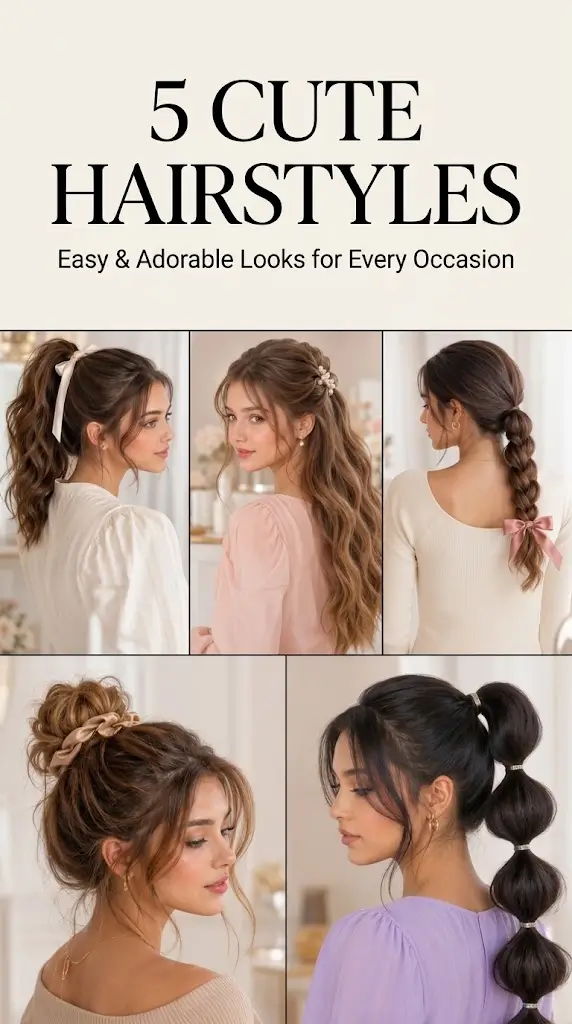
A cute hairstyle does not need to involve complicated braiding, elaborate updos, or an hour of heat styling. Often, the most wearable looks start with familiar shapes—a ponytail, bun, braid, or half-up style—and become more interesting through texture, face-framing pieces, accessories, or a slightly different placement.
The five styles below cover a useful range of moods. A high ponytail feels energetic and youthful, a wavy half-up style leans romantic, a braided ponytail is practical, a messy bun works beautifully when you want something relaxed, and a bubble ponytail adds a more noticeable fashion detail. Getting ready for formal school dances? Explore our complete gallery of homecoming hairstyles.
The better choice depends on more than the occasion. Your hair length, density, natural texture, tolerance for styling, and how long you need the hairstyle to stay secure all matter. A style that looks wonderful on long, thick hair may need a few adjustments on fine or shoulder-length hair.
Quick Picks: Which Cute Hairstyle Should You Try?
| If you want… | Try… | Styling level |
| A lifted, playful look | High ponytail | Easy |
| Soft, romantic hair | Half-up half-down with waves | Easy to moderate |
| Controlled texture | Low braided ponytail | Easy |
| A relaxed second-day style | Messy bun with face-framing pieces | Easy |
| A playful statement look | Bubble ponytail | Easy to moderate |
For the quickest option, the high ponytail or messy bun usually wins. If you want your natural length to remain visible, the half-up style is a better choice. A braid gives you extra structure, while a bubble ponytail is useful when you want a simple hairstyle to look more deliberately styled.
1. Cute High Ponytail for a Fresh, Playful Look
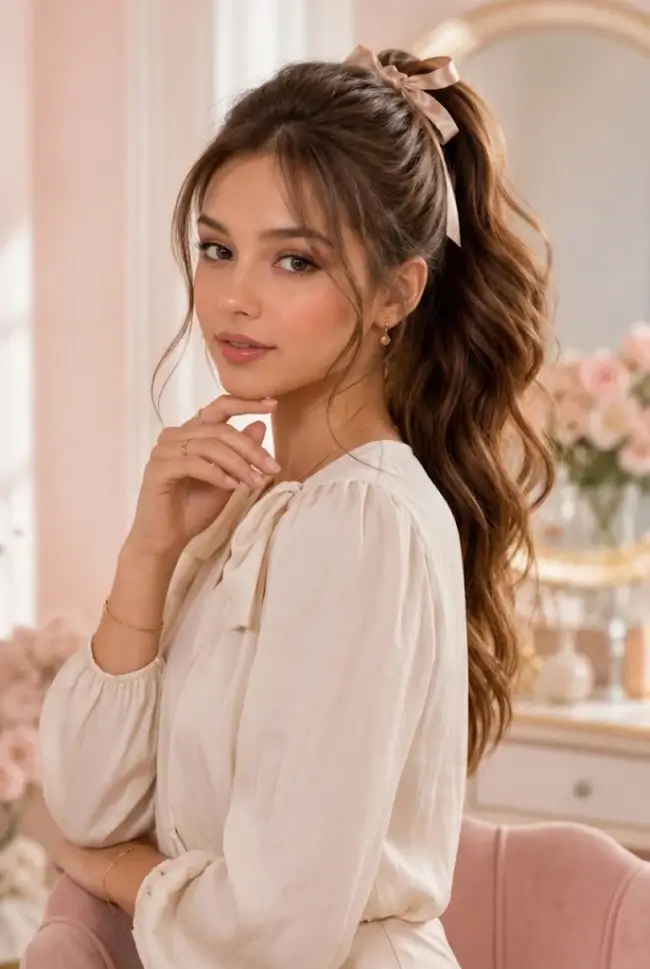
The high ponytail is one of those hairstyles that can change character depending on how you finish it. Pulled tightly and smoothed, it can look polished and streamlined. Made slightly looser with waves and a few face-framing pieces, it becomes softer and more casual.
The basic shape works best when you have enough length to gather the hair securely above the crown. Medium and long hair are the easiest lengths, although shorter layers can still work if you do not mind a few pieces escaping. Straight hair gives the ponytail a clean silhouette, while wavy hair adds natural movement. Curly hair can make the ponytail fuller and more textured, but a stronger elastic may be necessary.
Hair density also changes the result. Fine hair may benefit from a little root lift or texturizing product before the ponytail is secured. Thick hair can create impressive volume but may require a sturdy elastic and careful placement to prevent the ponytail from feeling heavy.
For a softer finish, leave a few pieces near the temples and cheekbones. Curling the ends is optional rather than essential. A ribbon, bow, scrunchie, or wrapped section of hair can hide the elastic and change the mood without changing the haircut.
The main limitation is comfort. A very tight high ponytail can become uncomfortable during long wear, particularly if your hair is dense. For work, errands, school, or a casual outing, a moderately secure ponytail is often more practical.
When asking a stylist for a cut that works well with this hairstyle, you might say: “I want enough length to make a secure high ponytail, but I would like the layers around my face to blend naturally when my hair is tied up.”
2. Romantic Half-Up Half-Down Hairstyle With Soft Waves
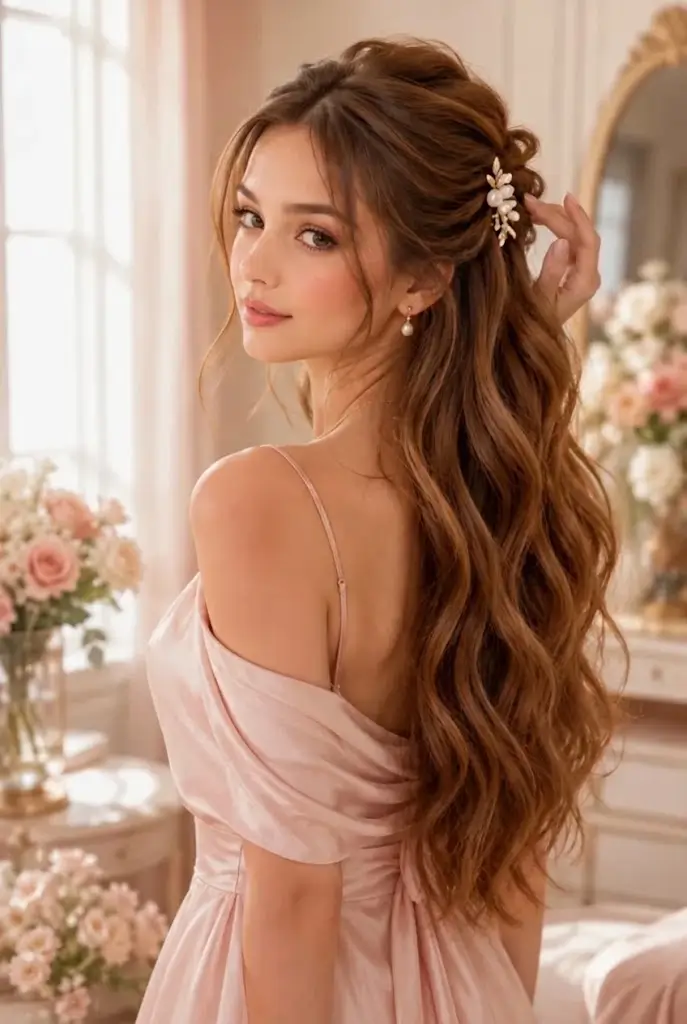
A half-up half-down hairstyle is useful when you want your hair away from your face without giving up the appearance of wearing your hair down. Adding soft waves makes the style feel more romantic, but the same structure can be adapted for a cleaner or more casual result.
Medium and long hair offer the most flexibility because there is enough length to leave a visible curtain of hair beneath the secured section. Fine hair can work particularly well when the crown is gently lifted, although too much teasing can make the finish look rough. Thick hair may require a larger clip, stronger elastic, or slightly smaller sections so the half-up portion stays secure.
Natural waves can be used instead of creating curls from scratch. If your hair is straight, a curling wand, large-barrel iron, rollers, or heatless method can create loose movement. A heat protectant is sensible when using hot tools, and the waves do not need to be perfectly uniform.
Face shape can influence where you place the gathered section. Keeping a little height at the crown can visually lengthen a rounder-looking face, while softer side pieces can complement stronger facial angles. These are styling choices rather than strict rules.
This hairstyle is particularly useful for occasions where a ponytail feels too casual but a full updo feels excessive. It can work for brunch, a date, birthday celebration, wedding-guest outfit, dinner, or a relaxed evening event.
Its main drawback is that it may take longer than a basic ponytail because the waves and finishing details require more preparation. If you want the same romantic effect with less heat, work with your natural texture and use a decorative clip or ribbon as the focal point.
For a haircut consultation, explain that you want the hair to look attractive both down and partially pulled back. You could ask for “soft face-framing layers that still blend when I wear my hair half-up.”
3. Adorable Low Braided Ponytail for Everyday Style
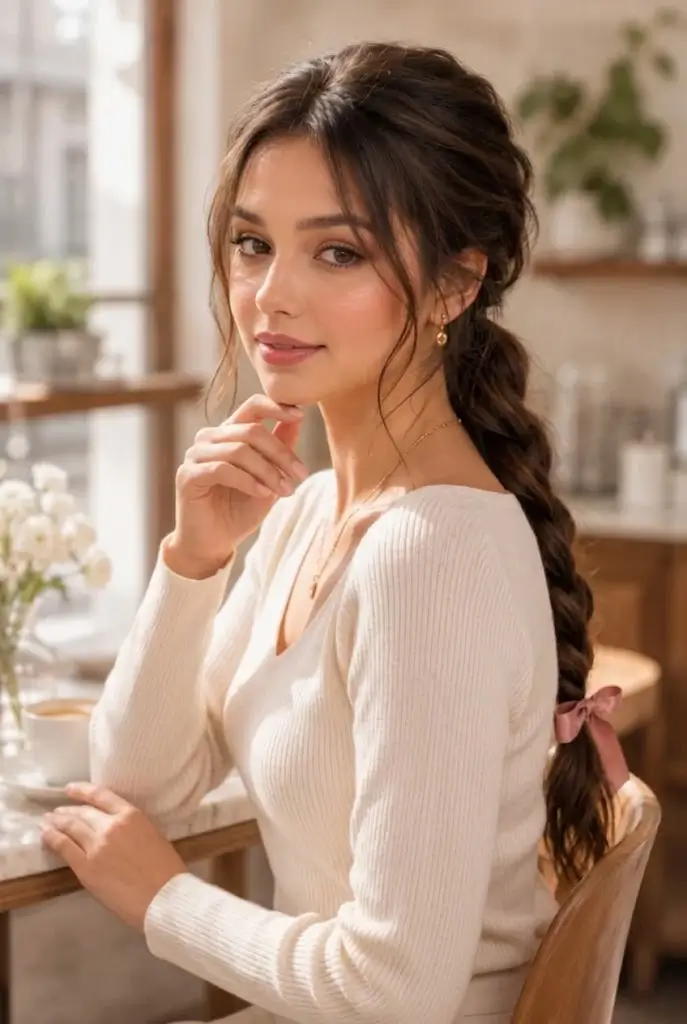
The low braided ponytail combines two practical ideas: the control of a ponytail and the visual texture of a braid. Instead of leaving the ponytail loose, you gather it low near the nape and turn the length into a simple three-strand braid.
This is one of the more practical choices for everyday wear because the braid helps keep the ends organized. Straight hair produces a neat, defined braid, while wavy or curly hair creates a softer and more dimensional result. Fine hair can look more substantial when the braid is gently loosened after it is secured. Thick hair generally produces a naturally fuller braid, although you may need a stronger elastic.
Hair length matters. Shoulder-length hair may allow a small braid, but longer hair gives you more room to create a substantial braided ponytail. Layers can also affect the result. Shorter layers may slip out around the braid, which is not necessarily a problem if you prefer a deliberately relaxed finish.
For a polished version, keep the top smooth and place the ponytail directly at the nape. For a softer look, pull out a few face-framing strands and gently widen the braid with your fingertips. A ribbon threaded through the braid can make the style feel more decorative without requiring complicated braiding skills.
The low position also makes this style useful for work, studying, travel, errands, and outdoor activities. It is generally less dramatic than a high ponytail and can be more comfortable for long periods.
If your hair is very slippery, a little texture spray can improve grip before braiding. Avoid adding so much product that the braid becomes stiff.
When discussing your haircut with a stylist, mention that you regularly wear low ponytails and braids. If you want fewer pieces escaping, ask for layers that are long enough to remain incorporated into the style.
4. Cute Messy Bun With Face-Framing Pieces
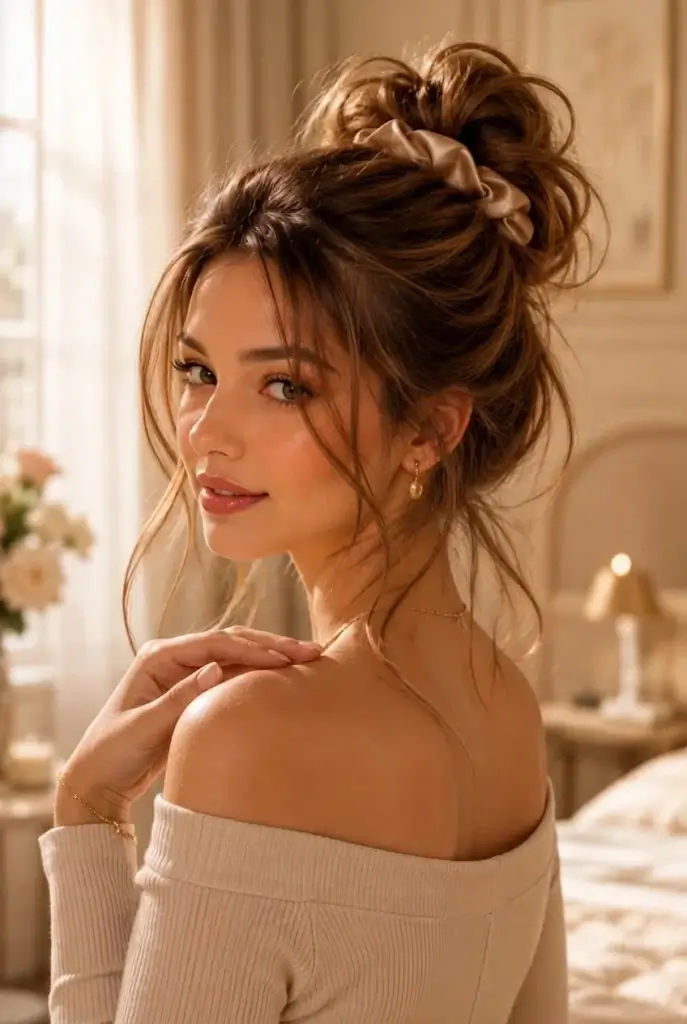
The messy bun works because it does not demand perfect precision. The goal is controlled looseness rather than simply twisting the hair into a random knot. Placement, volume, and a few intentional pieces around the face make the difference between a hurried bun and a hairstyle that looks deliberately relaxed.
This is especially useful for second-day hair because natural texture can give the bun more grip and body. Straight, fine hair may need dry texture spray or a small amount of volumizing product to prevent the bun from collapsing. Thick hair may create a fuller bun naturally but can require additional pins or a stronger elastic.
The bun can sit high, at the crown, or closer to the middle of the head. A higher bun gives a more energetic appearance, while a lower messy bun feels softer and more understated. Curly and wavy hair can be particularly effective here because the existing texture makes loose pieces look intentional.
Face-framing strands are optional, but they can soften the appearance of the hairstyle. Rather than pulling out many random hairs, choose a few pieces near the temples or cheekbones and shape them gently.
The biggest advantage is speed. Once you know the basic technique, the hairstyle can take only a few minutes. It is useful for casual weekends, travel, study sessions, quick mornings, errands, and relaxed social occasions.
The main limitation is security. A loose messy bun is not always the best choice for intense workouts or activities involving substantial movement. For those situations, a more controlled ponytail or braid may be more dependable.
If you want a haircut that works well with messy buns, ask for layers that add movement without leaving excessive short pieces around the crown. A stylist can also help determine how much face framing you can comfortably pull away from a bun without creating awkward gaps.
5. Sweet Bubble Ponytail for a Trendy Finish
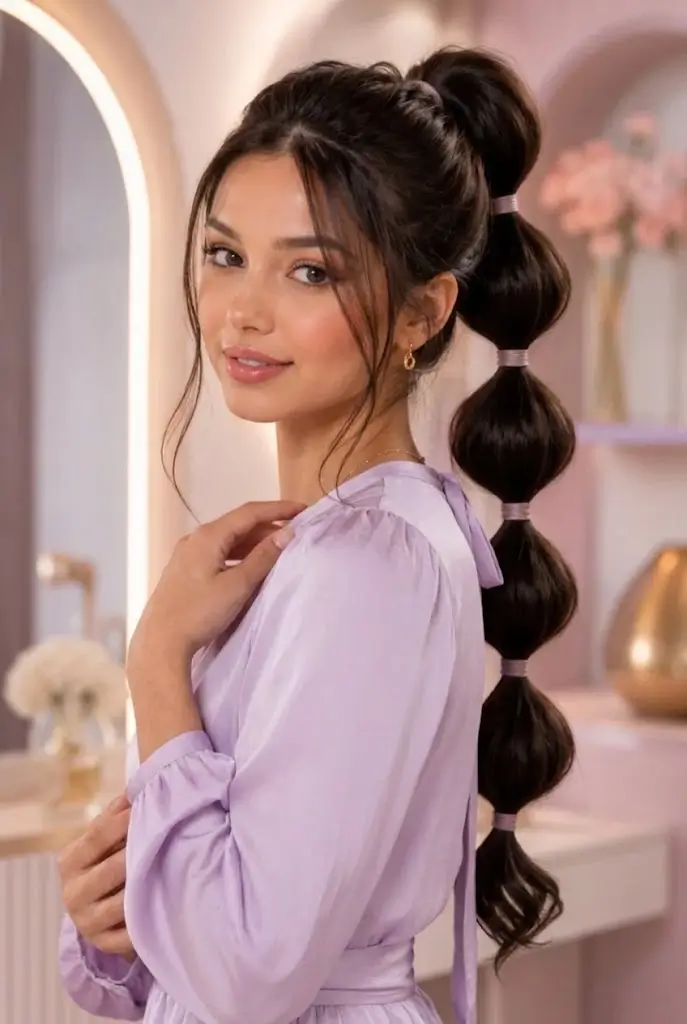
The bubble ponytail takes a familiar ponytail and divides its length into several rounded sections. Small elastics are placed down the ponytail, and the hair between them is gently pulled outward to create the characteristic bubbles.
Long hair is particularly suited to this style because additional length gives you more room for multiple sections. Medium-length hair can still work, although you may create fewer bubbles. Very layered hair may require extra attention because shorter pieces can fall out between the elastics.
Texture changes the character of the hairstyle. Smooth straight hair gives a crisp, graphic finish, while wavy or naturally textured hair produces softer bubbles. Fine hair can benefit from light texturizing product before the elastics are added. Thick hair may create larger bubbles naturally but can require stronger elastics.
The bubble ponytail is more decorative than the other options in this guide, making it useful for birthdays, parties, concerts, celebrations, festivals, or any outfit where a standard ponytail feels too ordinary. You can use neutral elastics for a subtle version or choose ribbons and decorative ties for a more playful result.
The technique is straightforward, but achieving evenly sized bubbles takes a little practice. Avoid pulling each section too aggressively; the shape should look rounded rather than stretched.
It can also be surprisingly practical because the hair remains gathered. However, the additional elastics mean removing the hairstyle carefully is important, particularly if your hair is fine or prone to tangling.
For a haircut consultation, tell your stylist that you want enough length and weight to create a full ponytail with multiple sections. If you have lots of layers, ask whether the current layering will allow the ponytail to stay cohesive.
How to Choose the Best Cute Hairstyle
The most useful question is not simply, “Which hairstyle looks cutest?” Instead, ask which hairstyle fits the way you actually wear your hair.
Start With Your Hair Length
Medium and long hair offer the widest range of options in this group. A high ponytail, braided ponytail, half-up style, messy bun, and bubble ponytail all become easier as you gain length.
If your hair is around shoulder length, the half-up style and low ponytail may be more reliable than a large bubble ponytail. A messy bun can still work, but expect shorter pieces to escape.
Consider Your Natural Texture
Straight hair often makes ponytails and bubble sections look clean and defined.
Wavy hair naturally adds movement to half-up styles, messy buns, and ponytails.
Curly hair can create beautiful volume in ponytails and buns without much additional styling, although shrinkage means the visible length may be shorter than it appears when stretched.
If your hair has strong natural texture, do not assume you need to straighten it before trying these styles. Working with the texture can reduce heat use and shorten preparation time.
Think About Density
Fine hair may benefit from texture spray, root lift, or gentle backcombing when extra volume is wanted. However, too much product can make fine hair heavy.
Thick hair can support fuller ponytails and buns but may need stronger accessories. Comfort matters too; a heavy high ponytail may not be pleasant for all-day wear.
Match the Hairstyle to the Occasion
For school, errands, casual workdays, and everyday activities, a high ponytail or low braided ponytail is usually straightforward.
For a date, dinner, birthday, or celebration, the wavy half-up style provides a softer finished appearance.
For a relaxed weekend or travel day, the messy bun can be the fastest option.
For a party or event where you want a hairstyle with more visual personality, the bubble ponytail stands out.
Be Honest About Styling Time
A hairstyle is not truly easy for you if it requires a routine you dislike.
If you have five minutes, choose a ponytail or bun.
If you have 10–20 minutes, you can add waves, braiding, or accessories.
If you enjoy styling your hair, the half-up waves and bubble ponytail give you more room to experiment.
Cute Hairstyles by Hair Type
Fine Hair
Fine hair can work beautifully with all five hairstyles, but volume and grip are often the main considerations. A high ponytail may appear smaller than expected, so gentle root lifting or a lightweight texturizing spray can create more visual fullness. Avoid loading the hair with heavy oils or dense creams before styling.
The messy bun can be especially useful because texture makes the shape look fuller. A half-up style can also create the impression of additional crown volume if the upper section is gently lifted.
For braids, softly widening the finished braid can make it appear thicker. A bubble ponytail benefits from a little texture because the sections hold their shape more easily.
The most useful approach is to build volume without making the hair stiff. Ask a stylist whether subtle layering or shape around the crown would help your preferred tied styles look fuller while still retaining enough length for a ponytail.
Thick Hair
Thick hair gives you plenty of material for buns, braids, ponytails, and half-up styles. The challenge is often control rather than volume.
A low braided ponytail can be particularly practical because the braid contains the length. A messy bun can look naturally full, although you may need several pins to keep the weight secure. Bubble ponytails also create substantial shapes on thick hair, so fewer bubbles may be needed to achieve a noticeable effect. Celebrating your special milestone? Discover these fabulous birthday hairstyles for women.
A high ponytail can be striking, but comfort deserves attention. If the ponytail feels heavy, moving it slightly lower can make a significant difference.
Your stylist can also discuss internal weight removal or strategically placed layers if your hair feels too bulky when tied back. The goal is not necessarily to remove as much weight as possible; excessive thinning can sometimes create unwanted shorter pieces.
Straight Hair
Straight hair gives these hairstyles a clean foundation. The high ponytail and bubble ponytail can look especially defined because the sections remain visually clear.
The tradeoff is that very smooth hair may have less natural grip. A light texture product can help elastics and pins stay in place, especially when creating a messy bun or braid.
If you want a romantic half-up style, soft waves can add movement, but they are not mandatory. A sleek half-up style with a polished clip can be equally attractive.
For low-maintenance styling, straight hair can often be gathered directly without extensive preparation. If you regularly wear ponytails, ask your stylist to consider how your layers behave when the hair is pulled upward.
Wavy Hair
Wavy hair already contains the movement that many of these styles are designed to create. That can make a messy bun, half-up hairstyle, or loose ponytail relatively easy to style.
Instead of brushing all the texture out, consider enhancing your natural wave pattern with a lightweight styling product. This can preserve the softness of the finished style.
Waves can also help fine hair appear more substantial, while thicker wavy hair may need careful sectioning to prevent the style from becoming too bulky.
A half-up style with natural waves is one of the easiest combinations for a romantic finish because the texture does much of the visual work. A low braid can also look fuller and softer when the waves remain intact.
Curly Hair
Curly hair can make ponytails and buns look naturally voluminous and textured. The important consideration is shrinkage and curl pattern. The visible length when the hair is curly may be significantly shorter than its stretched length, so some styles may require more length than expected.
A messy bun can work particularly well because individual curls escaping from the style can look intentional. A high ponytail can create strong volume at the crown, while a low ponytail gives a more relaxed silhouette.
Avoid treating every loose curl as something that needs to be smoothed away. Preserving the curl pattern can make the hairstyle more cohesive.
When discussing a haircut, explain how you normally wear your curls rather than only showing a picture of the hair worn straight. Your stylist needs to understand how the cut behaves in its natural state.
Coily Hair
Coily hair can be styled into ponytails, buns, half-up looks, and braided variations, but technique and preparation may differ considerably from straight or wavy hair. Shrinkage, density, strand fragility, and the amount of manipulation involved should all be considered.
A bun can provide a practical way to gather the hair, while a half-up style can showcase the natural texture without requiring the entire head to be pulled back. A ponytail can be worn sleek or textured depending on the desired finish.
Because repeated tight styling can place stress on the hair, comfort and tension should be treated as important parts of the decision. A hairstyle that looks attractive but causes discomfort is not a useful everyday option.
If you regularly wear protective or low-manipulation styles, adapt these ideas rather than forcing your hair into a particular finish. A stylist familiar with your texture can help determine which placement and accessories are most practical.
Cute Hairstyles by Face Shape
Round Face
With a rounder face shape, styling can be used to introduce vertical movement or create a little height rather than adding all the volume at the widest point of the face. A high ponytail can create upward movement, while a half-up style can work well when the crown is gently lifted.
Face-framing pieces can also change the visual outline. Rather than cutting very short pieces directly at the widest part of the cheeks, ask your stylist to position the framing according to your natural features and preferred length.
A messy bun placed higher on the head can create a different silhouette from a low bun. Neither is automatically better; the choice depends on your overall proportions and how much softness you want around the face.
Oval Face
An oval face shape tends to offer substantial flexibility because many hairstyle placements can work without needing to strongly rebalance the proportions. That makes the five styles in this article easy to experiment with.
A high ponytail can emphasize the length of the face, while a low braided ponytail creates a more grounded silhouette. A half-up style can be worn sleek, wavy, centered, or slightly relaxed.
If you have an oval face and want to experiment, focus less on rigid face-shape rules and more on the effect you want. Crown volume, face framing, accessories, and part placement can all change the final impression.
Square Face
For a square face shape, softer texture can be useful when you want to visually soften stronger angles. Loose waves in a half-up style, a relaxed messy bun, or a ponytail with soft pieces around the face can create movement.
That does not mean straight styles are off-limits. A sleek high ponytail can deliberately emphasize a clean, structured appearance if that is the aesthetic you prefer.
The key is deciding whether you want the hairstyle to echo your natural facial structure or introduce contrast. Your face-framing pieces do not have to be extremely short; longer pieces can create a gentler transition around the jaw.
Heart-Shaped Face
A heart-shaped face often has more visual width around the upper face with a narrower chin area. Soft face framing can help distribute attention through the hairstyle.
A half-up style can be adjusted by keeping some movement around the sides rather than pulling every strand tightly away from the face. A messy bun with longer face-framing pieces can create a relaxed balance.
High ponytails can also work, especially when the styling is not excessively tight. If you are considering a new haircut, tell your stylist how you want the pieces around the cheekbones and jaw to behave when the hair is tied back.
Long Face
For a longer face shape, hairstyle placement can be used to add width and reduce an overly vertical impression if that is your preference. A low braided ponytail, softly waved half-up style, or textured bun can introduce horizontal movement.
A high ponytail can still look excellent, particularly when paired with volume around the sides or soft face-framing pieces. There is no requirement to avoid height altogether.
The useful approach is to consider the complete silhouette rather than judging the ponytail or bun in isolation. Hair texture, bangs, part placement, and the amount of volume around the face can all influence the result.
Diamond Face
A diamond-shaped face typically has more visual width around the cheekbones with narrower forehead and jaw areas. Soft texture and thoughtful face framing can help create a balanced overall silhouette.
A half-up hairstyle with loose waves can highlight the cheekbones while keeping the overall effect soft. A messy bun with longer pieces around the face can also work well when you want movement rather than a highly structured look.
For a ponytail, experiment with placement rather than assuming one position is universally best. A stylist can help you decide where the gathered hair should sit according to your hairline, layers, and preferred amount of volume.
Lowest-Maintenance Choices
The high ponytail requires little more than gathering and securing the hair. You can leave it straight, use your natural texture, or add one accessory.
The messy bun is especially useful when your hair already has texture. It can work with second-day hair and does not require perfectly smooth strands.
The low braided ponytail is another practical option when you want more structure. It takes slightly longer but can stay organized throughout the day.
The half-up waves and bubble ponytail usually involve more preparation, especially if you need to create texture or several sections. They are still accessible hairstyles, but they are better choices when you have a little more styling time.
Cute Hairstyles You Can Tie Back
All five styles in this guide involve gathered hair, but they differ in how practical they are for active days.
- High ponytail: strongest choice for a simple, secure tied-back style.
- Low braided ponytail: excellent when you want the length contained.
- Messy bun: quick and comfortable for casual activities, though a loose bun may need repinning.
- Bubble ponytail: secure but involves several elastics and more styling steps.
- Half-up half-down: keeps the front controlled but leaves much of the hair down, so it is less practical for workouts.
For gym sessions or activities involving a lot of movement, security should take priority over decorative details. A low braid or secure ponytail may be more practical than a loose half-up style.
High Ponytail vs. Low Braided Ponytail
The high ponytail is faster and creates more lift. It is useful when you want an energetic silhouette and do not want to spend much time styling.
The low braided ponytail feels more controlled and understated. The braid contains the length and adds visual texture without requiring curls or waves.
Choose the high ponytail when speed and height matter. Choose the braid when you want the hairstyle to stay organized and textured.
Hair density can influence the decision too. Very thick hair may feel heavy in a high ponytail but more contained in a low braid. Fine hair may look fuller when the braid is gently loosened.
Half-Up Hairstyle vs. Messy Bun
These two styles solve different problems.
A half-up hairstyle lets you keep most of your hair visible while removing some of it from your face. It is useful when you want a hairstyle that feels feminine and styled without fully committing to an updo.
A messy bun gathers almost everything and prioritizes convenience.
Choose the half-up style for dinners, dates, celebrations, and occasions where wearing your length down is part of the look. Choose the messy bun for casual mornings, travel, study sessions, and days when practicality matters more than elaborate styling.
What to Tell Your Stylist
A good salon consultation is more useful when you describe how you actually wear your hair rather than simply naming a hairstyle.
Instead of saying, “I want layers,” explain what you need those layers to do. For example:
“I wear my hair in ponytails several times a week. I want face-framing pieces, but I still need the layers to stay inside a ponytail.”
If you want a half-up style, you could say: When you need a sleek, professional impression, check out these professional job interview hairstyles.
“I want soft face framing that looks good when my hair is down and still blends naturally when I pull the top half back.”
For thick hair:
“I want to reduce some bulk without creating lots of short pieces that fall out when I braid or tie my hair.”
For fine hair:
“I want movement and the appearance of fullness, but I do not want so many layers that my ends look thin.”
Also bring a photo showing the hairstyle from a useful angle. If possible, explain how much styling you are realistically willing to do. A cut that looks excellent after a professional blowout may not be the best choice if you normally air-dry and spend five minutes styling.
Frequently Asked Questions
What is the easiest cute hairstyle to do quickly?
A high ponytail or messy bun is usually the fastest of these five options. Both can work with natural texture and require only basic accessories. The messy bun can be especially convenient on second-day hair, while the high ponytail gives a cleaner finish.
Which cute hairstyle is best for long hair?
All five can work on long hair, but the bubble ponytail benefits particularly from extra length because you have enough hair to create several visible sections. Long hair also gives you more flexibility with half-up styles, braids, and larger buns.
What is a cute hairstyle for medium-length hair?
A half-up half-down hairstyle is a strong choice because it does not require all of the hair to reach a single tie point. A low ponytail or smaller messy bun can also work depending on the exact length and layering.
How can I make a ponytail look cuter?
Change the texture or add one deliberate detail. Soft waves, face-framing pieces, a wrapped section of hair, a ribbon, bow, or attractive scrunchie can make a basic ponytail look noticeably more styled without changing the fundamental technique.
Which hairstyle is best for fine hair?
Fine hair can work with every style, but texture and volume are useful. A gently loosened braid, lightly textured messy bun, or half-up style with crown lift can create a fuller appearance. Heavy products are generally less helpful when they flatten the hair.
Which cute hairstyle works well for thick hair?
A low braided ponytail can be particularly practical because it keeps the length contained. A messy bun also benefits from the natural fullness of thick hair, while a bubble ponytail can create dramatic sections without requiring extensive backcombing.
Can I create these hairstyles without heat?
Yes. None of the five requires heat. You can work with your natural texture, use a heatless wave method for the half-up style, or rely on accessories and texture rather than curling. The result will naturally differ from a heat-styled version.
How do I keep a messy bun from falling out?
Start with enough grip in the hair, choose an elastic appropriate for your hair density, and secure the bun with pins where it needs support. If your hair is very smooth, a small amount of texture product can make the hair easier to anchor.
Is a bubble ponytail difficult?
The technique is simple, but creating even bubbles takes practice. The most important part is spacing the elastics consistently and gently pulling the sections outward rather than stretching them too aggressively.
How long does hair need to be for a ponytail?
The exact length depends on your density, layering, curl pattern, and how secure you want the ponytail. Shoulder-length hair may support a smaller ponytail, while longer hair provides more styling flexibility. Curly hair may require additional length because of shrinkage.
Which hairstyle is best for a special occasion?
The wavy half-up half-down style is a versatile choice when you want something romantic without wearing a full updo. The bubble ponytail can work when the event is more playful, while a polished high ponytail can suit a modern, streamlined outfit.
How often should I change my hairstyle?
There is no required schedule. Rotate styles according to comfort, occasion, and how your hair responds. If a particular style creates noticeable tension or discomfort, change the placement or choose a looser option rather than wearing it continuously.
Final Takeaway
Cute hairstyles do not have to be complicated to feel special. The high ponytail, half-up half-down style, low braided ponytail, messy bun, and bubble ponytail all begin with familiar techniques, but small changes in texture, placement, accessories, and face framing give each one a distinct personality.
The best choice is the one that fits your actual hair and routine. Consider your length, density, natural texture, styling time, occasion, and how secure you need the hairstyle to be. Once those factors are clear, choosing between a quick ponytail, romantic half-up style, practical braid, relaxed bun, or playful bubble ponytail becomes much easier.