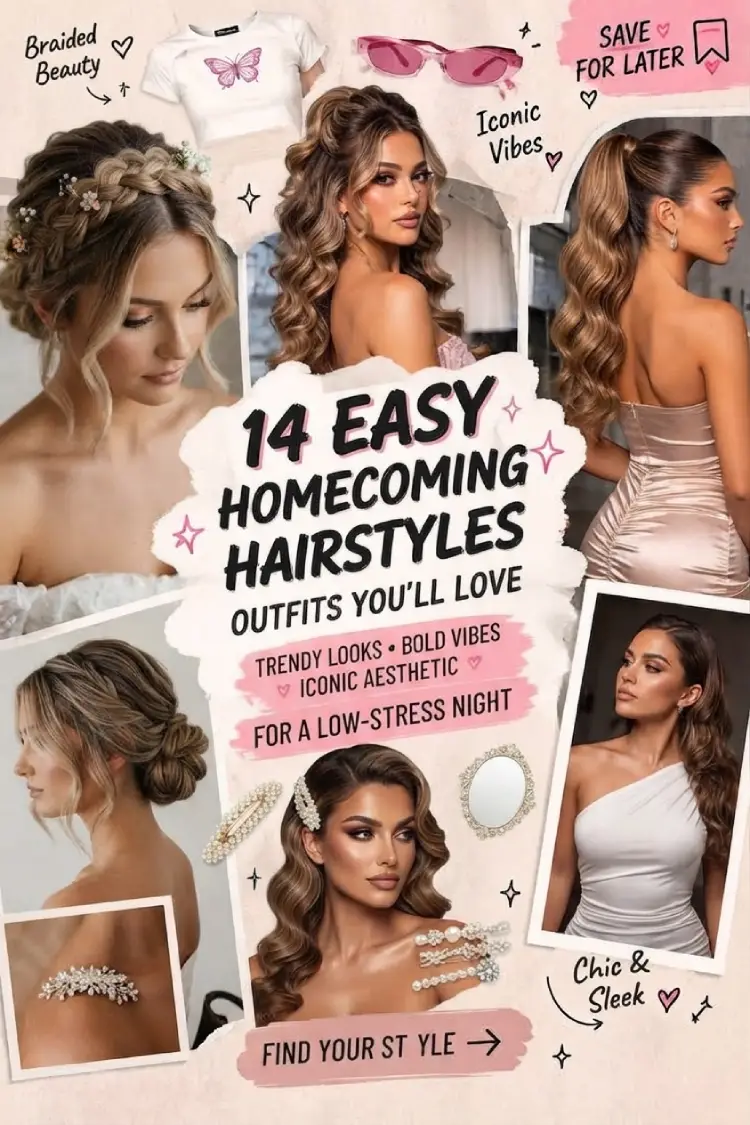
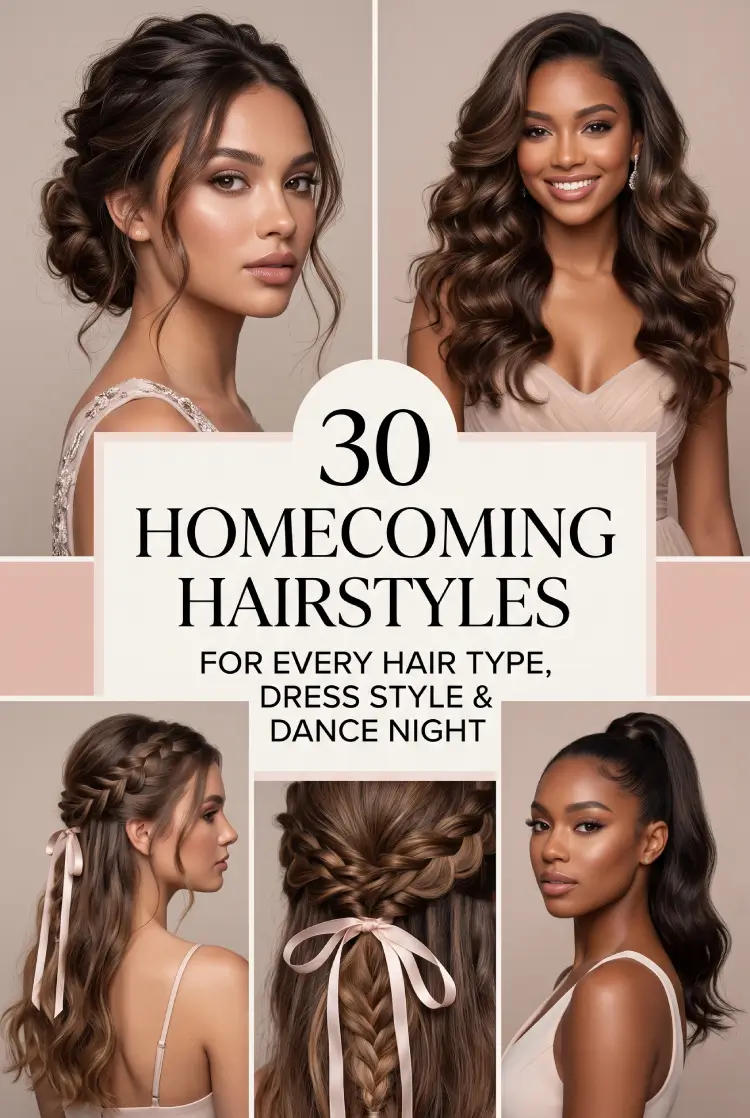
Homecoming hair has to do more than look beautiful in a photo. It needs to work with your dress, survive hours of movement, feel comfortable enough to wear for an entire evening, and still look intentional when the last song ends. For related styling inspiration, explore birthday hairstyles for women.
That makes the best homecoming hairstyle less about finding the most elaborate option and more about choosing the right combination of shape, security, texture and personality.
Long hair gives you room for dramatic waves, braids and sculpted ponytails. Medium hair can handle many half-up styles and compact buns. Short bobs and pixie cuts can lean into polished waves or glossy texture rather than trying to imitate a traditional updo. Curly and coily hair can be showcased instead of disguised, with styles that preserve natural volume and definition.
Your dress matters, too. A high neckline can look especially clean with an updo, while an off-the-shoulder dress may benefit from hair that falls around the shoulders. A backless dress gives you another reason to consider a high ponytail or bun.
Below are 30 homecoming hairstyles, followed by practical guidance to help you narrow the choices instead of simply saving every picture you see.
Quick Picks: Which Homecoming Hairstyle Fits You?
| If you want… | Start with… |
| Classic glamour | Hollywood waves |
| A romantic look | Crown twist with curls |
| Maximum dance-floor security | Braided high bun |
| Hair completely off your neck | High ponytail or top knot |
| A soft middle ground | Half-up crown braid |
| A short-hair statement | Sculpted finger waves |
| A natural-texture style | Afro puff or halo braid |
| Something playful | Bubble braid |
| Minimalist elegance | Sleek low bun |
| Vintage inspiration | French twist or side bun |
| An Quick and easy homecoming hairstyles save time while looking polished DIY option | Half-up top knot |
| Jewelry-like detail | Pearl or crystal accessories |
1. Classic Glam Hollywood Waves
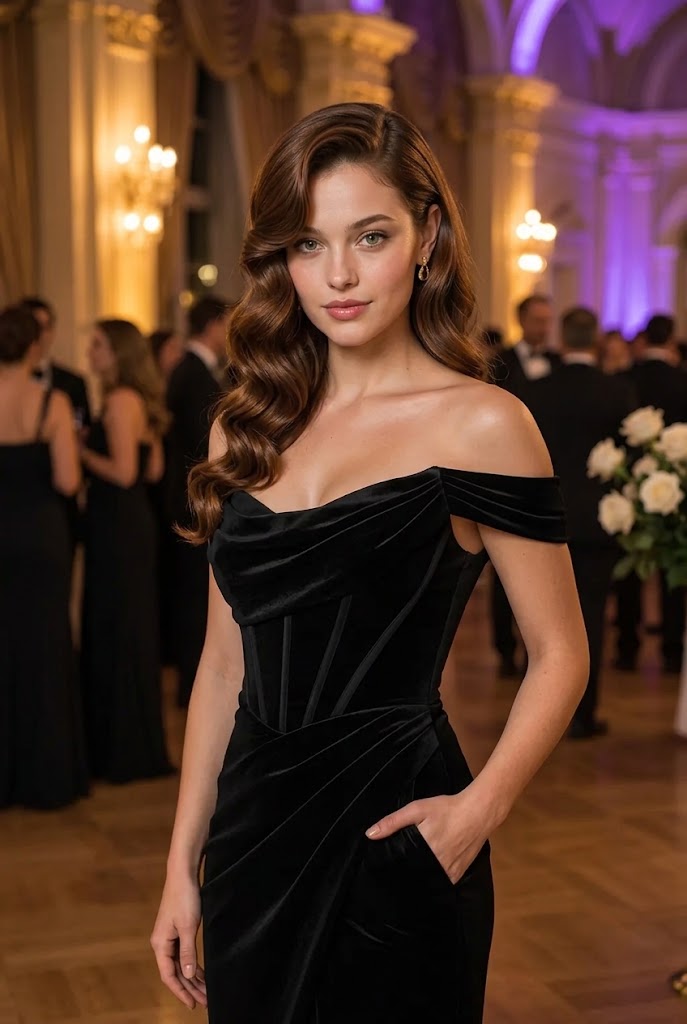
Classic Hollywood waves are one of the strongest choices when you want your hair to feel unmistakably formal without needing an elaborate updo. The style is defined by smooth, consistent S-shaped waves that usually sweep toward one side rather than looking like loose beach curls.
They work particularly well with medium-to-long hair and are easiest on straight or wavy textures, although curly hair can be blown out and shaped beforehand. Fine hair may benefit from setting spray and pin-curling because the structured pattern can otherwise fall quickly. Thick hair often holds the shape well but may require smaller sections.
This style suits oval, heart, square and longer face shapes especially well when the wave placement is adjusted around the cheekbones. It requires moderate heat styling and a deliberate setting process, so it is not the easiest option for a rushed morning. Ask your stylist for polished, uniform Hollywood waves with a deep side part and a soft sweep over one shoulder.
2. Textured Boho Half-Up Crown Braid
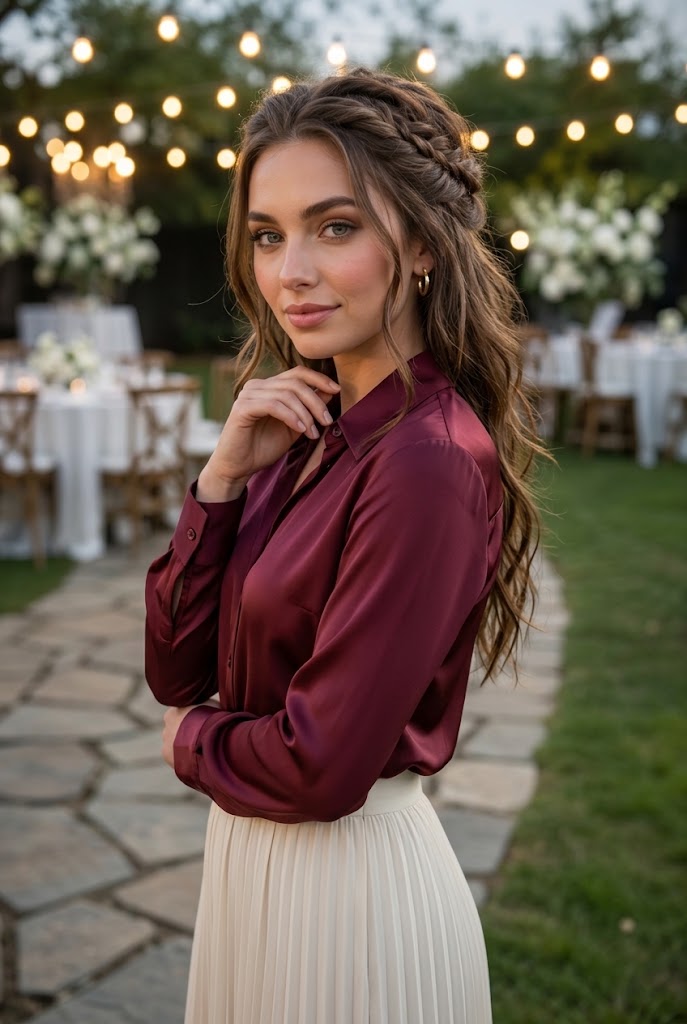
A textured half-up crown braid combines the security of having the front of your hair controlled with the movement of wearing the lengths down. The crown section can use Dutch, French or fishtail braiding, while the remaining hair is usually worn in loose waves.
This is particularly appealing for medium and long hair with natural wave, highlights or balayage because the braid creates visible dimension. Fine hair can be gently pancaked after braiding to make the plait appear fuller, while thick hair may need stronger pins at the meeting point.
The style works beautifully with round, oval and heart-shaped faces because soft strands can be left around the temples to customize the frame. Maintenance during the event is generally low once the braid is secured. The main limitation is that very short layers may escape. Tell your stylist you want a soft half-up crown braid with deliberately loosened texture and enough length left around the face to avoid a tight, pulled-back effect.
3. Sleek Snatched High Ponytail
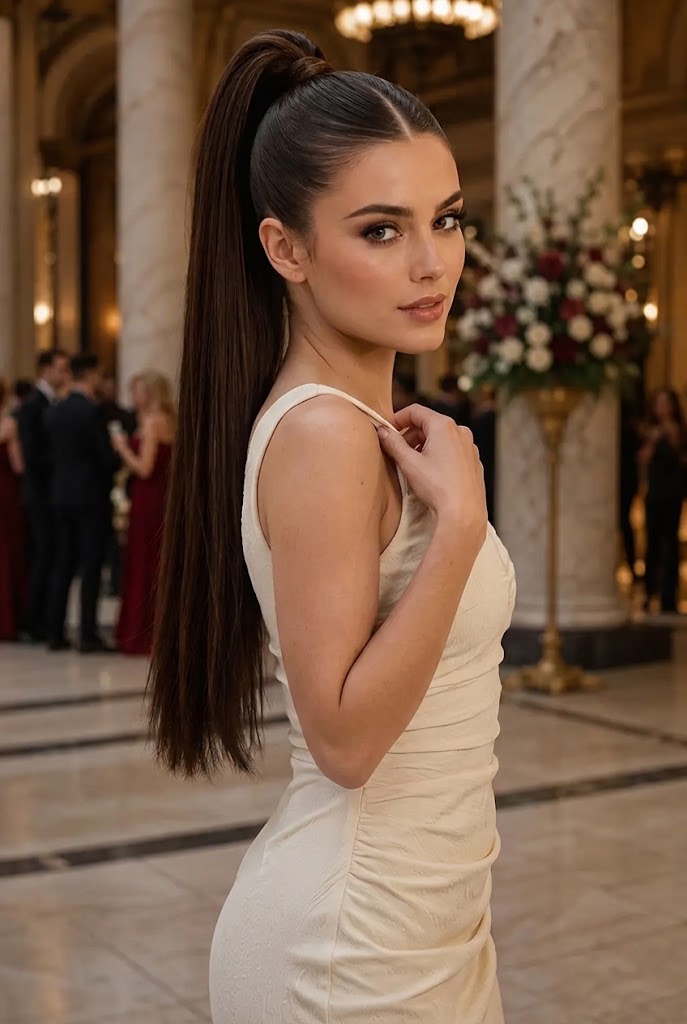
The sleek high ponytail is a practical choice when you want drama without having your hair resting against your neck. The defining feature is a smooth, elevated base at the crown with the ponytail either straight, softly curled or waved.
It tends to work best on medium-to-long hair, although extensions can create additional length or fullness if desired. Thick hair may need a strong elastic and careful weight distribution, while fine hair benefits from root-lifting products or discreet volume-building techniques.
The vertical shape can visually lengthen the overall silhouette, making it especially useful with high-neck, halter or backless dresses. It is also one of the better choices for someone who plans to dance continuously. The trade-off is tension: a very tight ponytail can become uncomfortable over several hours. Ask for a high ponytail with a smooth crown, concealed elastic and enough controlled tension to stay secure without pulling painfully at the hairline.
4. Romantic Low Chignon With Pearled Pins
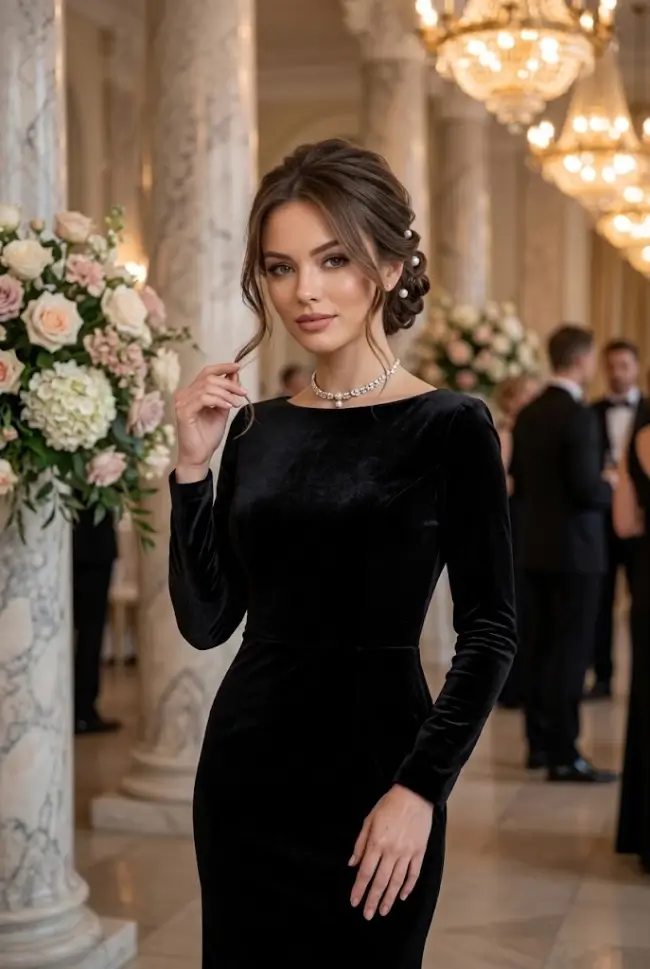
A low chignon gathers the hair at the nape into a compact bun or softly rolled shape. Adding pearl pins gives the classic structure a more youthful homecoming finish without making the style overly complicated.
This option is particularly versatile for medium-to-long hair and can be adapted to straight, wavy or curly textures. Fine hair may need texture spray or light padding to create a fuller bun, while thick hair may require additional anchoring. A few loose pieces around the ears can soften the shape for angular or longer faces.
The low placement makes this a useful choice with dresses featuring detailed shoulders, sleeves or high necklines because the hair stays visually contained. It is relatively secure, although loose romantic versions can loosen if heavily danced in. Ask for a soft low chignon at the nape with subtle texture, a few face-framing pieces and pearl pins positioned asymmetrically rather than evenly spaced.
5. Voluminous 1990s Butterfly Blowout
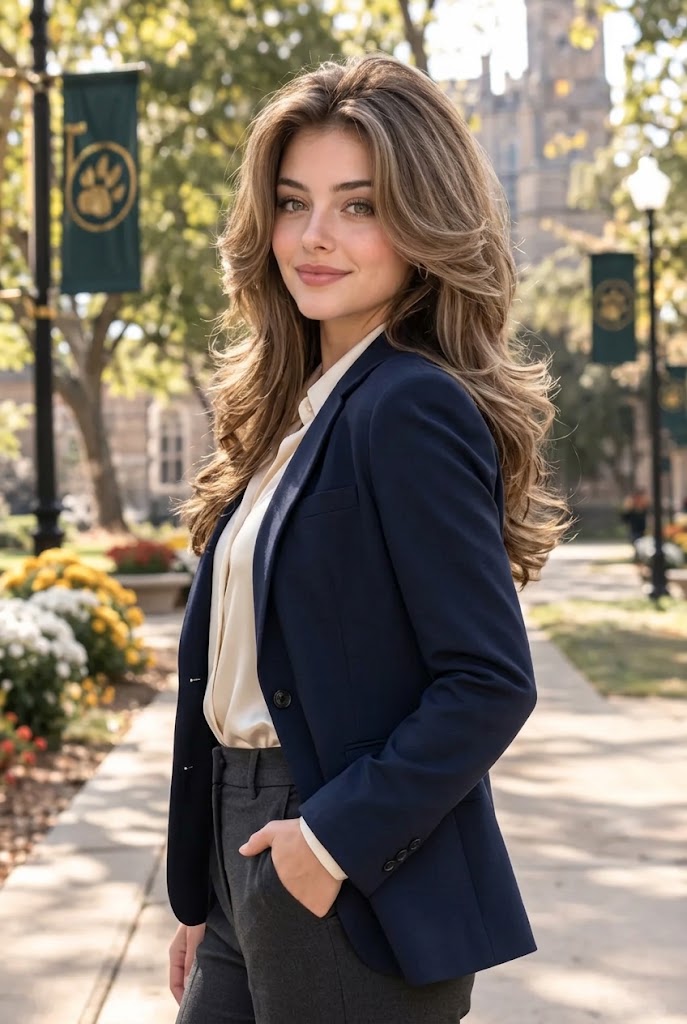
A 1990s-inspired butterfly blowout is all about movement, volume and layers that curve away from the face. Instead of tight curls, the finish looks like a large, bouncy blow-dry with feathered ends and substantial root lift.
It works particularly well on medium-to-long layered hair. Thick hair naturally provides fullness but may require more drying time, while fine hair benefits from volumizing mousse, large rollers or strategic layering. Straight hair is usually easiest to transform, whereas naturally curly hair may require more preparation.
This hairstyle can soften strong facial angles because the layers create width around the cheekbones and jaw. It is more maintenance-intensive than a sleek bun because humidity and movement can reduce the volume. If you want the look for several hours, a setting technique is worthwhile. Ask for long, face-framing butterfly layers styled into a large 1990s blowout with rounded volume rather than tight curls.
6. Messy Textured Low Bun With Face Tendrils
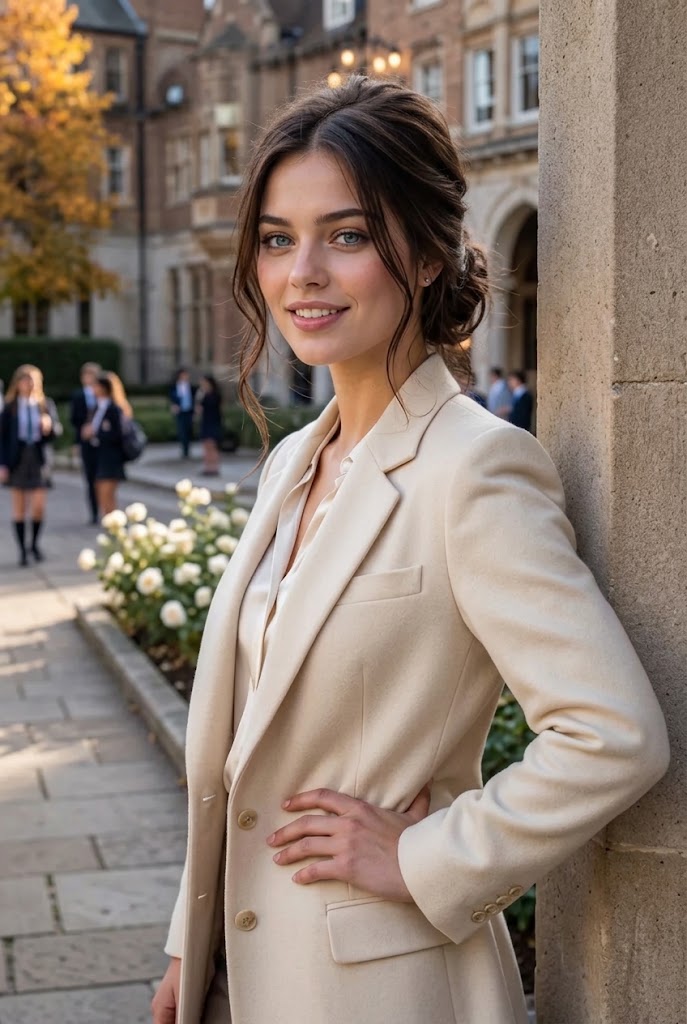
The messy low bun is designed to look intentionally relaxed rather than perfectly sculpted. The hair is gathered at the nape, with loops, twists or loose texture forming the bun while a few pieces remain around the face.
This style is forgiving for medium and thick hair because texture adds visual fullness. Fine hair can also wear it, but may need dry texture spray or a small amount of padding to prevent the bun from looking too small. Wavy and curly textures often work particularly well because the natural irregularity supports the undone finish.
Face-framing tendrils can be customized for different proportions. Shorter pieces can soften the cheek area, while longer pieces can create vertical movement. The main limitation is security: a deliberately loose bun is less reliable than a tightly anchored chignon. Ask for a low textured bun that feels soft and romantic, with two controlled face-framing pieces rather than numerous loose strands.
7. Waterfall Braid With Flowing Beach Waves
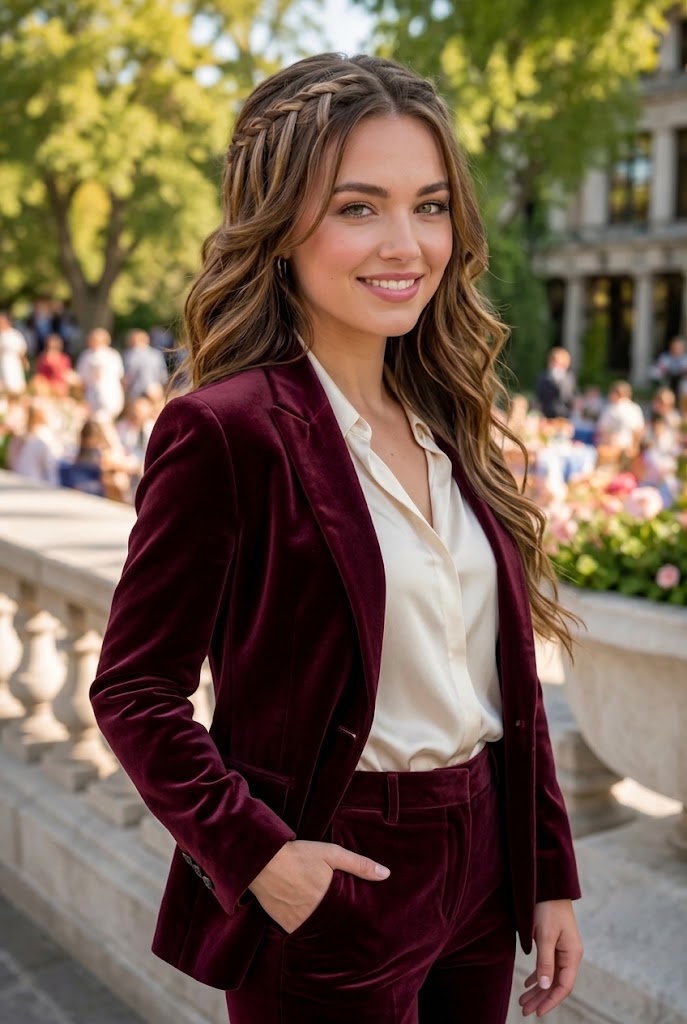
The waterfall braid creates a horizontal braided detail while selected strands are allowed to fall into the rest of the hair. Paired with loose waves, it gives you a half-up effect without completely separating the upper and lower sections.
Medium-to-long hair is generally the easiest canvas, especially when there is enough length for the dropped sections to blend naturally. Fine hair can benefit from light texturizing spray so the braid does not slide, while thick hair may need stronger hidden pins.
This look suits someone who wants visible detail from the side and back without committing to a full updo. It is especially attractive with dresses that have relatively simple necklines because the braid becomes the focal point. The technique can be difficult to execute on yourself, so a stylist or experienced braider may be worthwhile. Ask for a soft waterfall braid beginning near one temple and blending into loose, defined waves rather than overly uniform curls.
8. Snatched High Top Knot Bun
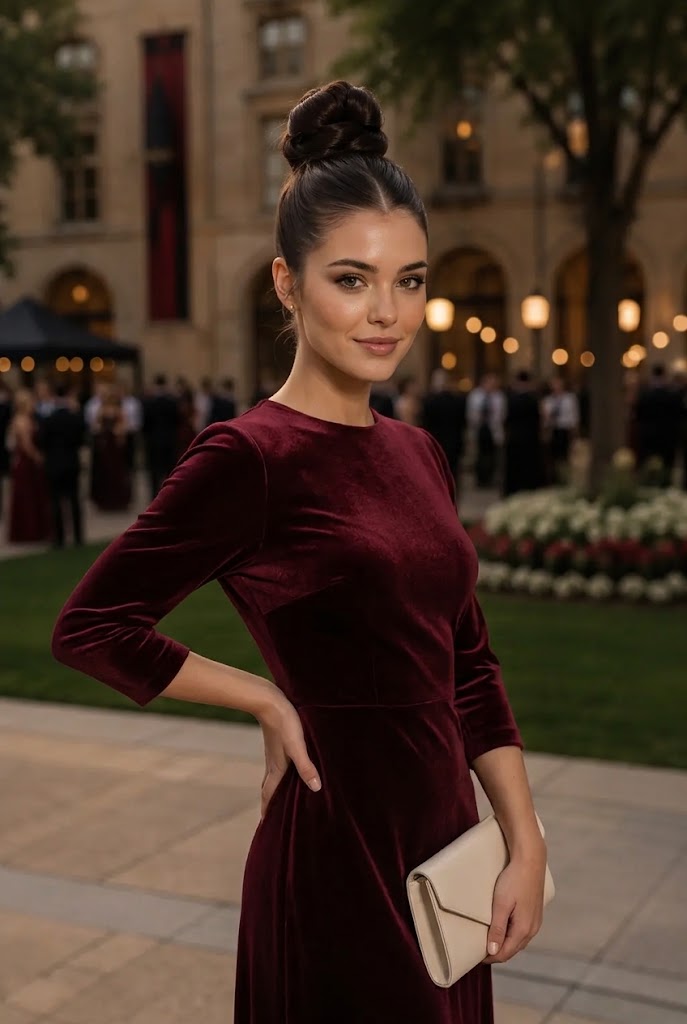
A high top knot moves all of the hair toward the crown and forms it into a compact bun. The result exposes the neck and shoulders while creating a strong vertical silhouette.
Longer hair is easiest to work with, although medium hair can form a smaller bun. Thick hair provides natural volume but can make the bun heavy, so secure anchoring matters. Fine hair may need texturizing spray, a bun accessory or carefully arranged loops for fullness.
This style is especially practical with high-neck, halter and backless dresses because it keeps the neckline visible. It is also a strong option for active dancers because there are fewer loose lengths to tangle. The drawback is that a very sleek version can emphasize the hairline and scalp shape. Ask for a high top knot with a clean crown, balanced bun proportions and secure U-pins rather than relying on one elastic.
9. Coily Crown Halo Braid With Gold Accents
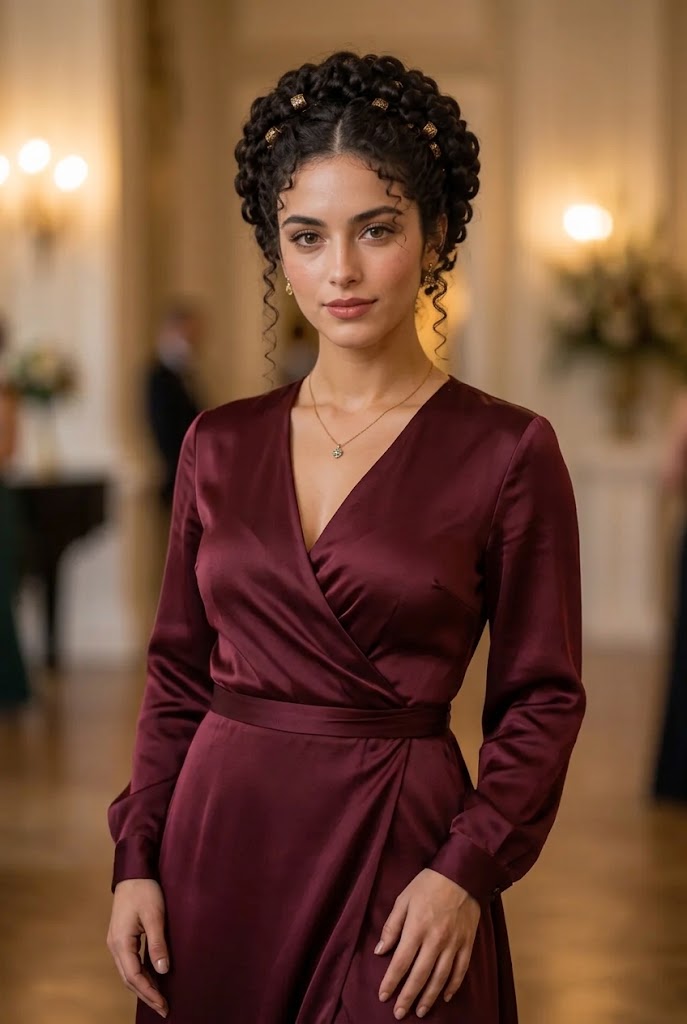
A crown halo braid creates a continuous braided shape around the head, making it a striking option for curly, coily and natural hair. Gold cuffs, thread or small metallic accessories can be added without changing the underlying structure.
This style works particularly well when you want your natural texture controlled around the perimeter while still making the hairstyle itself the statement. Hair density can actually help create a substantial braid, although highly dense hair may require more time and stronger anchoring.
Because the hair is secured around the head, this can be a practical choice for dancing and humid conditions. However, excessive tension around the hairline should be avoided, particularly if the style will be worn for many hours. Ask for a comfortable halo braid that follows the natural head shape, with moderate tension and gold accents distributed lightly rather than overloaded across the braid.
10. Bubble Braid Half-Up Style With Pearls
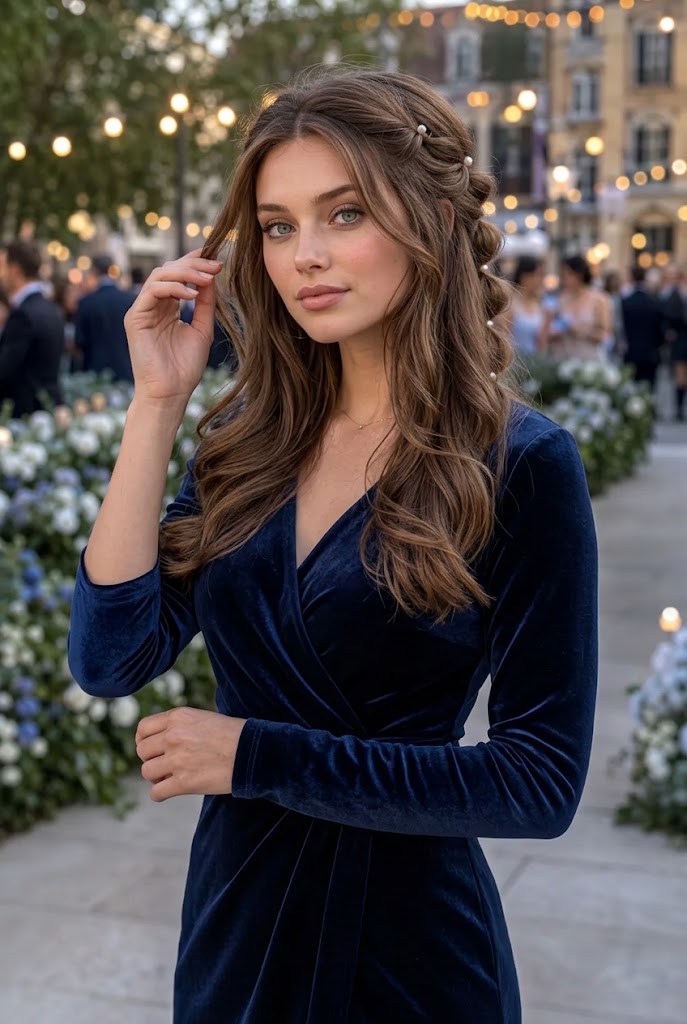
A bubble braid half-up style creates rounded sections along a ponytail using small elastics. Instead of traditional braiding, the hair is divided into repeated bubbles and gently pulled outward to create volume.
Medium-to-long hair works best because you need enough length to create several visible sections. Fine hair can still achieve the look, particularly when the bubbles are teased carefully, while thick hair creates larger and fuller shapes naturally.
The style is playful and works especially well if your dress has a youthful, sparkly or Y2K-inspired aesthetic. Pearls can hide the elastics and turn the functional structure into an accessory detail. It is relatively easy to maintain once the elastics are secure, although very short layers may stick out. Ask for a half-up bubble braid with evenly spaced bubbles and small pearl accents that disguise the elastics without making the style feel heavy.
11. Deep Side-Part Glam Waves With Crystal Clip
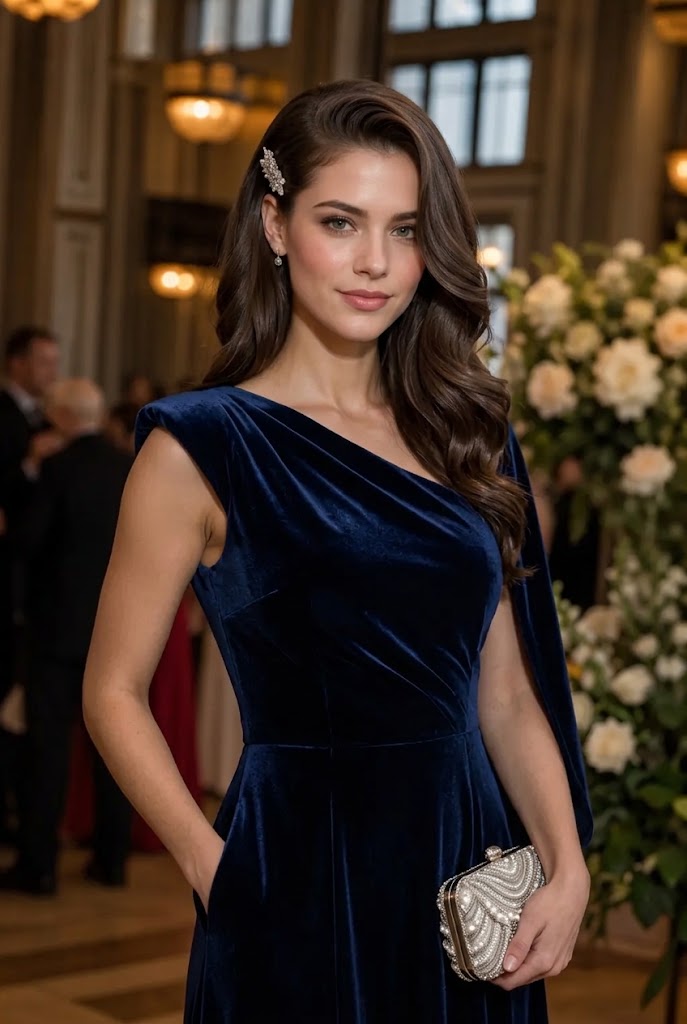
Deep side-part waves create asymmetry by moving most of the hair toward one shoulder. A crystal clip on the lighter side adds a jewelry-like focal point and helps hold that section in place.
This look works best on medium-to-long hair and is particularly effective on straight or wavy textures that can be shaped into polished waves. Thick hair may need careful sectioning to prevent the side from becoming too heavy, while fine hair may need root support around the crown.
The deep part can visually alter the balance of the face, so the exact placement should be customized rather than automatically positioned at the same point for everyone. A crystal clip also works best when coordinated with your jewelry rather than competing with it. Ask for soft glam waves with a deep side part, one side swept behind the ear and a crystal clip placed just above the ear.
12. Boho Fishtail Braided Half-Up Style
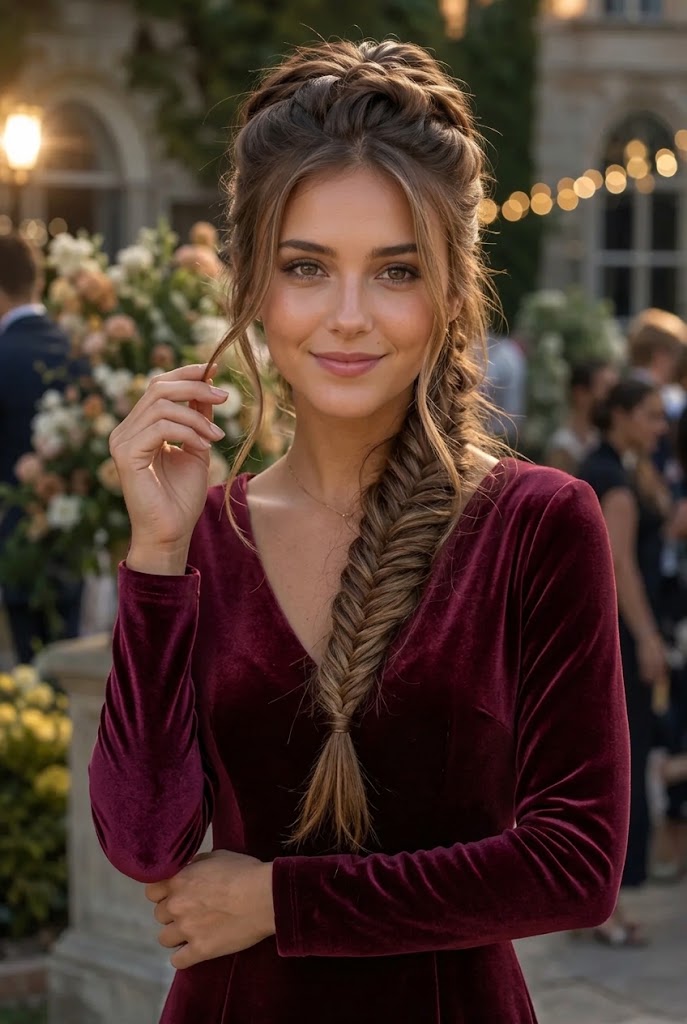
The fishtail half-up style uses thin sections crossed repeatedly to produce a detailed herringbone-like braid. Keeping the lower hair loose creates a contrast between intricate texture and flowing movement.
Long and medium-long hair are the easiest lengths for this look. Fine hair can benefit from gently loosening the braid after it is secured, while thick hair produces a naturally substantial plait. Wavy hair is particularly useful because the texture helps disguise small imperfections.
This is a strong choice for floral, lace, chiffon or bohemian-inspired dresses. It is less formal than a polished chignon but can still look sophisticated when the braid is clean and the waves are controlled. Ask your stylist for two small fishtail sections joined at the back, with the braid gently widened and the lower hair styled in soft waves.
13. Sleek Low Bun With Center Part
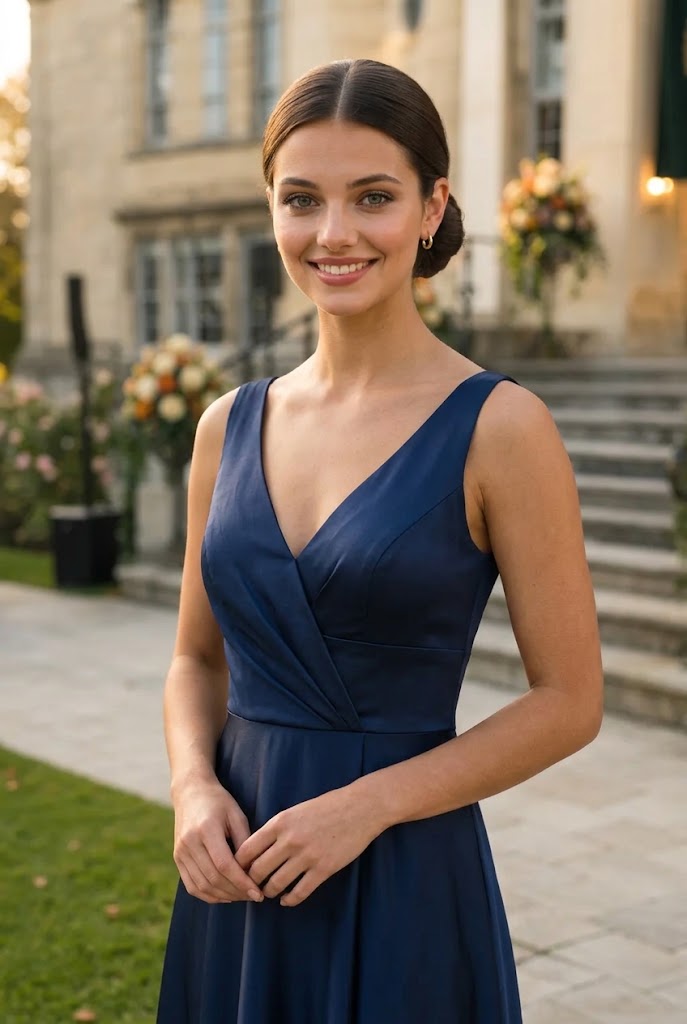
A sleek low bun with a center part is one of the cleanest choices in the collection. The hair is brushed smoothly toward the nape and wrapped into a compact bun, leaving the center part visible.
Straight and moderately wavy hair usually requires the least preparation, while curly or coily hair can wear the look after smoothing or with a texture-specific approach. Fine hair can create a neat, compact bun easily, while very thick hair may require multiple pins or a divided bun technique.
The style works especially well with high-neck, square-neck and architectural dresses because the clean silhouette does not compete with the clothing. It is also relatively reliable in humid conditions when properly secured. Ask for a center-parted low bun with a smooth finish, clean perimeter and enough hold to remain neat without making the scalp look excessively flat.
14. Textured High Ponytail With Velvet Ribbon
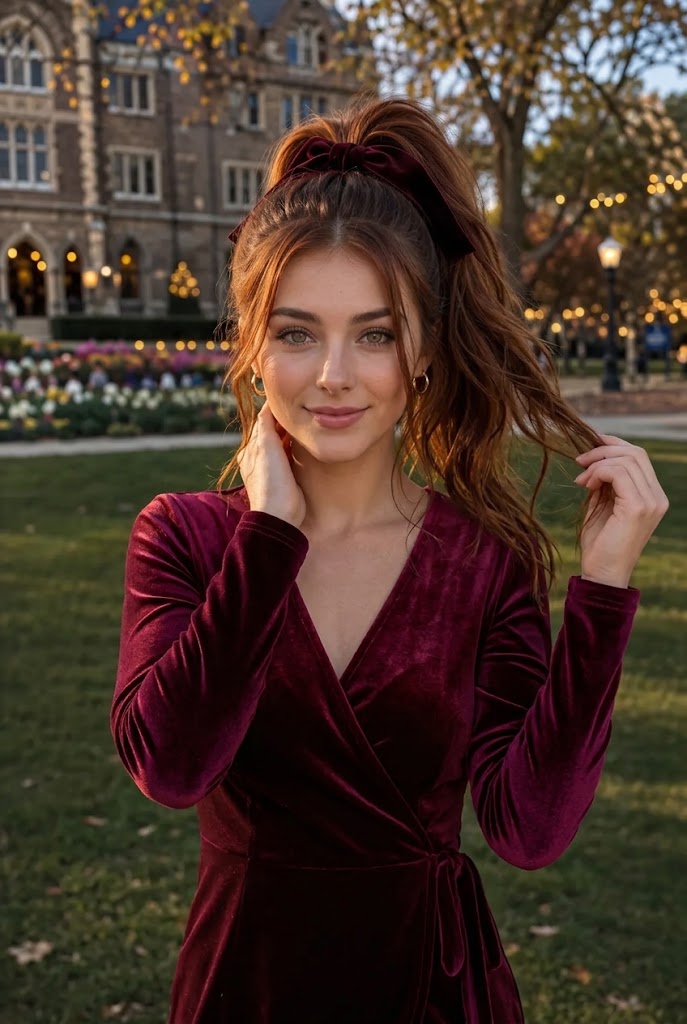
This version of the high ponytail combines a lifted base with loose waves through the tail and a velvet ribbon around the elastic. It provides movement without allowing the entire head of hair to remain loose.
Medium-to-long hair is ideal. Fine hair may need root volume and a little teasing at the base, while thick hair benefits from strong anchoring to prevent the ponytail from sliding downward. Wavy hair can often be styled with less heat because its natural movement contributes to the finished texture.
A velvet ribbon makes the hairstyle particularly suitable for autumn homecoming outfits and dresses with romantic or vintage details. The ponytail itself is practical for dancing, although the ribbon should be tied securely. Ask for a high textured ponytail with soft waves through the length and a velvet ribbon wrapped firmly around the base without excessive bulk.
15. Romantic Crown Twist With Cascading Curls
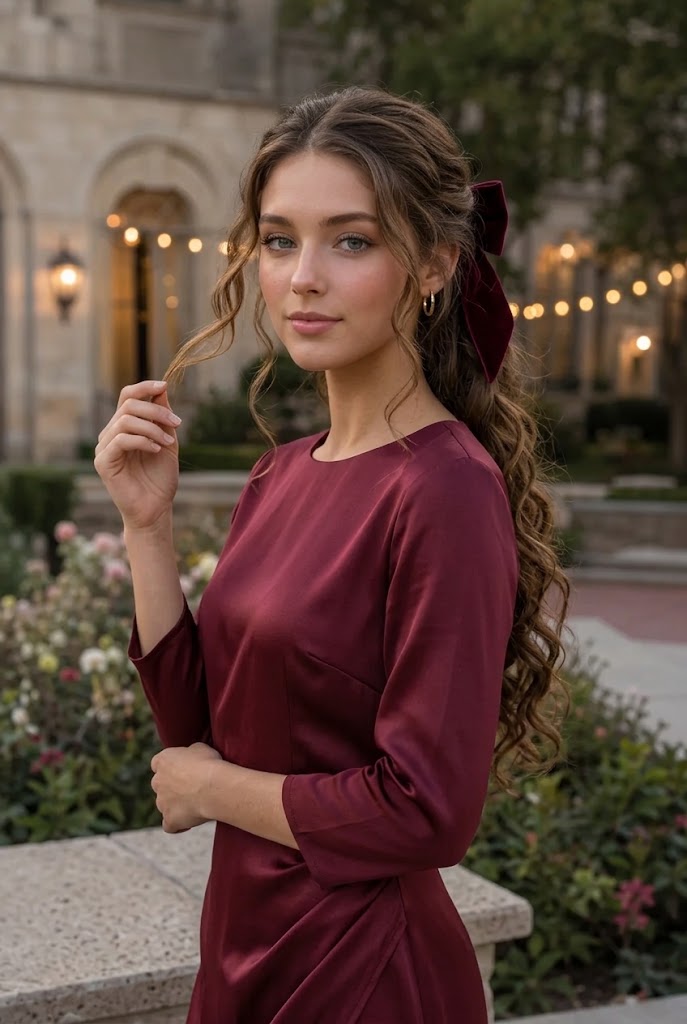
A crown twist uses sections from both sides of the face that are twisted backward and pinned together, leaving the rest of the hair loose. Defined curls underneath create the romantic contrast.
This hairstyle is especially useful for naturally wavy or curly hair because the loose texture provides much of the visual interest. Straight hair can achieve it with curling tools, although that increases styling time. Fine hair may need gentle backcombing at the crown, while thick hair can create substantial twists without additional volume.
The style suits sweetheart, off-the-shoulder and delicate necklines. It also gives you a way to keep front pieces controlled while still wearing your length down. Ask for a soft twisted half-crown with defined curls underneath, leaving enough natural movement that the style does not look rigid or overworked.
16. Modern 1990s French Twist With Tendrils
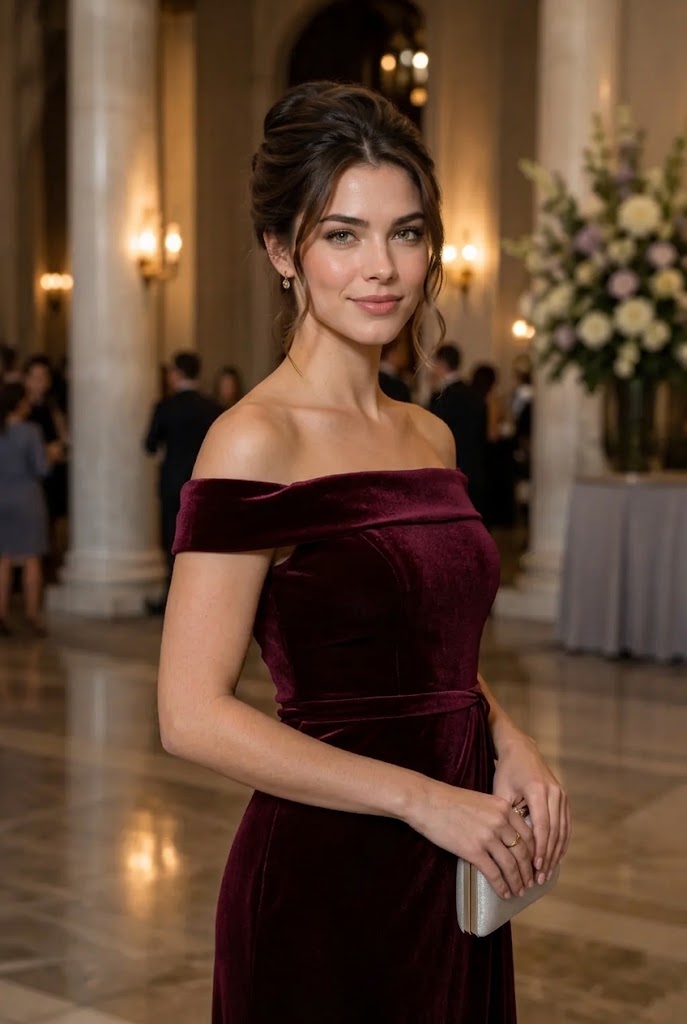
The French twist is a vertical updo in which the hair is gathered and rolled upward before being pinned. A modern version is less rigid than a traditional formal twist and often includes soft volume and two face-framing tendrils.
Medium-to-long hair works best, although shorter layers can be accommodated if the stylist has enough length to anchor them. Fine hair often benefits from texturizing spray because completely smooth hair can slide out of the twist. Thick hair requires strong internal pinning.
This is an excellent choice for high-neck, halter and strapless dresses when you want the neckline to remain visible. It has more technical styling requirements than a ponytail, so professional styling may be preferable. Ask for a modern French twist with controlled crown volume, a softly textured finish and two intentional cheek-length tendrils.
17. Dutch Pigtail Braid Updo
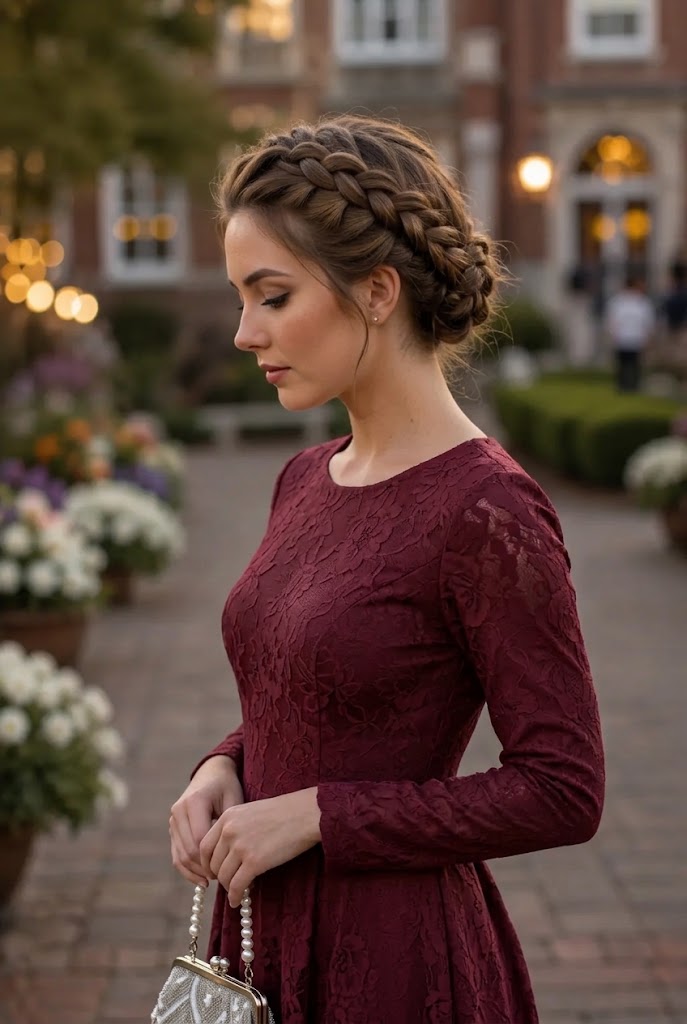
This style uses two Dutch braids that travel from the front toward the nape, where their tails can be tucked into small buns. The result combines the security of braiding with the structure of an updo.
It is particularly practical for thick, wavy or textured hair because the braids distribute the hair and help control bulk. Fine hair can wear the look too, although pulling the braid slightly wider can create a fuller appearance. Because the hair is anchored in several places, it can be a strong choice for active dancers.
The symmetrical design works well when you want the hairstyle itself to make a statement. It can also complement sporty or modern dresses. Ask for two raised Dutch braids beginning near the hairline and ending in compact textured buns at the nape, with the braids gently loosened for softness.
18. Half-Up Top Knot With Tousled Waves
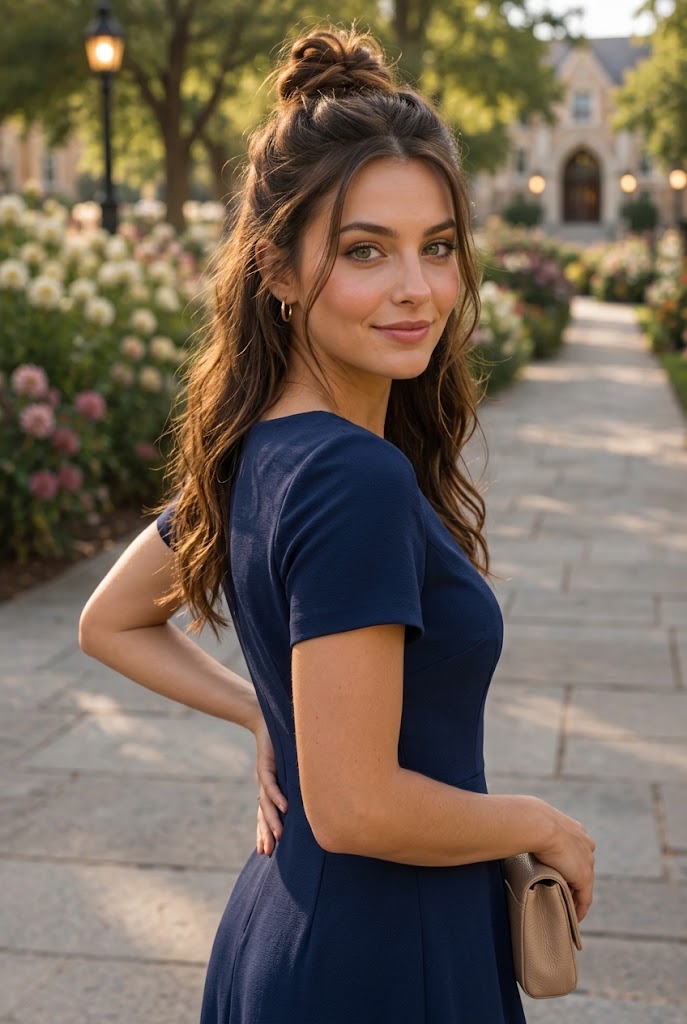
A half-up top knot takes only the upper portion of the hair and turns it into a small bun while the remaining hair stays loose. Tousled waves keep the result relaxed rather than overly formal.
This is one of the more approachable choices for home styling. Medium-to-long hair works best, while thick hair creates a naturally full bun. Fine hair can make a smaller knot and use texture spray to add grip. Wavy hair is especially convenient because it already has the movement needed underneath.
It suits casual, trendy and two-piece homecoming outfits particularly well. It is less formal than a chignon and therefore useful when you want your hairstyle to reflect a relaxed personality. Ask for a small textured half-up top knot with loose waves underneath and subtle crown volume rather than a tightly slicked finish.
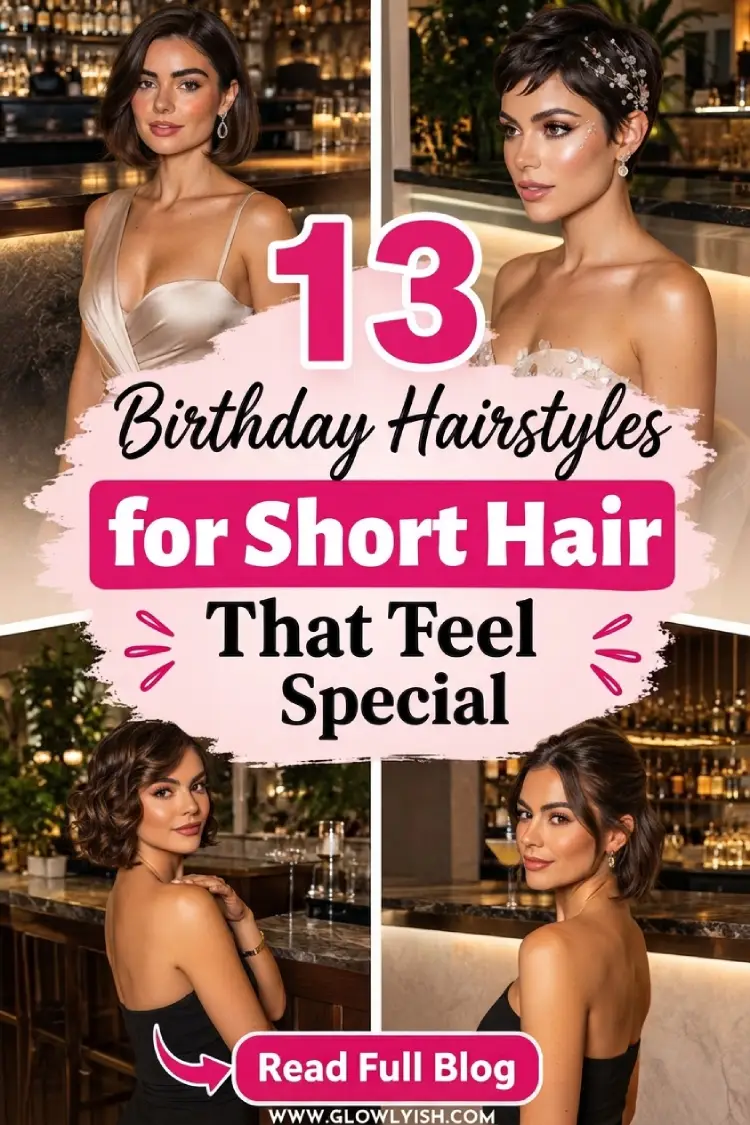
19. Sculpted Finger Waves on Short Bobs
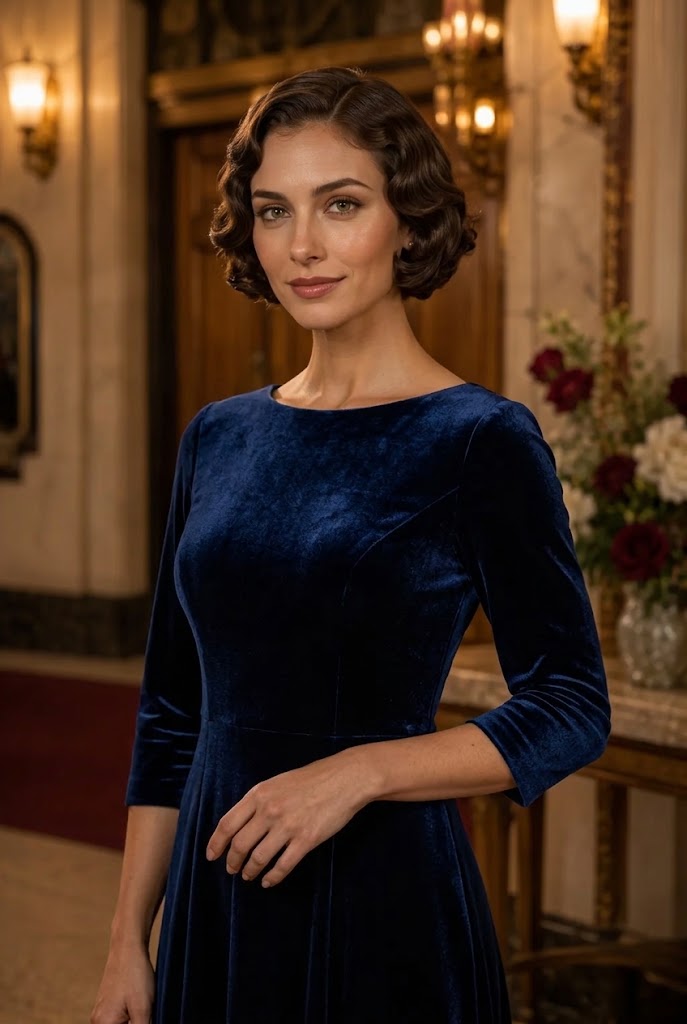
Finger waves are an excellent way to turn a short bob or pixie into a formal evening hairstyle without needing long hair. The technique molds the hair into defined S-shaped ridges close to the head.
Short, straight or relaxed textures generally make the process easiest, while naturally curly hair may require preparation depending on the desired level of precision. Fine hair can actually work well because the sculpted shape does not depend on large amounts of volume. Thick hair may require more time to control.
The look has strong vintage character and works beautifully with beaded, sequined or Art Deco-inspired dresses. Maintenance is low once the waves are set, although the initial styling is technical. Ask for glossy sculpted finger waves that follow the natural shape of the bob, with slightly softer definition around the face.
20. Snatched Braided High Ponytail
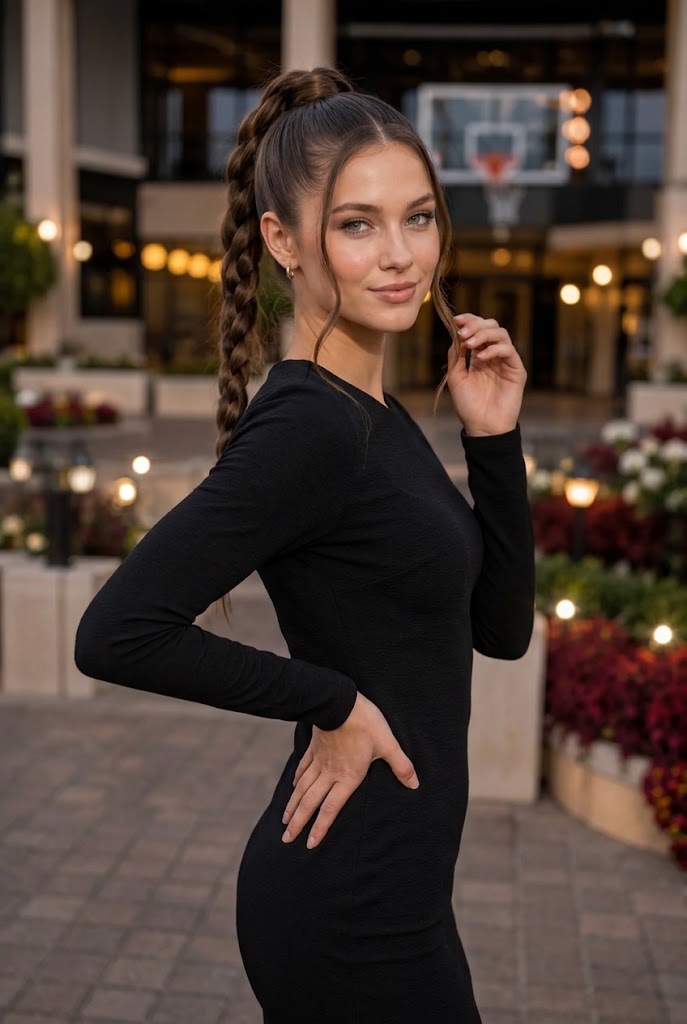
This style begins with a sleek high ponytail and turns the length into a three-strand, rope or similar braid. It combines the height of a ponytail with the security of a contained length.
Longer hair is the easiest starting point. Thick hair creates a substantial braid but needs strong anchoring, while fine hair may benefit from texturizing spray or discreet added volume. The style is particularly useful for active dancers because the braid reduces tangling compared with loose waves.
A tightly smoothed hairline gives it a modern editorial feel, although you do not need extreme tension to achieve the look. Ask for a high sleek ponytail braided down the length, with the elastic concealed by a wrapped strand and the braid kept secure but comfortable at the scalp.
21. Pearl-Studded Low Bubble Ponytail
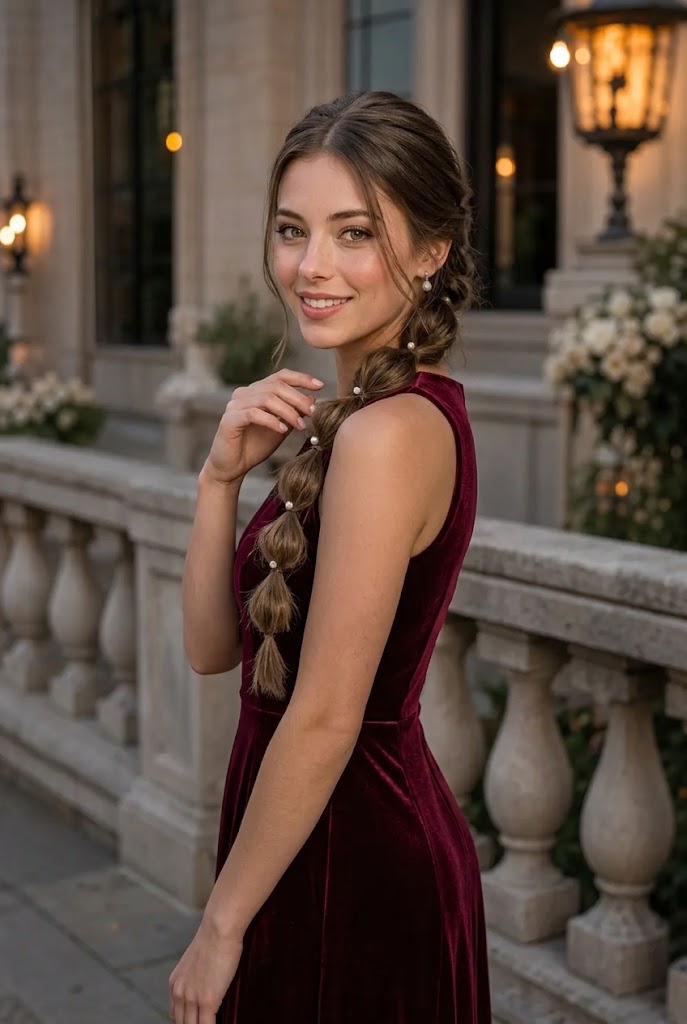
A low bubble ponytail divides the hair into several rounded sections from the nape downward. Pearl pins or pearl-tipped accessories can be positioned at each elastic to transform the structure into a decorative hairstyle.
Long hair is the best canvas because the bubbles need enough length to become clearly visible. Thick hair naturally produces larger bubbles, while fine hair can be gently expanded with the fingers or light teasing.
The low placement makes it a good choice for sleek dresses and statement necklines because the hairstyle remains contained without exposing the entire neck. It is also relatively practical for dancing. Ask for a smooth low bubble ponytail with evenly spaced sections, moderate fullness in each bubble and pearl details that look intentional rather than overly repetitive.
22. Twisted Halo Half-Up Curls
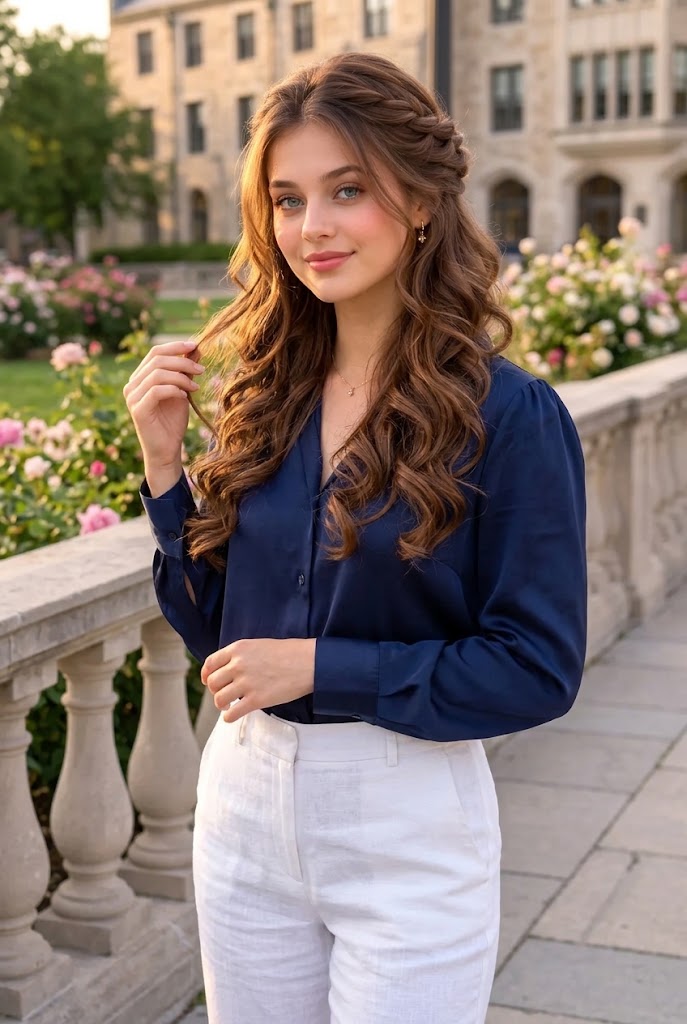
Twisted halo curls use two sections from the temples that are twisted backward and joined behind the head. The rest of the hair remains loose in curls or waves.
Naturally curly hair can make this particularly beautiful because the loose length supplies texture without requiring a complete restyle. Wavy hair works similarly, while straight hair can be curled beforehand. Fine hair may need some texture product to prevent the twists from becoming too flat.
The style keeps the front away from the eyes while preserving length around the shoulders. That makes it a comfortable compromise if you like wearing your hair down but dislike constant face-touching. Ask for a soft twisted half-up halo with defined curls underneath and enough looseness around the crown to keep the result romantic rather than tight.
23. Vintage Glam Side Bun
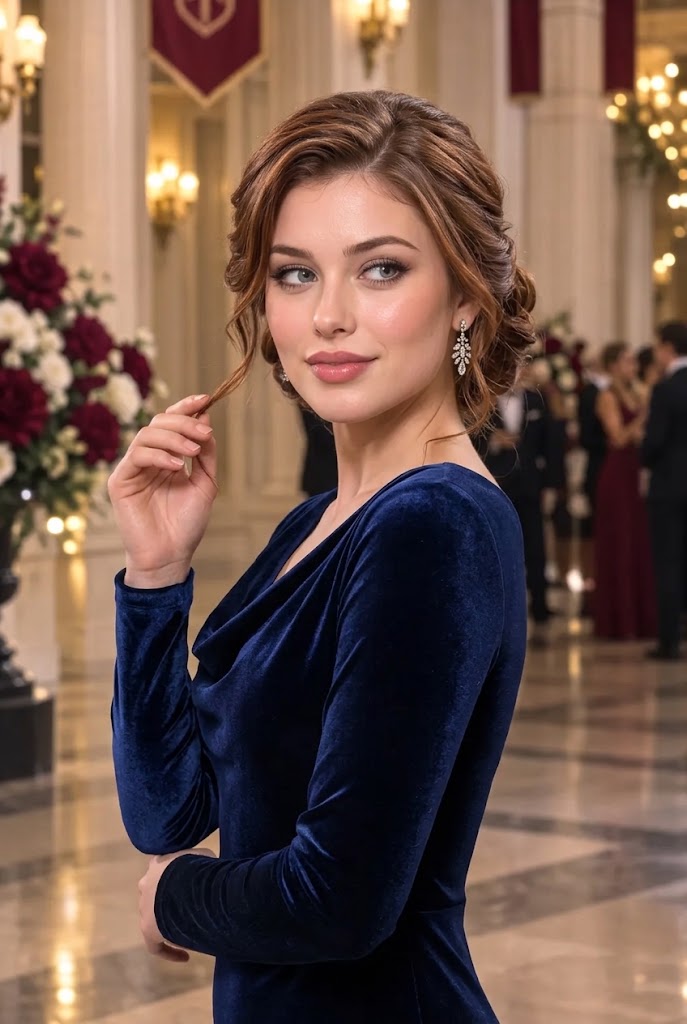
A vintage side bun moves the hair diagonally toward one side before forming a low chignon near or below the ear. Often the crown and lengths are shaped into smooth waves first.
Medium-to-long hair works best, and thick hair can produce a substantial side bun without padding. Fine hair may require texture spray or discreet volume support. The asymmetry can be customized according to your preferred part and the neckline of your dress.
This style is particularly effective with one-shoulder dresses because the side bun echoes the asymmetry of the clothing. It can also create a strong vintage silhouette without looking excessively traditional. Ask for a deep side part with polished waves swept into a soft side chignon, leaving one controlled curl or tendril near the face.
24. French Braided High Bun Updo
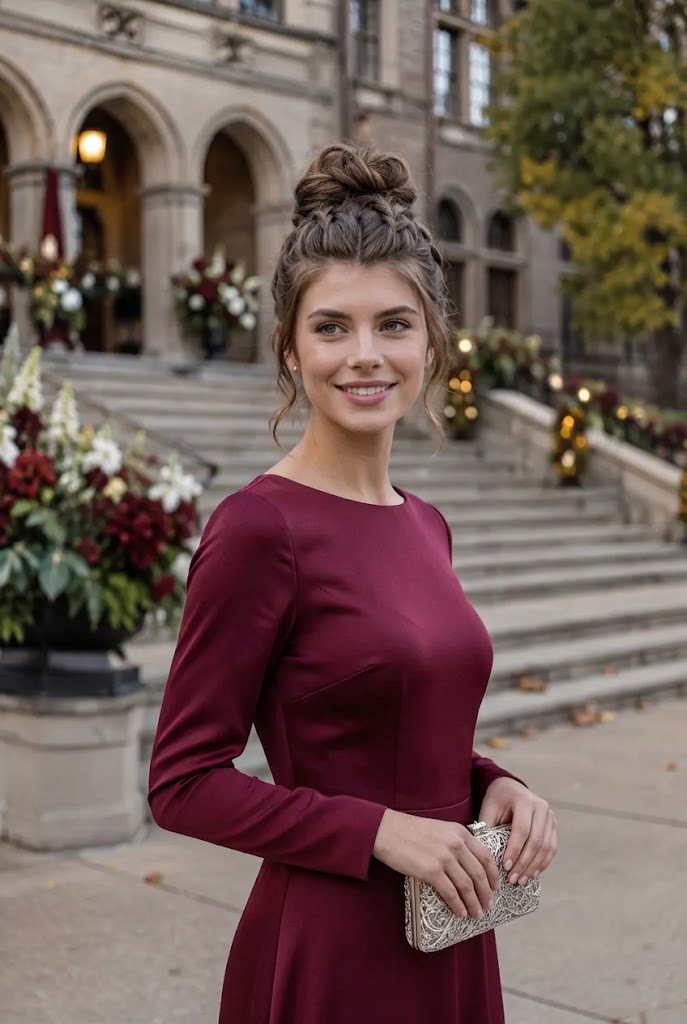
A French braided high bun combines a braid running upward from the nape with a bun at the crown. The unusual direction of the braid makes the back of the hairstyle visually interesting.
Longer hair is easiest, particularly when there is enough length to create a substantial bun after the braid is completed. Thick hair provides plenty of volume but may need strong pins. Fine hair can use a bun form to create a fuller finish.
This style is excellent for high-energy dancing because the hair is secured close to the head. It also works well with backless or halter dresses because it keeps the nape exposed. Ask your stylist for an upside-down French braid from the nape to the crown, transitioning into a rounded high bun with secure U-pins.
25. Romantic Side-Swept Bohemian Braid
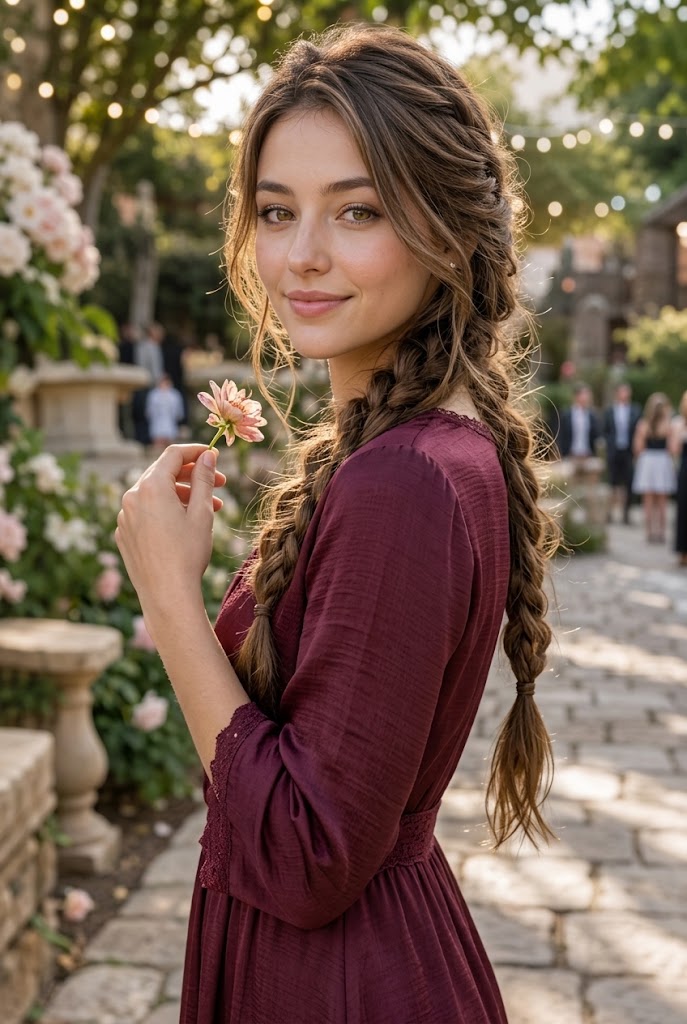
A side-swept bohemian braid gathers the hair over one shoulder and forms it into a loose, wide braid. Face-framing pieces and small floral or pearl details make it feel softer and more romantic.
Long hair is the easiest length, while medium hair can work if the braid remains substantial enough to reach over the shoulder. Fine hair benefits from gently widening the braid, while thick hair can usually create volume naturally.
This is a strong choice for chiffon, lace and floral dresses and can be especially attractive in outdoor photographs. The main drawback is that a loose braid can shift if the base is not secured. Ask for a large, relaxed side braid with controlled face-framing pieces, enough texture to look full and hidden pins at the back to keep the braid positioned over one shoulder.
26. Voluminous Afro Puff With Rhinestone Band
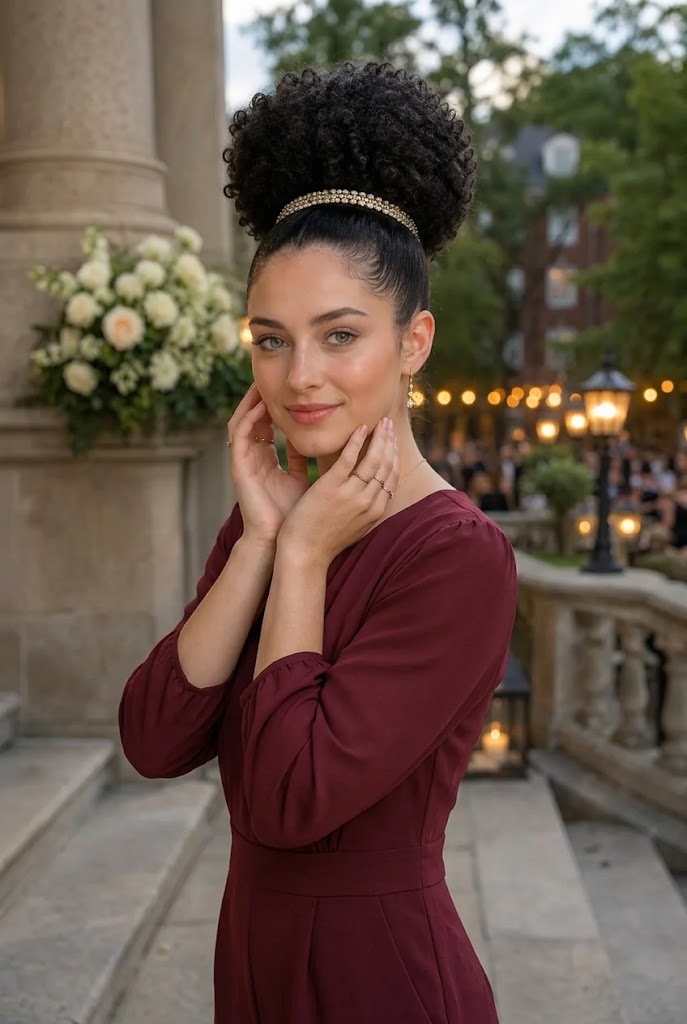
An afro puff showcases natural curls and coils by gathering them upward while allowing their texture and volume to remain visible. A rhinestone headband adds a formal accessory without requiring the natural texture to be dramatically altered.
This is particularly suitable for dense coily hair, although different curl patterns can adapt the silhouette. The priority should be comfortable tension around the perimeter rather than pulling the hair extremely tight. A wide fabric band or puff accessory can help distribute pressure.
The height of the puff can be adjusted according to personal preference and facial proportions. It pairs beautifully with statement earrings because the face and neck remain visible. Ask for a high natural puff with softly smoothed edges, comfortable tension and a rhinestone band positioned behind the front hairline rather than directly across the forehead.
27. Polished Ballet Chignon With Satin Bow
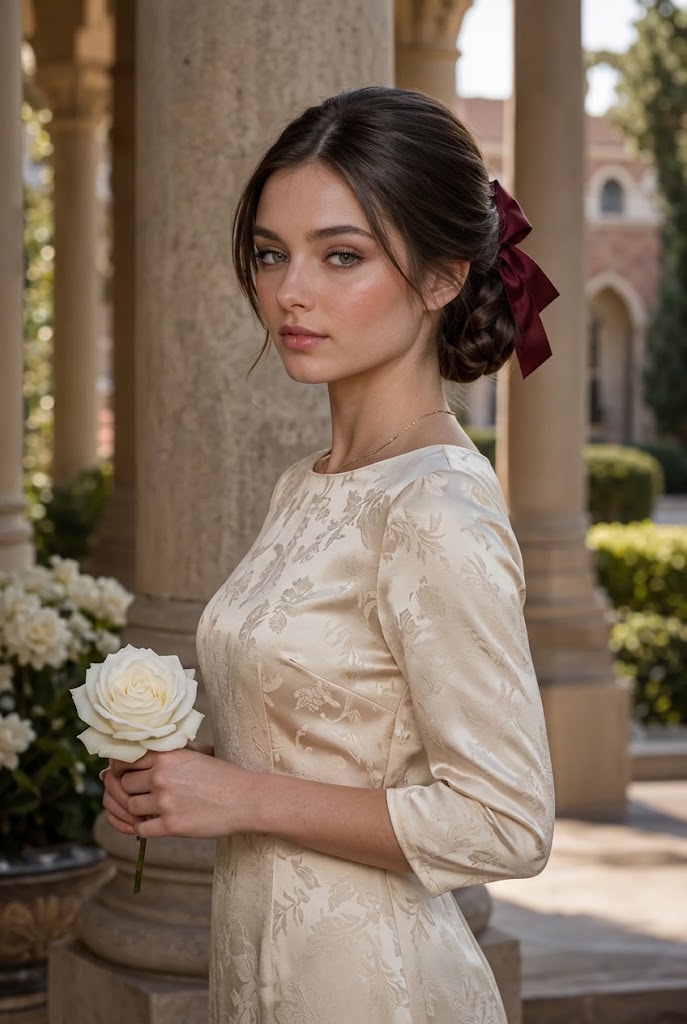
A ballet-inspired chignon is a compact low bun with a clean center part and smooth finish. Adding a satin bow makes the minimalist structure feel youthful and event-specific.
Straight and wavy hair generally require the least preparation. Curly and coily textures can also be adapted depending on whether you want to preserve the natural pattern or create a smooth finish. Fine hair can form a small neat bun, while thick hair may need careful sectioning.
This hairstyle is particularly useful with square, high or structured necklines because the clean shape does not compete with the dress. It is also one of the easier formal styles to maintain once securely pinned. Ask for a polished center-parted low chignon with a smooth finish and a satin bow placed directly above the bun.
28. Scalloped Dutch Crown Half-Up
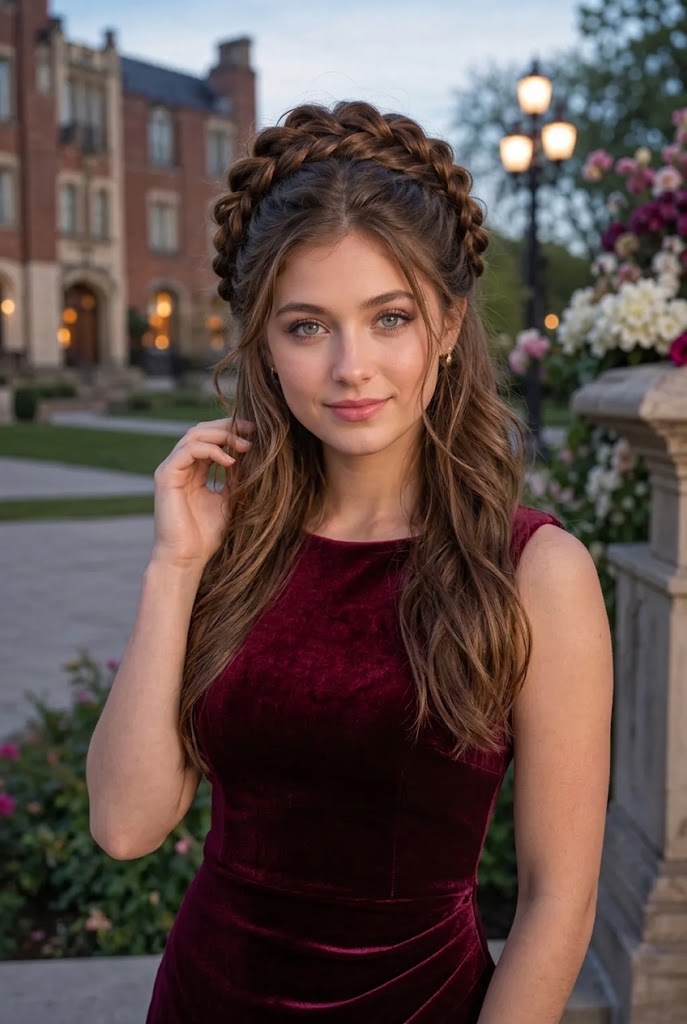
The scalloped Dutch crown creates two curved braided sections along the sides of the head before joining them at the back. Unlike a straight crown braid, the curved placement gives the hairstyle more movement and visual interest.
Medium-to-long hair works best. Thick hair can create substantial braid ridges, while fine hair may need texture spray and careful pancaking to make the pattern more visible. Highlighted hair can show the braid particularly well because the changing directions emphasize color variation.
This hairstyle is ideal if you want detailed work around the crown without sacrificing the length underneath. Ask for two gently curved Dutch braids that meet at the back, with the braid widened slightly and the remaining hair styled in loose curls or waves.
29. Wet-Look Sleek Waves With Gold Barrettes
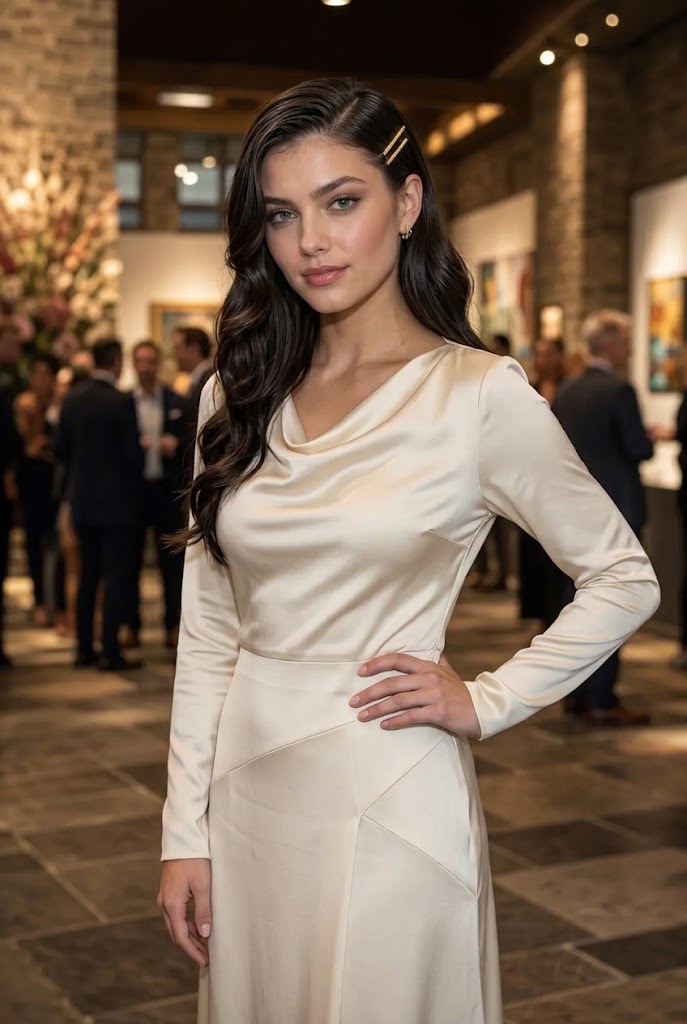
Wet-look waves are a fashion-forward option for short-to-medium bobs and lobs. The hair is molded close to the head with glossy product, while subtle wave ridges provide structure.
Straight and naturally wavy hair are usually easiest to manipulate. Curly hair can adopt the concept too, but the finished result will depend heavily on the natural curl pattern. Fine hair often works well because the style does not rely on volume, whereas very thick hair can require more product and sectioning.
Gold barrettes positioned on one side provide a polished accessory detail. This style is especially striking with sleek satin dresses or modern minimalist outfits. Ask for a glossy wet-look bob with controlled S-waves and two or three geometric gold barrettes placed above one ear.
30. Cascading Waterfall Curls With Sparkle Pins
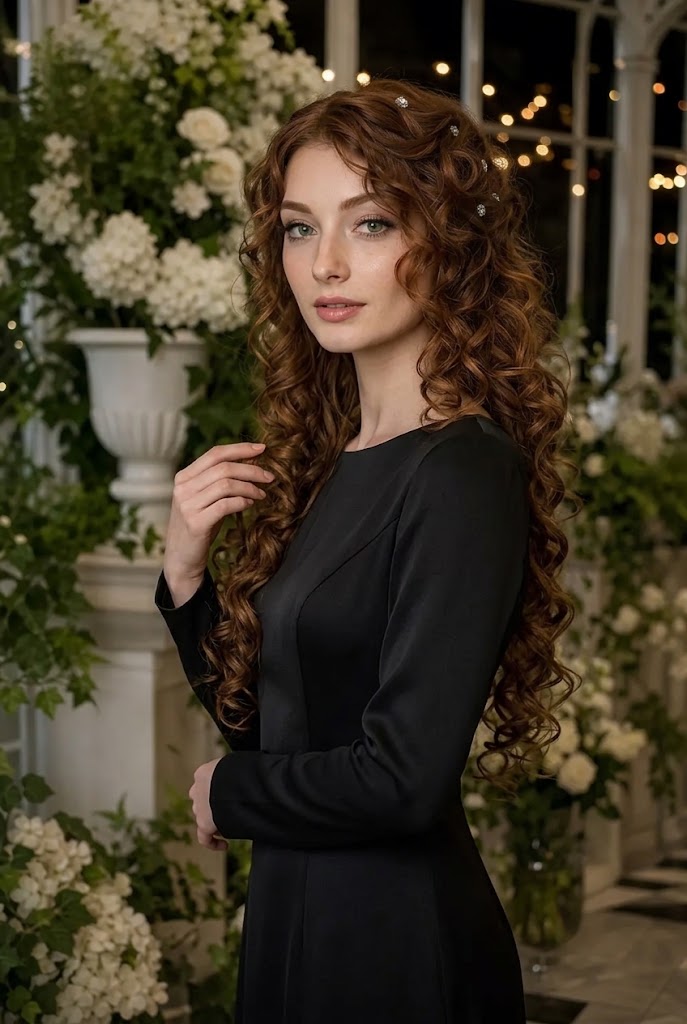
This final look combines a waterfall braid with defined curls that fall vertically through the lengths. Small crystal or rhinestone pins can be placed along the braid for additional sparkle.
Medium-to-long hair is ideal because the dropped strands need enough length to blend into the curls. Fine hair can benefit from lightweight texture spray, while thick hair may need a stronger braid base. Naturally curly hair can be adapted, although the waterfall strands may need selective definition to create a cohesive finish.
The hairstyle provides detail from the back without hiding all of the hair. It is therefore a good choice for someone who wants something elaborate but still wants their length visible. Ask for a soft waterfall braid across the back with defined cascading curls and small sparkle pins placed sparingly along the woven section.
How to Choose the Right Homecoming Hairstyle
The best hairstyle is not necessarily the one that looks most impressive in a saved photograph. It is the one that still makes sense when you consider your dress, hair, schedule and actual evening.
Start with four questions:
- How much movement will your hair need to survive?
- Do you want your neckline and shoulders visible?
- How much styling time are you willing to spend?
- Do you want your natural texture visible or transformed?
If you are dancing for several hours, favor secure styles such as braided buns, sleek ponytails, chignons and structured updos. If photos are the main priority and you enjoy wearing your hair down, Hollywood waves, glam waves or a waterfall style may be more appealing.
Also consider your hair’s behavior. Hair that loses curls quickly should not be forced into an elaborate loose-wave style without a setting strategy. Hair that becomes frizzy in humidity may be happier in a contained style. Dense hair may look beautiful in a large bun but require more pins. Fine hair can look elegant in a sleek style without needing excessive volume.
Homecoming Hairstyles by Hair Type
Fine Hair
Fine hair does not automatically need a large amount of teasing. In many cases, polished styles look more substantial because they rely on shape rather than sheer density.
Sleek low buns, French twists, finger waves, polished chignons and deep side-part waves can all work well. For loose styles, lightweight mousse or texture spray can provide grip without making the hair heavy.
Avoid coating fine hair with multiple heavy products before curling. Too much conditioner, oil or rich styling cream can make the strands slippery and reduce hold.
If you want a voluminous blowout, ask your stylist to focus on root lift and long-lasting setting rather than simply adding more product.
Thick Hair
Thick hair gives you plenty of material for large braids, buns, ponytails and dramatic waves. The challenge is usually not creating volume but controlling weight.
High ponytails and top knots need strong anchoring. A low chignon may require the hair to be divided into sections before being pinned. Braids can be especially useful because they distribute the weight more evenly.
For loose waves, allow extra styling time because thick hair often needs smaller sections and longer cooling periods.
When booking a stylist, mention your density in advance. Ask how they plan to reduce unnecessary weight without removing the fullness you actually want to keep.
Straight Hair
Straight hair provides an excellent foundation for sleek buns, ponytails, French twists, finger waves and wet-look styles.
The biggest challenge is sometimes grip. Very smooth hair may allow pins and curls to slide, so texturizing products or strategic setting can help.
If you want waves, ask for a proper setting technique rather than simply curling and immediately brushing. Allowing curls to cool before shaping them into the final style can make a noticeable difference in longevity.
Straight hair also makes accessories visually prominent, so pearl pins, bows, crystals and metallic barrettes can become major parts of the overall look.
Wavy Hair
Wavy hair is naturally suited to half-up styles, bohemian braids, crown twists, textured buns and tousled ponytails.
You can often preserve some of your natural pattern rather than completely restyling it. That can save time and create a hairstyle that feels more personal.
The important decision is whether you want definition or volume. Curl cream and diffusing can enhance the natural wave, while a round-brush blowout creates a smoother finish.
For homecoming, tell your stylist whether you want your natural wave enhanced, stretched, smoothed or completely transformed. Those are very different styling goals.
Curly Hair
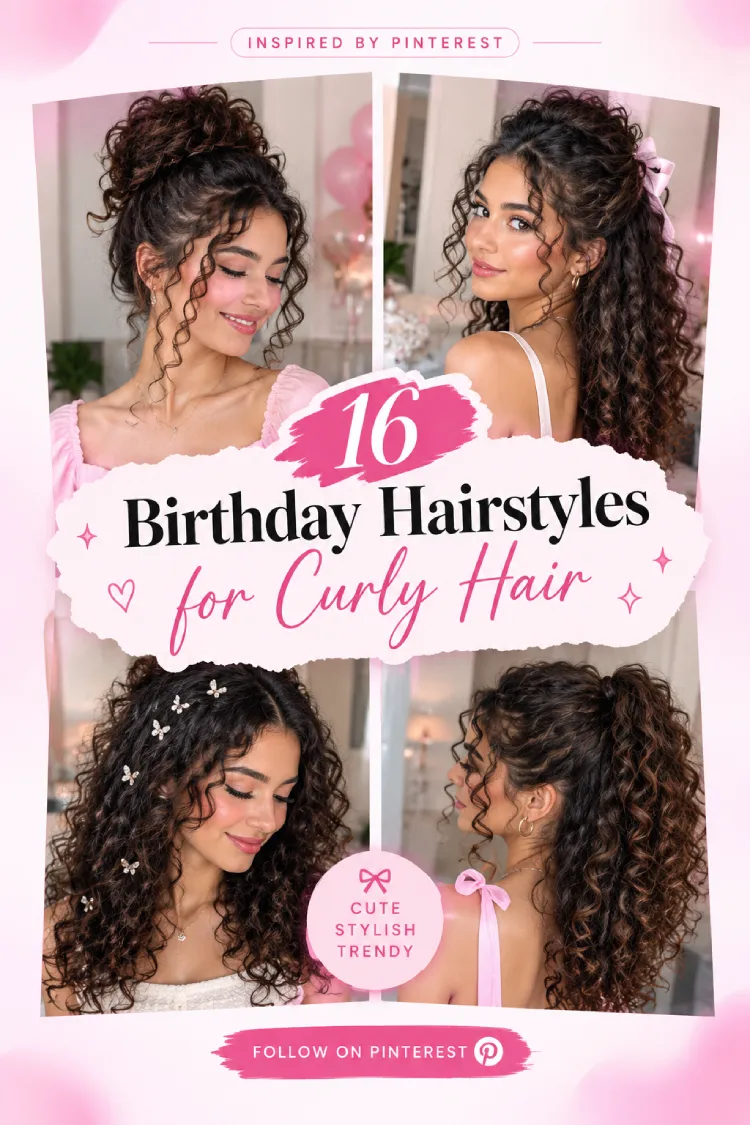
Curly hair offers considerable visual texture for homecoming styles. Half-up halo twists, crown braids, curly ponytails, waterfall styles and defined loose curls can all showcase the pattern.
The main consideration is shrinkage. A style that appears to have enough length when wet may become substantially shorter when dry.
Humidity protection can also matter, especially if your curls are being heat-styled or stretched. A stylist should work with your curl pattern rather than treating every curl type as though it behaves identically.
Ask for a style that preserves the amount of curl definition, volume and elongation you actually want.
Coily Hair
Coily hair can support dramatic updos, braided crowns, puffs and sculptural styles while keeping natural texture at the center.
Protecting the hairline from excessive tension is important. A beautiful hairstyle becomes considerably less enjoyable if it causes discomfort after an hour.
Natural texture also gives you options that do not require heat. A defined puff, halo braid or carefully shaped updo can be formal enough for homecoming while preserving the character of the hair.
If accessories are part of the plan, choose pieces that can be secured without repeatedly tugging at delicate areas.
Homecoming Hairstyles by Face Shape
Round Face
With a round face, you may enjoy styles that introduce some vertical height or controlled length around the face. A high ponytail, top knot or deep side part can create that effect.
That does not mean you need to avoid width completely. Soft waves can work beautifully when their widest point is placed thoughtfully rather than directly across the fullest part of the cheeks.
Face-framing tendrils can also be customized. Longer pieces may create more vertical movement, while shorter pieces can soften the overall outline.
The goal is not to “correct” your face shape. It is simply to decide where you want the hairstyle’s volume and movement to sit.
Oval Face
Oval faces offer considerable flexibility because the proportions can accommodate many different silhouettes.
You can experiment with sleek low buns, high ponytails, Hollywood waves, half-up styles, French twists and braided crowns. The more important question becomes what feature you want the hairstyle to emphasize.
A center part can create a clean symmetrical look, while a deep side part introduces asymmetry and drama.
If you have an oval face and feel overwhelmed by options, start with the dress neckline and your desired level of maintenance rather than trying to eliminate styles based on face shape alone.
Square Face
Soft movement can complement a stronger jawline, making Hollywood waves, loose curls, textured buns and side-swept styles appealing choices.
That does not mean every square face needs curls. A sleek low bun can look striking too, particularly when paired with statement earrings or a strong dress neckline.
The placement of face-framing pieces is more important than following a rigid rule. Soft pieces near the cheek or jaw can change the visual transition between hair and face.
Ask your stylist to look at the hairstyle from the front and profile before deciding exactly where layers, tendrils or waves should sit.
Heart-Shaped Face
Heart-shaped faces can work beautifully with styles that balance the forehead and chin area through movement around the lower face.
Half-up styles, crown twists, side-swept waves and softly textured buns can all provide useful options.
Avoid thinking in terms of forbidden hairstyles. Instead, consider where the hairstyle creates its greatest volume. If a style is very full at the crown, adding some softness lower around the face may produce a more balanced overall effect.
A stylist can also adjust a side part or face-framing pieces by a small amount to change the finished proportions.
Long Face
Longer facial proportions can work particularly well with styles that add some horizontal movement or width.
A voluminous blowout, soft waves, side-swept style or textured half-up hairstyle can create that visual balance. Very tall, tightly pulled styles can also be worn, but they create a stronger vertical silhouette.
If you love a high bun, consider adding controlled softness around the sides rather than making every strand completely flat.
The important point is that face shape should guide styling decisions rather than dictate them. Your preferred aesthetic, hair density and dress still matter.
Diamond Face
Diamond-shaped faces often have noticeable cheekbone width with a narrower forehead and chin. Styles that soften the transition around the cheeks can work particularly well.
Side-swept waves, soft crown twists, half-up curls and textured buns are useful options. A sleek style can also look excellent when the part and accessory placement are balanced.
Avoid choosing solely from a generic “best hairstyles for diamond faces” list. The same face shape can look completely different depending on hair density, length and styling.
Use your face shape as one piece of the decision rather than the entire decision.
Low-Maintenance Homecoming Hairstyles
If you do not want to spend the entire night worrying about your hair, prioritize structure.
Best options for lower maintenance include:
- Sleek low bun
- Ballet chignon
- Braided high bun
- Dutch pigtail braid updo
- Snatched braided ponytail
- High top knot
- Crown halo braid
- Low bubble ponytail
These styles keep more of the hair contained and therefore reduce tangling.
Loose waves and large blowouts can be beautiful, but they require more attention to humidity, friction and movement. If your hair naturally drops curls quickly, a loose hairstyle may require more preparation than you expect.
“Low maintenance” does not mean no styling. It means the finished structure generally requires fewer corrections once it has been properly secured.
Homecoming Hairstyles You Can Dance In
For an active dancer, security should be part of the selection process from the beginning.
High ponytails, braided ponytails, top knots, French braided buns and sleek low chignons are strong choices because the hair is anchored.
Half-up styles are a useful middle ground if you want some movement but still want the front controlled.
Loose curls are less predictable because they can separate, tangle or lose their shape as the night progresses.
Before committing to a style, move your head around during your trial. Turn from side to side, look down, raise your arms and gently shake your head. If pins already feel uncomfortable during the trial, the style probably needs adjustment.
How to Match Your Hairstyle to Your Dress
Strapless or sweetheart neckline
You have considerable freedom. Hollywood waves, half-up curls, side buns and crown twists can all work because the neckline leaves room around the shoulders.
High neckline
An updo often makes the most sense because it prevents the hair from competing with the fabric. Consider a French twist, top knot or sleek low bun.
Halter neckline
High ponytails and top knots expose the shoulders and keep the silhouette clean.
One-shoulder dress
Asymmetry can be especially attractive. Try a deep side part, vintage side bun or side-swept braid.
Backless dress
A high bun or ponytail keeps the back visible and makes the open-back detail part of the overall look.
Detailed or embellished dress
A simpler hairstyle may be more effective. A sleek chignon or polished waves can prevent the overall look from becoming visually crowded.
What to Tell Your Hairstylist
Bring at least two or three reference photos rather than one image and expect an identical result. Hair density, length and texture change how a style translates.
Instead of saying only “I want this hairstyle,” describe the important elements.
For example:
“I’d like a medium-height ponytail with a very smooth crown, but I don’t want the hairline pulled extremely tight. I want soft waves through the length and the elastic hidden.”
For a bun:
“I want a low textured chignon that looks polished from the back but still has softness around my face. Please keep the tendrils intentional rather than leaving lots of random pieces out.”
For a braid:
“I’d like a half-up crown braid with enough texture to look full, but I still want most of my length visible.”
Useful terms include perimeter for the outer edge of the haircut, internal layers for hidden movement within the hair, face framing for pieces shaped around the face, and graduation for a controlled change in length that creates a more structured silhouette.
When Should You Do a Homecoming Hair Trial?
A trial is especially worthwhile when:
- The style requires complicated braiding.
- You are booking a professional stylist.
- Your hair is unusually fine, thick, curly or coily.
- You have never worn the hairstyle before.
- You are using extensions.
- You want a very specific accessory placement.
- Your dress has a difficult neckline.
- You are concerned about curls holding.
Take photographs during the trial from the front, side and back. A hairstyle can look perfect from one angle while appearing too bulky or too flat from another.
Also wear a similar neckline during the trial if possible. The relationship between hair and clothing can change the entire visual balance.
Homecoming Hair Prep: The Day Before and Day Of
Avoid experimenting with a completely new product routine immediately before the dance.
If your stylist recommends washing the hair the day before, follow that specific guidance. Some hair types hold better with a little natural texture, while others need freshly washed hair for the desired finish.
On the day itself, arrive with hair in the condition your stylist requested. Heavy oils, excessive conditioner or unapproved styling products can interfere with curls, braids and pins.
If heat styling is involved, heat protectant should be part of the preparation.
For an emergency kit, consider carrying:
- A few bobby pins
- Small clear elastics
- Travel-size hairspray
- Blotting papers
- Small comb
- Mini edge brush
- A tiny amount of appropriate smoothing product
You probably will not need everything, but the kit is useful insurance.
Homecoming Hairstyle Accessories: How Much Is Too Much?
Accessories should support the hairstyle rather than fight it.
Pearls work beautifully with romantic buns, bubble ponytails and crown braids.
Crystal clips suit Hollywood waves, side-parted styles and sleek updos.
Velvet ribbons bring warmth and texture to ponytails and half-up styles.
Satin bows complement polished ballet-inspired buns.
Gold cuffs and metallic thread can elevate braided natural styles.
If your dress is heavily embellished, consider one strong accessory rather than several competing pieces.
A useful rule is to decide whether the hair, dress or jewelry should be the main focal point. They can all be beautiful without all demanding attention at the same time.
Frequently Asked Questions
What is the best hairstyle for homecoming?
There is no single best hairstyle for everyone. Hollywood waves suit someone who wants polished glamour, while a sleek bun or braided ponytail may be more practical for an active dancer. Your hair texture, dress neckline, desired maintenance and personal style should determine the choice.
Should I wear my hair up or down for homecoming?
Wear it up if you want your neckline, shoulders or back visible and prefer a secure style. Wear it down if movement and length are important to your overall look. Half-up styles provide a useful compromise.
What are the best homecoming hairstyles for long hair?
Long hair works particularly well with Hollywood waves, high ponytails, waterfall braids, side-swept braids, bubble ponytails, French twists and large buns.
What can I do with shor♥t hair for homecoming?
Short hair can look highly formal without being pinned into an updo. Sculpted finger waves, wet-look waves, glossy side parts and decorated bobs are strong options.
What is the easiest homecoming hairstyle?
A half-up top knot, polished low bun or simple ponytail is generally easier than a complicated braid or sculpted wave pattern. The easiest option depends on your hair’s natural texture.
What homecoming hairstyle stays in place while dancing?
Braided ponytails, braided buns, sleek low buns, high top knots and secure high ponytails generally offer strong stability because more of the hair is contained.
Can curly hair work in a formal homecoming hairstyle?
Absolutely. Curly hair can be worn in half-up curls, twisted halos, crown braids, curly ponytails, textured buns and other styles that preserve natural movement.
How do I make fine hair hold curls for homecoming?
Use lightweight preparation, avoid excessive heavy conditioning immediately before styling and allow curls to cool completely before brushing or separating them. A stylist can also select a setting technique appropriate for your hair.
How early should I choose my hairstyle?
Choosing a style several weeks before the event gives you time to coordinate the hairstyle with your dress, accessories and jewelry and leaves enough time for a trial if necessary.
Should I wash my hair before homecoming?
That depends on your hair and the planned style. Some updos benefit from slight texture, while other styles require clean hair. Follow the preparation instructions of the stylist creating the look.
How do I choose a hairstyle for my face shape?
Use face shape as a styling guide rather than a strict rule. Consider where the hairstyle adds volume, where it creates length and how face-framing pieces interact with your natural proportions.
What should I bring to my hairstylist?
Bring your dress or a clear photo of its neckline, your accessories if possible, and several hairstyle references. Also explain what you do and do not want, especially regarding tightness, volume and natural texture.
Final Decision Guide
If you are still undecided, narrow your options this way:
Choose Hollywood waves if you want classic glamour and are happy to wear your hair down.
Choose a half-up braid or twist if you want both visible length and a controlled front.
Choose a high ponytail if you want movement, height and a practical dance-floor style.
Choose a low chignon if your dress is formal and you want understated sophistication.
Choose a French twist if you want a more structured vintage-inspired updo.
Choose a braided bun if security is your highest priority.
Choose finger waves or wet-look waves if your hair is short and you want a deliberately fashion-forward finish.
Choose an afro puff or halo braid if you want natural texture to remain the focal point.
Choose a bubble ponytail or bow-adorned bun if you prefer playful, youthful details.
The right homecoming hairstyle should feel like an extension of the outfit rather than a separate costume. Once you know how much movement, volume, polish and maintenance you actually want, the huge number of hairstyle pictures becomes much easier to filter.