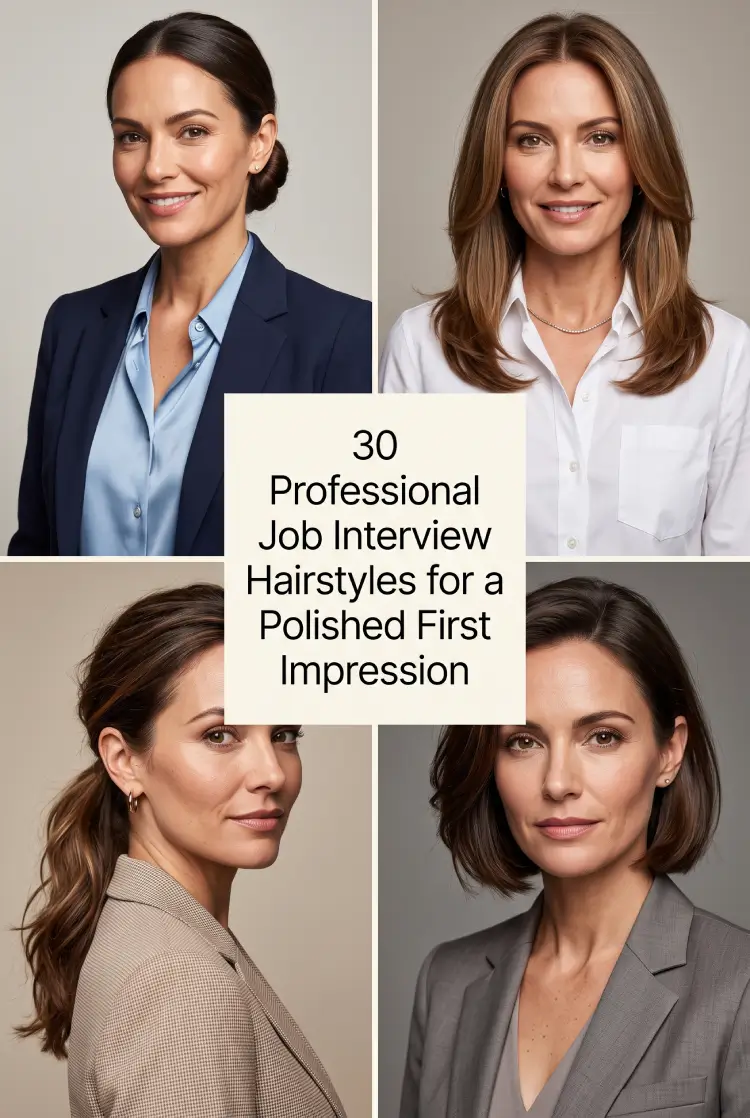
A job interview hairstyle does not need to be elaborate. The strongest choice is usually one that looks intentional, stays comfortable, keeps hair from repeatedly falling into your face, and still feels like you.
That can mean a sleek low bun for a conservative office, a polished lob for a corporate role, a defined curly style for someone who wants to wear their natural texture, or a neat half-up look for a creative workplace. The best interview hairstyle is less about following a universal rule and more about matching your hair, comfort level, interview setting, and workplace culture.
The reference collection covers 30 professional styles, including structured buns, ponytails, French twists, natural-texture looks, bobs, pixies, braids, loc styles and modern variations.
Below, each option is considered from a practical perspective: hair type, texture, density, styling effort, maintenance, face shape, security, workplace suitability and what you can actually ask for at the salon.
Quick Picks: Which Interview Hairstyle Should You Choose?
| If you want… | Consider… |
| The safest traditional option | Sleek low chignon |
| A polished look without an updo | Collarbone-grazing lob |
| A simple style for long hair | Tailored low ponytail |
| Something softer and feminine | Neat half-up twist |
| A formal corporate style | Classic French twist |
| A modern short haircut | Side-swept pixie |
| A natural-texture option | Defined coils or tapered natural crop |
| A style for thick hair | Low braided bun |
| A style with subtle personality | Side-tucked bob |
| A creative-office option | Low pigtail buns |
| A virtual interview | Smooth half-up or polished bob |
| A style with locs | Loc petal low bun |
The most important test is simple: Can you forget about your hair once the interview starts? If the answer is yes, you are probably close to the right choice.
1. Sleek Low Chignon
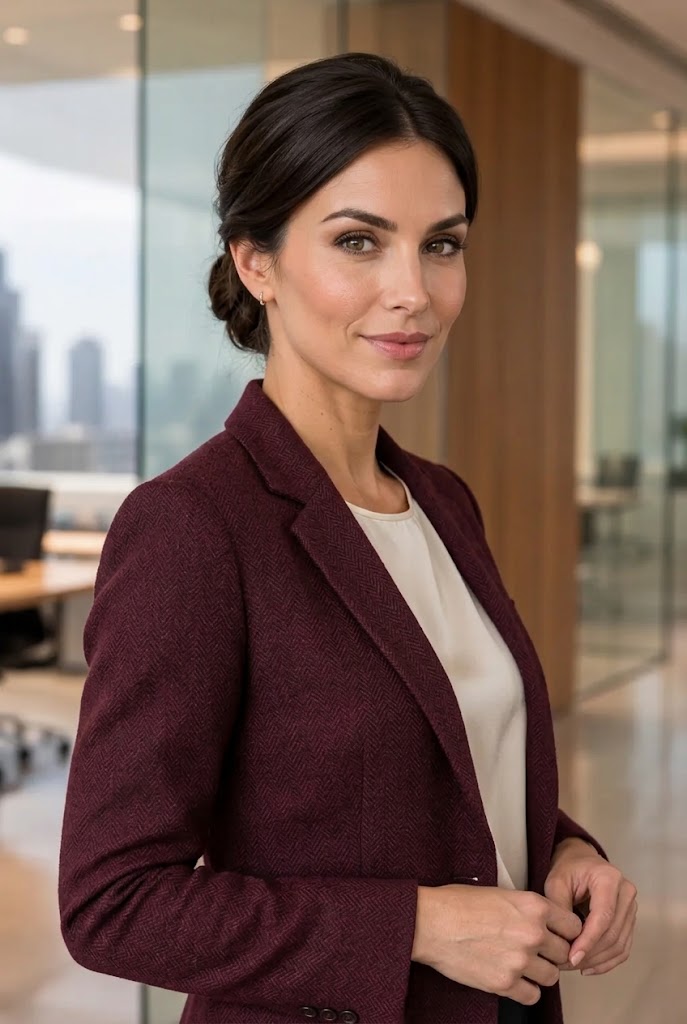
A sleek low chignon is one of the most dependable choices when you want your hairstyle to look controlled, refined and relatively conservative. The hair is gathered low near the nape and folded into a compact bun, creating a clean silhouette that works particularly well with suits, blazers and structured necklines.
This style is especially useful for medium-to-long hair with enough length to form a secure bun. Fine hair can look elegant in a smaller chignon, while thick hair may require a stronger elastic and several U-pins to distribute the weight. Straight and wavy textures are usually straightforward to smooth; curly or coily hair can also work beautifully when the natural texture is intentionally incorporated rather than aggressively flattened.
A center or side part changes the effect. A center part feels crisp and symmetrical, while a side part can soften the forehead and add movement around the face. Oval, square and heart-shaped faces can all work with the style, depending on placement.
Maintenance is mostly about security rather than constant restyling. If you are sitting through several interviews, avoid an overly tight bun that causes scalp discomfort. Ask your stylist for a low, compact chignon with a smooth perimeter and enough looseness at the scalp to remain comfortable.
2. Polished Blowout With Inward-Curved Ends
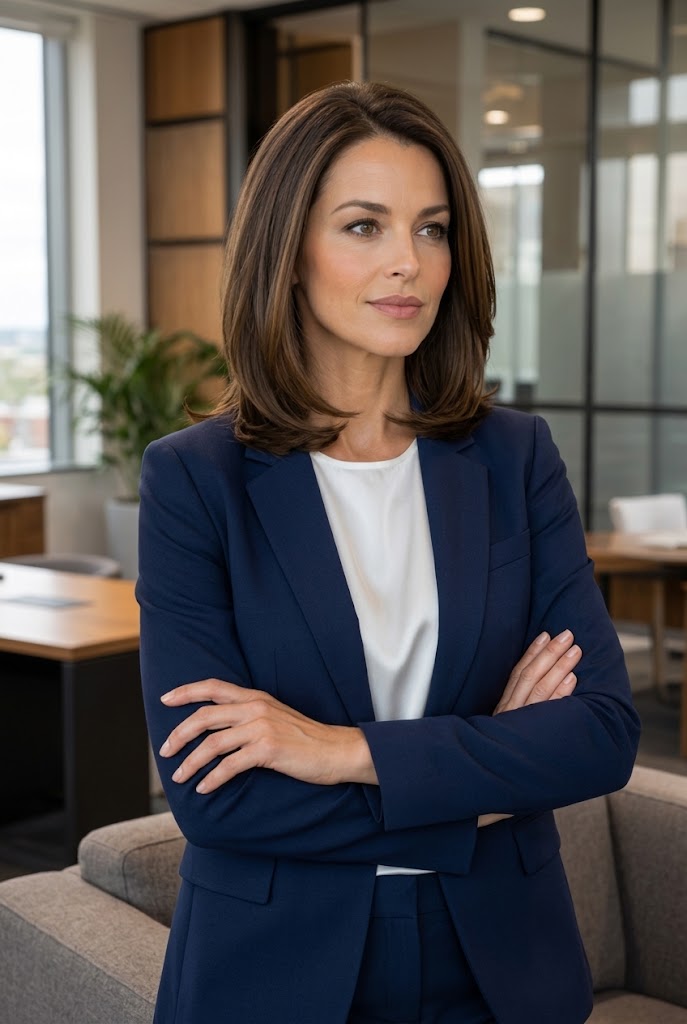
A polished blowout with softly curved ends is a strong option when you prefer to wear your hair down. Rather than creating dramatic curls, the goal is smooth movement through the lengths with the bottom section gently bending inward.
This works particularly well on medium or long hair and can be adapted to straight, slightly wavy or relaxed textures. Fine hair may benefit from a lightweight volumizing product at the roots, while thick hair often needs careful sectioning and tension during the blow-dry to prevent excess bulk. Naturally curly hair can also be styled this way, although the required heat and smoothing work make it less convenient if your curls are normally worn natural.
The inward bend can visually soften angular features, while a little volume around the sides can help balance longer or narrower facial proportions. It is also a good option when you need a hairstyle that works both in person and on camera.
The main limitation is weather. Humidity, rain and commuting can disturb a blowout more easily than a secured updo. Use heat protection and avoid trying an unfamiliar styling technique on interview morning. If you want this cut professionally, ask for a smooth blowout with a soft inward bevel rather than a heavily curled finish.
3. Tailored Low Ponytail With Hair Wrap
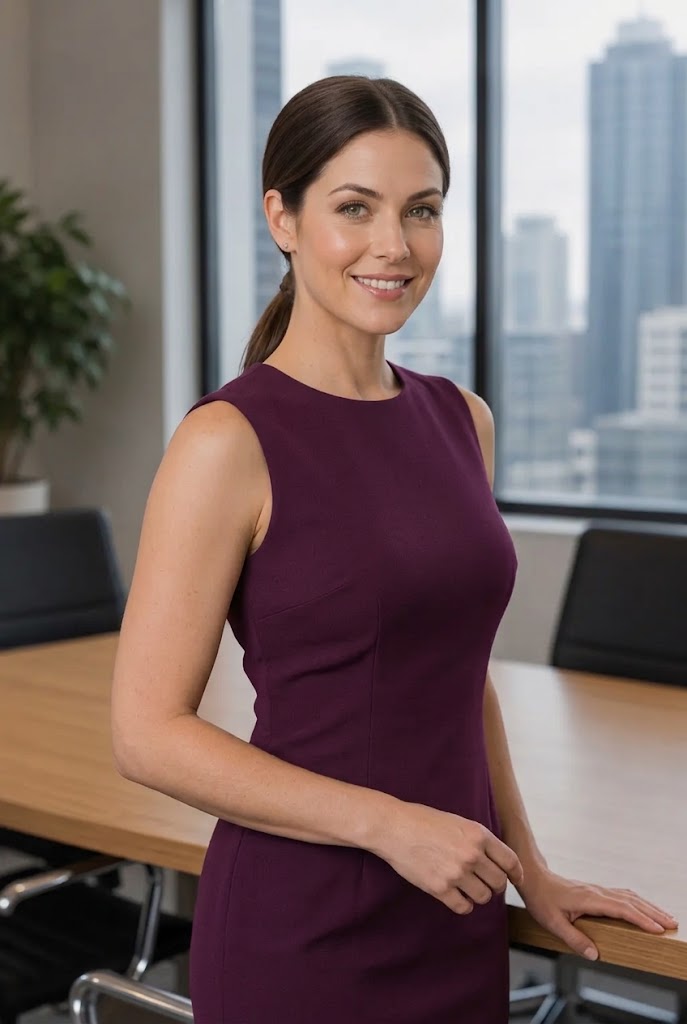
The low ponytail is simple, but a few details can make it look deliberately professional rather than like an everyday rushed style. Positioning the ponytail near the nape and wrapping a small section of hair around the elastic gives it a finished appearance without requiring complicated styling.
It is particularly practical for long and Polished medium-length hairstyles for women look clean and workplace-ready hair. Thick hair benefits from a sturdy elastic, while fine hair can look fuller if the crown is gently lifted before securing the ponytail. Straight hair creates the cleanest graphic effect, while waves and curls can make the ponytail softer and more relaxed.
A center part gives the style a structured appearance; a subtle side part can be more forgiving around the forehead. Because the hair is gathered behind the neck, the style also works well with collared shirts and jackets.
One advantage is movement: you can turn your head, take notes and move between rooms without repeatedly pushing hair away from your face. The drawback is that a very tight ponytail can become uncomfortable over several hours. Ask for a low ponytail at the nape with a concealed elastic and a smooth but comfortable finish. This is particularly suitable when you want professional hair without looking overly formal.
4. Neat Half-Up Half-Down Twist
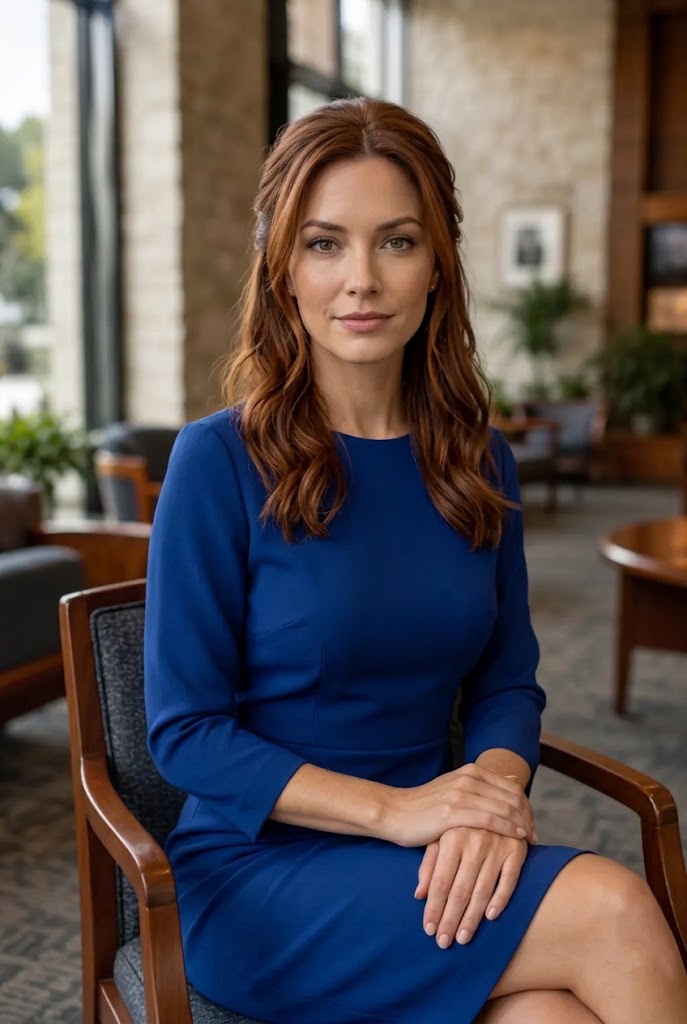
A neat half-up half-down twist offers a useful middle ground between wearing your hair completely down and committing to a full updo. The upper sections are swept away from the face while the remaining hair stays loose over the shoulders.
This is a good choice for medium and long hair, particularly when you want some softness around the neckline. Straight hair can be smoothed for a minimalist result, while waves add natural movement. Curly hair can also work well when the curls are defined and the front sections are secured without disrupting their pattern.
The biggest practical advantage is facial visibility. Hair is less likely to fall into your eyes while you are speaking, yet the style does not feel as formal as a bun. A half-up arrangement can also be easier to recreate than a complicated updo.
Face shape matters mainly through placement. Keeping the upper section smooth and allowing controlled width around the sides can balance longer or narrower faces, while softer framing pieces can work with stronger jawlines. For an interview, avoid an oversized decorative clip. A small neutral barrette or hidden pins are usually enough.
Ask your stylist for a clean half-up shape that removes the front hair from the face while keeping the lower lengths soft and natural.
5. Classic French Twist With Modern Smoothness
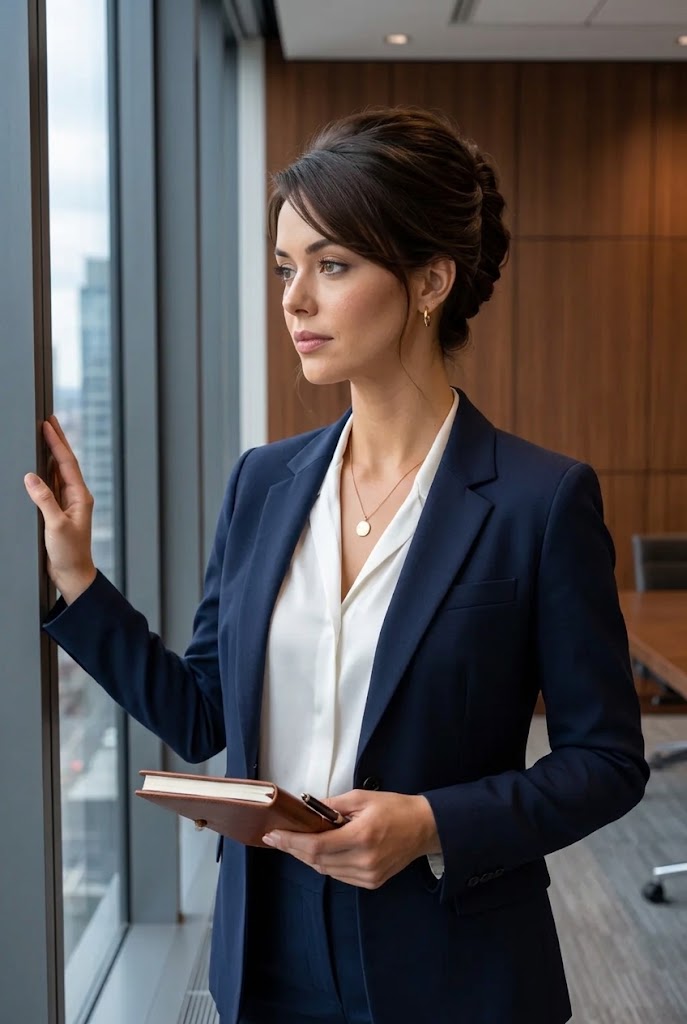
A French twist is a formal option that creates a vertical shape along the back of the head. It can be particularly appropriate for highly traditional environments, formal presentations or interviews where the overall dress code is conservative.
The style generally requires medium-to-long hair with enough length to fold and secure. Very fine hair may need texturizing spray or gentle internal teasing for grip, while very thick hair can require stronger pins and careful weight distribution. Straight hair creates the classic smooth effect, although waves can add subtle texture without changing the overall structure.
The French twist has a more formal visual language than a ponytail or bob, so consider whether it matches the workplace. A traditional law, finance or academic environment may make the formality feel natural; a casual startup might not require such a structured approach.
The style is secure once properly pinned, but it is not the easiest option to improvise. Practice it beforehand or have it styled professionally. Face shape can be balanced through the amount of height and softness at the front.
At the salon, ask for a clean French twist with controlled volume and a smooth surface, rather than an exaggerated formal updo.
6. Structured Side-Parted Low Bun
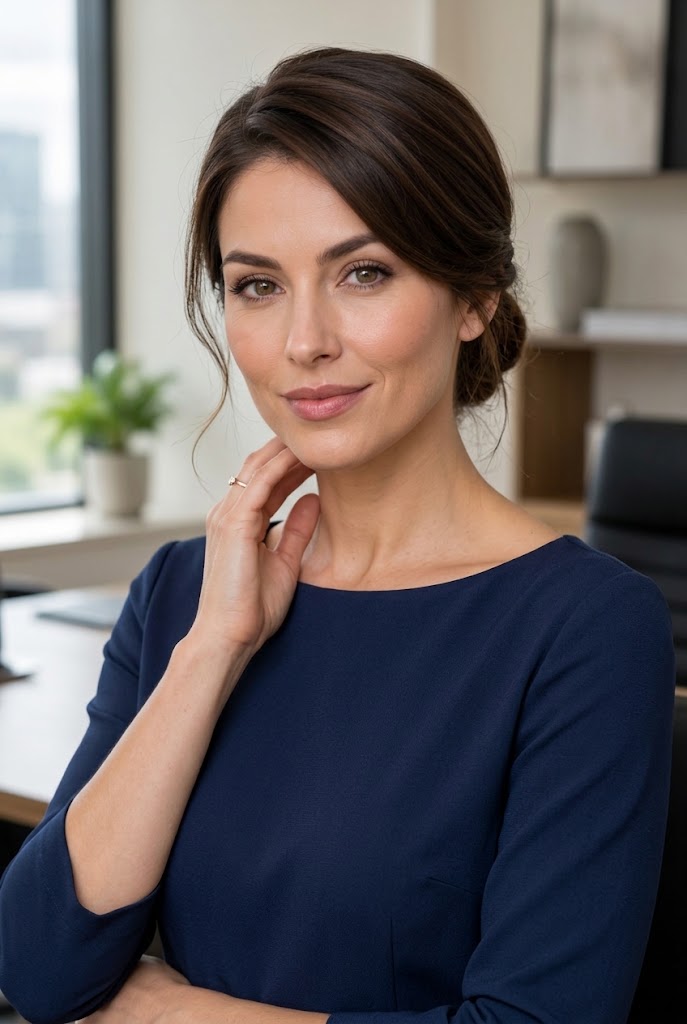
A side-parted low bun offers more facial framing than an all-back bun while retaining the security of an updo. The part is created before the hair is gathered at the nape, allowing one side to sweep naturally toward the face.
This can be particularly useful if you dislike the severe appearance of pulling every strand straight backward. Fine hair can be smoothed close to the head, while thick hair may create a fuller bun with more visible texture. Straight hair gives the cleanest result, but wavy and curly textures can be incorporated into a softer version.
A side part may visually soften square or angular features, while the low bun keeps the overall silhouette restrained. If you wear glasses, this style can also leave the temples and ears relatively clear.
Maintenance is moderate. The bun itself is secure, but the front section needs enough hold to remain in position. Avoid using excessive oil or heavy styling cream, which can make the roots appear flat or greasy under office lighting.
Ask your stylist for a low bun with a defined side part and soft front framing, keeping the perimeter polished without making the style overly tight.
7. Defined Curly Pineapple Updo With Smooth Edges
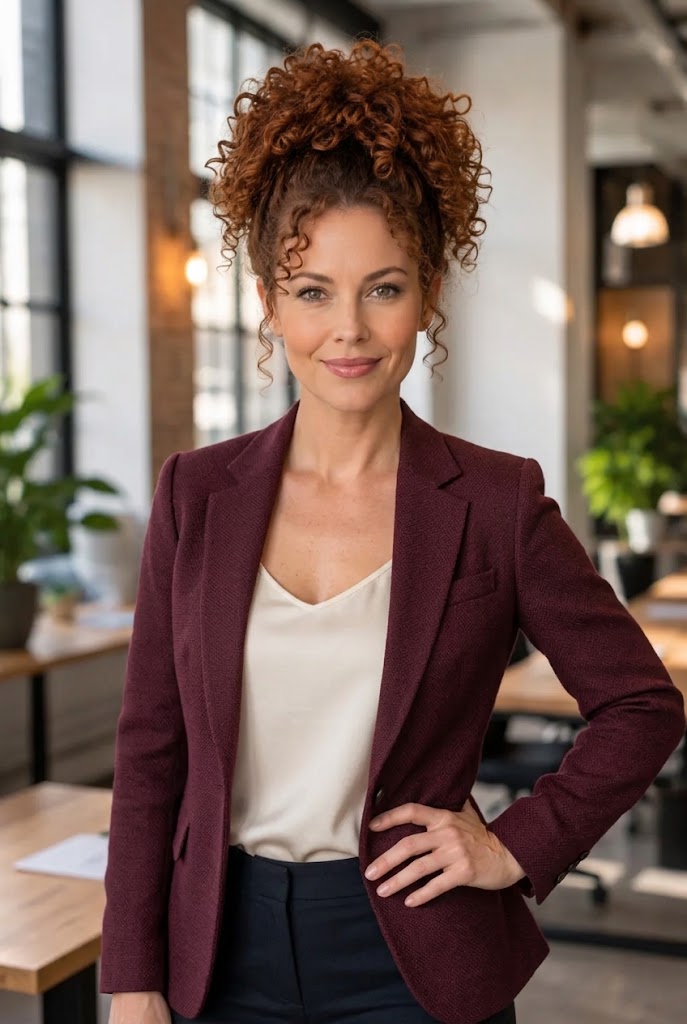
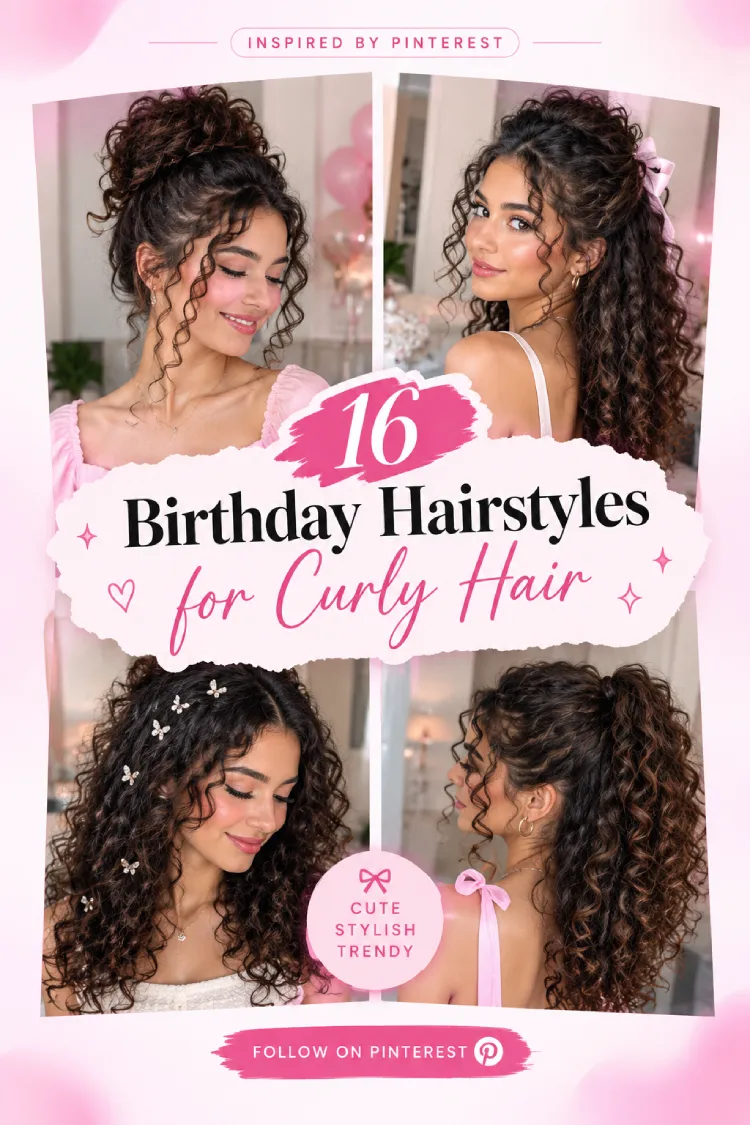
A pineapple updo can be adapted for an interview when natural curls or coils are gathered high enough to keep the hair away from the face while maintaining the texture’s natural shape. The goal is definition and control rather than forcing curls into a straight style.
This option can work across several curl patterns, provided the hair is long enough to gather comfortably. Fine curls may need lightweight definition, while dense curls often require a secure but non-damaging scrunchie. Avoid excessive tension around the hairline, especially if the style will remain in place for several hours.
A clean part, controlled edges and consistent curl definition can make the overall look feel intentional. Face shape can influence the placement: extra height can visually lengthen rounder proportions, while softer side volume can balance narrower faces.
This style is also a good reminder that natural texture does not need to be disguised to look professional. The practical requirement is simply that the hair should not require constant adjustment.
Ask your stylist or natural-hair professional for a defined high puff or pineapple with controlled edges and minimal tension, especially if you want to preserve your normal curl pattern.
8. Sharp Collarbone-Grazing Lob
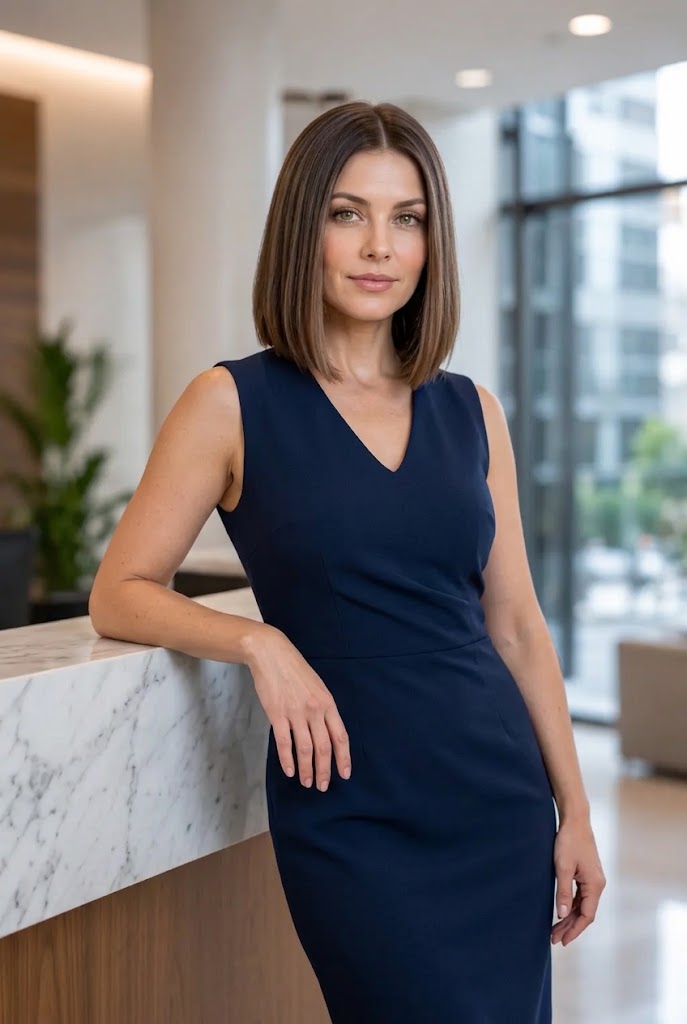
A collarbone-length lob is one of the most versatile interview haircuts because it can be worn down, tucked behind one ear, styled straight or given subtle movement. Its length sits between a traditional bob and longer hair, giving you several styling choices without requiring a full updo.
Fine hair often benefits from a strong perimeter because it can make the ends look denser. Thick hair may need internal weight removal so the shape does not become overly triangular. Straight hair shows the clean baseline clearly, while waves and curls create a softer interpretation.
The collarbone area is practical with many professional necklines, although hair can occasionally brush against a jacket or collar. If you want a very low-maintenance option, ask for a shape that works close to your natural texture rather than one that requires daily flat-ironing.
A lob can suit nearly any face shape when the length and volume are adjusted thoughtfully. A little face framing can soften the perimeter; a stronger baseline can provide structure.
Ask for a collarbone-length lob with a clean perimeter and subtle internal shaping that works with your natural texture.
9. Low Braided Bun With Clean Part
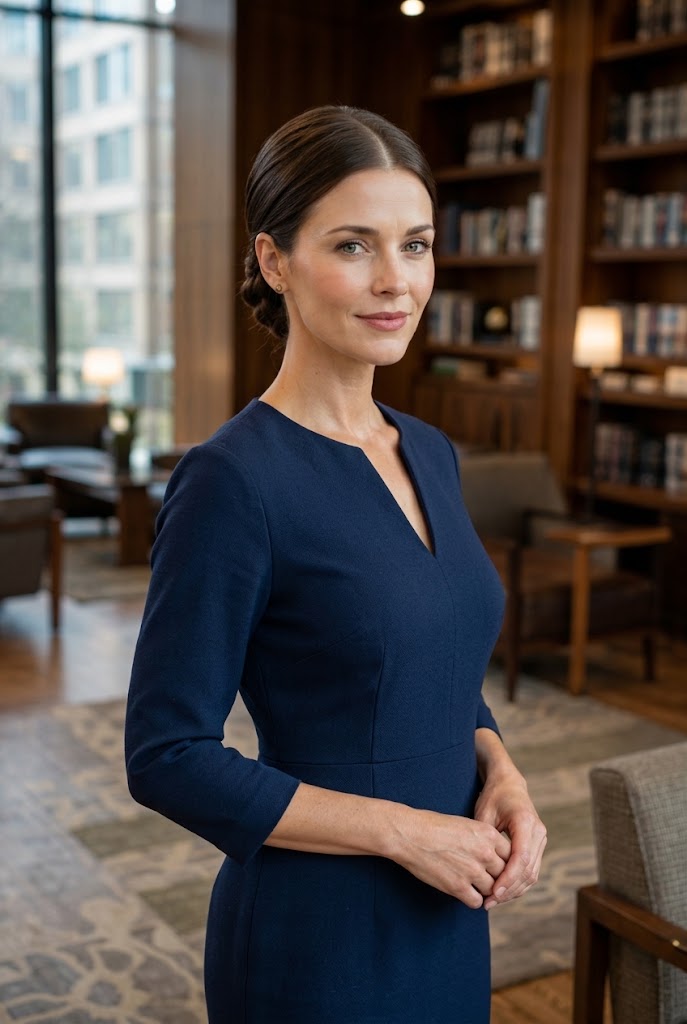
A low braided bun is especially useful when you have thick, long or unruly hair that does not always stay contained in a standard bun. Braiding the ponytail before coiling it creates a more secure structure and helps prevent shorter layers from escaping.
The style can be created from straight, wavy, curly or coily hair, although the finish will look different depending on texture. Thick hair often benefits from this construction because the braid distributes bulk. Fine hair can create a smaller, understated bun.
A center part feels symmetrical and formal, while a side part can soften the face. The braid itself adds visual texture, so keep accessories simple if you are interviewing in a conservative setting.
This is also a strong choice for a long interview day because the hair is contained in two stages: first in a ponytail, then in the braid and bun. However, avoid making the base excessively tight.
Ask for a neat low braided bun with a clean part and a compact shape that sits comfortably above the collar.
10. Sleek Pixie Cut With Side-Swept Bangs
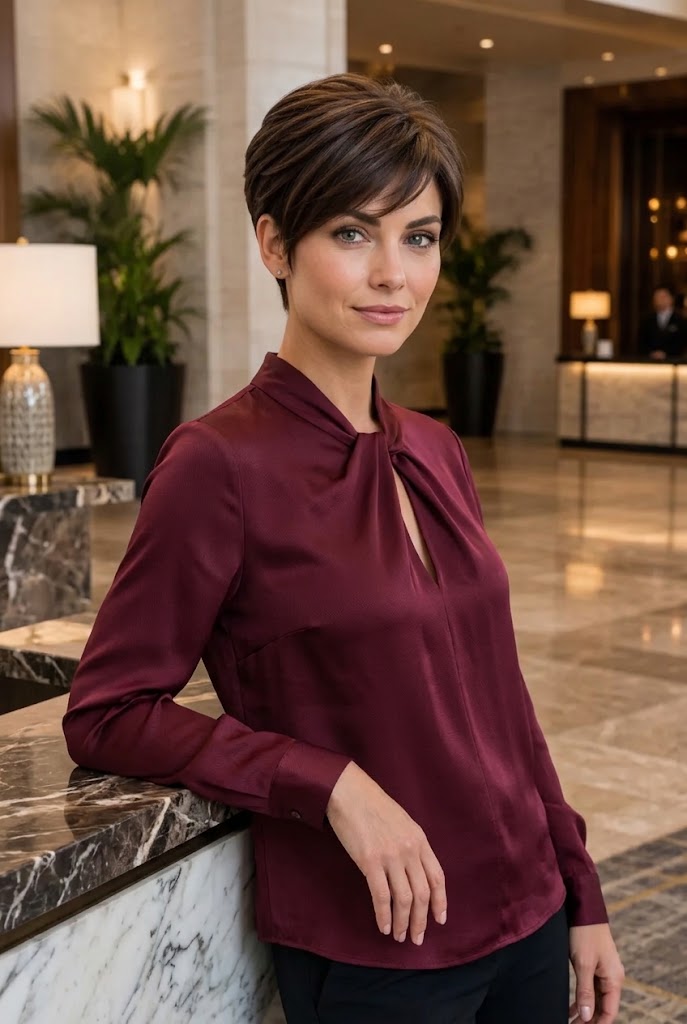
A sleek pixie with side-swept bangs is an excellent interview option if you already have short hair and want minimal styling time. The sides and nape are kept relatively close, while longer top sections are directed diagonally across the forehead.
Fine hair can benefit from the structured shape because it reduces the need to create fullness throughout the entire haircut. Thick hair may need careful weight removal. Straight and slightly wavy textures usually require the least styling, while curly hair needs a cut specifically designed around the curl pattern.
The side-swept fringe can provide facial framing without covering the eyes. Oval, heart and diamond-shaped proportions can work particularly well, but the exact fringe length should be adjusted to your features rather than copied from a photo.
The main maintenance consideration is the haircut itself. Pixies lose their intended shape faster than longer cuts, so regular trims are part of the look. On the positive side, daily styling can take only a few minutes.
Ask for a tapered pixie with a longer side-swept top and a fringe that stays comfortably above the eyes.
11. Polished High Ponytail With Wrapped Base
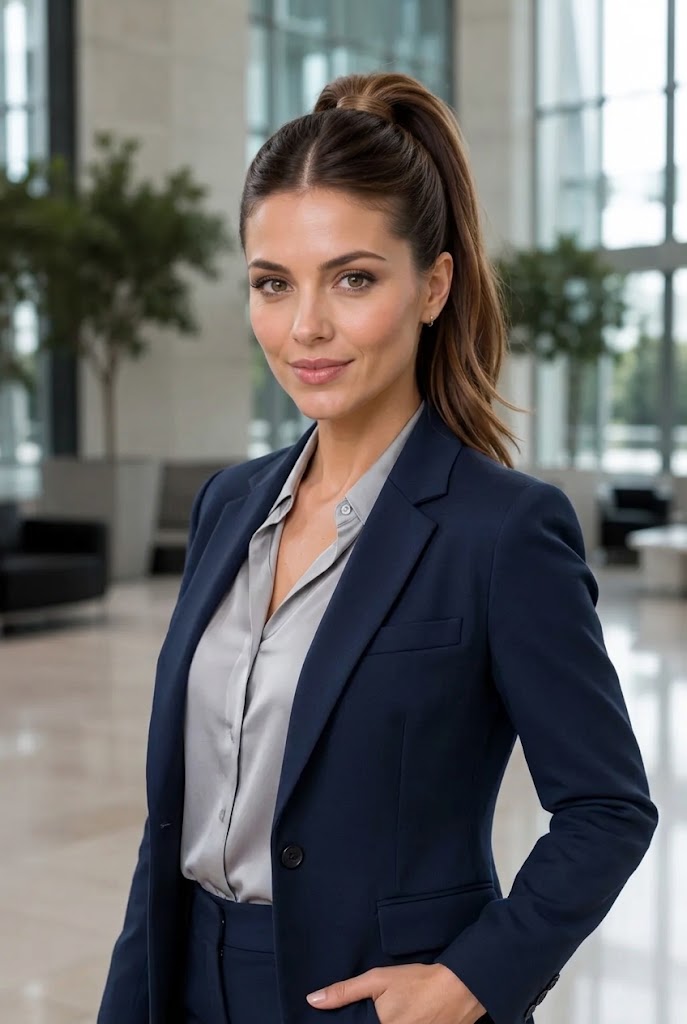
A high ponytail can look energetic and modern, but it needs deliberate execution for an interview. A smooth crown, secure base and hair-wrapped elastic make the difference between a gym-style ponytail and a polished professional version.
Long hair is the easiest to adapt, although medium hair can also work if there is enough length to form a secure ponytail. Thick hair creates a substantial silhouette but may require a strong elastic. Fine hair can benefit from subtle root volume so the ponytail does not look too flat.
The height draws attention upward, which can visually lengthen the neck and create a more energetic appearance. It can work particularly well in creative, technology or modern business environments, while a lower ponytail may be more appropriate in highly traditional offices.
One concern is tension. A high ponytail can become uncomfortable if worn tightly for hours. Keep the base secure without pulling the hairline excessively.
Ask for a polished high ponytail with a smooth crown and a small section wrapped around the base, rather than an overly slick or dramatic finish.
12. Soft Side-Twisted Low Chignon
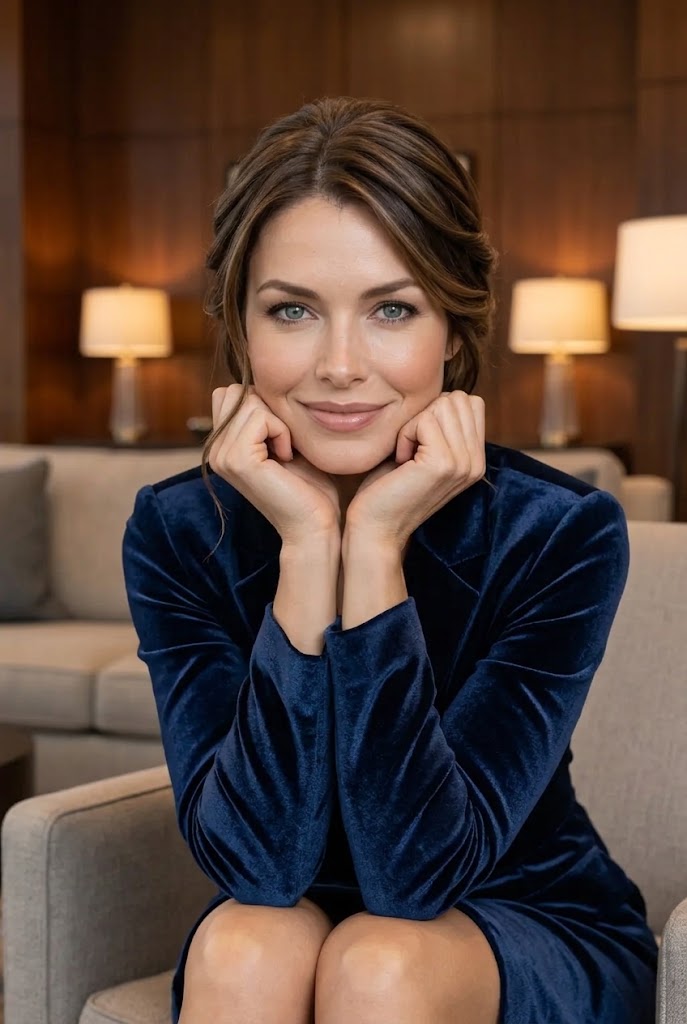
A side-twisted low chignon combines the security of a bun with a little more texture around the front. Two sections can be twisted backward before joining the remaining hair in a low chignon.
This is a useful option when you have face-framing layers that do not stay neatly tucked into a standard bun. Medium and long hair work best, while very short layers may need discreet pins. Wavy hair can create attractive natural texture, while straight hair may need a little styling product to give the twists enough grip.
The style feels less severe than a completely slick bun, making it useful for healthcare, education, consulting or creative workplaces where polished but approachable grooming is appropriate.
Maintenance is moderate because the twists need to stay secure. Use matte pins that match your hair rather than decorative accessories that become the focal point.
Ask your stylist for a low chignon with two soft side twists that keep the face-framing layers controlled without making the front completely flat.
13. Sleek Side-Tucked Bob With Deep Part
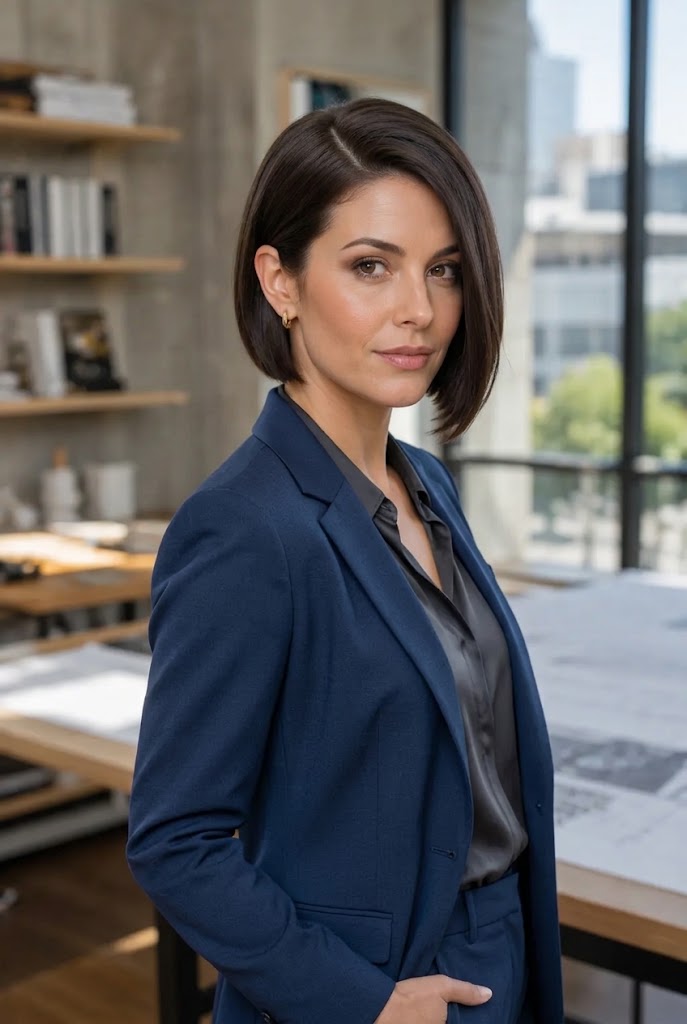
A sleek bob with a deep side part is a strong choice if you want your haircut itself to create a professional frame. One side is tucked behind the ear while the heavier side sweeps diagonally across the forehead.
This works particularly well for straight or smoothed hair, although a naturally wavy bob can also be shaped into a softer interpretation. Fine hair can benefit from a strong perimeter, while thick hair may need internal weight removal to keep the silhouette from becoming bulky.
The deep part creates asymmetry, so it can soften a very symmetrical face or add visual interest to a simple haircut. However, the part should still look intentional rather than exaggerated.
The ear tuck is especially useful during interviews because it keeps one side away from the face and allows clearer eye contact. The main styling requirement is maintaining smoothness, particularly in humid weather.
Ask for a polished bob with a deep side part, a clean perimeter and enough length to tuck one side securely behind the ear.
14. Smooth Crown Half-Up With Barrette Accent
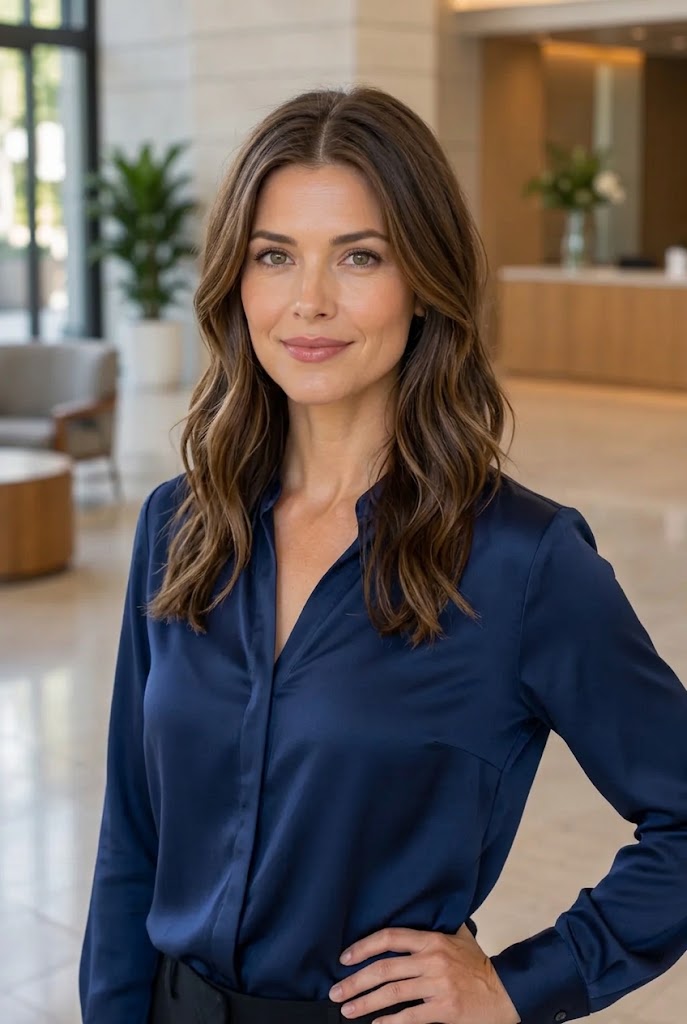
A smooth crown half-up style works well when you want your hair down but do not want the front sections falling forward. The top portion is gathered at the back while the lower hair remains loose.
For an interview, the accessory should be understated. A simple tortoiseshell, matte metal or neutral barrette can finish the style without turning it into an occasion hairstyle.
This works best on medium-to-long hair. Fine hair may need a little root texture so the crown does not collapse, while thick hair benefits from a sturdy clip with enough grip. Wavy and curly hair can be worn naturally as long as the top section remains controlled.
The style is especially useful for people who like the softness of wearing their hair down but become distracted by loose strands. It also translates well to video interviews because it opens the face and creates a clear silhouette.
Ask for a smooth half-up style with the crown controlled and the lower lengths left natural, using a small neutral barrette if needed.
15. Classic Ballerina Mid-Bun
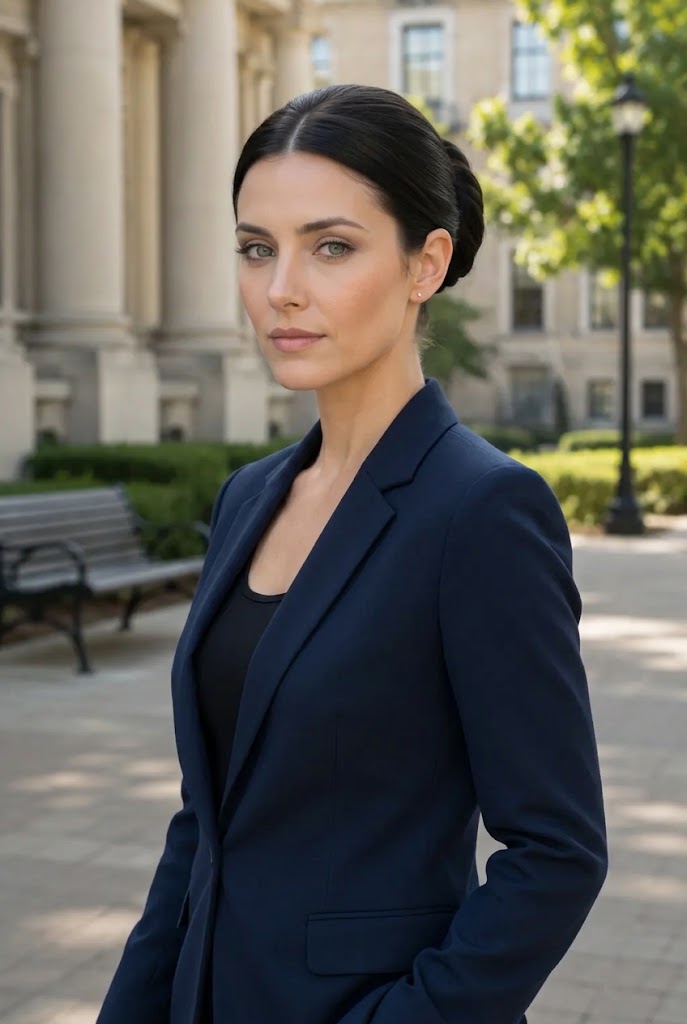
A ballerina-inspired mid-bun is a clean, centered option for interviews where you want your hairstyle to stay completely out of the way. The bun sits around the middle-back area of the head rather than low at the neck.
It works best with medium-to-long hair. Fine hair can create a compact bun, while thick hair may need to be divided or secured with several pins. Straight hair creates a very smooth result; waves and curls can either be smoothed or incorporated for a more textured finish.
The centered placement creates symmetry and emphasizes the face and neckline. It can therefore work especially well with oval and heart-shaped proportions, although the exact placement can be adjusted for other face shapes.
This style is secure but should not be pulled so tightly that it becomes uncomfortable. If your scalp becomes sensitive after a few hours, consider a lower, looser bun instead.
Ask for a clean mid-height bun with a smooth perimeter, moderate tension and enough structure to stay intact throughout the interview.
16. Natural Coils Wash-and-Go With Clean Side Part
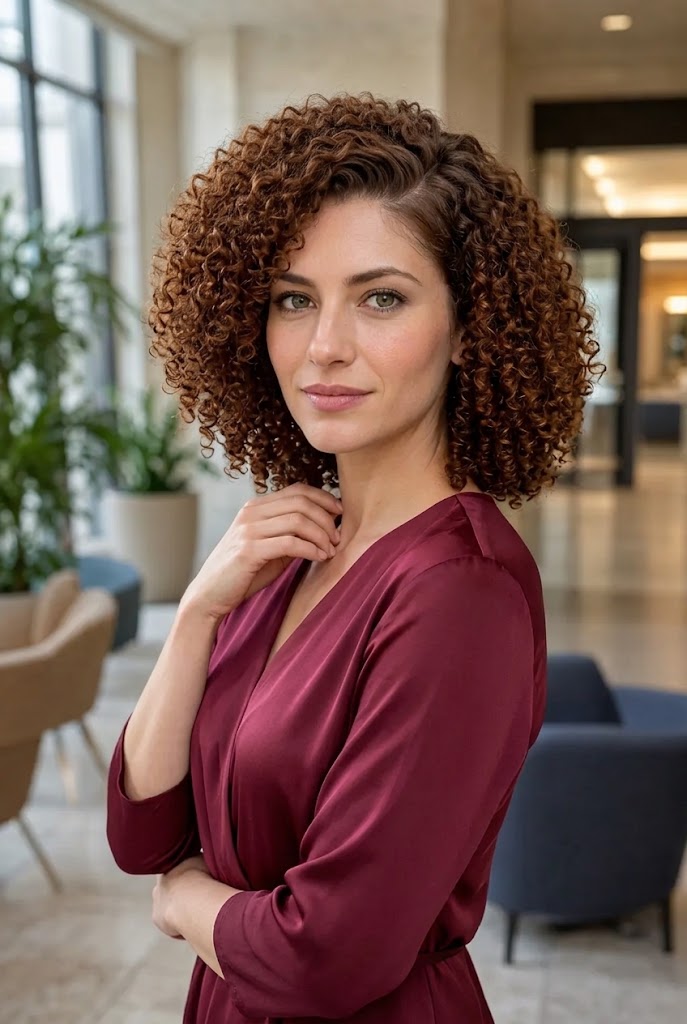
A defined wash-and-go with a clean side part can be an excellent professional hairstyle for naturally curly and coily hair. The emphasis is on consistent curl definition, a deliberate part and a shape that keeps the face visible.
The approach should be adapted to the individual’s curl pattern, density and shrinkage. Dense coils may require more product than fine curls, while lightweight leave-in products can prevent finer textures from becoming weighed down. A side part can add structure without compromising natural volume.
This style can be particularly practical if wearing your natural texture is already part of your routine. The biggest mistake would be attempting a completely unfamiliar curl routine immediately before an important interview.
Humidity should also be considered. A defined style may change throughout the day, so Understanding how to choose the right hairstyle makes professional styling effortless products that provide the amount of hold you normally tolerate.
Ask a stylist for a defined natural shape with a clean side part and controlled volume around the face, while preserving the natural curl pattern rather than stretching it excessively.
17. Folded Low Bun With Minimalist Hair Cuff
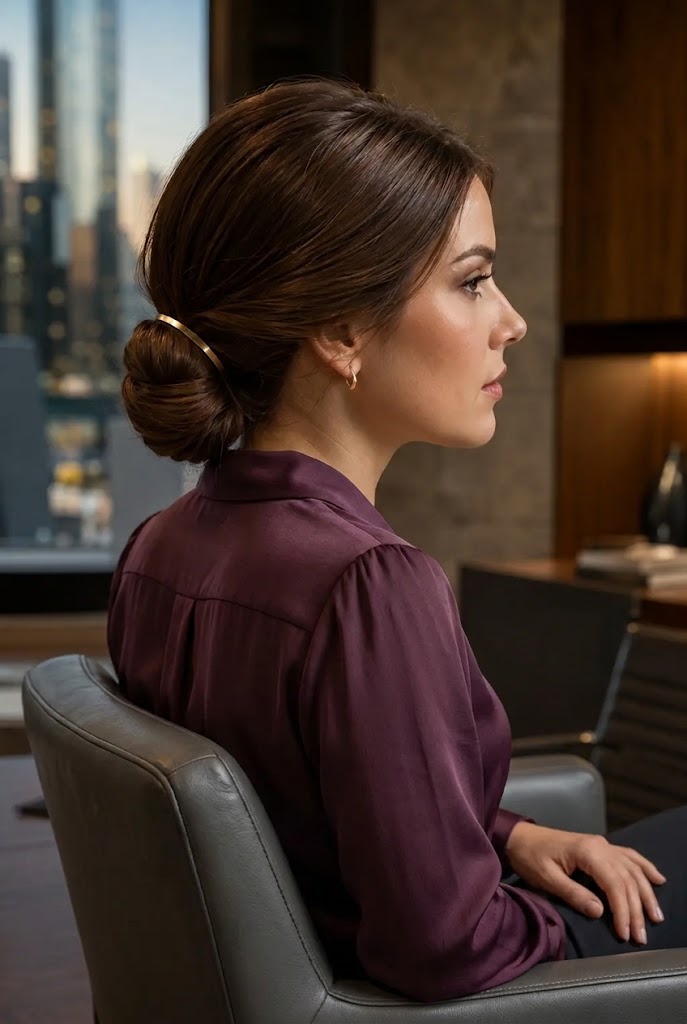
A folded low bun gives a traditional low ponytail a more architectural finish. Instead of wrapping the ponytail into a round bun, the length is folded and secured into a compact shape near the nape.
This works best on medium-to-long hair with enough length to create the fold. Fine hair produces a small, understated shape; thick hair creates more volume and may need additional pins. Straight hair makes the structure especially visible, while waves add softness.
A minimalist hair cuff can conceal the elastic and provide a small design element. For interviews, choose a neutral finish rather than a highly decorative accessory.
The style is useful when you want something more distinctive than a standard bun without becoming theatrical. It also keeps hair away from the face and shoulders.
Ask for a compact folded low bun with minimal bulk and a simple neutral cuff or hidden pins for security.
18. Structured French Twist With Low-Gloss Texture
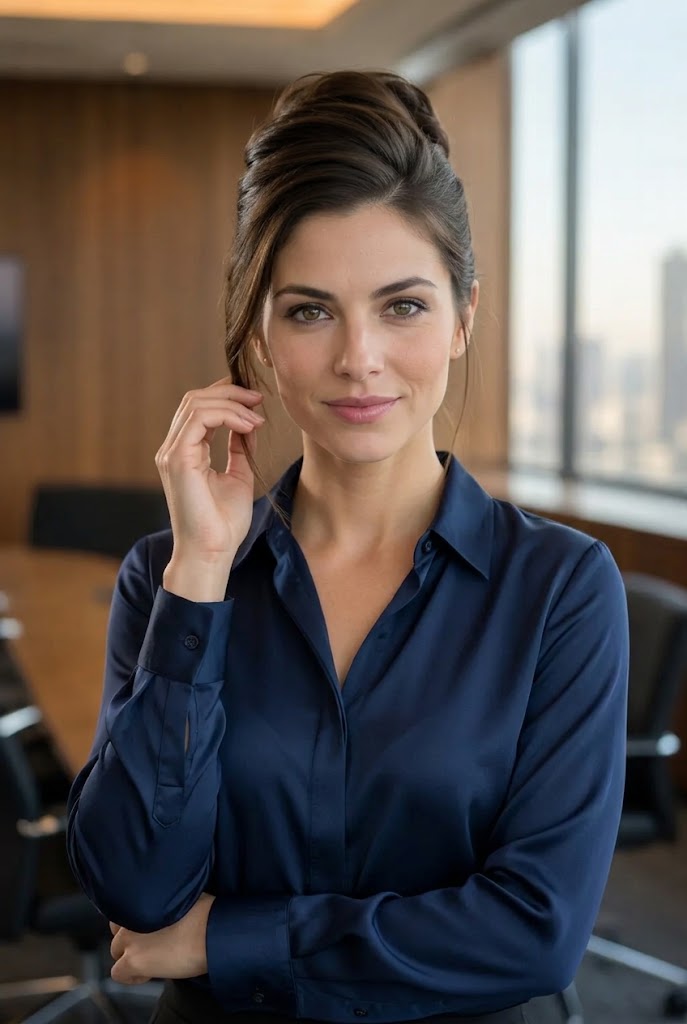
A low-gloss French twist is a softer interpretation of the classic French twist. Instead of aiming for a highly lacquered surface, the finished shape retains subtle texture while remaining controlled.
This can work especially well for medium-to-long hair with enough length to form the vertical fold. Fine hair may require texture spray for grip, whereas thick hair needs careful pinning. Naturally wavy hair can give the twist more character without making it look messy.
The style is formal, so workplace context matters. It can suit traditional professional settings, formal presentations or senior-level interviews, but it may feel unnecessarily elaborate in a casual workplace.
The low-gloss finish is also more forgiving than a glass-smooth surface because small changes in texture are less obvious. Practice is still important; a French twist is not the easiest style to invent on interview morning.
Ask for a structured French twist with restrained volume and a soft, natural surface rather than an ultra-glossy finish.
19. Low Sleek Pigtail Buns
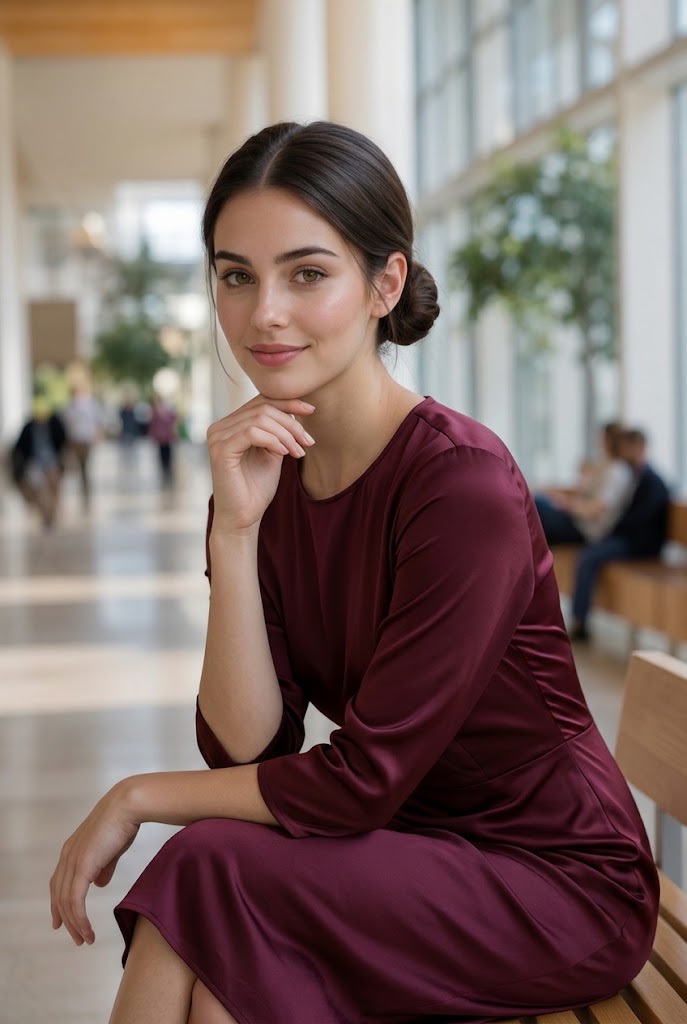
Low pigtail buns are the most unconventional option in this collection. Two compact buns sit low behind the ears, creating a symmetrical shape that can work in creative, design-oriented or fashion-forward workplaces.
They are not the safest universal interview choice. Workplace culture matters considerably here. A traditional finance or legal environment may call for something more conservative, while a creative agency or design role may leave more room for individual styling.
The style works best with medium-to-long hair and benefits from a clean center part. Fine hair creates small, tidy buns, while thick hair can produce fuller shapes. Straight hair gives the most graphic effect, but textured hair can create a more organic result.
The low placement is what keeps the style relatively sophisticated. High space buns would communicate a very different mood.
If you choose this option, ask for two compact low buns positioned close to the nape with a crisp center part and minimal accessories.
20. Tapered Natural Crop With Defined Edges
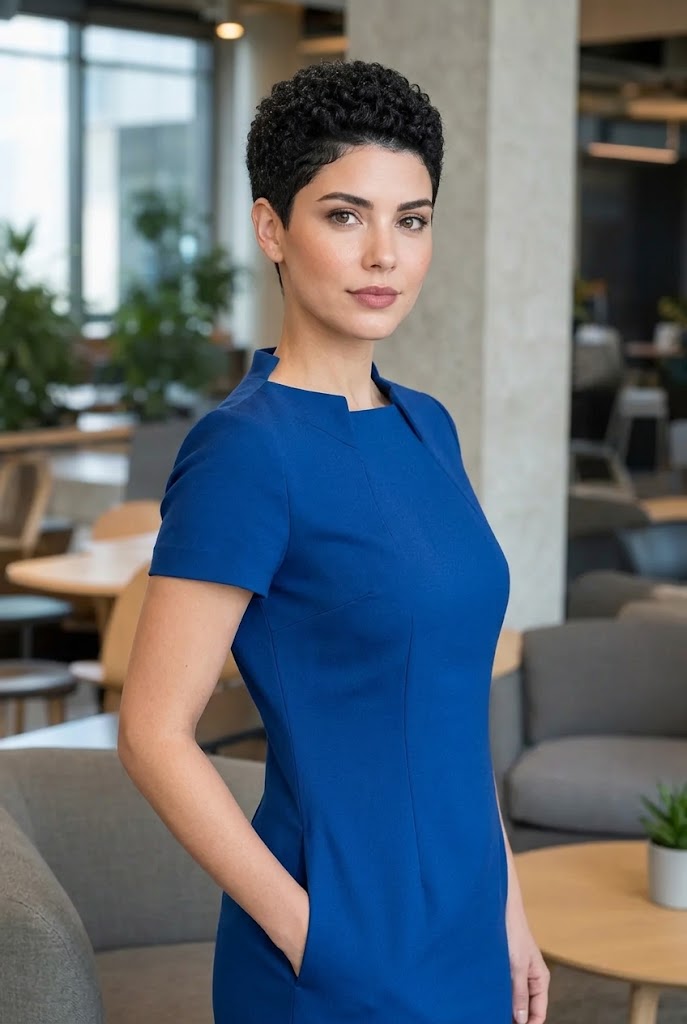
A tapered natural crop is a short haircut where the sides and neckline gradually become shorter while the top retains more curl or coil definition. It is a practical choice when you want a low-volume silhouette with visible natural texture.
The haircut can work across different curl patterns, but the taper needs to be customized to density and growth pattern. Dense hair can create strong texture on top, while finer curls may benefit from slightly more length to maintain visible definition.
This style requires less daily manipulation than long natural hair, although the shape itself needs periodic trims to maintain the taper. Moisture and curl definition may be enough for daily styling.
Face shape can be considered through the amount of height and width left on top. A little vertical volume can balance longer faces, while a wider top may complement narrower facial proportions.
Ask your barber or stylist for a gradual taper at the sides and neckline with enough length on top to define your natural curl or coil pattern.
21. Subtle Crown Braid Into Low Chignon
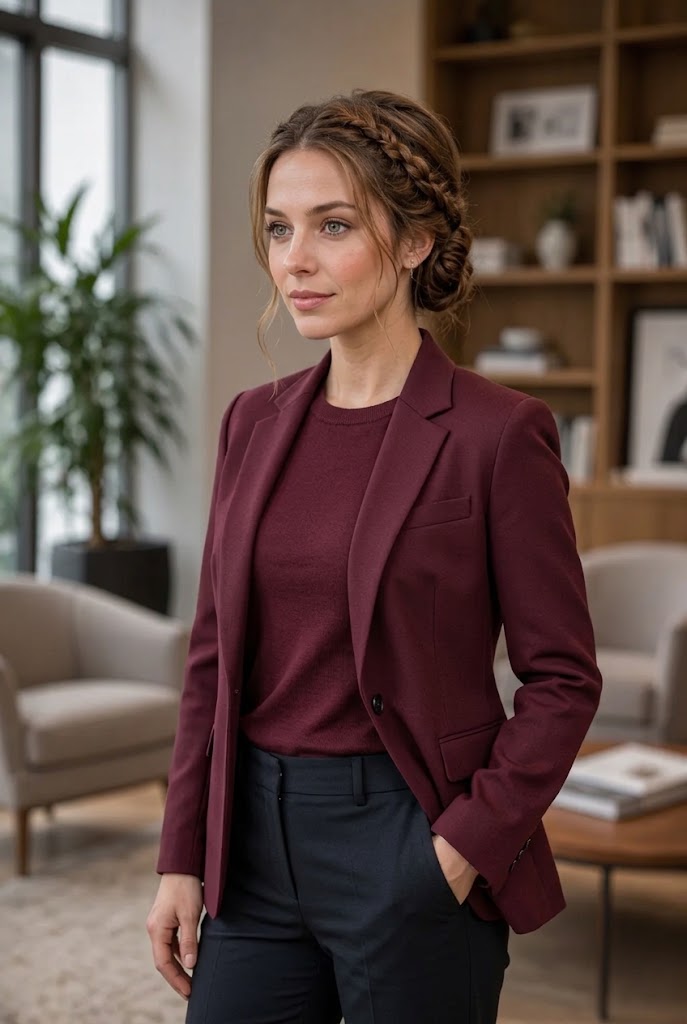
A subtle crown braid leading into a low chignon provides security around the face while keeping the overall style restrained. A braid begins near the temple or front section and travels toward the nape before joining the remaining hair.
This can be useful for medium-to-long hair, particularly if shorter layers tend to fall forward. Thick hair often benefits from the structure of the braid, while fine hair may need a little texturizing product for grip.
The braid should remain relatively flat and controlled for an interview. Large decorative braids or excessive volume can shift the style toward formal-event territory rather than professional grooming.
This option is especially useful if you want some texture without leaving the entire hairstyle loose. It also holds well during long interviews.
Ask for a slim crown braid that lies close to the head and feeds into a compact low chignon, with minimal visible pins and accessories.
22. Sleek Loc Petal Low Bun
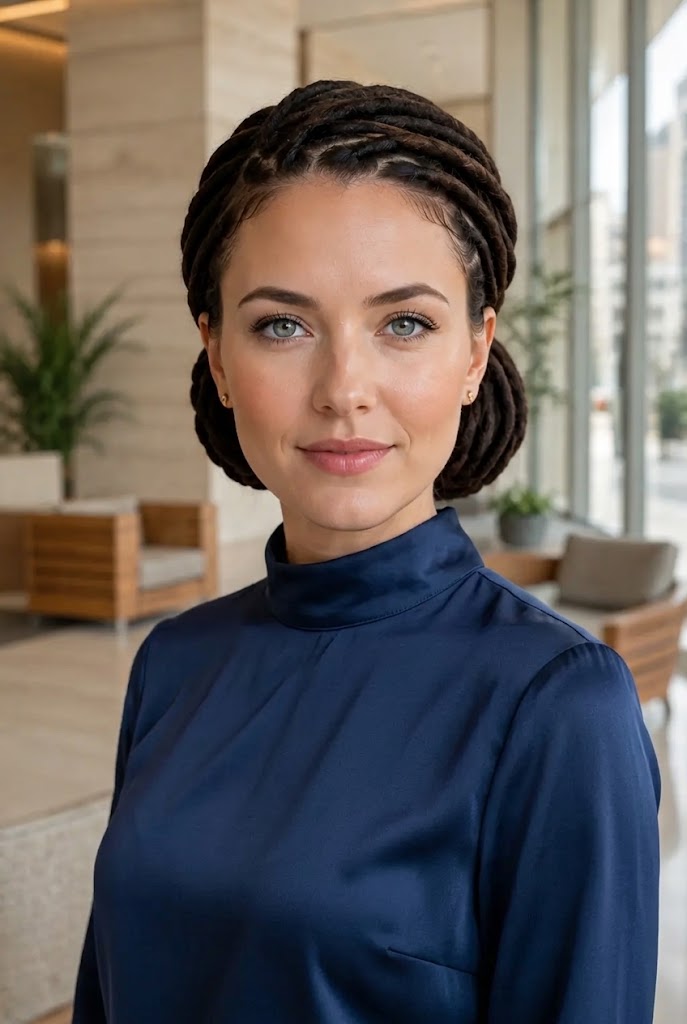
A low bun made from locs can create an elegant, structured interview hairstyle while preserving the character of the locs themselves. The lengths are gathered toward the nape and arranged into overlapping loops or a compact bun.
The key consideration is weight and tension. Locs can vary considerably in size, density and maturity, so the bun should never be forced into a configuration that creates discomfort. A stylist experienced with locs can choose a secure arrangement that respects the hair and scalp.
A clean part or gently smoothed front can make the overall silhouette feel more structured, while the loc texture remains visible through the bun.
The style works well for interviews where you want the hair completely contained. It also provides a polished option without requiring heat styling.
Ask for a low loc bun arranged with minimal tension, keeping the front neat while allowing the natural loc texture to remain visible.
23. Polished Segmented Low Ponytail
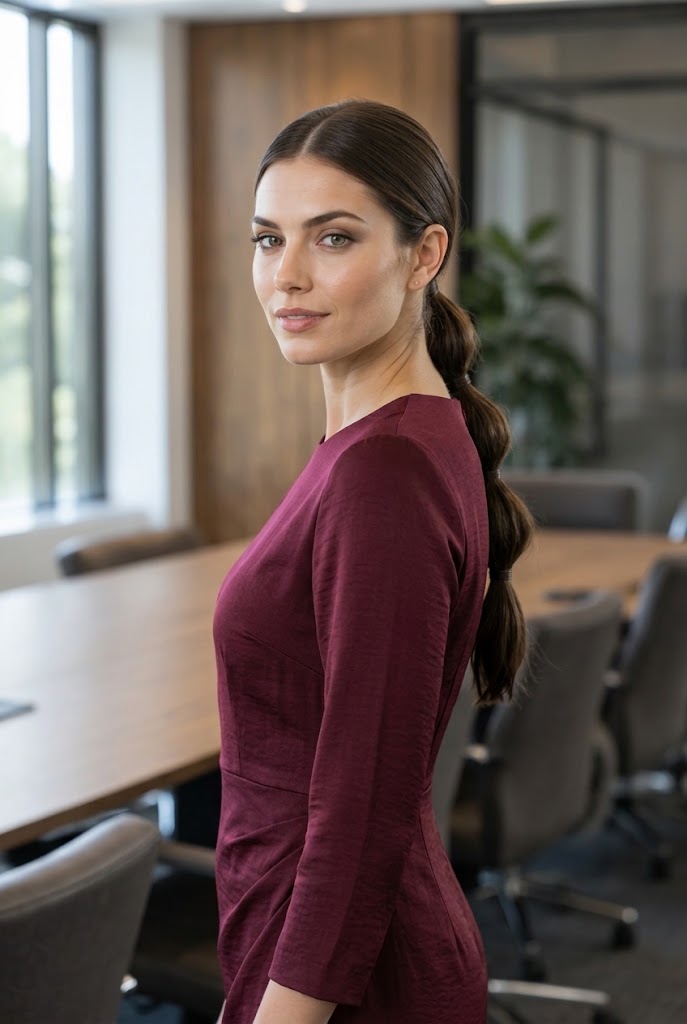
A segmented low ponytail adds subtle structure to a traditional ponytail by placing several small elastics down the length. The result is controlled and graphic without requiring an elaborate updo.
This works best on medium-to-long hair. Fine hair can create a slim segmented shape, while thick hair creates larger sections. Straight hair gives the clearest architectural effect, but waves can create a softer version.
The main advantage is containment. If your hair tends to fan outward, become tangled or catch on clothing, segmentation can help keep the lengths organized.
For a traditional workplace, keep the elastics discreet and the sections relatively large. Too many tiny segments can look more editorial than professional.
Ask for a low ponytail with three or four clean sections and concealed elastics, keeping the overall shape simple and streamlined.
24. Defined Flat-Twist Updo for Natural Coils
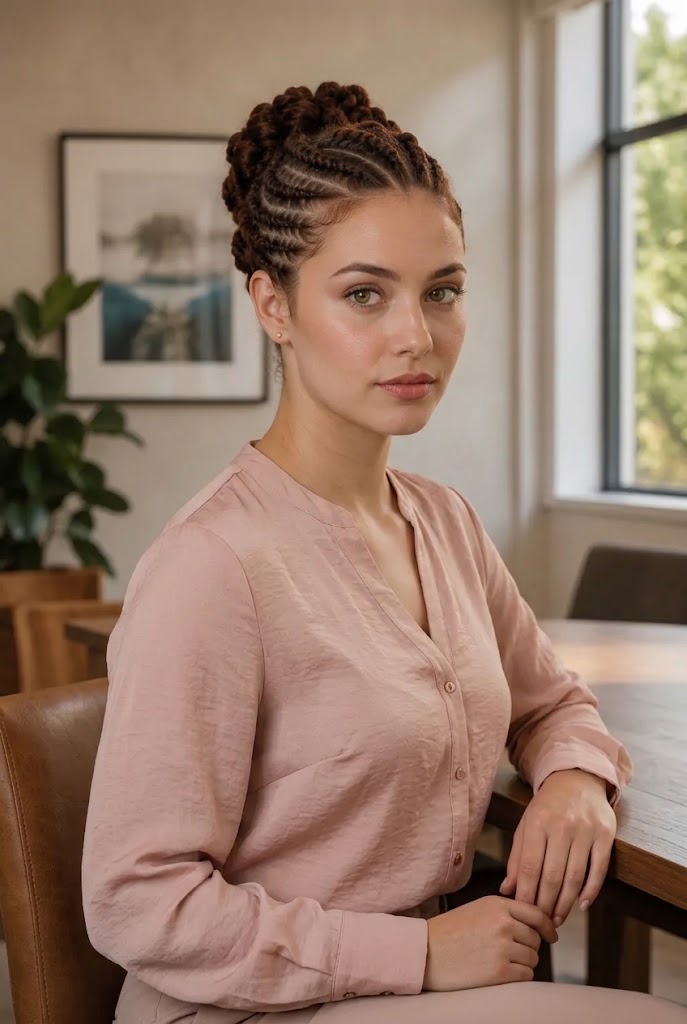
A flat-twist updo is a structured option for natural coils that keeps much of the hair close to the head. Several flat twists can travel from the front toward the nape, where the remaining hair is tucked or gathered.
This style is particularly useful when you want a protective, contained look for a long interview day. It can work with dense 4B or 4C textures as well as other natural curl patterns when the technique is adapted appropriately.
Comfort should be prioritized. The style does not need to be extremely tight to look polished. Excessive tension around the temples or hairline can make a long interview uncomfortable.
The neatness comes from clean parting, consistent twists and controlled edges rather than from flattening every strand.
Ask your stylist for two to four clean flat twists directed toward the nape, with the ends secured into a compact low arrangement and comfortable tension around the hairline.
25. Modern French Pleat With U-Pin Accent
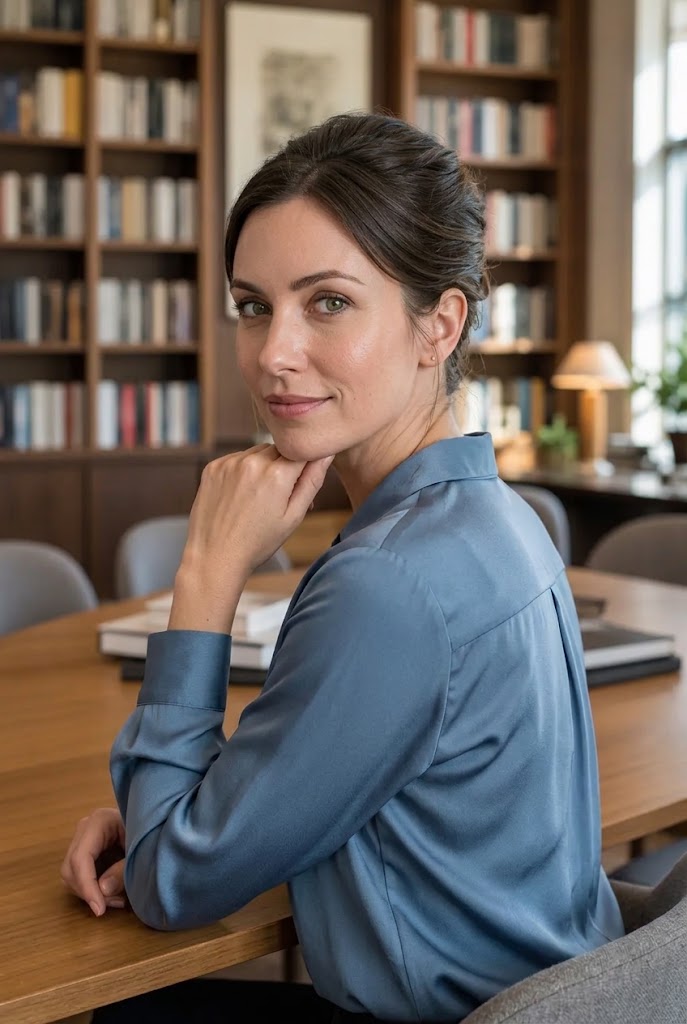
A modern French pleat creates a vertical fold similar to a French twist but can be finished with a simple U-shaped pin. It is a formal style with a slightly more minimalist feel.
Medium-to-long hair is generally required. Fine hair may need texturizing spray to provide grip, while thick hair may need several anchoring points. Straight hair produces a smooth architectural shape, while wavy hair can create a softer version.
The U-pin should be understated and secure. A matte or brushed-metal finish is generally more appropriate for an interview than an oversized jeweled accessory.
Because the style is formal, it should be matched to the workplace. It can be excellent for a highly traditional environment but may feel overly ceremonial for a casual office.
Ask for a clean French pleat with controlled volume and one discreet U-pin used as functional hardware rather than decoration.
26. Glossy Blunt Bob With Minimalist Ear Tuck
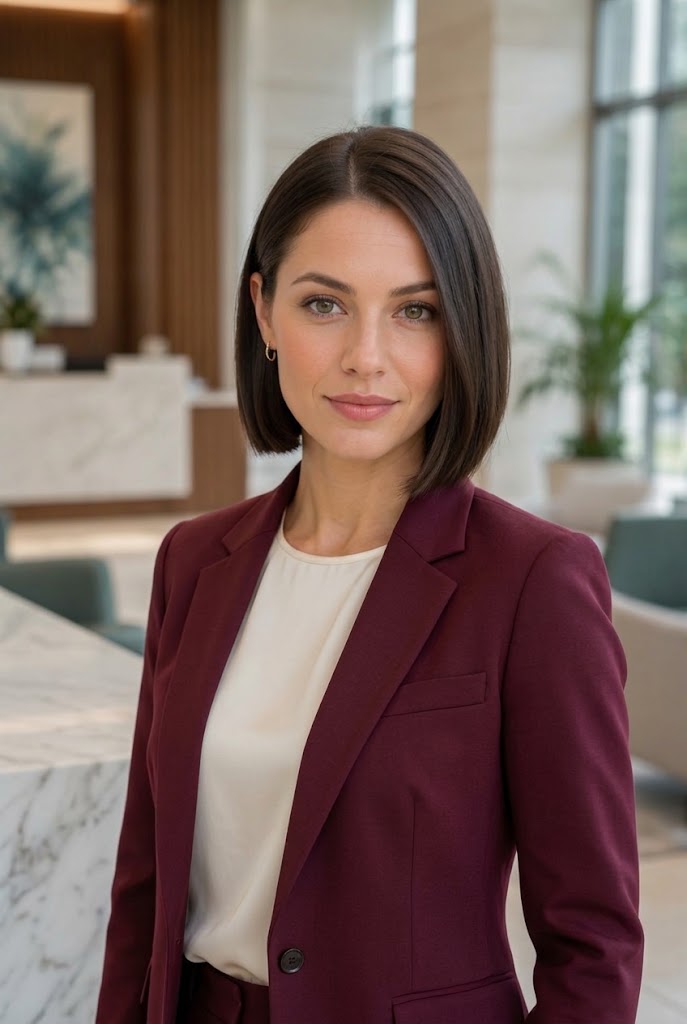
A glossy blunt bob provides one of the cleanest silhouettes for an interview. The ends are cut to a strong, relatively even line, while one side is tucked behind the ear to open the face.
This shape can be particularly effective for fine or medium-density hair because a strong perimeter can make the ends look visually substantial. Thick hair may need internal weight removal so the bob does not become too heavy.
Straight hair displays the blunt line clearly, while wavy hair creates a softer interpretation. Curly hair can absolutely be cut into a bob, but the perimeter should be designed around the curl pattern rather than copied from a straight-haired reference photo.
The ear tuck is practical because it reduces hair movement around one side of the face. The downside is that a glossy finish may require heat styling.
Ask for a blunt bob with a clean perimeter and enough length to tuck one side behind the ear without forcing the hair flat.
27. Structured Half-Up French Roll
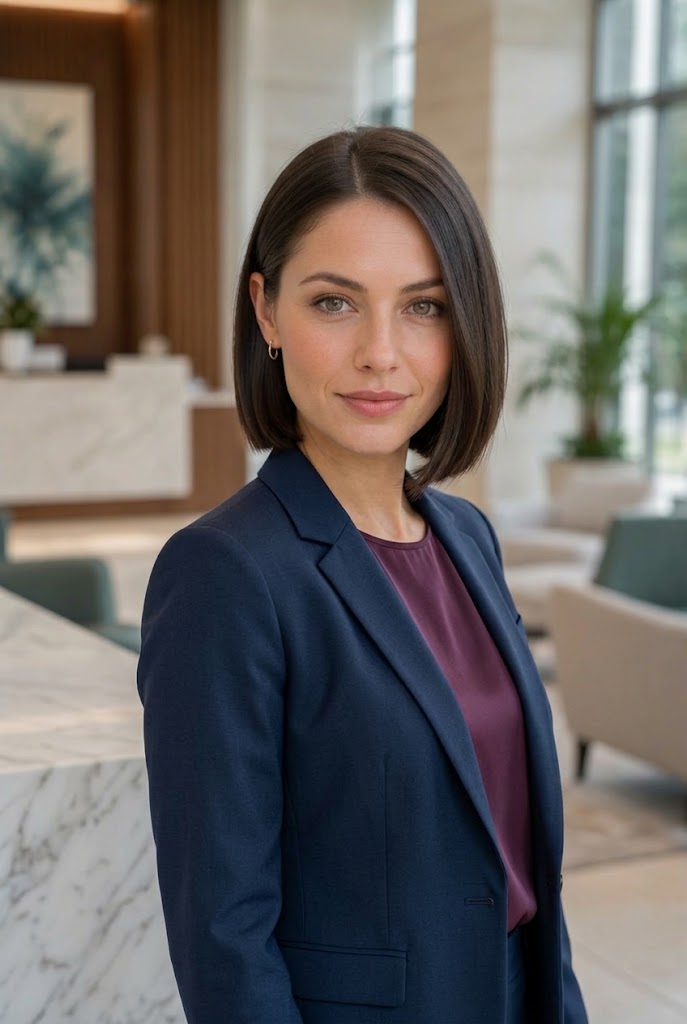
A half-up French roll combines the openness of loose hair with a more architectural top section. The upper portion is gathered and folded vertically while the lower hair remains down.
This style is better suited to medium-to-long hair and works particularly well when you want to keep the front away from your eyes without committing to a complete updo.
Straight hair gives the most structured finish, while waves can add softness to the lower section. Thick hair may require additional pins in the upper roll, while fine hair benefits from texture and careful placement.
The style can work in creative or modern professional environments, but it is more elaborate than a simple half-up twist. Keep the roll relatively small and the accessories discreet.
Ask for a half-up French roll with a smooth, compact top section and soft lower lengths that remain controlled around the shoulders.
28. Side-Swept Voluminous Pixie With Tapered Nape
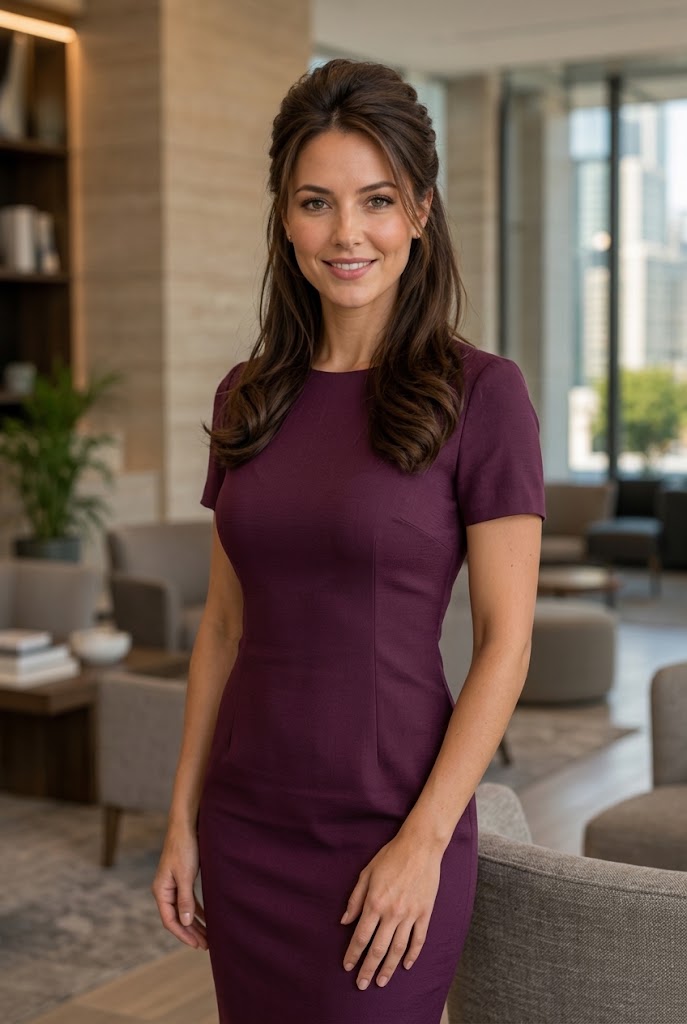
A side-swept pixie with a tapered nape combines a close neckline with longer crown sections directed diagonally across the forehead. It is particularly useful if you want a short haircut that still provides some styling flexibility.
Fine hair can benefit from the contrast between the tapered sides and longer top because the shape does not require bulk everywhere. Thick hair may need internal weight removal to keep the crown controlled. Straight and wavy textures are relatively easy to direct; curly hair requires a curl-aware interpretation.
The side sweep gives you a way to frame the forehead without hiding the eyes. A little volume at the crown can also balance longer facial proportions.
This is a haircut rather than a temporary hairstyle, so grow-out should be considered. Pixies generally require more frequent shaping than longer hair if you want the taper to remain crisp.
Ask for a tapered pixie with a longer side-swept crown, controlled volume and a fringe that stays clear of the eyes.
29. Textured Low Knot With Tortoiseshell Barrette
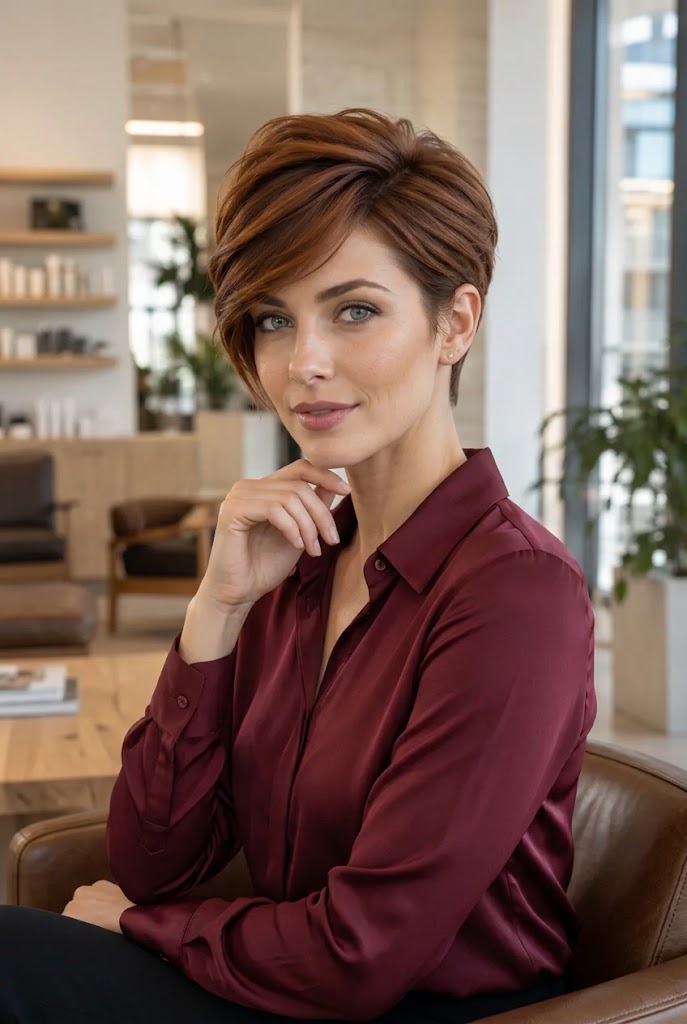
A textured low knot is softer than a slick bun. The hair is gathered low and twisted into a compact knot while retaining some natural texture. A simple barrette can cover the fastening point.
This works particularly well for medium-to-long hair with natural waves or texture. Straight hair can be given grip with a light texturizing spray, while curly hair can retain some of its natural pattern.
The style is useful when you dislike extremely polished, flattened hair but still need your hairstyle to remain controlled. The key is restraint: a little texture looks intentional, while excessive looseness can make the style appear unfinished.
Choose a narrow neutral barrette rather than an ornate clip. The accessory should support the hairstyle, not compete with your face or clothing.
Ask for a low textured knot with controlled volume and a small neutral barrette placed across the fastening point.
30. Sleek Glass-Hair Lob With Inward Bevel
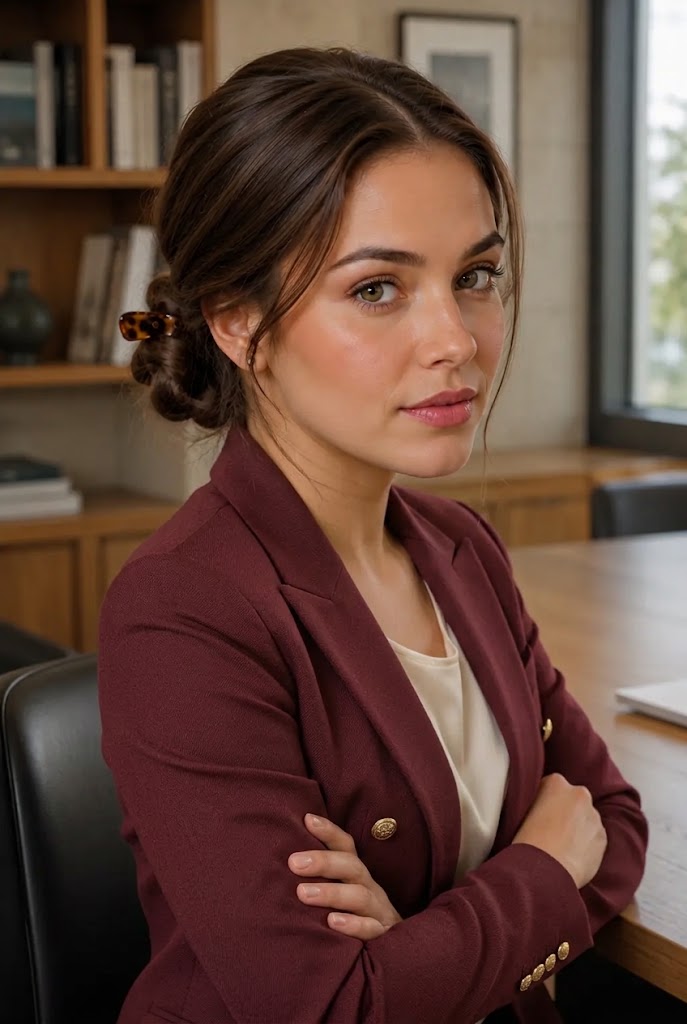
A sleek glass-hair lob is a collarbone-length cut styled exceptionally smooth, with the ends gently curved inward. It is a strong choice if your personal style leans minimalist and polished.
The clean perimeter works particularly well on straight hair. Fine hair can benefit from the strong line, while thick hair may require internal shaping. Naturally wavy or curly hair can achieve the look with heat styling, but that may make it a higher-maintenance interview choice.
The inward bevel softens the otherwise straight silhouette and can help the cut frame the jaw and collar area. It is especially effective with clean tailoring and simple necklines.
The biggest consideration is heat. If your hair does not normally tolerate frequent flat-ironing or blowouts, do not introduce an intensive heat routine solely for an interview. Your natural texture, when neatly shaped, is often a better choice.
Ask your stylist for a collarbone-length lob with a clean baseline and a subtle inward bevel that can be maintained without excessive daily heat.
How to Choose the Right Job Interview Hairstyle
The best interview hairstyle is the one that removes uncertainty rather than creating it.
Before choosing, consider five questions.
1. Will I need to touch it?
If you know you constantly tuck your hair behind your ears, choose a style that removes that problem. A low ponytail, bun, pixie or half-up style may be easier than wearing long hair loose.
2. Does it work with my normal texture?
An interview is not the ideal day to discover that your hair behaves differently after a new styling technique. If your normal routine is air-drying curls, consider a polished natural-texture style. If you normally wear a bob straight, a smooth bob may be easier than an elaborate updo.
3. Does it fit the workplace?
A conservative employer and a creative employer may have very different expectations. The hairstyle should complement the environment without requiring you to erase your personality.
4. Can I maintain it for several hours?
Think beyond the first 15 minutes after styling. Consider commuting, humidity, rain, sitting under warm lights, wearing headphones or moving between interview rooms.
5. Do I feel like myself?
A technically polished hairstyle can still be the wrong choice if it makes you uncomfortable. Confidence is easier when you are not mentally monitoring your hair.
Job Interview Hairstyles by Hair Type
Fine Hair
Fine hair often looks strongest when the haircut has a deliberate perimeter and the styling products remain lightweight. Blunt bobs, polished lobs, compact buns and sleek ponytails can all work well.
Avoid layering too aggressively if your goal is the appearance of density. For an interview, excessive dry shampoo or heavy styling powder can also make fine hair look dull or gritty under bright lighting.
A small amount of root lift can help, but avoid creating exaggerated volume. The goal is controlled shape.
Good options include the glossy blunt bob, collarbone lob, low chignon, side-tucked bob and sleek pixie.
Thick Hair
Thick hair benefits from styles that distribute or contain its weight. Braided buns, low chignons, ponytails and structured twists can prevent the lengths from becoming distracting.
If you are considering a new haircut, internal layers or strategic weight removal may help, but the exact approach depends on texture. Removing too much weight from curly or wavy hair can change the shape significantly.
For an interview, secure the hair without pulling it so tightly that you become uncomfortable.
Good options include the low braided bun, structured low bun, French twist, loc bun and segmented ponytail.
Straight Hair
Straight hair naturally lends itself to polished bobs, lobs, sleek ponytails, French twists and smooth buns.
The advantage is predictability: straight hair often holds clean geometric shapes well. The challenge is that flyaways and oily roots can become more visible, so use styling products sparingly.
A heat protectant is important if you use a flat iron or blow dryer. Do not keep reheating the same section simply to achieve a glass-like finish.
Good options include the blunt bob, glass-hair lob, low ponytail, low chignon and side-parted bob.
Wavy Hair
Wavy hair gives professional styles natural movement without requiring a completely smooth finish. A textured low knot, half-up twist, lob or soft chignon can work particularly well.
The key is consistency. If some sections are intentionally wavy while others are frizzy, the result can look unfinished. Use a lightweight styling cream or mousse that matches your normal routine.
Avoid brushing dry waves repeatedly if doing so causes puffiness. Shape the waves first and secure the front.
Good options include the half-up twist, textured low knot, soft chignon, lob and natural wave blowout.
Curly Hair
Curly hair does not need to be straightened to look professional. Defined curls, controlled half-up styles, low curly buns and shaped natural cuts can all create a polished result.
The most practical approach is usually to choose a style you already know works with your curl pattern. A familiar wash-and-go may be more reliable than attempting a new heat-styled look the night before an interview.
Pay attention to humidity and product buildup. Use enough hold to maintain definition but avoid making the curls stiff if that is uncomfortable.
Good options include the defined wash-and-go, curly pineapple, curly half-up style, low curly bun and curl-friendly lob.
Coily Hair
Coily textures offer many professional options, from defined natural crops to flat-twist updos, low buns, puffs and other structured styles.
Comfort and tension should be priorities. A hairstyle can look neat without being pulled extremely tight. If you are choosing a protective style specifically for an interview, give yourself enough time to make sure it feels comfortable.
Clean parting and deliberate shape often create the polished effect more effectively than excessive edge styling.
Good options include the flat-twist updo, tapered natural crop, defined natural coils, low bun and controlled pineapple.
Job Interview Hairstyles by Face Shape
Round Face
For rounder facial proportions, you can experiment with hairstyles that introduce some vertical movement or keep excessive width away from the widest point of the face.
A high or mid-height ponytail, tapered pixie or controlled updo can create vertical direction. A lob that extends below the chin can also create a longer visual line.
That does not mean you need to avoid round bobs or curls. The placement of volume matters more than following a rigid rule. A side part can also introduce asymmetry.
Good options include the low chignon, side-parted bob, lob, tapered pixie and structured French twist.
Oval Face
Oval proportions tend to work with a broad range of hairstyles, so the bigger question is usually lifestyle and texture.
A low bun, bob, ponytail, pixie, half-up style or natural-texture hairstyle can all work. Consider what your hair naturally wants to do and how much time you have before the interview.
If your face is relatively long, excessive height at the crown may not be necessary. If you have a softer oval shape, movement around the sides can change the overall balance.
The main advantage is flexibility rather than a requirement to choose a specific style.
Square Face
If you have a stronger jawline, softer movement around the face can create a more balanced appearance. Side parts, loose twists, textured buns and softly curved ends can all provide contrast to sharper lines.
A very blunt bob can still work if you like strong geometry, but it will emphasize the haircut’s clean structure rather than soften it.
Think about the effect you want. A structured corporate look can be intentional; a softer style may feel more approachable.
Good options include the side-parted low bun, soft side-twist chignon, inward-curved blowout and textured low knot.
Heart-Shaped Face
Heart-shaped proportions often look balanced with hairstyles that create controlled width around the lower face while avoiding excessive height directly at the forehead.
Side-swept pixies, low buns, bobs and half-up styles can all be adapted. A deep side part can also change the visual balance.
Avoid treating the recommendations as strict rules. Hair density, fringe length and personal preference can matter more than a general face-shape category.
Good options include the side-swept pixie, low chignon, side-tucked bob, half-up twist and natural curls with a side part.
Long Face
Longer facial proportions can often work well with styles that create some lateral movement rather than adding unnecessary height.
A half-up style, softly curved blowout, bob, textured low knot or natural curls can provide width around the sides. If you choose an updo, consider keeping the crown relatively controlled.
A pixie can also work beautifully when the top and sides are shaped to balance the face rather than simply adding height.
The goal is proportion, not hiding the face.
Diamond Face
Diamond-shaped proportions often have more visible width around the cheekbones with narrower forehead and jaw areas. Hairstyles that frame the cheekbones without creating excessive bulk at exactly that point can work well.
Side parts, controlled pixies, low buns and soft half-up styles can all be customized.
A stylist can adjust the length of face-framing pieces based on where your natural width sits.
Good options include the side-swept pixie, soft chignon, half-up twist, side-parted bob and low braided bun.
Low-Maintenance Interview Hairstyles
If you have a busy interview schedule, prioritize styles that need little intervention once finished.
Lowest daily effort
- Sleek pixie
- Tapered natural crop
- Blunt bob
- Defined natural curls
- Low ponytail
Moderate effort
- Low chignon
- Half-up twist
- Low braided bun
- Textured knot
- Lob with smooth styling
Higher effort
- French twist
- French pleat
- Glass-hair lob
- Elaborate braided updo
- Heat-styled blowout
“Low maintenance” does not mean no maintenance. A pixie may take little time each morning but require more frequent haircuts. A long ponytail may take five minutes to style but still require washing, detangling and smoothing.
Choose based on the entire routine, not just styling time.
Interview Hairstyles You Can Tie Back
If you need your hair tied back for comfort, look for enough length to create a secure ponytail or bun.
A collarbone lob may be too short for a reliable ponytail depending on the haircut. A longer lob can often be gathered, although shorter pieces may fall out.
Medium-to-long hair provides the most flexibility. Straight hair generally creates the cleanest ponytail, while curly and coily hair can create beautiful textured versions with less need for heat.
For workouts or long commutes, a secure low ponytail or bun may be more practical than a loose style.
Short pixies and many bobs cannot realistically be tied back. In those cases, choose a haircut that naturally keeps the hair away from the eyes.
Up or Down: Which Is Better for an Interview?
Neither is automatically more professional.
Wear it up when:
- You frequently touch your hair.
- Your hair falls into your face.
- The weather is humid or windy.
- You want maximum security.
- You are interviewing in a conservative environment.
Wear it down when:
- Your haircut already looks polished.
- Your hair naturally behaves well.
- You are comfortable without touching it.
- The workplace is modern or creative.
- You want your haircut itself to be part of your presentation.
The strongest down-style is one you can leave alone. The strongest up-style is one that does not cause discomfort.
Job Interview Hairstyles for Virtual Interviews
Camera framing changes what matters.
A hairstyle that looks beautiful from behind may contribute very little on a video call. Instead, focus on the front and sides.
A bob, side-swept pixie, half-up style, low ponytail or natural curls with a defined part can all work well.
Test your hairstyle using the same camera, lighting and background you will use for the interview. Check whether your hair casts shadows over your eyes or blends into the background.
Headphones can also affect your choice. Very large buns or high ponytails may become uncomfortable underneath over-ear headphones.
For video interviews, facial visibility is more important than elaborate back-of-head styling.
Job Interview Hairstyle Comparison: Bob vs Ponytail vs Bun
| Feature | Bob/Lob | Ponytail | Bun |
| Styling time | Low–moderate | Low | Low–moderate |
| Security | Moderate | High | Very high |
| Best for long hair | Sometimes | Yes | Yes |
| Best for short hair | Yes | No | No |
| Formality | Moderate | Moderate–high | High |
| Heat styling | Optional | Optional | Usually optional |
| Humidity resistance | Moderate | High | High |
| Personality | More visible | Moderate | Subtle |
| Maintenance | Haircut-dependent | Routine-dependent | Routine-dependent |
If you want your haircut to communicate personality, a bob or lob gives you more visibility. If you want maximum practicality, a ponytail or bun is easier to control.
What to Tell Your Stylist Before an Interview
Do not simply show a photo and say, “I want this.”
Explain the situation.
You might say:
“I need a professional haircut that still works with my natural texture and can be styled quickly for interviews.”
For a bob:
“I’d like a clean bob that sits around my jaw or just below it, with enough weight removed internally that it doesn’t become bulky.”
For a lob:
“I want a collarbone-length lob that can air-dry reasonably well but also looks polished when straightened.”
For a pixie:
“I’d like a tapered pixie with a longer side-swept top, but I want the fringe to stay out of my eyes.”
For curly hair:
“I want the shape to support my natural curl pattern rather than requiring me to straighten it every morning.”
For thick hair:
“Please remove enough internal weight to make the shape manageable, but keep the perimeter strong.”
For a bun-friendly haircut:
“I still want enough length around the sides and back to secure the hair into a low ponytail or bun.”
These details give the stylist useful information about length, texture, maintenance and lifestyle, rather than only appearance.
What to Avoid Before an Important Interview
You do not need to make your hair unusually conservative. You do need to avoid unnecessary risk.
Avoid:
- Getting a dramatic haircut the day before.
- Trying a completely unfamiliar styling technique.
- Using excessive hairspray or oil.
- Wearing an accessory that constantly needs adjustment.
- Choosing a style that hurts after an hour.
- Testing a new chemical service immediately before the interview.
- Straightening naturally curly hair if you are uncomfortable maintaining it.
- Using heavy products that make the roots look greasy.
- Ignoring the weather forecast.
- Choosing a hairstyle purely because it looks good in a photo.
If you want a haircut before the interview, give yourself enough time to become comfortable with it. The reference material also advises avoiding brand-new cuts or colors immediately before an interview.
A Simple Interview-Morning Hair Routine
Start with hair that is clean enough for your normal styling routine rather than trying to force an unfamiliar “perfect hair” schedule.
- Give yourself more time than usual.
- Use the products you already know work.
- Apply heat protectant before heat styling.
- Secure the hairstyle without excessive tension.
- Check the front, sides and back.
- Look at the hairstyle while wearing your interview outfit.
- Test whether you can move your head comfortably.
- Bring a few discreet emergency pins or a small comb if needed.
- Check your hairstyle in the lighting where the interview will take place.
- Stop touching it once it is finished.
The final goal is not maximum styling. It is minimum distraction.
Frequently Asked Questions
What is the best hairstyle for a job interview?
A sleek low chignon, low ponytail, polished bob, neat half-up style or controlled natural-texture hairstyle can all work. The best choice is one that suits the workplace and remains comfortable without repeated adjustment.
Is it professional to wear natural hair to an interview?
Yes. Natural curls, coils, locs, twists and other textured styles can look polished and professional. The important considerations are comfort, neatness, deliberate shape and whether the hairstyle allows you to focus on the interview rather than constantly adjusting it.
Should I wear my hair up or down for a job interview?
Either can work. An updo offers maximum security, while a polished bob, lob or blowout can work beautifully worn down. Choose based on how your hair behaves and how comfortable you feel.
What is a good interview hairstyle for long hair?
A low ponytail, low chignon, braided bun, French twist or half-up style are practical choices. They keep long hair contained and reduce the need to move it away from your face.
What is a good interview hairstyle for short hair?
A polished bob, side-tucked bob, sleek pixie or tapered natural crop can all work. The key is to make sure the haircut itself is shaped intentionally and that the front does not fall into your eyes.
Can I wear a ponytail to an interview?
Absolutely. A low ponytail with a concealed elastic can look especially polished. A high ponytail can also work in modern or creative workplaces when it is smooth and secure.
Are braids professional for an interview?
Yes. Simple braids, braided buns, crown braids and flat-twist styles can be professional when the overall design is neat and appropriate for the workplace.
Should I get a haircut right before an interview?
Avoid making a dramatic change immediately beforehand. If you want a haircut, schedule it early enough to become comfortable with the new shape and practice styling it.
How can I keep my hair from getting frizzy during an interview?
Use products that already work for your hair, avoid excessive manipulation and consider a secured style if the weather is humid or windy. A low bun, braid or ponytail may be more reliable than leaving long hair loose.
What hairstyle is best for a Zoom interview?
Choose something that looks good from the front. A polished bob, side-swept pixie, neat half-up style, low ponytail or defined natural curls can all work. Test the hairstyle with your camera and lighting beforehand.
Can I wear bangs to a job interview?
Yes. The important thing is that the bangs do not repeatedly fall over your eyes or require constant adjustment. Side-swept, curtain-style or neatly shaped bangs can all work depending on the haircut.
How do I choose an interview hairstyle for a conservative company?
Lean toward controlled shapes such as a low chignon, low ponytail, neat bun, polished bob or restrained French twist. You do not need to remove your personality; simply keep the styling deliberate and the accessories understated.
How do I choose an interview hairstyle for a creative company?
You generally have more room for texture, modern cuts and subtle accessories. A textured bob, half-up style, natural curls, low pigtail buns or a distinctive pixie can work if the overall presentation remains intentional.
Final Decision Guide
If you are still unsure, use this shortcut:
Choose a low chignon if you want maximum security and a traditional professional look.
Choose a low ponytail if you want simplicity and practicality.
Choose a bob or lob if you want to wear your hair down while keeping a polished silhouette.
Choose a half-up style if you want softness without hair falling into your face.
Choose a pixie if short hair is already part of your lifestyle and you want minimal daily styling.
Choose natural curls or coils if that is your normal texture and you can define the shape comfortably.
Choose a braid or braided bun if you need extra security for thick or long hair.
Choose a loc bun or natural-texture updo when you want your existing hairstyle to remain authentic while creating a contained silhouette.
Above all, choose the hairstyle you can stop thinking about once the interview begins. Your hair should support your presentation—not become another thing you have to manage.