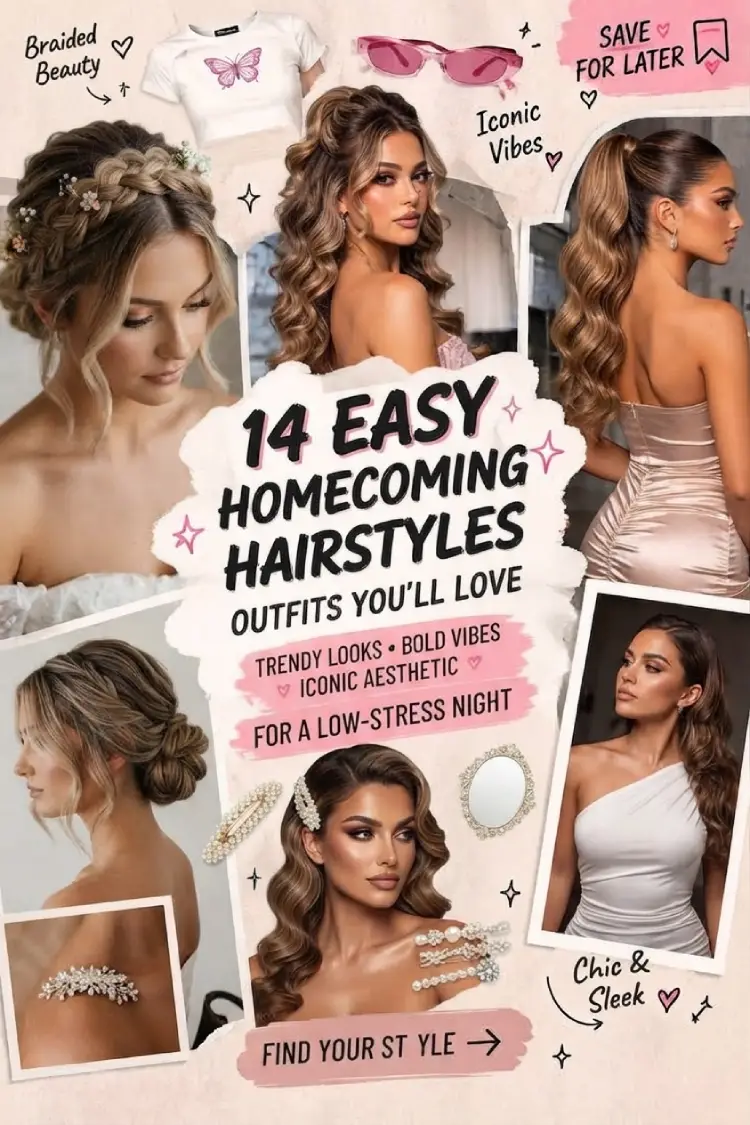
Discovering stunning homecoming hairstyles for every hair type ensures a flawless dance look hair does not need to become the hardest part of getting ready. For related styling inspiration, explore cute hairstyles for every occasion.
The best easy homecoming hairstyles give you enough polish for photos while staying manageable once the music starts. A style that takes 20 minutes to create but needs constant fixing is not really an easy option. For a dance night, hold, comfort, and how well you can recreate the look yourself matter just as much as the finished appearance.
The 14 ideas below focus on styles you can realistically create at home, with options for long, medium, and some shorter hair lengths. You will find loose looks, half-up styles, braids, buns, ponytails, and simple accessories so you can choose based on your dress, hair texture, and how much time you have.
Quick Picks: The Easiest Homecoming Hairstyles
If you are getting ready at the last minute, start here:
- Fastest polished option: Sleek low ponytail
- Best all-around choice: Twisted half-up waves
- Best for keeping hair off your face: Low textured bun
- Best for long hair: Soft waves with a half-up twist
- Best for medium hair: Braided half-up style
- Best no-fuss option: Claw-clip chignon
- Best romantic option: Low ponytail with curls
- Best accessory-led style: Half-up bow hairstyle
- Best for dancing: Dutch braid into a bun
- Best for naturally wavy hair: Defined soft waves with a side part
1. Twisted Half-Up Waves
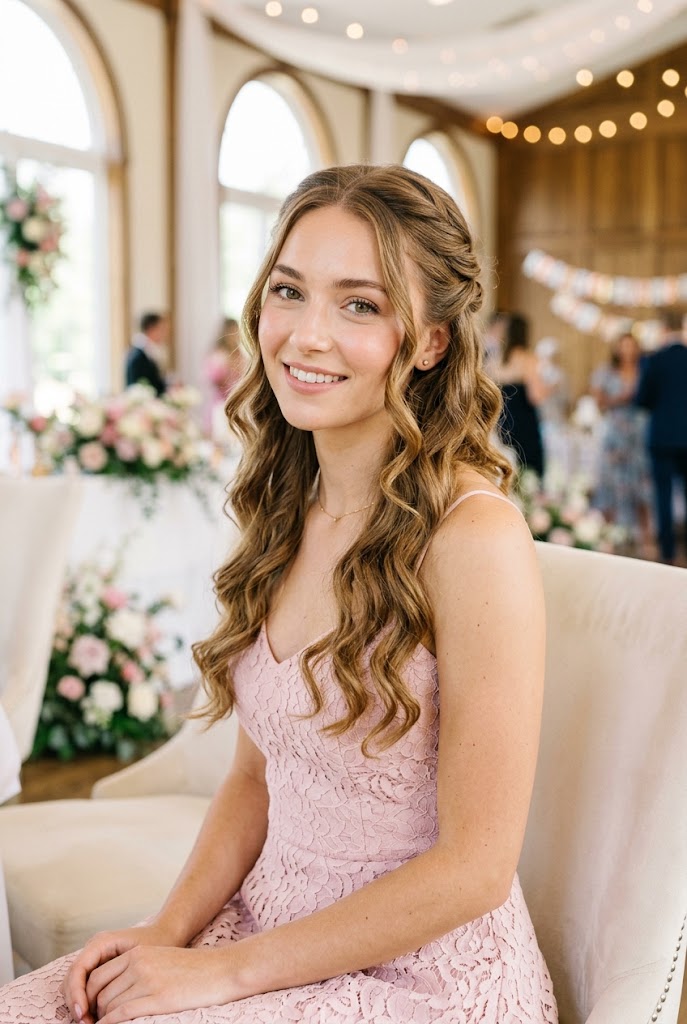
Twisted half-up waves are one of the safest choices when you want your hair down without having to manage all of it throughout the night. The basic idea is simple: create loose waves through the lengths, then take two sections from the front and twist them toward the back. Pin them together around the crown, leaving the remaining hair loose.
This style works particularly well on medium and long hair because there is enough length for the waves to show clearly. Fine hair can benefit from lightweight texturizing spray before styling, while thicker hair may need smaller sections when curling so the shape lasts.
The half-up structure also has a practical advantage. Hair around the front is secured instead of repeatedly falling across your face while dancing or taking photos. Leave two small pieces around the cheeks if you want a softer finish.
For the stylist, there is no complicated cut requirement. The important part is preserving enough length around the front to twist and pin comfortably.
Effort: Easy
Best for: Medium to long hair
Hold tip: Pin the twists underneath rather than placing visible pins on top.
2. Sleek Low Ponytail With a Wrapped Base
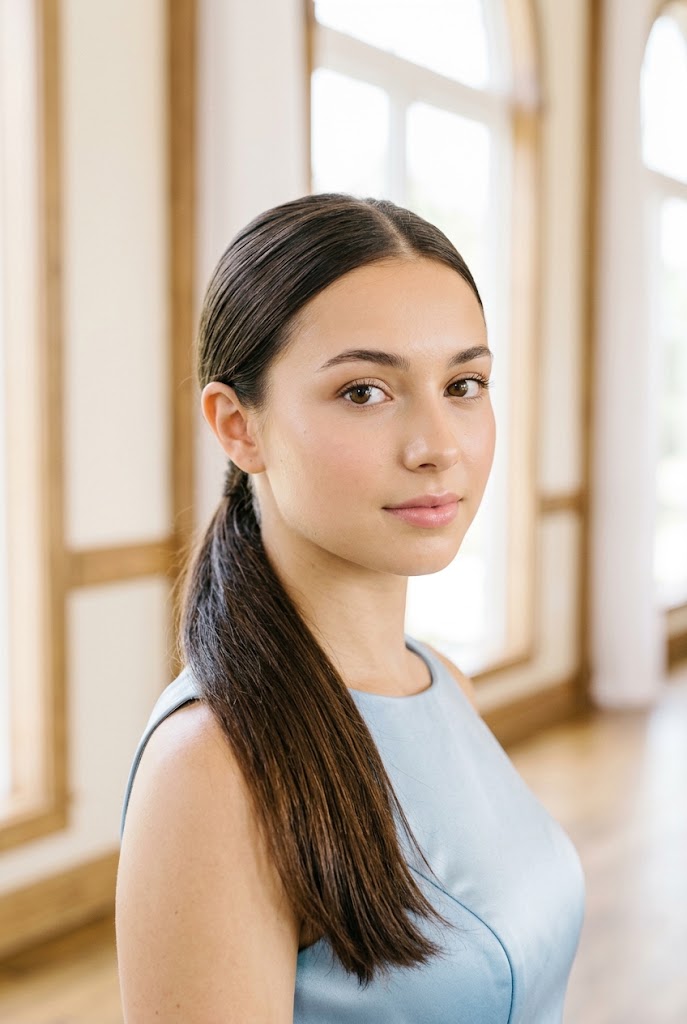
A sleek low ponytail is ideal when you want something polished without spending the evening worrying about loose curls. Brush the hair smoothly toward the nape of the neck, secure it with an elastic, then wrap a small section of hair around the base to conceal the band.
The look becomes more formal when the ponytail is very smooth and the ends are either straight or given one soft bend. It can also work beautifully with a side part if a center part feels too severe.
This style is particularly practical for dancing because the majority of the hair stays together. Long, medium, and some shorter lob-length hair can work, although very short layers may escape around the sides.
Fine hair can make a sleek ponytail appear neat without requiring much volume. Thick hair may need a stronger elastic and a second securing point underneath the ponytail.
If your dress has an interesting neckline, this hairstyle keeps the neck and shoulders visible rather than competing with the outfit.
Effort: Easy
Best for: Straight, wavy, fine, or thick hair
Hold tip: Use a small amount of smoothing product rather than coating the entire head in heavy gel.
3. Soft Low Bun With Face-Framing Pieces
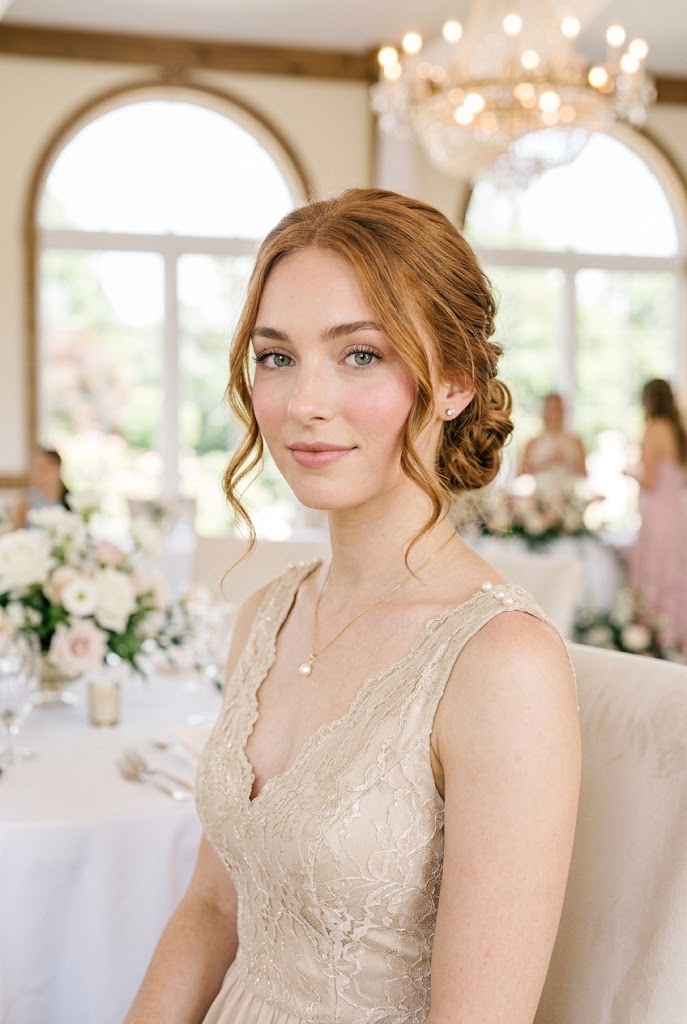
A low bun is a useful choice when you want your hair completely controlled but do not want a highly structured formal updo. Gather the hair at the nape, twist it into a loose bun, and secure it with bobby pins. Pull out a couple of fine pieces around the face afterward.
The difference between a casual everyday bun and a homecoming version comes from the preparation. Smooth the crown, add gentle texture through the lengths, and make sure the bun has enough shape rather than simply twisting all the hair into a tight knot.
Medium and long hair are easiest for this style. Thick hair may produce a substantial bun without much teasing, while fine hair can benefit from dry texture spray or a little backcombing before pinning.
This is also one of the more comfortable choices for an active dance night. Your hair is off your neck and shoulders, and there are fewer loose lengths to brush against your dress.
Keep the front pieces intentional. Two tiny tendrils look more polished than random pieces that have escaped because the bun was not secured properly.
Effort: Easy
Best for: Medium to long hair
Hold tip: Cross bobby pins into the bun rather than inserting them parallel to the scalp.
4. Half-Up Bow Hairstyle
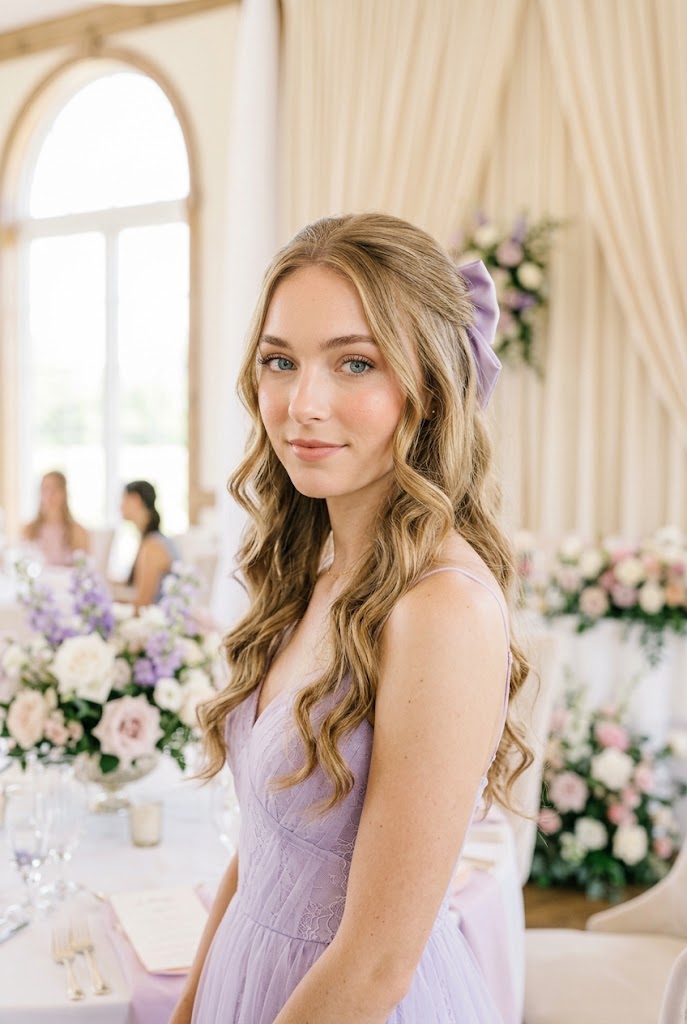
A simple bow can turn an otherwise basic half-up hairstyle into a homecoming-ready look without requiring complicated braiding or curling. Start with softly waved or naturally textured hair, gather the top section toward the back, and secure it. Finish with a satin, velvet, or narrow ribbon bow.
The hairstyle works especially well when your dress is relatively simple and you want the hair accessory to become part of the outfit. A small bow creates a subtle detail, while a larger ribbon creates a more noticeable statement.
Medium and long hair give you the most flexibility, but the half-up structure can also be adapted to a bob or lob if enough hair can be gathered at the back.
For fine hair, avoid an oversized heavy accessory that pulls on the pinned section. Thick hair may need two small elastics underneath the bow so the half-up section stays secure.
Choose the ribbon based on the overall outfit rather than trying to match every detail exactly. A complementary shade can look more intentional than an exact color match.
Effort: Very easy
Best for: Medium to long hair
Hold tip: Secure the half-up section first, then attach the bow to the elastic rather than relying on the ribbon alone.
5. Loose Side-Swept Waves
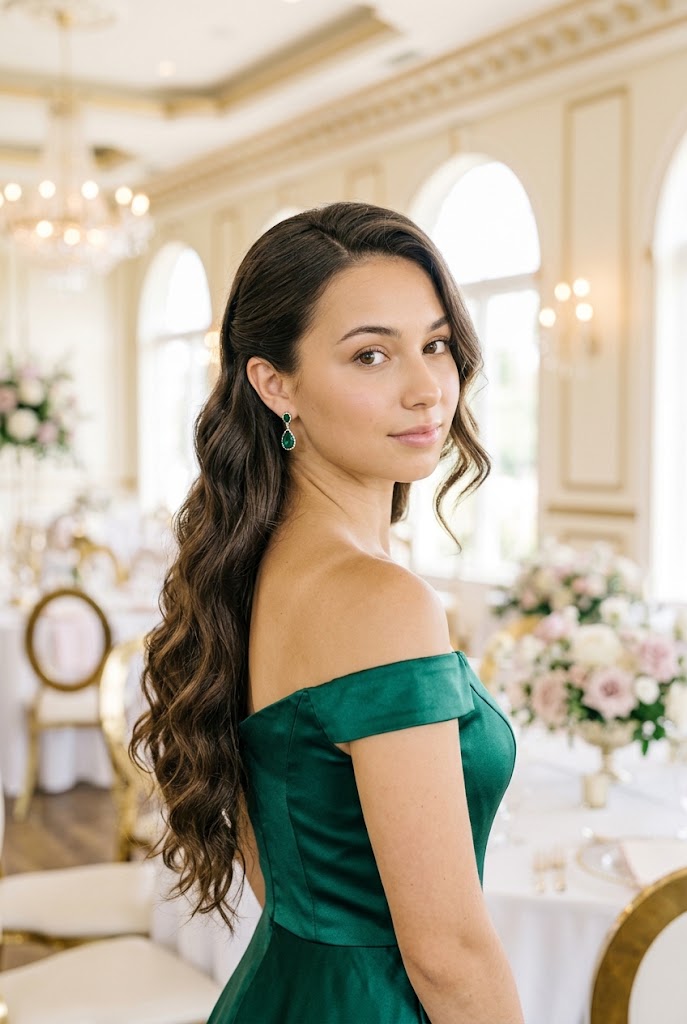
Side-swept waves give you a glamorous result without the complexity of an elaborate updo. Create loose curls or waves, brush them gently once they have cooled, and move the majority of the hair over one shoulder. A few pins behind the opposite ear can help keep the parting in place.
This option is particularly attractive for dresses with one shoulder, an asymmetrical neckline, or interesting detailing on one side. It also works with strapless dresses because the hair creates movement around the shoulders.
Longer hair shows the sweeping effect most clearly, although shoulder-length hair can still be styled this way. Fine hair may need texture spray for grip, while thick hair can benefit from working in smaller sections so the waves have enough definition.
Do not make every wave identical. Slight variation tends to create a softer result and reduces the amount of styling time.
The biggest limitation is movement. Because the hair remains mostly down, it may require occasional adjustment during energetic dancing. A few hidden pins can make a significant difference.
Effort: Easy
Best for: Medium to long hair
Hold tip: Pin the hair behind the ear on the lighter side of the sweep.
6. Braided Half-Up Hairstyle
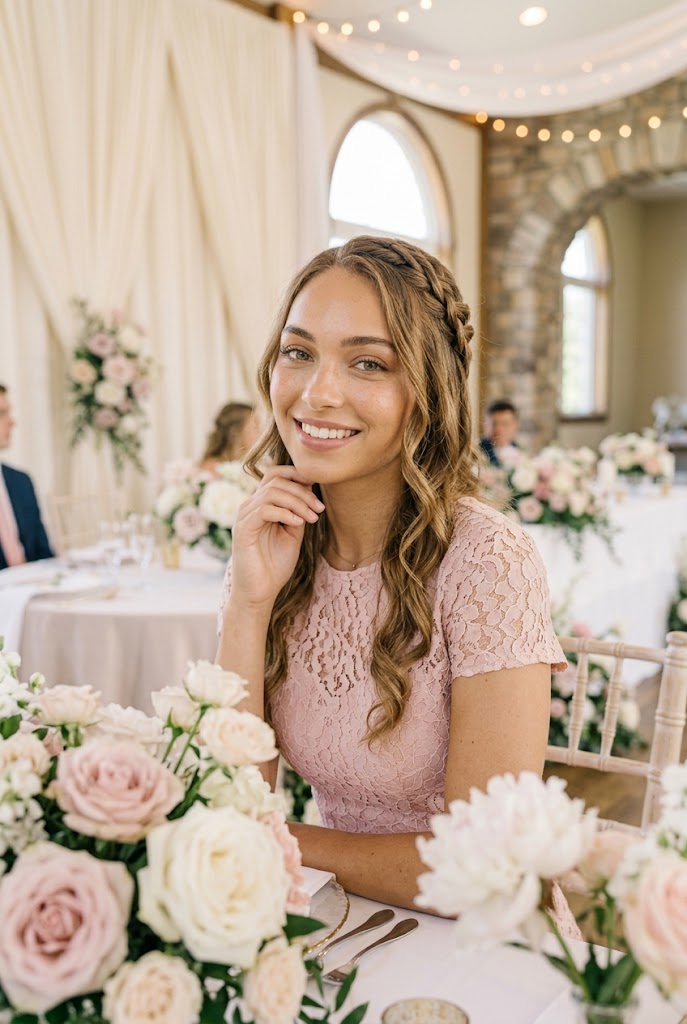
A braided half-up hairstyle gives you the visual detail of a formal style without requiring an intricate full updo. Take two sections from the sides, create simple three-strand braids, and bring them toward the back. Secure them together while leaving the remaining hair loose.
You can use straight hair, waves, or curls underneath the braid. Waves tend to make the overall look softer, while straighter lengths give the braid more contrast.
This is a good option when you want something that looks more detailed than a basic half-up ponytail. It also gives fine hair some visual texture without requiring a large amount of volume.
Thick hair can support chunkier braids, while finer hair may look better with smaller, tighter sections. If your hair is layered heavily around the crown, some shorter pieces may escape from the braid; that can be left soft and intentional rather than repeatedly trying to force them into place.
A few small decorative pins can be placed where the braids meet, but the hairstyle does not need heavy accessories to look finished.
Effort: Easy
Best for: Medium to long hair
Hold tip: Use clear mini elastics before pinning the braids together.
7. Low Ponytail With Curled Ends
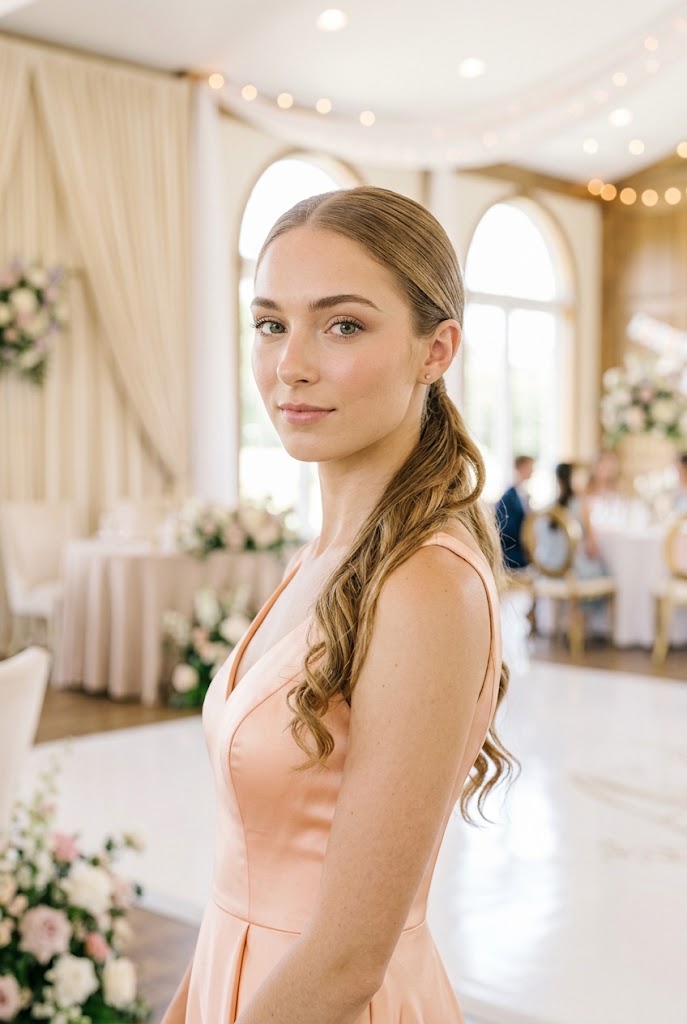
A low ponytail with curled ends is a useful middle ground between wearing your hair completely down and committing to an updo. Secure the ponytail at the nape or slightly higher, then curl or wave the loose length.
The style looks particularly polished when the crown is smooth and the ponytail has consistent movement. You can wrap a small piece of hair around the elastic for a cleaner finish.
This option is excellent for medium and long hair. A lob can also work if the ends are long enough to form a visible ponytail. Fine hair can benefit from a small amount of volume at the crown, while thick hair may need a strong elastic designed to hold more weight.
Because the ponytail keeps the hair together, it is less demanding than loose curls. You will still have movement and length for photographs, but you are less likely to spend the night pushing hair away from your face.
For a more youthful finish, leave a small amount of softness around the temples instead of making the entire front completely slick.
Effort: Easy
Best for: Medium to long hair
Hold tip: Curl the ponytail after securing it so the shape stays organized.
8. Claw-Clip Chignon
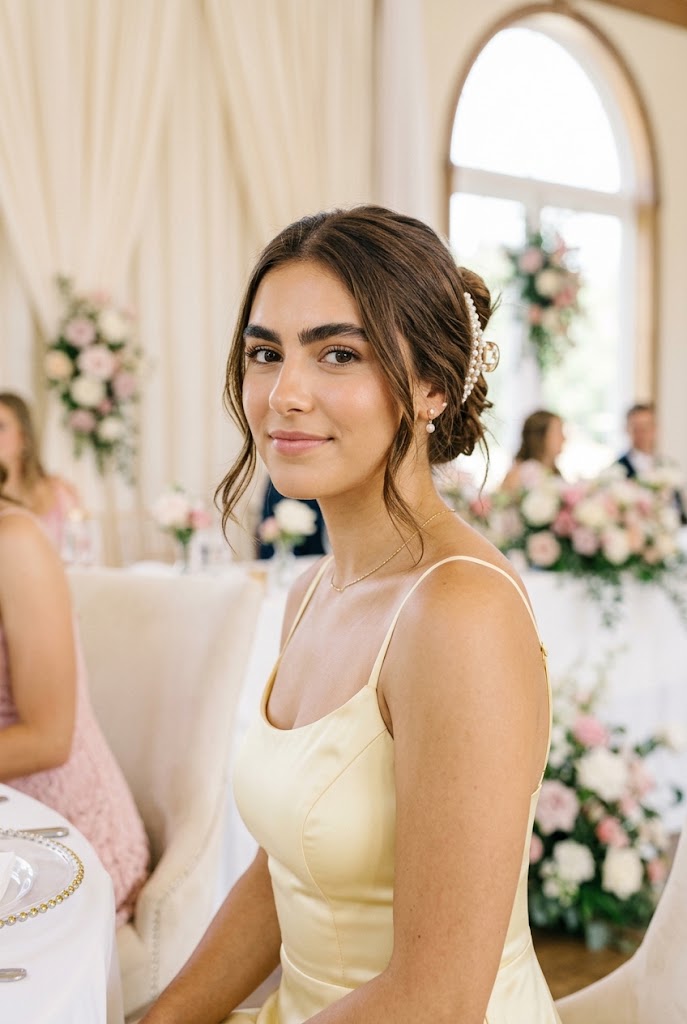
A claw-clip chignon is one of the easiest choices for someone who does not want to spend a long time working with bobby pins. Gather the hair at the back, twist it upward, tuck the ends, and secure the twist with a strong decorative claw clip.
The result depends heavily on the clip. A small clip may not support thick or long hair, while an oversized clip can overwhelm fine or short hair. Choose one that comfortably holds the amount of hair you have.
This hairstyle is especially useful if you want a relaxed formal look rather than a tightly polished updo. A few soft pieces around the face can keep it from appearing too severe.
Medium-length hair is often particularly easy to manage in this style because there is enough length to twist but not so much that the weight pulls the clip downward.
One limitation is security. If you expect a very energetic dance floor, test the clip beforehand. Shake your head, move your shoulders, and check whether the style shifts before relying on it for the entire evening.
Effort: Very easy
Best for: Medium to long hair
Hold tip: Use a smaller elastic underneath the twist if your hair tends to slide out of clips.
9. Bubble Ponytail
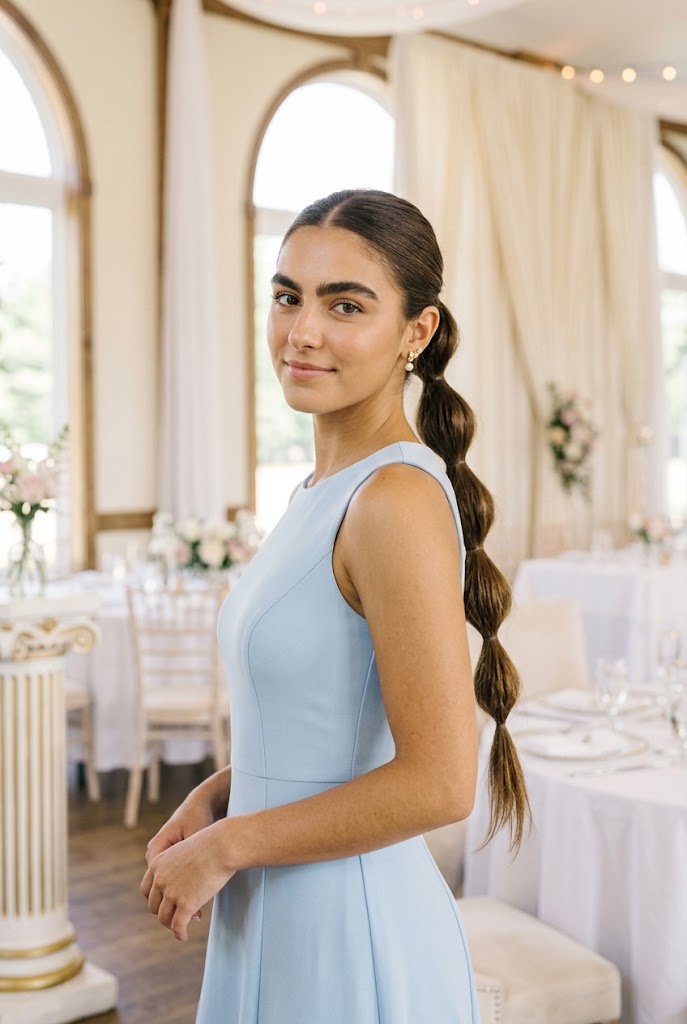
A bubble ponytail creates a statement with a surprisingly simple technique. Start with a regular ponytail, then place small elastics at intervals down the length. Gently pull the sections between the elastics outward to create rounded bubbles.
The hairstyle works best when the spacing is reasonably consistent. You do not need perfectly identical bubbles, but large differences in size can make the ponytail look accidental rather than intentional.
Long hair provides the most room for multiple sections. Medium-length hair can still work with three or four bubbles. Very fine hair may need lightweight texturizing spray to give the sections enough body, while thick hair can create naturally substantial bubbles.
This is a strong option if you want your hair secured but do not want a traditional bun. It also photographs well from the back, which makes it useful for homecoming outfits with open backs or interesting dress details.
Use elastics that blend into your hair or coordinate with the outfit. Small metallic or satin-covered elastics can also become part of the design.
Effort: Easy
Best for: Medium to long hair
Hold tip: Keep the first bubble relatively close to the base so the ponytail does not sag.
10. Two Front Twists With Loose Hair
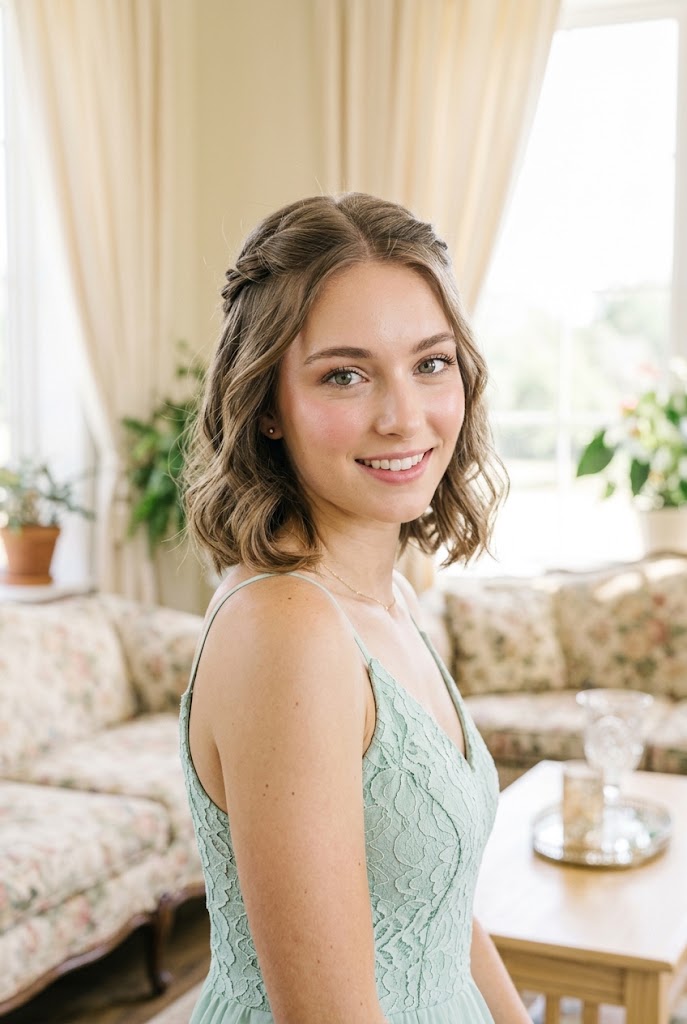
When time is tight, two front twists can give loose hair enough structure to feel intentional. Create a center or slightly off-center part, take a small section from each side, twist it backward, and secure the sections behind the crown.
The remaining hair can stay straight, naturally wavy, or softly curled. That flexibility makes this one of the most useful options for different hair textures.
Fine hair can benefit from slightly teasing the area underneath the twists before pinning. Thick hair may require stronger pins or slightly larger sections so the twists do not disappear into the rest of the hair.
The style also works well with face-framing layers because shorter pieces can remain loose around the cheeks. If you have bangs, you can keep them forward instead of forcing them into the twists.
This is a particularly good emergency hairstyle because it does not require perfect curls. If your first attempt at waves is uneven, the twists add enough structure to make the overall look appear deliberate.
Effort: Very easy
Best for: Shorter, medium, and long hair
Hold tip: Cross two bobby pins over each twist for better security.
11. Dutch Braid Into a Low Bun
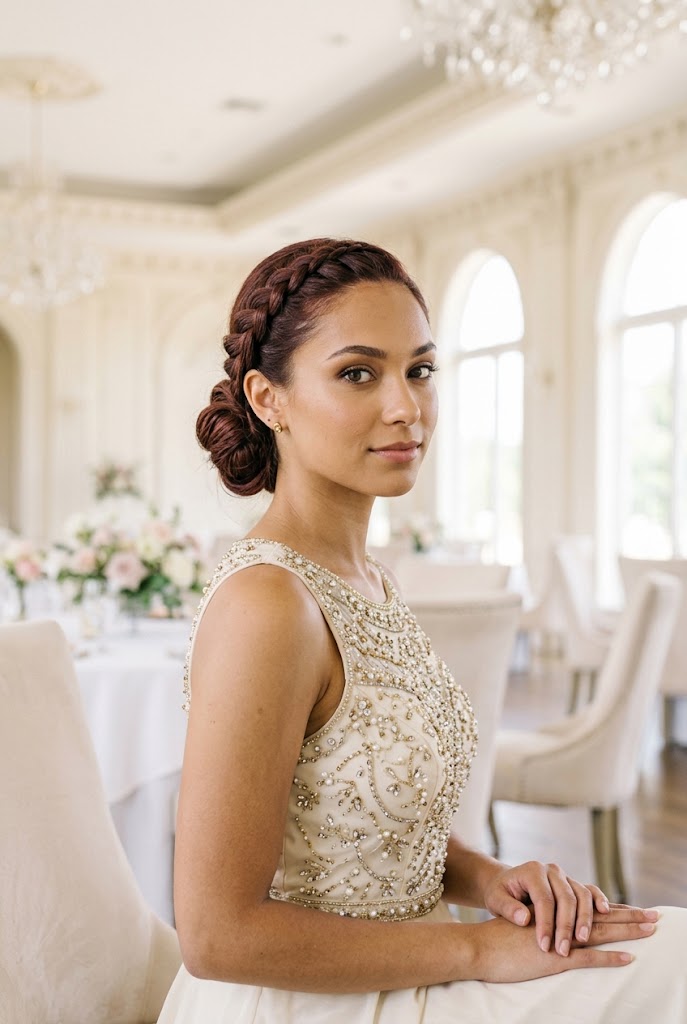
A Dutch braid leading into a low bun takes slightly more practice than the previous options, but it offers excellent security once you know the technique. Create a Dutch braid along one side or across the crown, then gather the remaining hair into a low bun.
The braid provides structure while the bun keeps the ends controlled. That makes this a strong choice when dancing and movement are major concerns.
Medium to long hair works best. Thick hair can create a substantial braid and bun, while fine hair may need gentle pulling at the braid edges to add visual fullness. Avoid pulling too aggressively because loosening the braid too much can reduce its security.
If you have layers, some shorter sections may emerge around the braid. A small amount of flexible hairspray can help without making the entire hairstyle stiff.
This style is worth practicing once before homecoming. The technique is manageable, but the back section can be difficult to judge in a mirror if you have never braided your own hair.
Effort: Moderate
Best for: Medium to long hair
Hold tip: Use the braid as the structural anchor and secure the bun separately.
12. Soft Waves With a Decorative Hair Clip
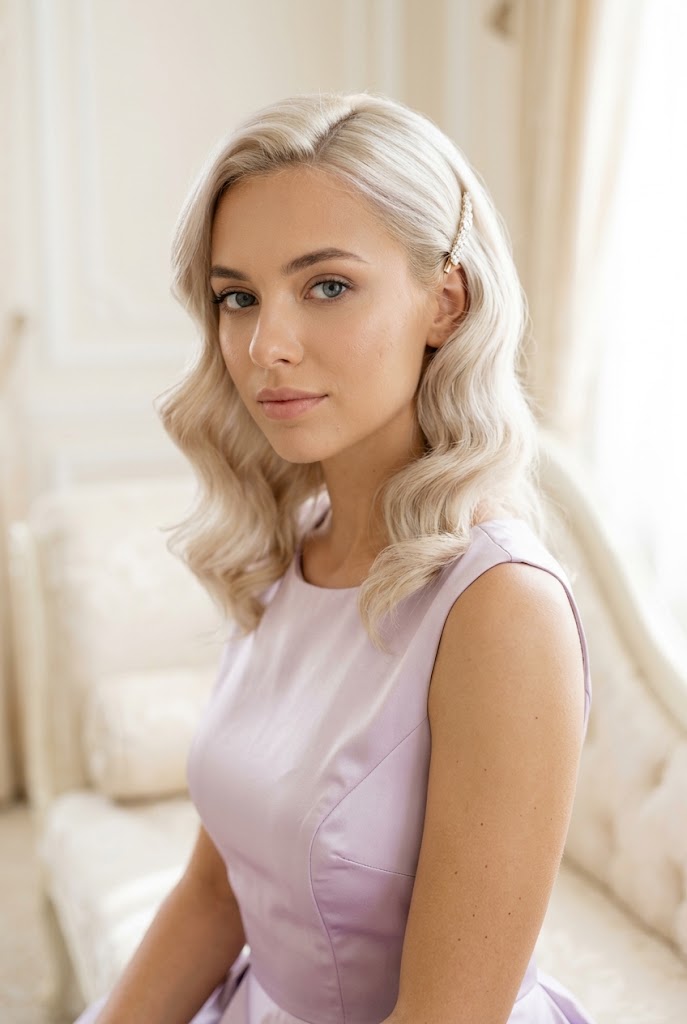
If complicated styling is not your strength, let one beautiful accessory do some of the work. Create loose waves, part the hair naturally, and add a jeweled barrette or decorative clip above one ear.
The hairstyle remains simple while the accessory creates the formal detail that makes it feel appropriate for homecoming. It is especially useful when you have limited time or want to avoid a tightly secured hairstyle.
Shoulder-length and longer hair are ideal, but a bob can also work with a smaller clip. Fine hair should use a lightweight accessory so it does not slide downward. Thick hair may need a stronger clasp designed for heavier sections.
Place the clip where it actually secures hair rather than simply resting it on top. A small hidden bobby pin underneath can also stop the accessory from shifting.
This is one of the easiest styles to personalize. Pearls, crystals, bows, metallic clips, or floral shapes can change the mood without requiring a completely different hairstyle.
Effort: Very easy
Best for: Short, medium, and long hair
Hold tip: Lightly tease the underside of the section before clipping for additional grip.
13. Rope-Twist Ponytail
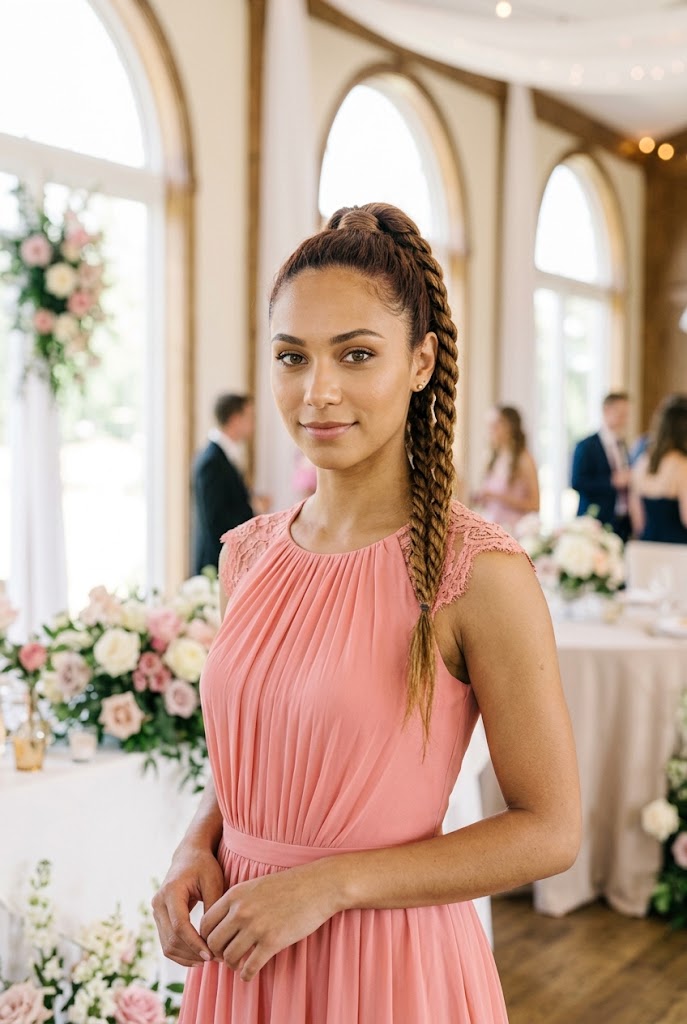
A rope-twist ponytail looks more complicated than it is. Begin with a ponytail, divide it into two sections, twist both sections in the same direction, then wrap them around each other in the opposite direction. Secure the end with an elastic.
The result gives a basic ponytail more texture while keeping the hair controlled. It is particularly useful when you want something different from curls or braids.
Long and medium-length hair work best because the twist needs enough length to become visible. Straight hair often shows the rope pattern clearly, while wavy hair produces a softer version.
Fine hair can be lightly texturized before twisting, but avoid heavy products that make the sections slippery. Thick hair may need a stronger elastic at the base.
You can leave the ponytail low for a sophisticated finish or position it around the middle of the back of the head for a more youthful look. A small ribbon around the base can also coordinate it with your dress.
Effort: Easy
Best for: Medium to long hair
Hold tip: Twist firmly enough to maintain definition without creating excessive tension at the scalp.
14. Half-Up Hairstyle With a Soft Ribbon
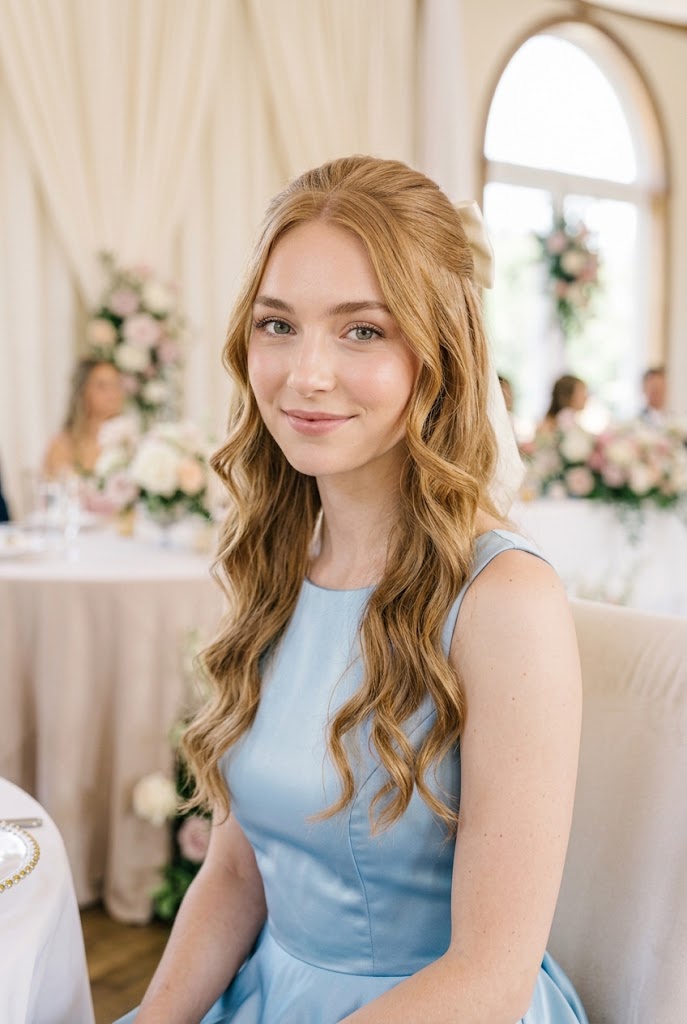
A ribbon half-up hairstyle is the ultimate low-stress option when you want something pretty but do not want to spend the afternoon perfecting your hair. Style the loose hair with soft waves, natural texture, or simply smooth the ends. Gather the top section and tie a ribbon around the secured section.
Unlike a complicated updo, the hairstyle does not depend on every strand being perfectly positioned. That makes it especially forgiving if you are styling your own hair.
The ribbon can also coordinate with your dress without requiring an exact color match. Satin creates a dressier finish, while velvet feels richer and more textured.
Medium and long hair give you the easiest half-up section, but shorter hair can use a smaller gathering at the crown. Fine hair should use a lightweight ribbon; heavy fabric can pull on the hairstyle.
For extra security, use a small elastic underneath the ribbon and tie the ribbon around that rather than relying on the fabric to hold the hair.
Effort: Very easy
Best for: Short, medium, and long hair
Hold tip: Choose a narrow ribbon if your hair is fine or slippery.
How to Choose an Easy Homecoming Hairstyle
The easiest hairstyle is not necessarily the one with the fewest steps. It is the one that fits your hair, outfit, skill level, and the amount of movement you expect.
If you plan to dance for most of the night, prioritize a ponytail, bun, braid, or secured half-up style. If photographs are more important and you are comfortable making occasional adjustments, loose waves can work beautifully.
Your dress neckline is another useful consideration. Hair worn up can show off high, halter, or detailed necklines, while loose or half-up hair can complement strapless and open-shoulder dresses. Current homecoming styling guidance similarly recommends considering the neckline when choosing how much hair to leave down.
Also consider your natural texture. A naturally wavy head of hair may only need definition and a few pins, while very straight hair may need texture spray or a light curl before a braid or twist will stay in place.
Easy Homecoming Hairstyles by Hair Type
Fine Hair
Fine hair often benefits from styles that create structure without requiring excessive teasing. Twisted half-up looks, two front twists, decorative clips, and braided styles can make the hair appear more detailed without depending on huge volume.
Avoid loading the hair with heavy oils before styling because slippery strands can make pins and elastics less secure. Lightweight mousse or texture spray can give the hair more grip.
A smaller accessory is usually easier to manage than a heavy bow or oversized claw clip. If you want a bun, creating a little texture first can help it hold its shape.
Thick Hair
Thick hair can support substantial buns, braids, and ponytails, but weight becomes the main consideration. Use strong elastics and enough pins to distribute the weight instead of relying on one pin to hold the entire style.
A low bun, Dutch braid into a bun, bubble ponytail, or rope-twist ponytail can take advantage of the density without leaving the hair completely loose.
When curling thick hair, work in manageable sections and allow each section to cool before brushing it out. Otherwise, the style can lose its shape quickly.
Straight Hair
Straight hair provides a clean base for sleek ponytails, low buns, rope twists, and smooth half-up styles. The challenge is usually grip rather than neatness.
If braids or twists tend to unravel, apply a small amount of texturizing product before beginning. You can also avoid freshly washed hair immediately before styling if your hair becomes especially slippery when clean.
Soft waves can work beautifully too, but use heat protectant and allow curls to cool before loosening them.
Wavy Hair
Naturally wavy hair is well suited to low buns, half-up twists, loose ponytails, and accessory-based styles. Instead of trying to completely straighten the texture, enhance the natural wave and work with it.
A small amount of curl cream or lightweight styling product can help define the pattern. A half-up twist is particularly forgiving because slight differences between waves do not have to be corrected.
For humid conditions, concentrate hold product around the crown and front rather than saturating the entire hairstyle.
Curly Hair
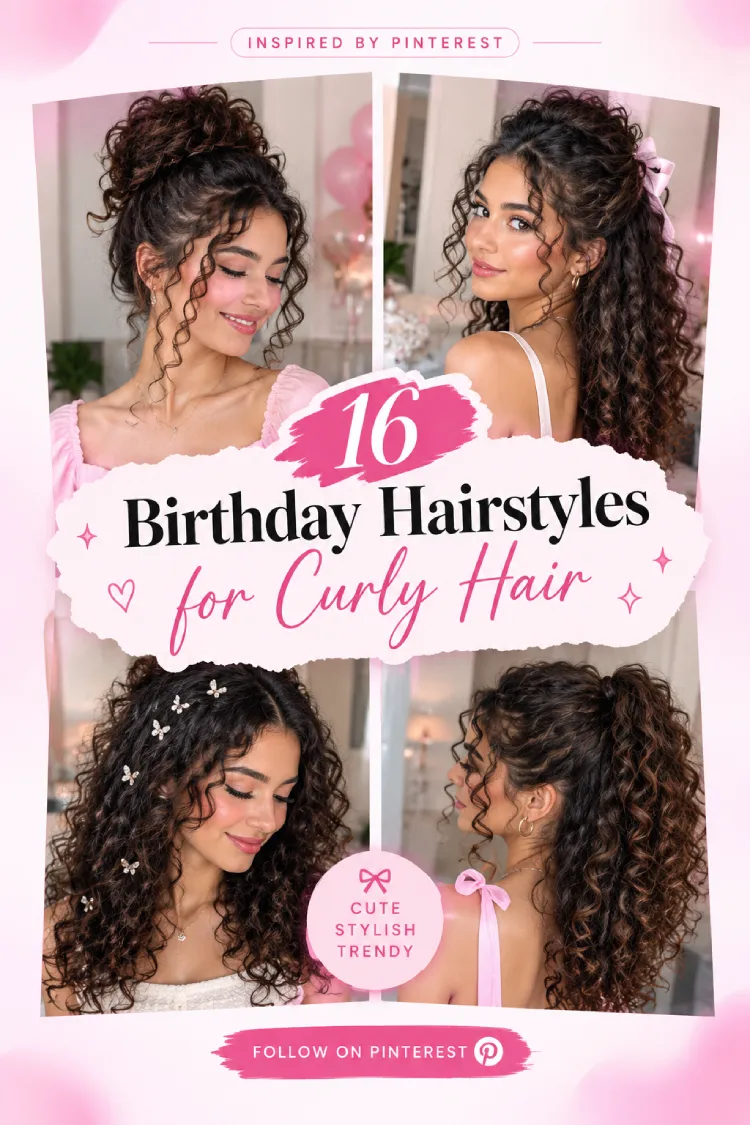
Curly hair does not need to be transformed into straight or loose waves to become homecoming-ready. A defined curly half-up style, low puff-like bun, or pinned-back curly look can retain the natural pattern while giving it a formal shape.
Choose products based on your normal curl routine rather than experimenting with several new products immediately before the event.
Secure the style in a way that does not flatten the curl pattern. Decorative pins and small clips can add detail without requiring major manipulation.
Coily Hair
Coily hair offers many possibilities for homecoming, from defined natural texture and pinned-up styles to braided or twisted looks. The easiest choice depends on your established styling routine and how much preparation your hair normally requires.
If your hair is already stretched, twisted, braided, or defined, build the homecoming style around that existing texture rather than starting from scratch.
Comfort matters here as much as appearance. Avoid creating excessive tension simply to achieve a tighter silhouette, particularly around the hairline.
Easy Homecoming Hairstyles by Face Shape
Round Face
Styles with some vertical movement or height can create a different visual balance from a hairstyle that is very wide at the sides. A side-swept wave, higher ponytail, or half-up style can work nicely.
You do not need to avoid rounded curls or buns altogether. Placement and proportion matter more than a strict rule about which hairstyles are “allowed.”
Oval Face
An oval face can work with many different placements, which makes it easy to experiment. Half-up waves, low buns, ponytails, braids, and side-swept styles can all be adapted.
Use the hairstyle to complement the dress rather than choosing solely according to face shape.
Square Face
Soft texture around the face can balance the stronger visual lines often associated with a square face. Loose waves, side-swept hair, and softly pinned half-up styles can create movement.
Avoid making the hairstyle unnecessarily rigid unless a sleek look is specifically what you want.
Heart-Shaped Face
Styles that maintain some softness around the lower face can create a balanced appearance. Half-up waves, low ponytails with face-framing pieces, and side-swept styles are easy choices.
If you wear a high bun or ponytail, leaving a few soft pieces around the temples can change the overall effect.
Long Face
Width and texture can be useful when choosing a style for a longer face shape. Soft waves, low buns with loose pieces, and half-up styles can all work.
You do not need to avoid height completely, but extremely tall volume at the crown may emphasize vertical length more than you want.
Diamond Face
Soft waves, side parts, and styles with gentle fullness around the sides can complement diamond-shaped proportions. A decorative clip or side-swept style can also bring attention toward the hairstyle rather than creating one strong central line.
Which Easy Homecoming Hairstyle Is Best for Dancing?
If you expect to spend most of the night dancing, rank the options by security rather than appearance alone.
Most secure:
- Dutch braid into a low bun
- Low textured bun
- Sleek low ponytail
- Rope-twist ponytail
- Bubble ponytail
Moderately secure:
6. Braided half-up
7. Twisted half-up
8. Claw-clip chignon
More movement required:
9. Low ponytail with curls
10. Side-swept waves
11. Loose soft waves
That does not mean loose waves will fall apart. It simply means they have more hair moving independently, so they may need occasional adjustment.
How to Make an Easy Homecoming Hairstyle Last
Start with hair that has enough grip for the style. Extremely slippery hair can make braids, twists, and pins difficult to secure.
Use heat protectant whenever you use a curling iron, wand, or straightener. Give curled sections time to cool before brushing or arranging them.
For pinned styles, place pins underneath the visible hair rather than stacking them directly on top. Crossed bobby pins usually provide more security than a single straight pin.
Do a movement test before leaving home. Turn your head, bend forward, move your shoulders, and gently shake your hair. If the hairstyle shifts during a 30-second test, fix it before you leave rather than waiting until the dance.
Most importantly, bring a tiny emergency kit if you have room: a couple of bobby pins, one spare elastic, and a small amount of finishing product can solve many minor problems.
What to Tell Your Stylist
If you decide not to style your hair yourself, describe the result rather than simply asking for “easy homecoming hair.”
For a half-up style, you might say:
“I want soft waves with the top section twisted back, but I still want enough hair around my face to keep the style soft.”
For a low bun:
“I’d like a low textured bun at the nape with a smooth crown and a few controlled face-framing pieces.”
For a ponytail:
“I’d like a polished low ponytail with soft movement through the ends and the elastic hidden with a piece of hair.”
If you want a braid, bring a reference image and explain whether your priority is security, softness, volume, or keeping the hair away from your face.
Easy Homecoming Hairstyle Mistakes to Avoid
Trying a completely new technique on the actual day
Practice once beforehand. Even a simple style can take longer the first time.
Curling freshly washed, slippery hair without preparation
If your hair struggles to hold shape, texture and grip may matter more than adding more hairspray at the end.
Using too many heavy products
Heavy product buildup can make fine hair flat and make pins slide through smooth strands.
Ignoring the weight of your hair
A thick, long ponytail can become uncomfortable if the elastic is too weak or the style is positioned too tightly.
Choosing a hairstyle that fights your dress
A highly detailed hairstyle and highly detailed neckline can compete visually. Sometimes a simple ponytail or bun lets the dress do more of the work.
Waiting until the last minute to test the hold
Dance, humidity, movement, and photographs are very different from standing still in front of a mirror.
Frequently Asked Questions
What is the easiest homecoming hairstyle to do yourself?
A twisted half-up hairstyle, two front twists, simple low ponytail, or half-up style with a ribbon are among the easiest choices. They require fewer complicated steps and are relatively forgiving if the finish is not perfectly symmetrical.
What is an easy homecoming hairstyle for long hair?
Long hair gives you plenty of options, including soft waves, low buns, bubble ponytails, rope-twist ponytails, braided half-ups, and Dutch braids into buns. For dancing, a secured ponytail or bun is usually more practical than leaving all the length loose.
What is the easiest homecoming hairstyle for medium hair?
Medium hair works especially well with twisted half-ups, braided half-ups, low ponytails, claw-clip chignons, and soft waves. The key is choosing a style that does not require more length than you actually have.
Can I do my own homecoming hair?
Absolutely. Choose a style that matches your existing skill level and practice it once before the event. Half-up twists, simple ponytails, bows, decorative clips, and loose waves are especially approachable for DIY styling.
Should I wear my hair up or down for homecoming?
Consider both your dress and how much you plan to move. Updos and ponytails keep hair controlled and can highlight the neckline, while loose hair gives you more movement and softness. Half-up styles provide a useful middle ground.
How can I make homecoming hair last all night?
Start with appropriate preparation, use heat protectant when needed, secure pins properly, and choose a hairstyle suited to your hair’s texture and density. A style that works with your natural hair usually requires less fighting and fewer repairs.
Is a half-up hairstyle good for homecoming?
Yes. Half-up styles combine the visual softness of wearing your hair down with some of the security of an updo. They are also flexible enough to work with waves, curls, braids, twists, bows, and decorative clips.
What should I bring for a homecoming hair emergency?
A couple of bobby pins, one spare hair elastic, and a small finishing product are usually enough for minor repairs. If you are wearing a claw clip or decorative accessory, bringing a backup pin can also help.