Short Hairstyles for Fine Hair
Fine hair can be deceptively versatile. The individual strands may be smaller in diameter, but that does not automatically mean you have low density or very little hair. Fine hair can be straight, wavy, curly, or coily, and it can range from sparse to surprisingly abundant. That distinction matters because the haircut that works beautifully on dense fine hair may not be the best choice for hair that is both fine and low-density.
The most successful short hairstyles for fine hair usually have one thing in common: the shape is doing some of the work. A clean perimeter, carefully placed graduation, restrained layering, or strategic fringe can help the hair look more substantial without relying on heavy styling. For even more weightless, full-bodied cuts, explore our updated collection of short hairstyles for fine hair.
Current professional beauty coverage frequently points toward blunt and structured bobs, French bobs, pixies, layered pixies, and bixies as particularly adaptable options. The important detail is not simply choosing a short length; it is choosing where the haircut keeps weight and where it creates movement.
If your goal is hair that looks fuller, easier to style, or simply more intentional, these are some of the strongest short haircut directions to consider.
Quick Picks: Which Short Cut Works Best for Fine Hair?
| Hairstyle | Best Feature | Styling Effort | Tie-Back Potential |
| Blunt Bob | Dense-looking ends | Low–Medium | Limited |
| French Bob | Compact fullness | Low–Medium | Limited |
| Chin-Length Bob | Versatility | Medium | Usually limited |
| Graduated Bob | Lift at the back | Medium | Limited |
| Layered Bob | Movement | Medium | Sometimes |
| Textured Bob | Airy volume | Low–Medium | Sometimes |
| Bixie | Bob versatility + pixie lift | Medium | Rarely |
| Classic Pixie | Easy daily handling | Low–Medium | No |
| Layered Pixie | Crown texture | Medium | No |
| Short Shag | Movement and texture | Low–Medium | Rarely |
1. Blunt Bob for Fine Hair
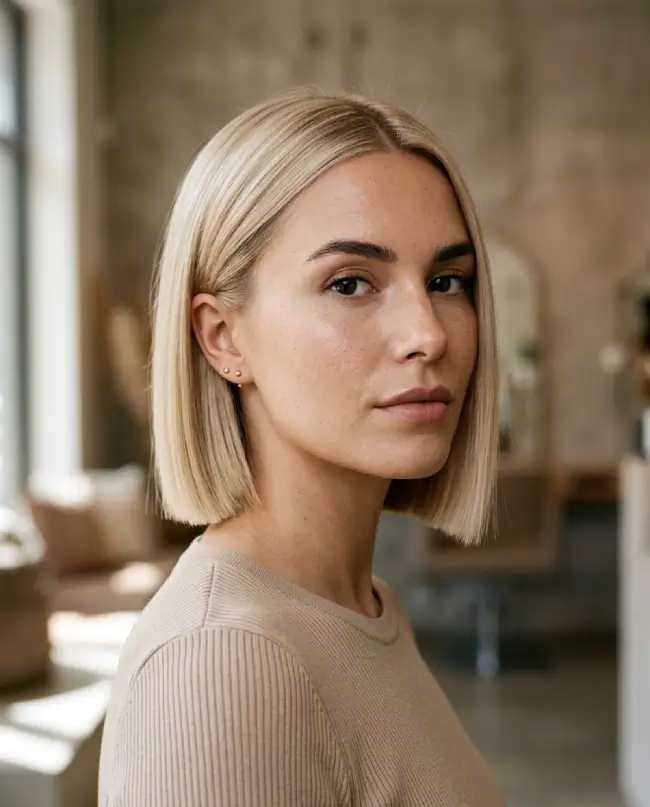
A blunt bob is one of the clearest choices when your priority is making fine hair appear denser. Instead of heavily removing weight through layers, the haircut finishes with a relatively strong perimeter. That solid line gives the ends a more substantial visual presence, particularly when the hair is straight or softly wavy.
For fine hair with lower density, a blunt bob can be especially useful because excessive layering may make the ends appear separated or wispy. A length around the jaw or chin often creates a compact silhouette, although the ideal point depends on your neck, jawline, natural texture, and preferred styling.
Straight fine hair can show the precision of this cut beautifully. Fine wavy hair can also work, but the perimeter may need to be adapted so the natural wave does not make the shape look uneven. A little root-lifting mousse or lightweight volumizing spray can add body without coating the strands.
Maintenance is relatively straightforward, but the clean outline means grown-out ends become noticeable. Ask your stylist for a strong, clean perimeter with minimal weight removal, and show a reference photo indicating exactly where you want the bob to finish. Current professional guidance also frequently recommends blunt or structured shapes when the goal is a fuller-looking silhouette.
2. French Bob for Fine Hair
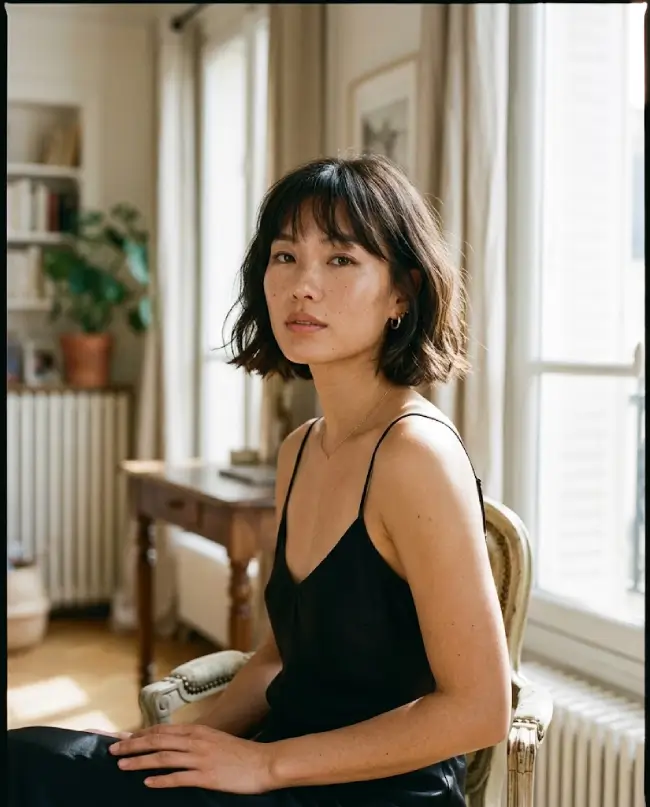
The French bob combines a compact shape with a deliberately understated finish. It commonly sits around the jaw or above it and may include bangs or a soft fringe. For fine hair, its strength comes from keeping the overall silhouette concentrated rather than allowing length to pull the strands downward.
Fine straight hair can make a French bob look especially graphic, while fine waves can give it a softer, less precise personality. If you have fine hair but plenty of density, subtle texture can be introduced without destroying the strong shape. If your hair is genuinely sparse, however, ask for restraint with texturizing because excessive removal can make the ends look thinner.
Face shape is also worth considering. A shorter French bob draws attention toward the eyes, cheekbones, jaw, and lips, while fringe changes the visual proportions around the forehead. A longer fringe or parted fringe can provide more flexibility than a very short, heavy bang.
Styling can be surprisingly simple. Fine hair often responds well to a lightweight styling cream, mousse, or texture product rather than several layers of heavy product. Air-drying may work beautifully on naturally wavy hair, while straight hair may benefit from a quick blow-dry to establish the rounded or polished shape.
Ask for a jaw-skimming French bob with a clean perimeter and soft, individualized fringe, explaining whether you want it to look polished or slightly undone. French bobs are repeatedly featured in current fine-hair coverage because their compact shape can make delicate strands look intentional and substantial.
3. Chin-Length Bob
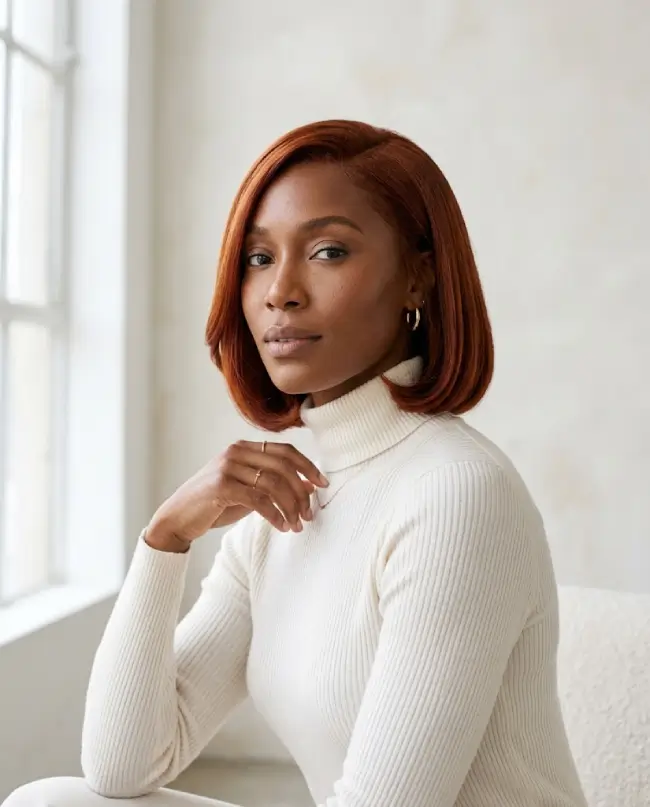
A chin-length bob sits in a useful middle ground: it is short enough to reduce the weight that can drag fine hair down, but long enough to offer more styling possibilities than a very short crop. This makes it one of the easiest starting points if you are nervous about going dramatically short.
The key decision is the perimeter. A clean chin-length line can create the appearance of density, while subtle internal shaping can introduce movement without visibly thinning the ends. Fine straight hair often looks polished with a sleek finish, whereas fine wavy hair can be encouraged into loose bends for additional dimension.
Your face shape can influence where the chin-length line should sit. Placing the widest or strongest part of the silhouette at the chin can emphasize that area, so your stylist may slightly adjust the length or angle to balance your features. There are no universal rules here; small changes can make the same basic bob look completely different.
This cut requires moderate maintenance because the shape is easy to recognize as it grows. It can often be tucked behind the ears, making it practical for work or everyday errands, although a full ponytail is generally unrealistic unless your hair is long enough to extend beyond the jaw and neckline.
For the salon, describe it as a chin-length bob with a strong perimeter and very subtle internal shaping, and mention whether preserving visual thickness at the ends is more important to you than creating lots of movement.
4. Graduated Bob
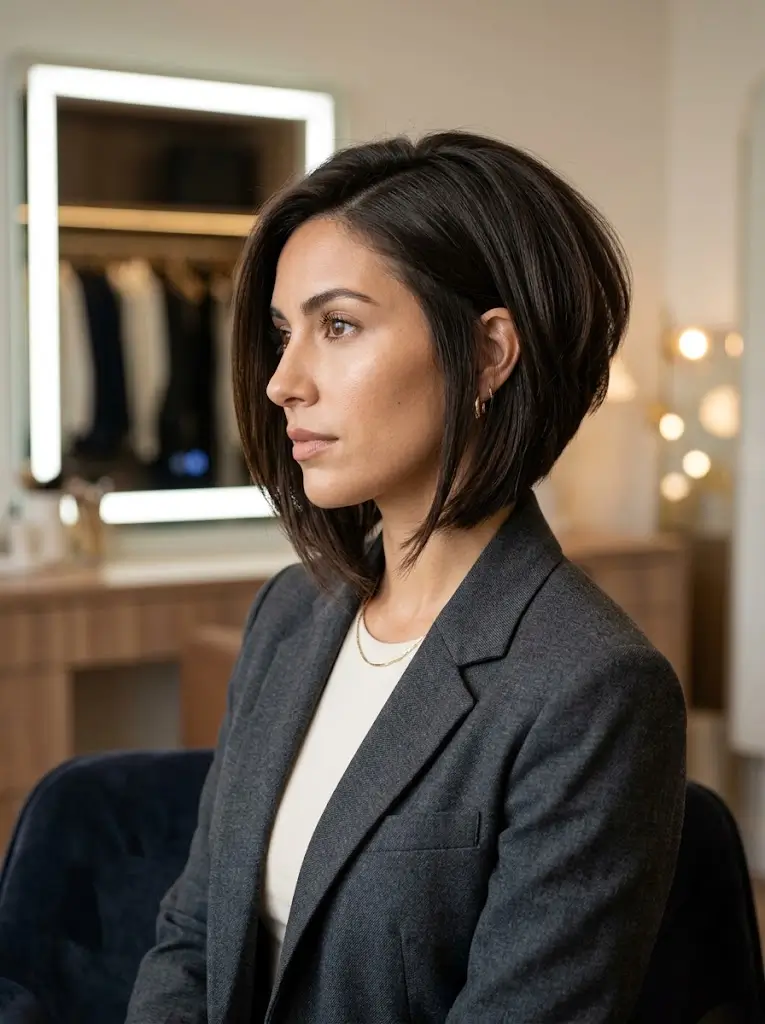
A graduated bob uses shorter sections toward the back to create a controlled change in length. On fine hair, that graduation can provide lift and structure without requiring aggressive layers throughout the entire haircut. The result is often a fuller-looking back and a more shaped profile.
This style can work particularly well when fine hair tends to collapse at the crown or nape. The shorter underneath sections can support the longer hair above them, although the amount of graduation should be customized to your density. If you have very low-density hair, too much graduation can expose areas you would rather keep covered.
Straight hair shows the architecture of a graduated bob clearly, while waves soften the transition and create a more relaxed finish. Fine curly hair can also be adapted into a graduated silhouette, but shrinkage needs to be considered before the stylist decides the final length.
The maintenance level is moderate. The cut looks best when the graduation remains controlled, so regular trims help preserve its shape. It is less suitable if your priority is tying your hair into a ponytail every day.
Ask your stylist for a softly graduated bob that preserves as much visible density as possible, rather than simply requesting “lots of layers.” Bring a photo from the side as well as the front, because the profile is a major part of this haircut.
5. Layered Bob for Fine Hair
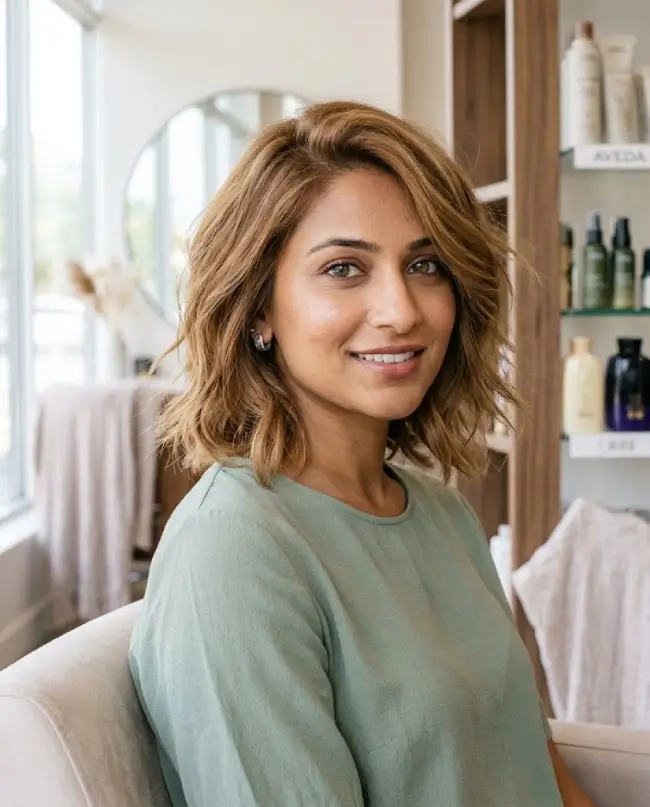
A layered bob can be excellent for fine hair, but it requires more judgment than a blunt bob. Layers can create movement, lift, and texture when placed strategically; too many layers can have the opposite effect by removing the visual weight that makes fine ends look full.
This distinction is particularly important for density. Fine hair with plenty of strands can often handle more layering than fine hair with low density. A stylist may use subtle crown layers or internal shaping while leaving the perimeter comparatively solid.
Fine wavy hair is a natural match for this approach because the layers can encourage the wave pattern to move rather than sit as one flat mass. Straight hair may need some styling to show the layers, particularly if it tends to fall close to the head.
A layered bob generally requires more styling than a blunt bob, but the trade-off is greater movement. A lightweight mousse followed by a quick blow-dry or air-drying with a small amount of texture cream may be enough. Avoid automatically reaching for heavy oils or thick creams if your strands become flat easily.
For a salon appointment, ask for subtle layers that create movement through the interior while keeping enough weight at the perimeter to prevent the ends from looking sparse. This is much more useful than simply asking for “volume layers.”
6. Textured Bob

A textured bob is a good option when you want fine hair to look less flat and more dynamic. Unlike a heavily layered haircut, the goal is usually controlled irregularity: enough separation and movement to keep the shape from appearing lifeless without making the ends look depleted.
Fine wavy hair can be particularly attractive in this style because natural bends provide much of the texture. Fine straight hair can also wear a textured bob, but you may need a small amount of styling product or a few loose bends from a heat tool to reveal the shape.
The biggest consideration is how the texture is created. Fine hair can respond poorly to excessive thinning or aggressive texturizing, especially when density is already low. A stylist can instead use selective shaping and preserve the strongest sections of the perimeter.
This haircut suits a relaxed lifestyle if your natural texture cooperates. It can often be refreshed with a small amount of texture spray or lightweight mousse. If your hair is extremely straight and resistant to holding shape, expect more styling time.
Ask for a softly textured bob that preserves density at the perimeter rather than heavily thinning the ends. This distinction is especially valuable if you have fine strands that become transparent-looking at the tips.
7. Bixie
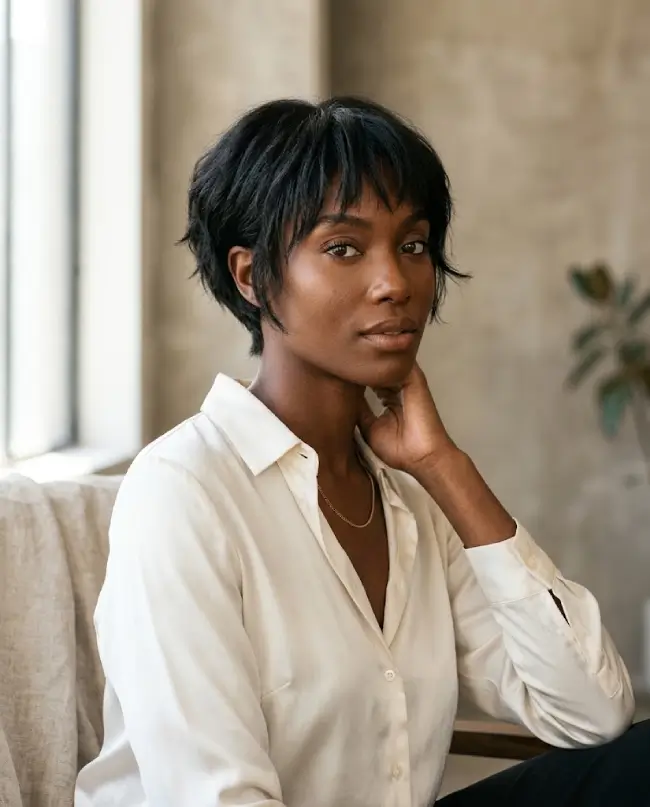
The bixie sits between a bob and a pixie, giving you some of the shape and movement associated with both. It is particularly useful if you want to go shorter but are not ready for a traditional cropped pixie.
For fine hair, the bixie can create volume through its shorter proportions while retaining enough length around the sides, crown, or fringe for customization. The result can be sleek and controlled or choppy and textured depending on how it is cut.
Fine straight hair often benefits from a little piecey styling around the crown and fringe. Fine wavy hair may require very little effort because the natural texture can provide the movement that gives the bixie its character. Density is important: very low-density hair may need a cleaner, less fragmented version to avoid a see-through appearance.
Grow-out is one of the bixie’s major considerations. Because it occupies an in-between length, the shape can change noticeably as the hair grows. That can be good news if you are considering a gradual transition toward a bob, but it means the cut may need periodic reshaping.
Ask for a soft bixie with enough length around the face to customize the fringe and enough crown structure to create lift. The bixie is now regularly included among short fine-hair options because it combines some of the versatility of a bob with the lighter proportions of a pixie.
8. Classic Pixie
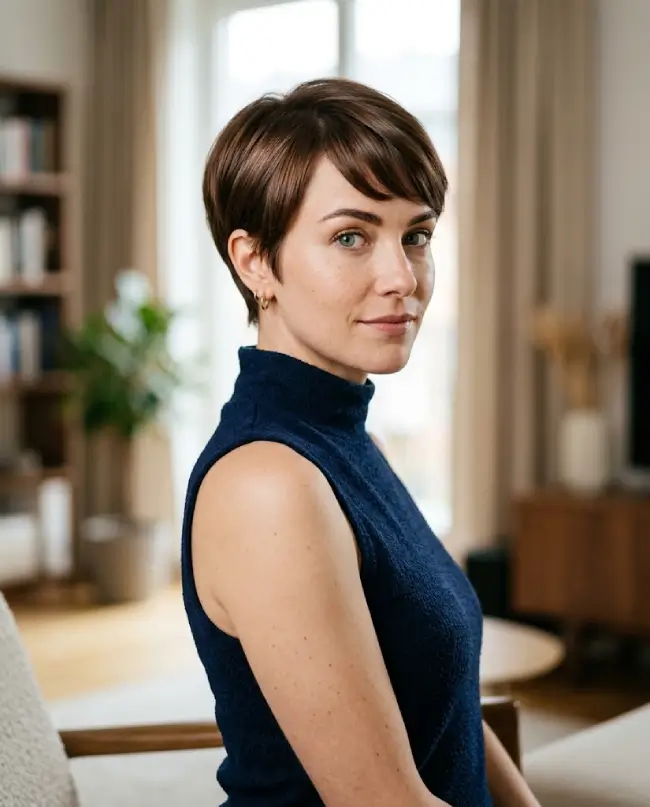
The classic pixie is one of the shortest options in this guide and can dramatically reduce the amount of hair you need to manage. For fine hair, that can be an advantage because there is less length available to become weighed down.
A pixie can be tailored around the face, ears, neckline, and crown. That customization matters more than simply choosing “short.” Fine hair may benefit from leaving slightly more length through the top so the stylist can create separation and lift, while the sides and neckline can be kept cleaner.
Fine straight hair can look sleek and graphic in a pixie, while waves can produce a softer, more irregular finish. Curly or coily fine hair may also work beautifully, but shrinkage and curl pattern should be considered before cutting.
The downside is commitment. A pixie cannot be tied back, and growing it out requires patience through several transitional shapes. Maintenance can also be higher than expected if you want the original silhouette to remain crisp.
Styling is generally quick. A small amount of lightweight paste or texture cream may be enough to separate pieces. Avoid applying large amounts of product because fine strands can become coated and lose lift.
For your stylist, say: “I want a pixie that keeps enough length on top for styling and volume, with a clean neckline and sides.” Current fine-hair guidance consistently recognizes pixies as useful when the cut is adapted to density, texture, and face shape.
9. Layered Pixie
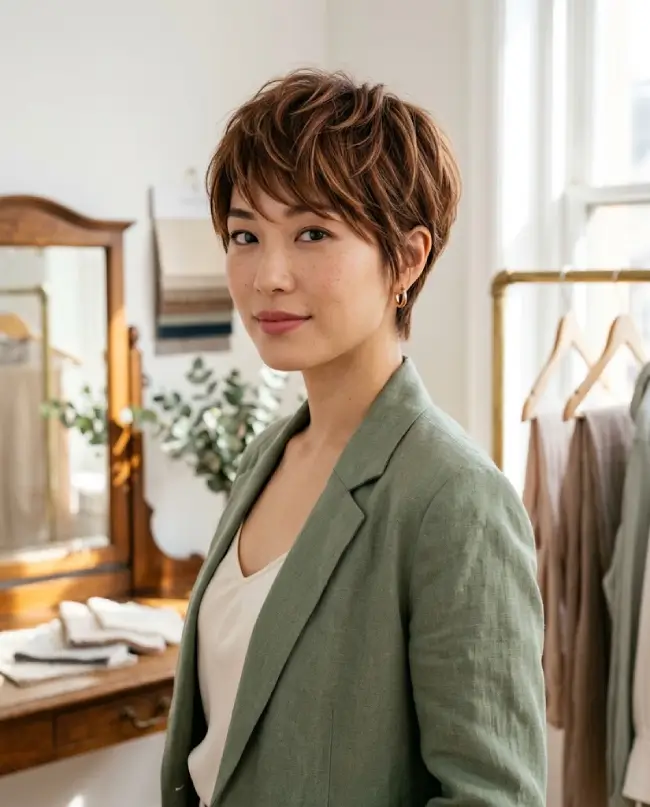
A layered pixie provides more movement than a very traditional, uniform crop. Strategic shorter pieces can encourage the longer sections to stand away from the head, creating the impression of texture and dimension.
This can be particularly helpful for fine hair that is abundant enough to support multiple layers. If your hair is fine but low-density, however, the stylist should avoid removing too much from areas where you need coverage.
The crown is usually the most important area. Carefully placed layers can give the top more visual height, while a longer fringe can soften the face. A side-swept fringe may also offer a useful styling option on days when you want a different silhouette.
Maintenance is moderate to high depending on how precise you want the shape. The cut itself is easy to wash and dry, but short layers become obvious as they grow. Regular reshaping keeps the style intentional.
A layered pixie can be a practical choice for someone who wants short hair but dislikes a completely flat, uniform crop. It also works well for people willing to spend a few minutes manipulating the hair with their fingers.
Tell your stylist: “Keep the layers concentrated where I need lift, but preserve enough weight to stop my fine hair from looking thin.” Strategic layering, rather than maximum layering, is the important distinction.
10. Short Shag
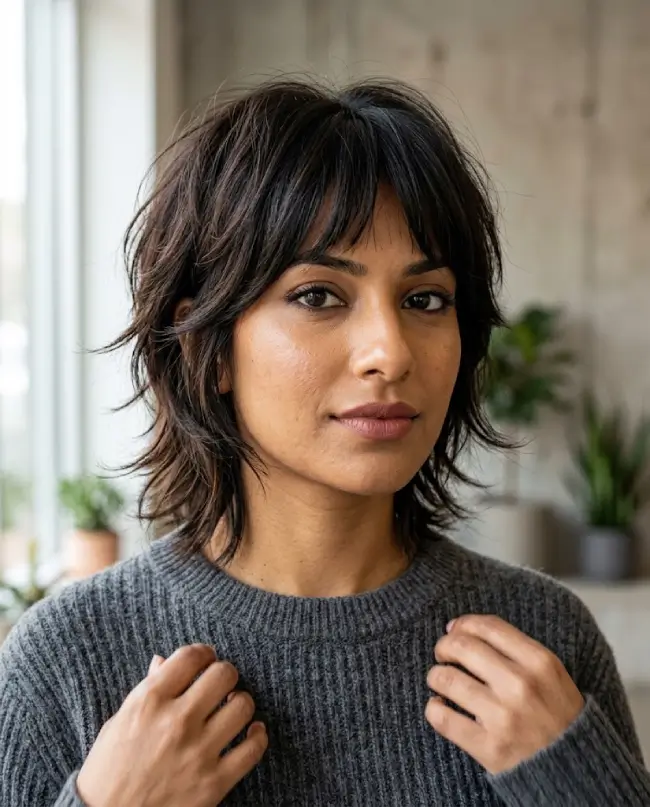
A short shag takes a different approach to fine hair. Instead of relying primarily on a solid perimeter, it uses layers, movement, and texture to create an intentionally airy shape. This makes it especially interesting for fine hair with a natural wave or bend.
The style can work on straight hair too, but straight fine strands may require more styling to reveal the separation between layers. Wavy and curly textures often have an easier time producing the lived-in movement associated with a shag.
Density should be discussed carefully. If your hair is fine but plentiful, a short shag can distribute that volume beautifully. If your hair is both fine and sparse, very aggressive layering may expose too much scalp or make the ends look thin.
The maintenance can be relatively relaxed because the style is designed to have movement rather than a perfectly geometric outline. That said, the haircut still needs occasional reshaping to keep the layers balanced.
Styling can be as simple as applying mousse or lightweight texture cream to damp hair and allowing the natural pattern to develop. A diffuser can help curly or wavy hair retain shape without excessive brushing.
Ask for a short shag with controlled layers and face framing, while keeping enough density around the areas that look naturally sparse. Shaggy layering is also frequently recommended for fine or thin-looking hair when texture and movement are the main goals.
How to Choose the Right Short Hairstyle for Fine Hair
The best haircut depends on more than the word “fine.” Start by looking at four things: strand diameter, density, natural texture, and styling habits.
If your strands are fine but you have a lot of them, you have considerably more freedom with layers and texture. If your hair is fine and low-density, preserving the perimeter becomes more important.
Next, consider your natural texture. Straight fine hair often benefits from clean shapes because the haircut is visible. Wavy hair can handle softer layers and movement. Curly and coily hair require more attention to shrinkage and curl pattern because the finished length may be considerably shorter once the hair dries.
Finally, think about how you actually live. A short pixie may be easier to wash and dry, but it cannot be pulled into a ponytail. A bob takes longer to dry than a pixie but gives you more flexibility with tucked-behind-the-ear styling. A textured cut may look great with air-drying but require product to behave consistently.
The right question is not “Which haircut makes fine hair thick?” A haircut cannot change strand diameter or create new density. A better question is: “Which shape makes the amount of hair I have look its strongest?”
Fine Hair vs. Thin Hair: They Are Not the Same
Fine hair describes the diameter of individual strands. Thin hair usually describes density, meaning how much hair grows across the scalp. Pixie cuts provide exceptional root lift for finer strands—explore the versatile modern medium pixie haircut.
You can have fine hair with high density, fine hair with low density, coarse hair with low density, or thick-looking hair made from many fine strands.
This distinction changes haircut recommendations.
Fine hair with high density can often support more texture and layering. Fine, low-density hair generally benefits from preserving weight and avoiding excessive thinning. Current expert coverage makes the same distinction, noting that fine hair can occur across different densities and textures, while thin hair refers more specifically to density.
If you are unsure which category describes you, ask your stylist to assess both your strand diameter and overall density before deciding on the amount of layering.
Short Hairstyles for Fine Hair by Texture
Fine Straight Hair
Straight fine hair shows every line of a haircut, which makes precision particularly important. Blunt bobs, French bobs, chin-length cuts, and sleek pixies can all work well because their silhouettes remain visible without relying on natural texture.
The trade-off is that straight fine hair can also expose poor weight distribution quickly. Excessive thinning may make the ends look sparse, while too much length can cause the hair to lie close to the head.
A lightweight volumizing mousse, root spray, or blow-drying technique can create additional lift without making the hair stiff. If you want a very low-effort routine, prioritize a haircut that looks good close to your natural texture.
Fine Wavy Hair
Fine waves give you a built-in source of movement. A textured bob, layered bob, bixie, or short shag can use that natural pattern to create dimension without requiring a curling iron.
The main risk is over-layering. Waves already create separation, so removing too much weight can make the hair look thinner than it actually is.
Air-drying can be an excellent option if your wave pattern is consistent. Apply a small amount of lightweight mousse or curl-enhancing product to damp hair, scrunch gently, and allow it to dry without excessive manipulation.
Fine Curly Hair
Fine curly hair needs a particularly thoughtful approach because curl shrinkage changes the apparent length and the distribution of volume.
A tapered pixie, rounded short bob, or controlled shag can work beautifully, depending on the curl pattern. The stylist should assess the hair dry as well as wet when appropriate, because the final shape needs to account for shrinkage.
Avoid assuming that every fine curly head needs lots of layers. Sometimes the curl pattern itself provides enough movement. The goal is to create a balanced silhouette while keeping the curls defined.
Fine Coily Hair
Fine coily hair can look incredibly full when shaped thoughtfully, but shrinkage, density, and curl pattern become even more important. Short tapered cuts, cropped styles, and carefully shaped bobs can all work, provided the final proportions are designed around the natural coil.
The stylist should understand how the hair behaves when dry. A few millimeters of difference can change the finished silhouette considerably.
Lightweight moisture and definition products may work better than heavy products that flatten the roots. The haircut should support the natural pattern rather than forcing the hair into a texture it does not naturally have.
Short Hairstyles for Fine Hair by Face Shape
Round Face
With a round face, the goal does not have to be making the face look “less round.” Instead, think about where the haircut creates height, width, and visual emphasis.
A longer pixie with volume at the crown can elongate the overall silhouette, while a bob that extends slightly below the widest part of the cheeks can create a different proportion. Side-swept fringe can also introduce an angled visual line.
Avoid rigid rules about what round faces can or cannot wear. A short French bob, for example, may look completely different depending on the fringe, parting, and texture.
Oval Face
Oval faces tend to offer substantial flexibility because the proportions are relatively balanced. This allows you to choose primarily according to your hair density, texture, and preferred maintenance level.
A blunt bob can emphasize the jawline, while a pixie draws attention toward the eyes and cheekbones. A bixie provides a middle option.
The more important question for fine hair is where the haircut preserves weight. If density is low, prioritize a shape that keeps the ends visually substantial.
Square Face
A square face can work with both structured and soft short cuts. A blunt bob emphasizes a strong jawline, while rounded ends, waves, or a softer fringe can introduce contrast.
A textured pixie can also work well when the top carries movement and the sides are shaped thoughtfully.
Rather than trying to “hide” a square jaw, consider whether you want to emphasize it or soften the overall impression. Your preference should guide the haircut.
Heart-Shaped Face
Heart-shaped faces often have a broader forehead and narrower chin area. Short hairstyles can balance that relationship through fringe, side volume, or a slightly longer front.
A French bob with a soft fringe can work well if you enjoy a defined shape. A longer pixie with side-swept pieces offers more movement around the forehead and cheek area.
For fine hair, avoid adding so much texture around the top that the forehead becomes the only visual focus. Placement matters more than the number of layers.
Long Face
A long face can be balanced by considering width and horizontal movement rather than adding excessive height.
A chin-length bob, wavy bob, or fringe can introduce visual width. A pixie can also work, particularly when the top is not excessively elongated.
Fine hair often benefits from a little texture or wave because it can make a compact cut appear fuller and more dimensional.
Diamond Face
Diamond-shaped faces often have prominent cheekbones with a narrower forehead and jaw. Short cuts can highlight those cheekbones beautifully.
A textured bob, side-swept pixie, or soft French bob can all work depending on where the weight sits. Face-framing pieces can be used to shift attention toward or away from the cheekbones.
For fine hair, focus on maintaining enough fullness around the areas you want to emphasize rather than relying on heavy product.
Low-Maintenance Short Hairstyles for Fine Hair
If low maintenance is your priority, start with the difference between daily styling and salon maintenance.
A pixie may take only a few minutes to style in the morning, but it often needs frequent reshaping to keep its intended silhouette. A blunt bob may require slightly more drying but can remain recognizable for longer as it grows.
For minimal daily effort, consider:
- A blunt bob that follows your natural texture
- A French bob with natural waves
- A simple chin-length bob
- A soft pixie
- A natural-texture bixie
- A short shag if your hair already has wave or curl
Air-drying potential is highly individual. A haircut that air-dries beautifully on fine wavy hair may fall completely flat on fine straight hair. Do not choose a cut solely because an inspiration photograph appears “effortless”; the result may depend on styling, product, or naturally cooperative texture.
Short Hairstyles for Fine Hair You Can Tie Back
Short hair and ponytails do not always go together.
A pixie is generally too short for a practical ponytail. A bixie may allow some tiny sections to be secured, but it is not usually a dependable workout hairstyle. A chin-length bob can sometimes be gathered if your hair is dense enough and the front pieces are long enough, but expect shorter sections to escape.
If tying your hair back is important, consider staying closer to a longer bob or lob rather than choosing a cropped cut.
Tell your stylist that you need enough length to secure the hair for exercise or work. That requirement can change the ideal haircut considerably.
Pixie vs. Bob for Fine Hair
| Consideration | Pixie | Bob |
| Daily drying | Very quick | Quick–Moderate |
| Styling | Usually easy | More versatile |
| Visual fullness | Strong when shaped well | Strong with solid perimeter |
| Tie-back | No | Sometimes |
| Grow-out | More noticeable | Generally easier |
| Salon maintenance | Often higher | Moderate |
| Texture options | High | Very high |
| Commitment | Higher | Lower |
| Best for | Minimal length and bold shape | Versatility and flexibility |
Choose a pixie if you genuinely enjoy short hair and want to reduce daily handling. Choose a bob if you want the option to tuck, part, wave, straighten, or gradually grow your hair longer.
How to Make Fine Hair Look Fuller in a Short Haircut
The haircut is only one part of the equation.
Keep weight where it helps. Fine, low-density hair often benefits from a stronger perimeter.
Avoid unnecessary product buildup. Heavy creams, oils, and thick styling products can collapse delicate strands.
Use root-focused styling. Applying lightweight mousse or volumizing spray near the roots can create lift without coating every strand.
Change your part occasionally. Moving the part can provide temporary root lift because the hair is not repeatedly falling in the same direction.
Use heat strategically. A quick blow-dry at the roots can make a meaningful difference, but excessive heat can damage delicate strands.
Do not confuse texture with thickness. A messy finish can make hair appear more dimensional, but it does not actually increase density.
Current professional guidance commonly emphasizes shape, controlled layering, and lightweight volumizing approaches rather than simply adding more and more layers.
What to Tell Your Stylist
Instead of saying only, “I want a short haircut for fine hair,” describe the result you want.
For a fuller-looking bob:
“I want a chin-length bob with a strong perimeter. Please keep the ends looking dense and use only subtle internal shaping.”
For a French bob: Looking to sculpt and define facial features with shorter hair? See these flattering short haircuts for round faces.
“I want a compact French bob around the jaw, with a soft fringe that can be worn straight or slightly parted.”
For a pixie:
“I want a short pixie but enough length through the crown to create lift and change the direction of the styling.”
For a bixie:
“I want a soft bixie that keeps some bob-like length around the face but has enough shorter layers through the crown for movement.”
For a textured cut:
“I want movement without making the ends look thinner, so please preserve density around the perimeter.”
Also bring photographs taken from multiple angles. A front-facing image alone cannot show the neckline, graduation, crown shape, or amount of layering.
Frequently Asked Questions
Is short hair better for fine hair?
Short hair can be helpful because less length is available to weigh the strands down, but there is no single length that works for everyone. Fine hair with low density may benefit from a compact shape that preserves visual weight, while fine hair with high density can accommodate more layering.
What is the best short haircut for very fine hair?
A blunt or softly structured bob is often a strong starting point when the goal is a fuller-looking perimeter. A pixie can also work well if you prefer a much shorter style. The right choice depends on density, texture, face shape, and how much styling you want to do.
Is a bob or pixie better for fine hair?
Neither is universally better. A bob offers more styling flexibility and some tie-back potential, while a pixie reduces length and can be extremely quick to style. If you are uncertain about going very short, a bob is usually the less dramatic transition.
Should fine hair have layers?
Sometimes. Fine hair with plenty of density can benefit from strategic layers that create movement. Fine, low-density hair may look fuller with fewer layers and a stronger perimeter. The goal is controlled placement rather than maximum layering.
Does a blunt bob make fine hair look thicker?
It can create the visual impression of denser ends because the perimeter remains solid. It does not increase the actual number or diameter of hair strands.
What short hairstyle is easiest to maintain?
A simple haircut that works with your natural texture is generally easier than a complicated style that requires daily heat styling. A pixie may be quick to style but can require frequent trims, while a bob may take slightly longer to dry but offer a more forgiving grow-out.
Can fine curly hair be cut short?
Yes. Fine curly hair can work beautifully in short shapes, but the haircut needs to account for curl pattern and shrinkage. A stylist experienced with your curl type can determine how much length is needed to achieve the intended shape.
Can you put fine short hair in a ponytail?
It depends on the length. A chin-length or longer bob may be partially or fully tieable for some people, while a pixie generally is not. If a ponytail matters to your lifestyle, tell your stylist before choosing the final length.
How often should a short fine haircut be trimmed?
The ideal schedule depends on the cut. Highly precise pixies and sharply defined bobs may need more frequent reshaping than softer textured styles. Rather than following a universal schedule, book the next trim when the silhouette begins losing the shape you wanted.
What products work well for fine hair?
Lightweight mousse, root-lifting spray, texture spray, and light styling creams can be useful. The best product depends on your texture and scalp behavior. Heavy oils, waxes, and creams may weigh some fine strands down, so start with a small amount.
Can short hair make fine hair look fuller?
A suitable haircut can create the appearance of greater fullness through shape, density preservation, and texture. It does not change the underlying strand diameter or create additional hair.
What should I avoid if my hair is fine and sparse?
Avoid automatically requesting heavy thinning or extensive layers. Those techniques can be appropriate in some circumstances, but removing too much visual weight from already sparse areas can make the ends look even less substantial.