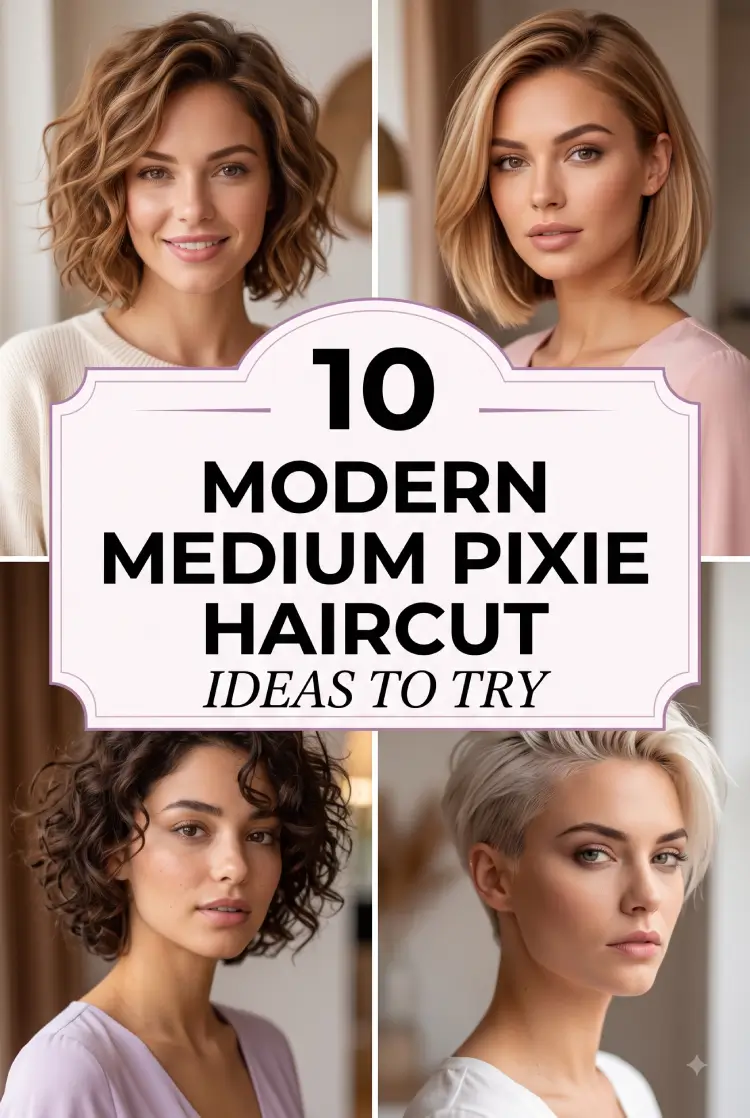
A modern medium pixie haircut sits in a useful middle ground: shorter and easier to manage than a conventional bob, but longer and more adaptable than a traditional close-cropped pixie. The extra length can remain through the crown, fringe, sides, or around the ears, giving you more options for parting, tucking, pinning, or changing the finish from one day to the next.
The supplied reference focuses on 10 variations within this medium-pixie category, including grown-out, shaggy, sleek, curly, undercut, choppy, feathered, polished, and fringe-forward shapes. For lightweight crown volume and soft movement, check out this flattering short haircut with feathered crown.
The important distinction is that “medium pixie” is not one exact haircut. Two cuts can have similar overall length but behave completely differently depending on where the weight is left, how the nape is shaped, whether the sides are clipped, and how much texture is built into the top.
Below, each variation is explained with those practical differences in mind.
Quick Picks: Which Medium Pixie Is Right for You?
| If you want… | Consider… |
| A transitional cut while growing out a pixie | Textured Grown-Out Pixie |
| Movement and an undone finish | Soft Shaggy Pixie Bob |
| A polished, sophisticated shape | Sleek Side-Swept Pixie |
| To keep and showcase natural curls | Curly Long Pixie |
| Less bulk through thick sides | Undercut Pixie |
| Piecey texture and casual movement | Side-Part Choppy Pixie |
| Soft, feminine movement | Feathered Pixie Bob |
| The easiest deliberately messy option | Messy Grown-Out Pixie |
| A neat professional finish | Polished Pixie Bob |
| Fringe that changes the proportions of the face | Tousled Fringe-Forward Pixie |
1. Textured Grown-Out Pixie

A textured grown-out pixie is one of the most practical choices when you like short hair but do not want to maintain a very tight pixie indefinitely. It generally keeps more length through the top, sides, and area around the ears, creating a silhouette that can begin to resemble a short bob as it grows. Texture prevents that extra length from looking shapeless.
This version can be particularly useful for fine or medium-density hair because strategically placed layers can create separation and movement without requiring a large amount of styling product. Straight hair can look deliberately piecey, while slightly wavy hair can make the shape appear more relaxed with little intervention. Very thick hair may need internal weight removal so the sides do not expand too much.
Face shape is relatively flexible. Crown height can add verticality, while a side tuck can expose the cheekbone and change the balance of the cut. It is also one of the better medium-pixie options if you occasionally want to pin a front section back, although a complete ponytail is usually unrealistic at this length.
For maintenance, ask your stylist to keep some length around the ears and top while maintaining a clean, softly shaped nape. If you are intentionally growing out a shorter pixie, tell them that the grow-out phase matters as much as the immediate haircut.
Styling effort: Low to moderate.
Best suited to: Fine-to-medium straight or wavy hair.
Watch for: Excessive bulk at the sides as it grows.
Best stylist request: “Keep the top and ear area longer so I can tuck and reshape it while it grows out.”
2. Soft Shaggy Pixie Bob

The soft shaggy pixie bob combines the compact shape of a pixie with the movement associated with a short layered bob. Instead of a sharply defined perimeter, the ends are broken up with softer layers, giving the haircut a more relaxed outline around the cheekbones and jaw. The reference places this variation around the cheekbone-to-jaw area and emphasizes movement rather than a rigid finish.
This is particularly interesting for fine hair because carefully distributed layers can make the hair appear more active and dimensional. However, too many short layers can have the opposite effect on very fine hair, so the stylist needs to preserve enough weight at the perimeter. Medium-density wavy hair is another strong match because its natural bends can supply much of the desired texture.
For a round face, keeping some height through the crown while allowing softer pieces to fall vertically can create a longer-looking visual line. On a square face, airy ends and side movement can soften the appearance of a stronger jaw. Oval and heart-shaped faces can usually accommodate a broad range of versions.
This is one of the more forgiving choices for people who prefer air-drying. A curl cream or lightweight styling cream can encourage natural movement, while straight hair may benefit from a quick rough-dry and a small amount of texture spray.
Ask for soft, point-cut layers with a lightweight perimeter rather than an aggressively chopped shape if you want movement without making the haircut look disconnected.
Styling effort: Low.
Best suited to: Fine-to-medium wavy, straight, or lightly curly hair.
Maintenance: Moderate; the layered shape can tolerate some growth.
Best stylist request: “I want a soft pixie-bob shape with airy layers and movement, not a heavily razored finish.”
3. Sleek Side-Swept Pixie

A sleek side-swept pixie takes the medium length and concentrates it toward the front and top, where it can be directed across the forehead. The result is cleaner and more controlled than a choppy or shaggy version. A deep side part can create a pronounced sweep, while a slightly longer front gives you enough material to shape around the eye and cheekbone.
Straight hair is the easiest starting point for this cut because the natural direction already supports a smooth finish. Medium-to-thick hair can also work well, although bulk may need to be removed underneath the longer top so the sweep does not become too heavy. Fine hair can wear the style too, but excessive smoothing product can make it look flat, so root lift is useful.
This shape is especially adaptable for heart-shaped and oval faces. On a heart-shaped face, the diagonal fringe can visually connect the forehead and cheekbone area. For a round face, maintaining some lift at the crown rather than flattening everything against the head can provide more vertical balance. A long face may call for a less extreme side sweep and more fullness around the sides.
The main tradeoff is styling. Unlike a deliberately messy pixie, this version looks best when the part and front section are controlled. Blow-drying with a small brush usually gives the most predictable result, with a flat iron used sparingly if necessary.
Ask for a longer front section, a defined side part, and enough length to create a genuine sweep rather than a short fringe that merely points sideways.
Styling effort: Moderate.
Best suited to: Straight, medium-to-thick hair.
Maintenance: Moderate, particularly around the fringe.
Best stylist request: “Keep the front long enough for a smooth side sweep and keep the back cleaner and shorter.”
4. Curly Long Pixie
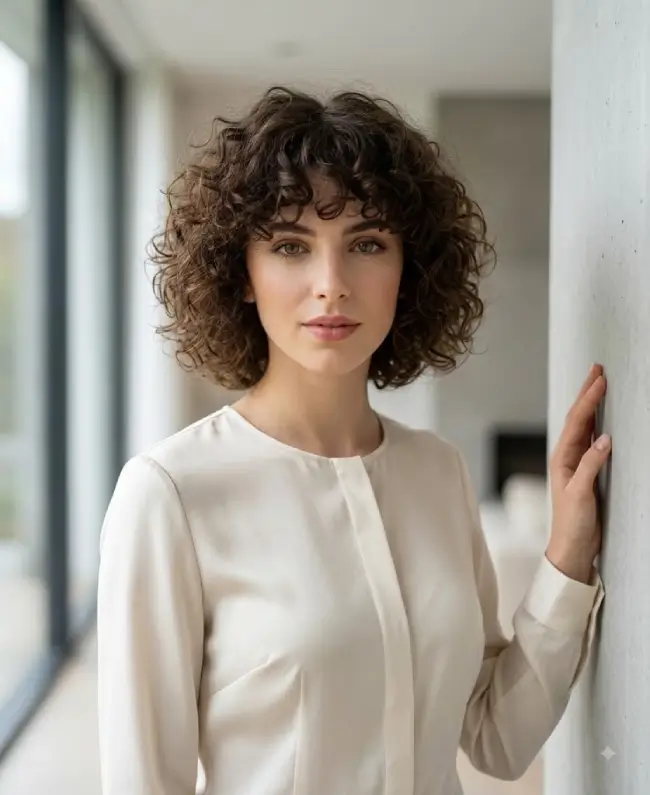
A curly long pixie is designed around the behavior of natural curl rather than trying to make curly hair imitate straight hair. More length is retained through the top and sides, allowing curls to form a rounded, soft silhouette. The shape needs to account for shrinkage, spring, and the fact that curls can appear substantially shorter once dry.
This variation can work particularly well for naturally curly and coily hair, but the cutting technique matters. A stylist who understands your curl pattern can judge where the hair will sit after drying and avoid creating an unintended pyramid or overly round shape. Depending on the curl pattern, a dry or curl-by-curl approach may be useful.
Face shape should be considered alongside curl volume. A long or oval face may work beautifully with fuller curls around the forehead and sides, while a round face may benefit from a little more vertical lift through the crown. Heart-shaped faces can be balanced by allowing some curl weight to remain around the lower sides.
The biggest advantage is that daily styling can be quite simple. Apply curl cream to wet hair, encourage the curls with your hands, then air-dry or diffuse on low heat. The main limitation is predictability: humidity, shrinkage, and changes in curl definition can alter the silhouette from day to day.
If you want this version, tell your stylist how your curls behave when completely dry, how much shrinkage you experience, and whether you want the final shape rounded, elongated, or softly tapered.
Styling effort: Low to moderate.
Best suited to: Curly and coily textures.
Maintenance: Moderate; shape needs periodic reassessment as curls grow.
Best stylist request: “Please shape the cut around my natural curl pattern and account for shrinkage when deciding the length.”
5. Undercut Pixie
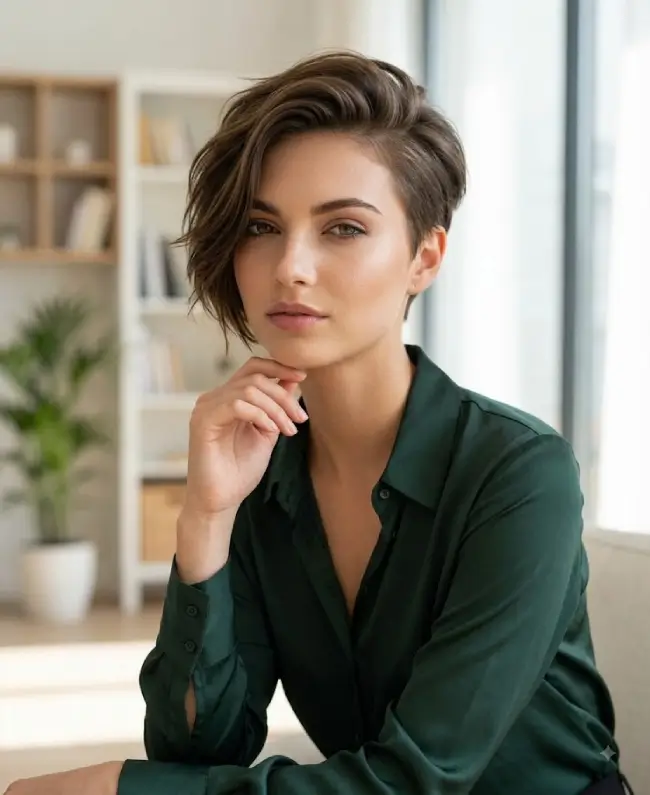
An undercut pixie creates contrast by keeping the upper layers longer while shortening the sides and/or nape considerably. The medium length remains visible on top, so the haircut does not necessarily look like a traditional clipped pixie. Instead, the underlayer removes weight and allows the longer top to become the main visual feature.
This is especially useful for thick hair that becomes bulky around the ears and sides. Removing some of that underlying mass can make the upper shape easier to control. Straight hair will show the contrast clearly, while wavy hair can give the longer top a softer, more dimensional appearance.
The undercut also changes maintenance. Although the top may be relatively easy to style, the short section underneath becomes visible as it grows. Someone who wants a crisp, deliberate undercut may need more frequent salon visits than someone wearing a softer tapered nape. If you prefer a gentler grow-out, a scissor-cut undercut can be less stark than a very close clipper finish.
Face shape can be adjusted through the longer top. A round face may benefit from height and directional movement, while a heart-shaped face can work with softness toward the forehead and temples.
This is not necessarily the best option if you want maximum versatility in tying your hair back. The shorter underneath section can make small ponytails or buns difficult, even when the top is long enough to gather.
Ask for a soft undercut if you want bulk reduction without a dramatic shaved contrast, or specify exactly how short you want the underneath section.
Styling effort: Moderate.
Best suited to: Medium-to-thick straight or wavy hair.
Maintenance: Moderate to high if the undercut must remain crisp.
Best stylist request: “I want the underneath cleaned up to remove bulk, but I don’t want an extremely severe shaved contrast.”
6. Side-Part Choppy Pixie

The side-part choppy pixie relies on short, separated layers rather than a smooth continuous surface. The side part gives those pieces a direction, while the choppy texture creates small areas that can be flipped, twisted, or separated with the fingers. The result is casual and energetic rather than polished.
Fine hair can benefit from this approach when the stylist preserves enough density in the right places. Texture can make individual sections more visible and give the haircut a sense of fullness, but aggressively thinning already-fine hair can leave it looking sparse. Medium-density hair often gives the stylist more freedom to create stronger pieceiness.
Straight hair will display the cut’s texture clearly. Wavy hair can make it even easier to style because natural bends add variation to the layers. On a square face, a side part and irregular pieces can soften the visual strength of the jawline. Round faces may benefit from directional height rather than excessive width.
Styling is straightforward: work a small amount of mousse or styling foam through damp hair, direct the hair toward the side part, then use a small amount of texturizing cream on selected pieces. The key is restraint. Too much product can turn a flexible haircut into a stiff, separated one.
Bring a reference photo that shows how much choppiness you actually want. “Choppy” can mean anything from subtle separation to visibly short, disconnected pieces, and those outcomes are very different.
Styling effort: Low to moderate.
Best suited to: Fine-to-medium straight or wavy hair.
Maintenance: Moderate.
Best stylist request: “I want visible texture and movement, but I still want enough weight for the ends to look healthy.”
7. Feathered Pixie Bob
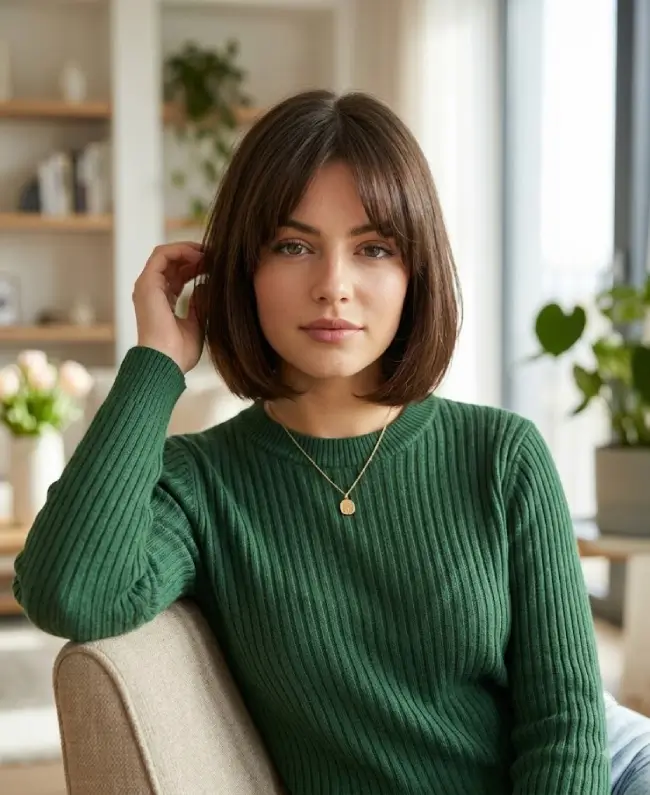
The feathered pixie bob is a softer alternative to a strongly textured or choppy cut. It keeps a compact silhouette while using tapered, feathered pieces to create movement around the face and ends. Rather than looking deliberately messy, the layers tend to blend into one another, which makes the haircut suitable for people who like movement but still want a refined appearance.
Fine-to-medium straight hair can show the feathering particularly well. Slightly wavy hair adds natural movement, although very curly hair may require a different layering strategy because the curls can compress the intended shape. Thick hair can also wear a feathered pixie bob, but the stylist may need to remove weight internally rather than simply adding more visible layers.
This cut is especially adaptable around heart-shaped and oval faces because the face-framing pieces can be customized in length. On a square face, softer ends can reduce the severity of a strong perimeter. A round face may benefit from slightly longer vertical pieces and moderate crown lift rather than excessive fullness at cheek level.
The styling routine is usually moderate. A small round brush can direct the ends inward or outward, while a lightweight serum keeps the layers from looking dry. Air-drying can work on naturally wavy hair, but straight hair may need a quick blow-dry to reveal the feathered shape.
Ask for blended feathering rather than aggressive razor layers if you want a soft, polished result.
Styling effort: Moderate.
Best suited to: Fine-to-medium straight or gently wavy hair.
Maintenance: Moderate.
Best stylist request: “Please keep the feathered layers soft and blended, especially around the face, rather than making the ends very choppy.”
8. Messy Grown-Out Pixie
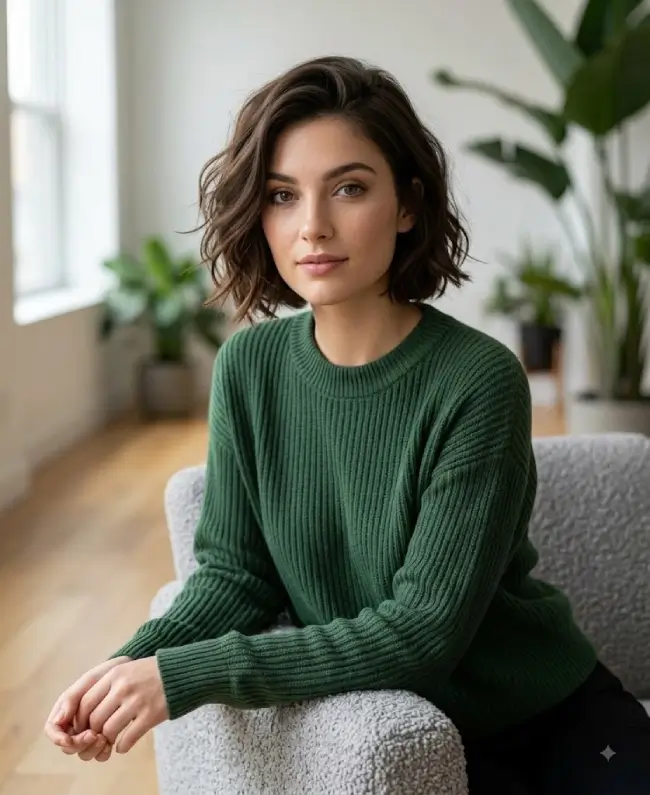
The messy grown-out pixie is designed to look intentional even when the hair is no longer at its freshly cut stage. Extra length through the top and sides creates a softer silhouette, while texture keeps the shape from becoming visually heavy. This makes it useful for anyone who likes short hair but dislikes the frequent maintenance associated with a very precise pixie.
Medium-density and thick hair can be particularly good candidates because the additional length has enough substance to create movement. Straight hair may need texture product to prevent the style from appearing too flat, while wavy hair can often rely on its natural bend. Very fine hair may need careful layering because too much removal can make the ends look thin.
This is also one of the more lifestyle-friendly options for people who prefer a relaxed routine. Rough-drying with your hands, adding a small amount of styling cream, and scrunching the ends may be enough. The haircut does not need every strand placed perfectly.
The downside is that “messy” still needs structure underneath. If the nape and perimeter are allowed to grow without occasional shaping, the cut can quickly move from intentionally undone to generally overgrown. Small maintenance appointments can preserve the silhouette without forcing you back into a very short haircut.
For the salon, explain that you want a shape that remains attractive as it grows, with softer transitions rather than a sharply defined short nape.
Styling effort: Low.
Best suited to: Medium-density, thick, straight, or wavy hair.
Maintenance: Relatively forgiving, but occasional shaping helps.
Best stylist request: “I want a grown-out shape that still looks deliberate between cuts, with soft layers and a relaxed nape.”
9. Polished Pixie Bob
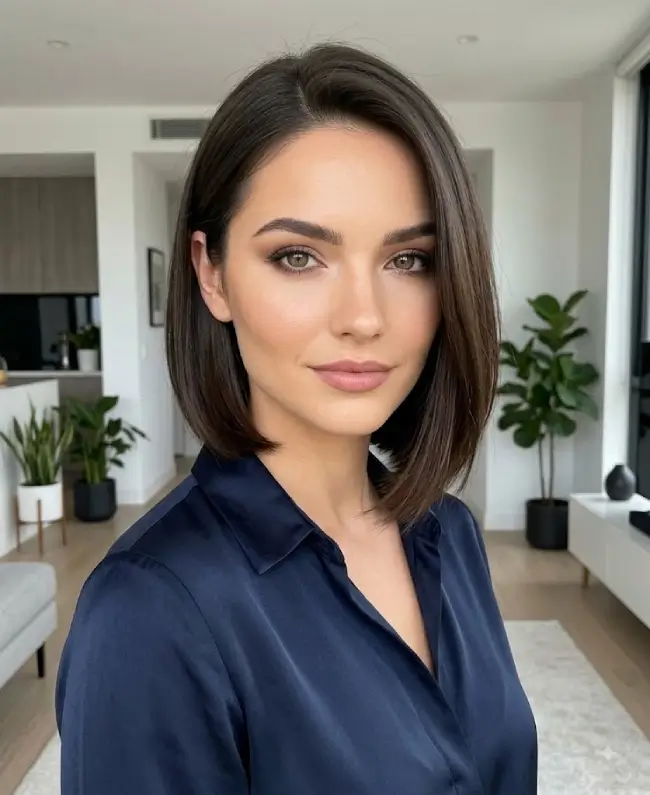
The polished pixie bob is the neatest and most structured option in this group. It generally keeps enough length around the jaw, cheeks, or front to read as a compact bob, while the shorter back and carefully controlled shape retain the efficiency of a pixie. The result works particularly well when you want short hair that can move from professional settings to more dressed-up occasions without requiring a dramatic restyle.
Straight hair makes the polished outline easiest to maintain, particularly when the ends naturally fall into place. Medium-to-thick hair may need internal layering or weight removal so the perimeter does not become too dense. Fine hair can work when the cut preserves a strong enough outer line to maintain visual density.
Oval and heart-shaped faces can accommodate this silhouette easily, while round and square faces may benefit from adjustments to the jawline and volume placement. A slightly longer front can elongate the overall shape, while subtle face framing can keep the cut from appearing overly geometric.
Styling is more involved than with a messy grown-out pixie. A blow-dry usually establishes the shape, and a flat iron can be used selectively rather than over the entire head. The tradeoff is predictability: once the shape is established, the hair can look tidy with relatively little product.
If this is your preferred direction, ask for a compact pixie-bob silhouette with subtle contouring around the jaw and enough length in front to tuck behind the ear.
Styling effort: Moderate.
Best suited to: Straight, medium-to-thick hair, with adaptations for finer textures.
Maintenance: Moderate.
Best stylist request: “I want a polished pixie bob with a clean shape, subtle internal weight removal, and enough front length for an ear tuck.”
10. Tousled Fringe-Forward Pixie
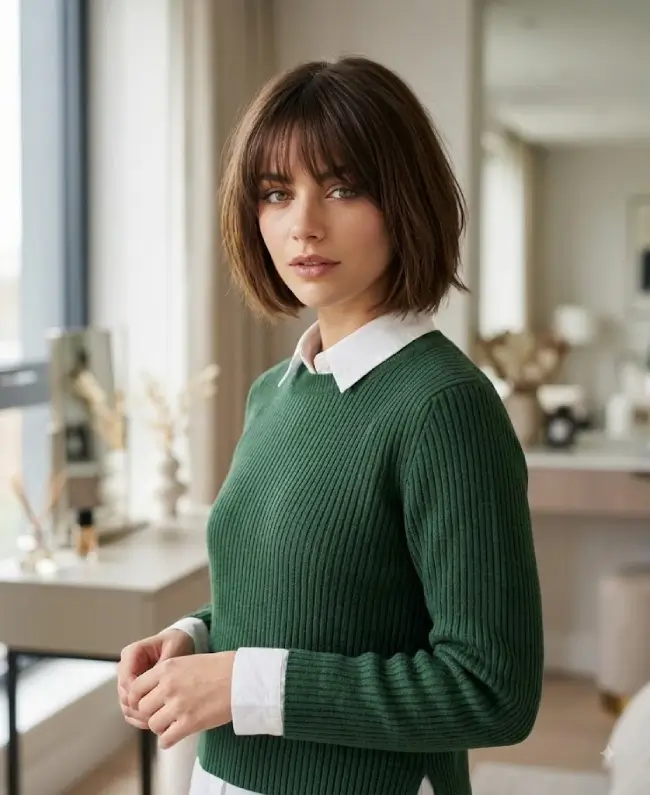
The tousled fringe-forward pixie places emphasis on a longer, softer fringe that moves toward the forehead while the crown and sides remain layered. Compared with a side-swept pixie, the fringe is directed forward rather than diagonally across the face. That creates a different visual balance and makes this style particularly interesting for people who want the fringe to be a major part of the haircut.
Fine-to-medium straight or slightly wavy hair can work well because the lighter texture allows the fringe to separate into individual pieces. If your hair is thick, the stylist may need to remove internal weight so the fringe does not become a dense block. Curly hair can be adapted, but the fringe length must be judged according to curl shrinkage.
A forward fringe can visually reduce the apparent height of a longer forehead or long face, while a little crown lift prevents the haircut from becoming too flat. Oval faces are highly adaptable to the shape. Heart-shaped faces can also work well when the fringe is soft rather than extremely blunt.
The practical limitation is that hair around the forehead requires regular attention. It may need refreshing after sleep, humidity, exercise, or hats. Fortunately, it can usually be pushed aside, tucked, or pinned when you want the face more open.
Ask for a soft, piecey fringe with enough length to move in several directions, rather than a rigid blunt bang that locks you into one styling option.
Styling effort: Low to moderate.
Best suited to: Fine-to-medium straight or lightly wavy hair.
Maintenance: Moderate because the fringe changes quickly as it grows.
Best stylist request: “Give me a soft forward fringe that can be separated and pushed aside, not a heavy straight-across bang.”
How to Choose the Right Modern Medium Pixie
The best medium pixie is usually determined by where the length remains, not simply by how short the haircut looks from the front.
If you want flexibility, preserve length through the front, crown, and around the ears. If you want a cleaner, more sculpted shape, a shorter nape and tighter sides can make the haircut feel more distinctly pixie-like. If bulk is your main problem, internal layering or an undercut can make a major difference without necessarily shortening the visible top.
Think about your normal styling routine before choosing the cut. Someone who likes air-drying may be happier with a shaggy, wavy, curly, or messy version. Someone who enjoys a polished finish may prefer a side-swept or polished pixie bob. Need additional tips to maximize fullness? Explore our guide to short hairstyles for fine hair.
Also consider how often you are willing to visit a salon. A soft grown-out pixie can tolerate more change than a crisp undercut or precisely shaped fringe. The difference may seem minor on haircut day, but it becomes important several weeks later.
Medium Pixie Haircuts by Hair Type
Fine Hair
Fine hair often benefits from medium pixie cuts because the shorter overall length reduces the weight that can pull the roots downward. The important point is not to over-layer it. Too much aggressive texturizing can remove the very density that makes the ends appear fuller.
A textured grown-out pixie, soft shaggy pixie bob, or carefully constructed choppy pixie can work well. The stylist can use shorter pieces at the crown to encourage lift while preserving enough perimeter weight. Feathered layers can also add movement, but they should remain controlled.
Lightweight mousse, root-lifting foam, or a small amount of texture spray is generally more useful than heavy creams and oils. If you heat-style, use a heat protectant and avoid repeatedly pressing fine hair with a flat iron.
For fine hair, ask your stylist to show you where they plan to remove weight and where they intend to preserve it. That conversation is often more useful than simply saying you want “lots of layers.”
Thick Hair
Thick hair can be excellent for medium pixie styles because it provides natural fullness and enough material to create shape. The challenge is controlling density around the ears, temples, sides, and nape.
An undercut can be useful when the side area becomes bulky, while a polished pixie bob may benefit from internal weight removal. Grown-out styles can also work well because the extra density helps the longer layers maintain their shape.
However, thinning should be strategic. Removing too much hair can create unwanted frizz or cause the outer layer to sit separately from the underneath section. The goal is usually to reduce excess weight while maintaining a coherent silhouette.
If your hair is thick and you exercise frequently, consider how much hair remains around the neck and ears. A cleaner nape can feel more practical, but it may increase maintenance.
Tell your stylist where your hair becomes heaviest after washing and where it tends to puff out. Those details can guide the shape more effectively than density alone.
Straight Hair
Straight hair shows the architecture of a haircut clearly. Clean perimeters, side parts, feathered ends, undercuts, and polished pixie bobs are particularly visible because there is less natural curl to disguise uneven weight distribution.
A sleek side-swept pixie can be very effective if your hair naturally follows a side part. A polished pixie bob gives straight hair a more structured outline, while a choppy or textured cut introduces visual movement that straight hair may otherwise lack.
The tradeoff is that straight hair can reveal every styling decision. If the cut has a strong perimeter, it may need more frequent trims to maintain that exact shape.
A lightweight smoothing product can help control flyaways, while texture spray can provide separation when you want a less formal finish. Use heat protection if you regularly blow-dry or flat-iron.
Wavy Hair
Wavy hair can make medium pixies look naturally textured without requiring much manipulation. A shaggy pixie bob, messy grown-out pixie, or choppy side-part version can take advantage of bends that already exist in the hair.
The key is to avoid cutting the shape solely according to how the hair looks when wet. Waves contract and change direction as they dry, so your stylist should understand your natural pattern.
Air-drying may be sufficient for some waves. A small amount of curl cream or lightweight mousse can enhance definition, while a diffuser can speed drying without disturbing the pattern too much.
If your waves vary significantly from section to section, choose a haircut with a little tolerance for irregularity. A deliberately tousled or feathered shape will usually disguise variation better than a highly geometric perimeter.
Curly Hair
Curly medium pixies require more consideration of shrinkage and curl direction than straight-hair versions. The curly long pixie is the clearest example because its success depends on allowing the curls to form the intended silhouette.
A stylist should assess the curl pattern, density, and how your hair behaves once completely dry. Length that looks generous when wet can appear considerably shorter after the curls spring upward.
Product selection matters too. A moisturizing curl cream may be enough for some textures, while others need a stronger styling gel to maintain definition. Diffusing on low heat can reduce drying time without requiring excessive manipulation.
Curly hair also benefits from a haircut that works with movement rather than against it. Ask your stylist to preserve enough length for your curls to form a balanced shape and explain how much shrinkage you normally experience.
Coily Hair
Coily hair can be shaped into a medium pixie with beautiful volume and definition, but the cut should be customized to the specific coil pattern and density. The most important consideration is how much the hair contracts and where the natural volume develops.
A longer top with a tapered or softly shortened perimeter can create a strong silhouette without requiring the sides to be completely clipped. If you want more length around the face, allow the front to remain long enough to account for shrinkage.
Moisture and definition are usually more important than achieving a sleek finish. Depending on the texture, a leave-in conditioner, curl cream, gel, or combination of products may be appropriate.
If you use protective styling frequently, discuss that with your stylist before choosing a medium pixie. The haircut may need enough length to accommodate your preferred routines.
Medium Pixie Haircuts by Face Shape
Round Face
With a round face, consider where the haircut creates height and width. A little additional height at the crown can create a more vertical impression, while excessive volume directly at cheek level may emphasize horizontal width.
Side-swept pixies and textured grown-out versions can work especially well because they create directional movement. An undercut can also be useful if it allows the top to rise without adding bulk at the sides.
That does not mean a round face needs a specific haircut formula. The final result depends on forehead height, cheekbone placement, jawline, and personal styling choices. A round face can absolutely wear a softer, fuller pixie when that is the look you prefer.
Oval Face
Oval faces offer considerable flexibility because many medium-pixie proportions can be adjusted without needing to compensate strongly for one dominant facial dimension.
A polished pixie bob can emphasize balanced proportions, while a curly long pixie can introduce volume and movement. Fringe-forward, side-swept, feathered, and grown-out versions are all options.
The most useful question is therefore not “Which pixie suits an oval face?” but “Which feature do you want the haircut to emphasize?” A fringe can bring attention toward the eyes, while a tucked side can expose the cheekbone and ear.
Square Face
For a square face, consider whether you want to emphasize the strong jawline or soften it visually. Soft layers, feathered ends, side parts, and irregular texture can break up an overly geometric outline.
A side-part choppy pixie can introduce diagonal movement, while a feathered pixie bob can create softer transitions around the jaw. A very blunt, sharply horizontal perimeter will emphasize structure more strongly.
That is not necessarily a problem. If you like a graphic haircut, the stronger jawline can actually become part of the overall aesthetic. The choice depends on whether you want softness or definition.
Heart-Shaped Face
Heart-shaped faces often have more width through the upper face with a narrower chin. Medium pixies can balance those proportions by controlling volume around the temples and adding appropriate movement toward the lower face.
A side-swept pixie, feathered pixie bob, or polished pixie bob can all be adjusted around the forehead and cheekbones. A softer fringe can also work when it does not create a heavy horizontal block.
Ask your stylist to consider the relationship between the fringe, temples, cheekbones, and chin, rather than treating “heart-shaped” as a fixed haircut rule.
Long Face
For a long face, volume placement and fringe length become particularly useful design tools. A forward fringe can bring some visual weight toward the forehead and eyes, while fullness through the sides can make the overall shape feel less vertically elongated.
The tousled fringe-forward pixie is an obvious option, but a curly long pixie can also work beautifully when the curls create width rather than only height.
Very high crown volume may emphasize length, so discuss the desired proportions before the stylist begins. A medium pixie gives you enough length to make those adjustments without needing a long haircut.
Diamond Face
Diamond-shaped faces often have noticeable cheekbone width with comparatively narrower forehead and jaw areas. Medium pixies can emphasize the cheekbones or soften their prominence depending on where the layers fall.
Feathered pieces around the face can create a gradual transition, while a side-swept fringe can introduce a diagonal line. A textured pixie can also work when the movement is distributed rather than concentrated directly at the widest part of the face.
The most useful approach is to bring a photo showing the exact length and volume placement you like, then ask the stylist to adapt that shape around your cheekbones and jaw.
Which Medium Pixie Is Lowest Maintenance?
The easiest options are generally the messy grown-out pixie, textured grown-out pixie, and softer shaggy pixie bob because their shapes are designed to tolerate movement and some additional length.
A polished pixie bob demands more control. A side-swept fringe needs regular attention as it grows. An undercut requires frequent upkeep if you want the contrast to remain sharp.
“Low maintenance” also depends on texture. A naturally wavy person may be able to air-dry a shaggy pixie, while someone with very straight hair might need a few minutes of styling to create the same movement.
Before choosing a haircut, separate two kinds of maintenance:
- Daily maintenance: washing, drying, products and styling.
- Salon maintenance: how often the cut needs reshaping.
A haircut can be easy to style but require frequent trims, or take a little daily work while growing out gracefully.
Can You Tie a Medium Pixie Back?
Sometimes, but expectations matter.
A medium pixie with longer front and side sections may allow a small half-up section, tiny ponytail, clips, or individual pieces to be pinned away. A pixie bob with enough length around the jaw gives you more options than a short undercut.
Hair texture also matters. Curly or coily hair can sometimes gather into a small puff or secured section at a shorter length because the texture compresses differently. Straight hair may require more length before a secure tie-back becomes practical.
If tying your hair back is important for workouts or work, tell your stylist before the cut, not afterward. They can preserve length around the areas you need most.
If a full ponytail is non-negotiable, a medium pixie may still be too short. A short bob or bixie that sits closer to the jaw could provide a better compromise.
Pixie vs. Pixie Bob: Which Is Easier to Live With?
| Feature | Medium Pixie | Pixie Bob |
| Overall feel | Shorter and more cropped | Softer and closer to a short bob |
| Styling | Often quick | Usually slightly more controlled |
| Grow-out | Can change noticeably | Often transitions more gradually |
| Tie-back potential | Limited | Better with sufficient front length |
| Thick hair | Can remove bulk efficiently | May require internal weight removal |
| Fine hair | Can create lift | Strong perimeter can preserve density |
| Formal styling | Easy with the right fringe/top | Naturally suited to polished styling |
| Salon upkeep | Varies by shape | Usually moderate |
| Transition to bob | Relatively straightforward | Already close to bob territory |
If you are nervous about going short, a pixie bob is often the more gradual starting point. If your priority is removing bulk and keeping the neck and sides lighter, a more traditional medium pixie may be preferable.
What to Tell Your Stylist
Bring at least two or three photos showing the shape, not just the overall aesthetic. Tell your stylist which elements you want to keep consistent: length around the ears, fringe length, nape tightness, crown volume, or ability to tuck the hair.
For a grown-out style, say: “I want enough length through the top and sides that the cut still looks intentional as it grows.”
For a polished pixie bob: “Keep the front around the jaw or upper-jaw area, with a cleaner shorter back and subtle internal layering.” For an extensive overview of current trends, browse our ultimate roundup of short hairstyles for women.
For thick hair: “I need weight removed from the areas that puff out, but I don’t want the outer layer over-thinned.”
For curls: “Please account for my dry curl pattern and shrinkage when deciding the final length.”
For a fringe-forward pixie: “I want a soft, piecey fringe that can move forward or be pushed aside.”
Terms such as perimeter, graduation, internal layers, face framing, and weight removal are useful when they describe something you genuinely want. A photo remains the best reference because technical terminology can mean different things to different stylists.
Styling Tips for a Modern Medium Pixie
A medium pixie rarely needs a large collection of products. Start with one product that addresses your actual problem.
For fine hair, try a lightweight mousse or volumizing foam at the roots. For wavy or curly hair, a curl cream may be more useful. For straight hair that lacks separation, a small amount of texture paste or spray can create definition.
Heat protection matters whenever you use a blow-dryer, flat iron, or other heated tool. You can often reduce heat exposure by rough-drying first and using a brush only for the final shaping.
Do not overload a short haircut with heavy oil or thick styling cream. Short layers can become visibly weighed down by very small amounts of product.
For an intentionally messy finish, apply product sparingly and finish with your fingers. For a polished result, establish the direction with a brush first and use a flat iron only where necessary.
Frequently Asked Questions
Is a medium pixie easier to maintain than a bob?
It can be easier day to day because there is less hair to wash, dry, and style, but salon maintenance depends heavily on the shape. A soft grown-out pixie can tolerate additional length, while a crisp undercut or precise fringe needs more frequent reshaping.
Is a medium pixie good for fine hair?
Yes. Shorter lengths can reduce the weight pulling on fine strands, and strategic layering can create movement. The key is avoiding excessive thinning or over-layering, which can make the ends appear less dense.
Can thick hair have a medium pixie?
Absolutely. Thick hair gives the cut plenty of body, but bulk needs to be controlled. Internal layers, a tapered nape, or a softer undercut can help the silhouette sit closer to the head.
Can you air-dry a medium pixie?
Many can be air-dried, particularly shaggy, textured, grown-out, wavy, and curly versions. Sleek side-swept and polished styles are more likely to benefit from a short blow-dry if you want a controlled finish.
How often should a medium pixie be trimmed?
There is no single schedule for every version. A deliberately grown-out style can tolerate more time between appointments, while an undercut, precise fringe, or sharply defined perimeter changes faster as it grows.
Which medium pixie is best for a round face?
Consider versions that create directional movement or moderate crown height, such as a side-swept, textured, or undercut pixie. The goal is to decide where you want visual volume rather than following a rigid face-shape rule.
Is a medium pixie suitable for curly hair?
Yes, provided the cut is designed around the curl pattern and shrinkage. A curly long pixie can preserve enough length for the curls to form a balanced silhouette while remaining shorter than a conventional bob.
Can a medium pixie grow into a bob?
Many medium pixies can transition toward a bob, particularly if the stylist preserves length around the top, sides, and front. A planned grow-out is much easier when the initial cut avoids unnecessarily short disconnected sections.
What should I do if I am nervous about going short?
Start with a longer pixie bob or grown-out medium pixie and preserve enough front and side length to tuck behind the ears. Explain exactly how much length you are unwilling to lose before the haircut begins.
Which medium pixie requires the least styling?
A messy grown-out pixie or soft shaggy pixie bob is generally more forgiving because natural texture can become part of the finished shape. Your own hair pattern is just as important as the haircut itself.
Final Takeaway
A modern medium pixie gives you more room to customize than the phrase “pixie cut” might suggest. The ten variations above range from relaxed grown-out shapes to polished pixie bobs, curly versions, undercuts, textured crops, and fringe-led styles.
The most useful choice is the one that fits your actual hair behavior and routine, not simply the photo that looks best on a screen. Consider where your hair is thickest, how your texture behaves without heat, whether you need to tie it back, and how often you want to visit the salon.
If you are uncertain, preserving a little more length through the front and sides is usually the more flexible starting point. You can always shorten a medium pixie later; growing back a section that was cut too short takes considerably longer.