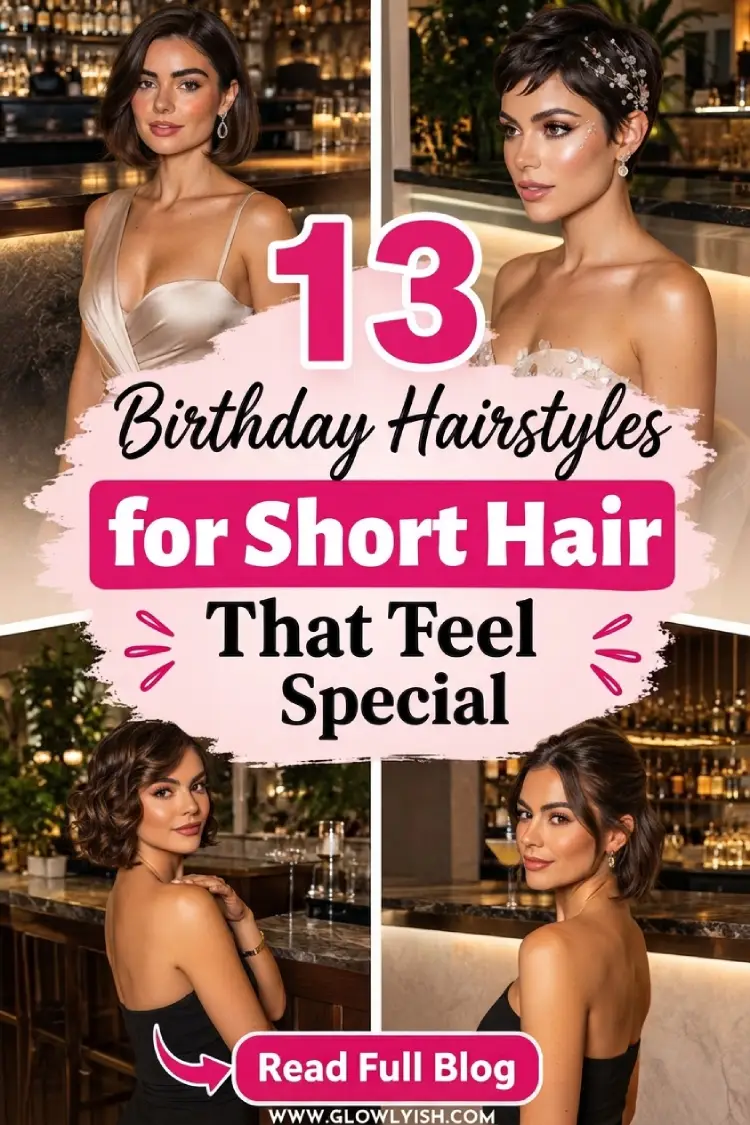
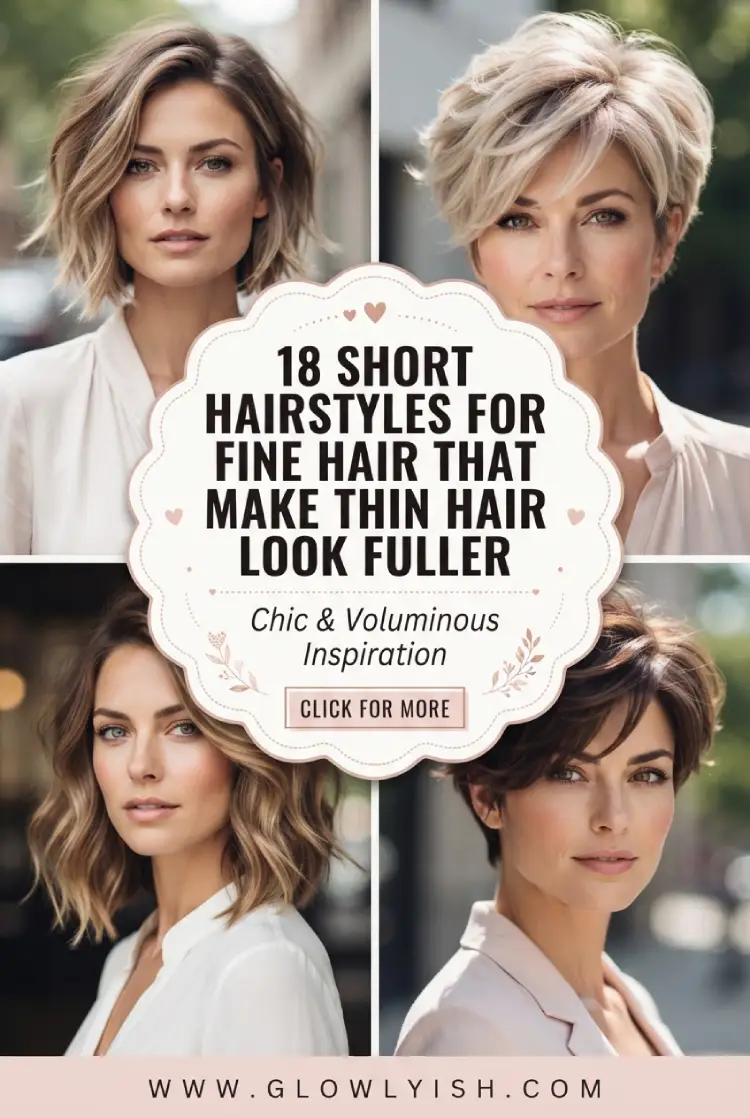
Fine hair can look surprisingly full when the haircut is doing the right work. The goal isn’t necessarily to add more layers or pile on styling products. In many cases, the better strategy is to choose a shape that protects the appearance of density, keeps the ends looking substantial, and creates lift where your hair naturally falls flat. For related styling inspiration, explore For related styling inspiration, explore For related styling inspiration, explore short haircut with feathered crown.modern medium pixie haircut.short haircuts for round faces.
That’s why short hairstyles for fine hair can be such a good option. Removing excess length takes away some of the weight that can pull delicate strands downward, while a thoughtfully shaped bob, pixie, bixie, or crop can give the hair a stronger silhouette. Current hairstyle guidance also emphasizes that fine hair doesn’t automatically mean low density—you can have lots of fine strands—so the ideal cut depends on both strand thickness and how much hair you actually have.
Below are 18 cuts worth considering, followed by practical advice for choosing one based on your hair type, face shape, styling routine, and desired length.
Quick Picks: The Best Short Cuts for Fine Hair
| If you want… | Consider… |
| The strongest-looking ends | Blunt Bob |
| A classic, versatile shape | Chin-Length Bob |
| A polished French-inspired look | French Bob |
| Built-in crown volume | Stacked Bob |
| More movement | Softly Layered Bob |
| A shorter but feminine cut | Bixie |
| Maximum shortness | Classic Pixie |
| Texture and lift | Textured Pixie |
| An easy everyday cut | Short Layered Crop |
| A softer, undone look | Short Shag |
| Bangs without losing all your length | Bob With Wispy Bangs |
| Natural waves | Wavy Bob |
| Curly texture | Short Curly Bob |
| A sharper silhouette | A-Line Bob |
| A modern, slightly edgy finish | Choppy Bob |
| A face-framing effect | Side-Swept Bob |
| Minimal styling | Grown-Out Pixie |
| More personality and crown movement | Feathered Short Crop |
1. Blunt Bob
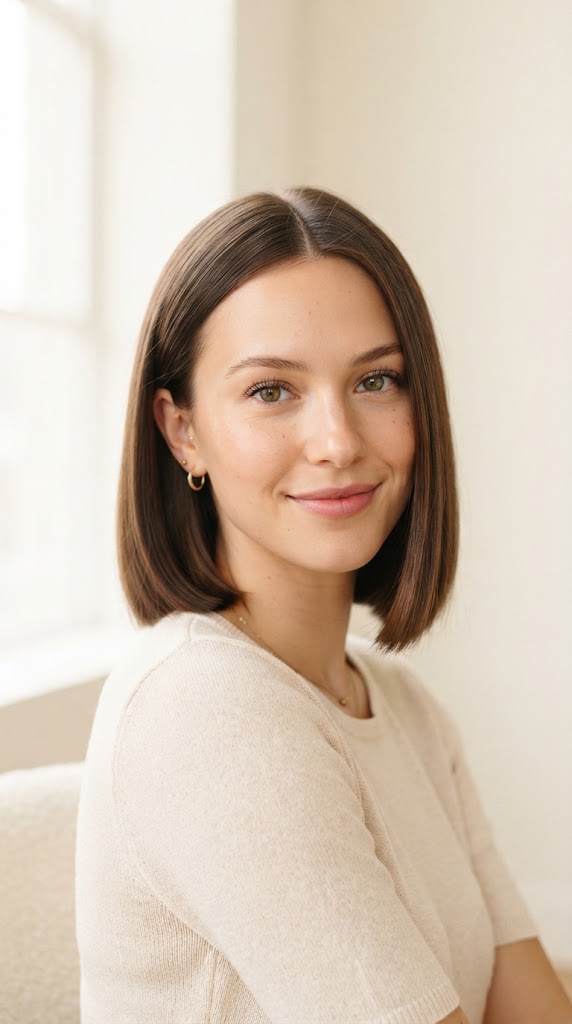
A blunt bob is one of the strongest starting points if your main goal is making fine hair appear denser. The defining feature is a relatively clean, solid perimeter rather than lots of wispy ends. That creates a visual line where the hair stops, which can make the bottom edge look more substantial.
A chin-length or slightly shorter version works especially well for straight fine hair because the shape remains visible without requiring much texture. If your hair is naturally wavy, the same cut can look softer and more dimensional when allowed to bend naturally.
The important distinction is that blunt does not have to mean stiff. Your stylist can maintain the strong perimeter while adding subtle movement above it. Avoid excessive thinning through the ends, especially if your hair already has low density.
Stylist request: Ask for a clean blunt perimeter with minimal internal weight removal and enough length to sit around the chin or jaw.
Best for: Fine straight or softly wavy hair, especially when the ends tend to look thin.
2. Chin-Length Bob
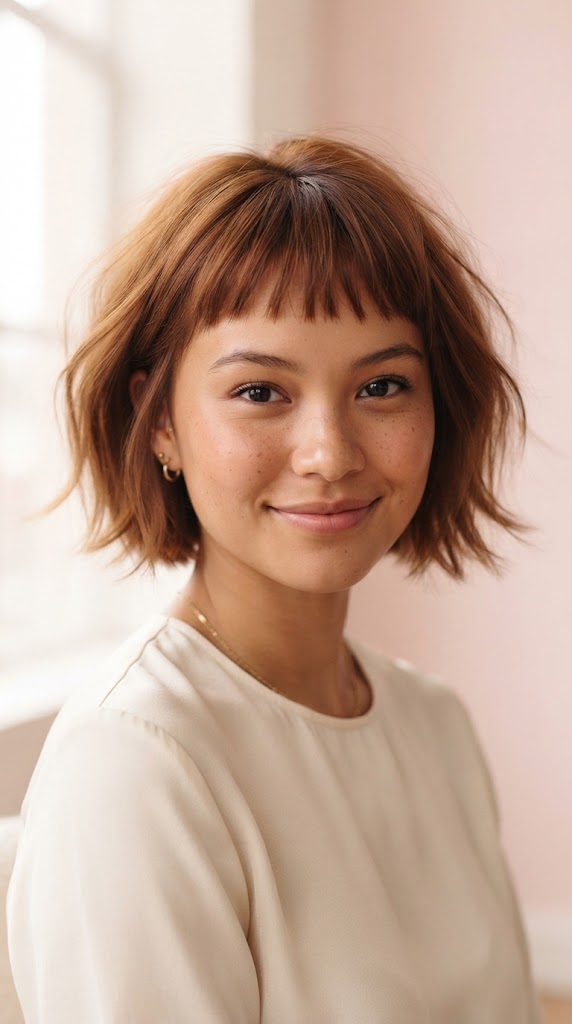
The chin-length bob gives fine hair a useful balance between enough length to frame the face and enough shortness to avoid excessive weight. Because the ends sit around the jaw, the haircut can look polished without requiring a very cropped commitment.
For fine hair, the most flattering version often has a defined perimeter rather than heavily feathered ends. You can add a little lift at the crown or use a side part to keep the shape from looking too flat. A slight bend through the ends can also make the haircut appear more dimensional.
This is a particularly practical choice if you’re moving from longer hair and aren’t ready for a pixie. It still gives you some styling flexibility, and depending on your exact length, you may be able to tuck the front pieces behind your ears.
Stylist request: Ask for a chin-grazing bob with a strong perimeter and very subtle face framing.
Best for: Fine straight, slightly wavy, or lightly textured hair when you want a classic everyday haircut.
3. French Bob
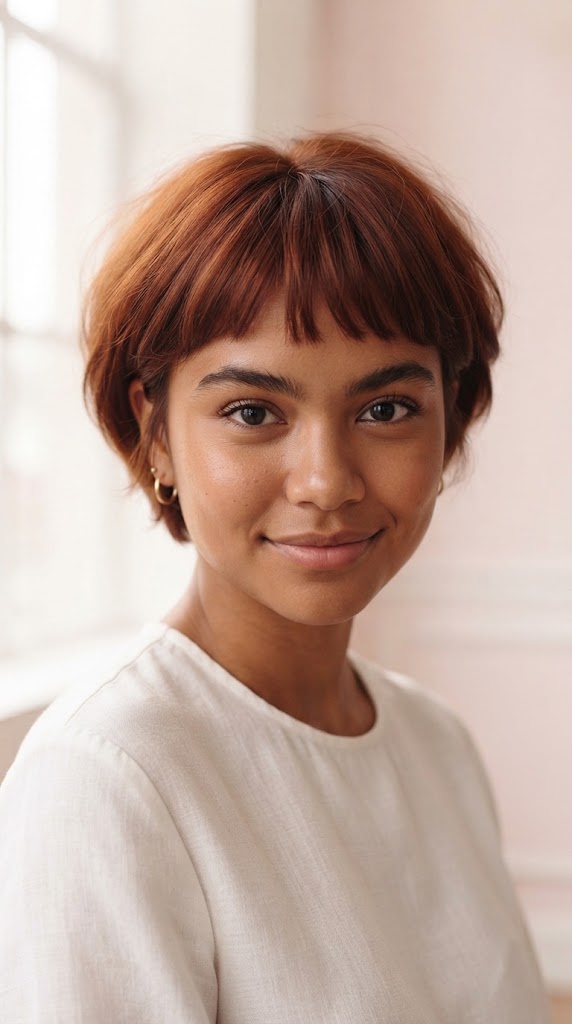
The French bob brings a little more personality to short fine hair. It generally sits around the jaw or higher and is often paired with bangs, a strong outline, and an intentionally effortless finish.
Fine hair can benefit from the compact shape because there is less length pulling the strands downward. A French bob can also make the hair appear visually denser around the perimeter, particularly when the ends remain relatively full.
Bangs are optional. A soft curtain or side-swept fringe gives you a less committed interpretation, while a shorter straight fringe makes the haircut much more distinctive. If your hair is wavy, embrace the natural texture instead of trying to make every strand perfectly smooth.
Stylist request: Ask for a short French-inspired bob with a defined perimeter and optional soft fringe, while keeping the ends substantial.
Best for: Fine straight or wavy hair and anyone who wants a fashion-forward cut without going as short as a pixie.
4. Stacked Bob
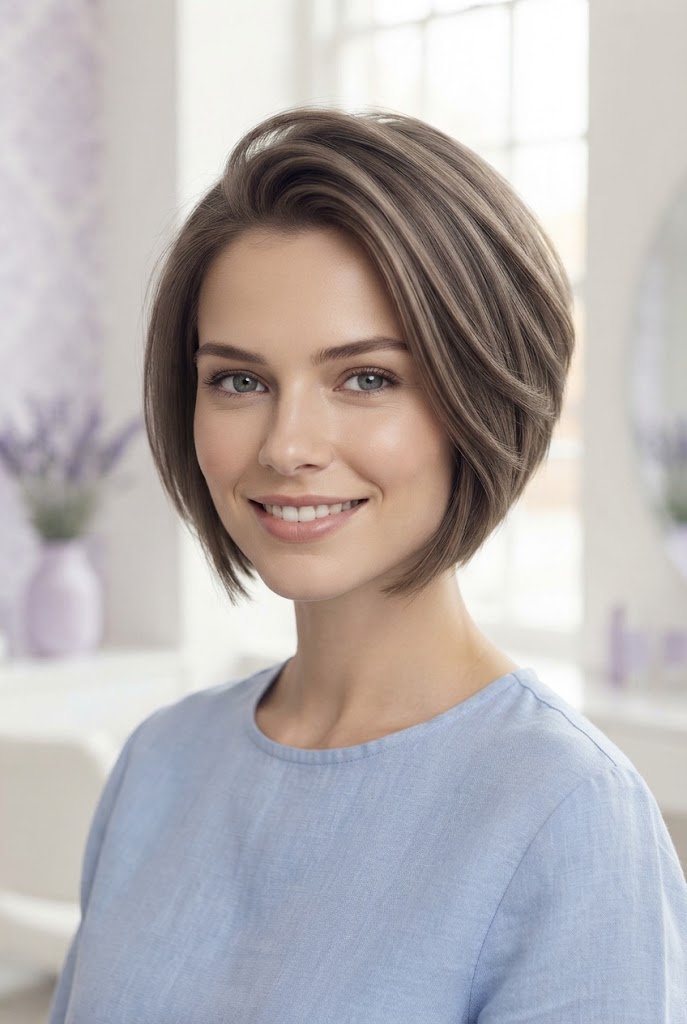
A stacked bob can be particularly useful when fine hair needs some lift at the back of the head. The haircut is shorter through the nape and gradually becomes longer toward the front, creating a shaped silhouette rather than one flat line.
That graduation can give the back of the haircut a sense of structure and fullness. It is especially useful for someone whose fine hair tends to collapse against the neck.
The amount of stacking matters. Too much graduation can make the haircut look overly layered or difficult to grow out, while a subtle stack can provide shape without sacrificing the appearance of density. Ask your stylist to show you the intended profile before cutting.
Stylist request: Ask for a softly graduated bob with controlled stacking through the nape and a fuller perimeter.
Best for: Fine hair that needs shape at the back, especially straight or lightly wavy textures.
5. Softly Layered Bob
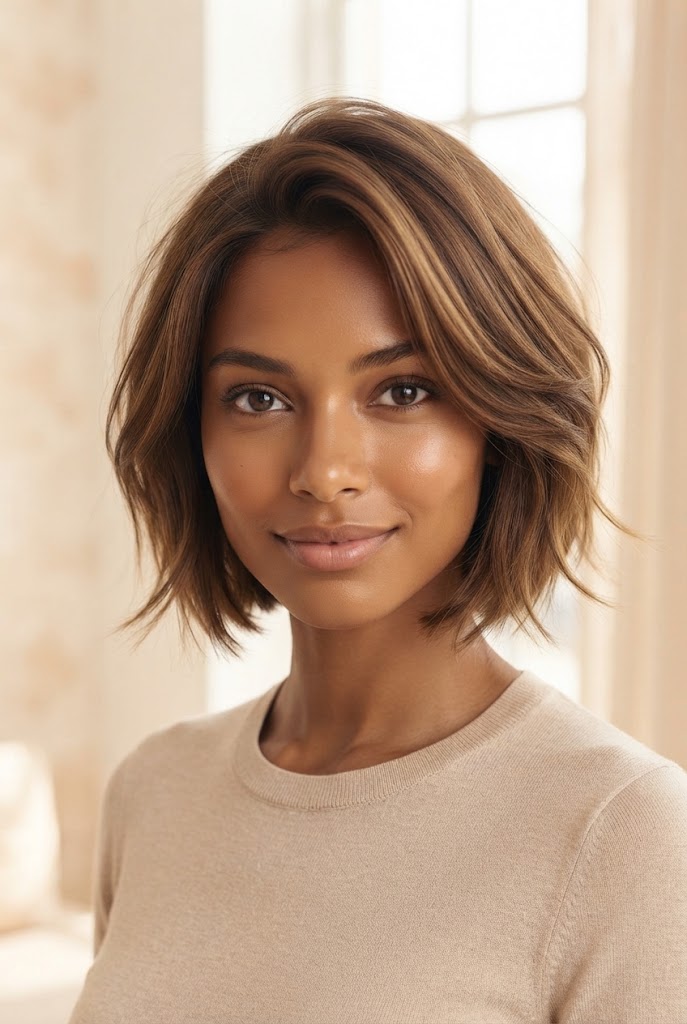
Layers aren’t automatically bad for fine hair. The problem is over-layering, which can remove too much visible weight from already delicate strands. A softly layered bob takes a more controlled approach.
In short bobbed hairstyles with layers, instead of creating many disconnected pieces, the stylist can introduce subtle layers around the crown or face while keeping enough density around the perimeter. This gives the haircut movement without making the ends appear sparse.
This version is particularly useful if you dislike the solid appearance of a completely blunt bob. The layers can help fine hair move more naturally and can make a simple blow-dry look less rigid.
Stylist request: Ask for subtle internal or crown layers while keeping the outer perimeter strong and avoiding aggressive thinning.
Best for: Fine hair that needs movement but still needs to retain visual density.
6. Bixie
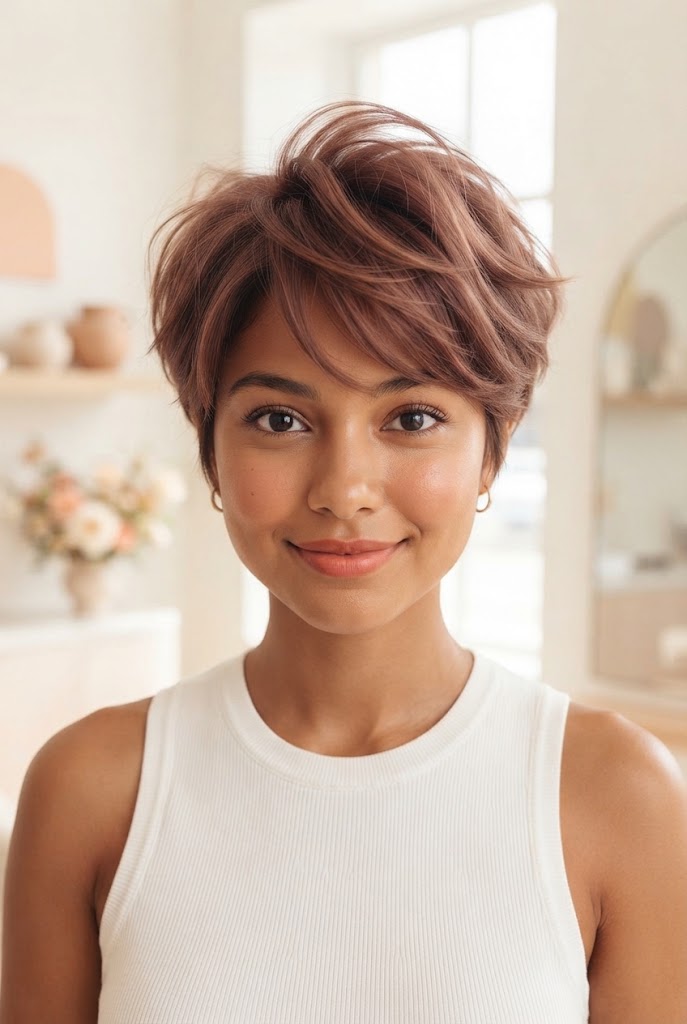
The bixie sits between a bob and a pixie, making it an excellent middle ground when you want short hair without going fully cropped. It typically combines a shorter back and sides with more length around the top and front.
For fine hair, that combination can create lift and movement without removing every bit of length. The shorter sections are less likely to become weighed down, while the longer top pieces give you enough hair to shape, sweep, or tousle.
A bixie can be especially helpful if you’re transitioning toward a pixie or growing one out. Because it has several possible lengths and textures, it can be customized considerably.
Stylist request: Ask for a bixie with controlled crown layers, a softly tapered back, and enough length around the front to frame your face.
Best for: Fine hair that needs texture and lift but still benefits from some length.
7. Classic Pixie
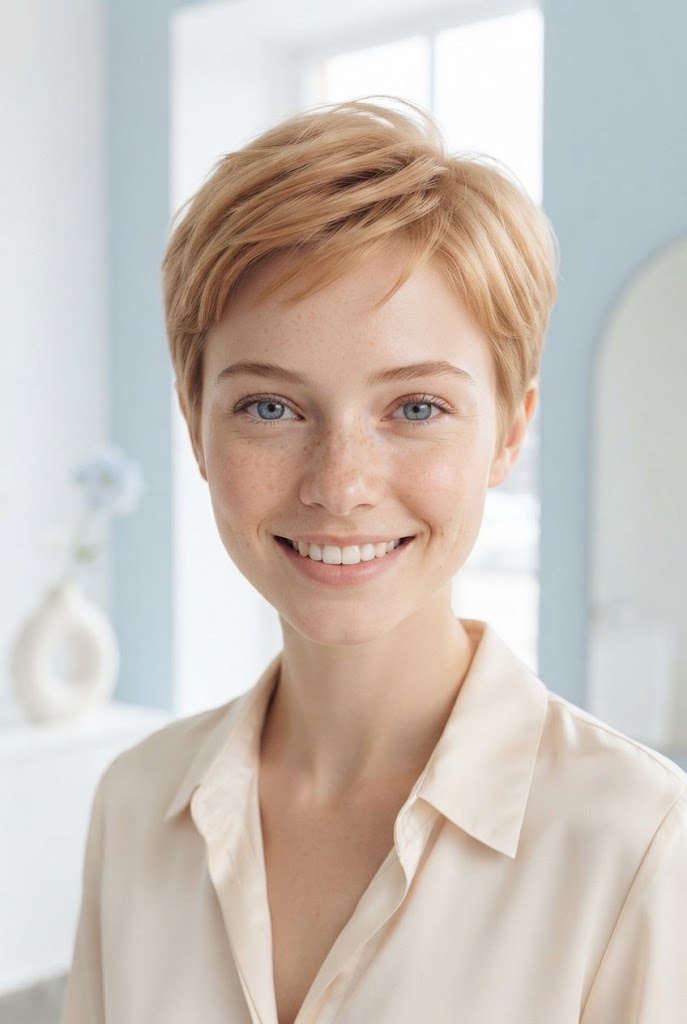
A classic pixie removes much of the length that can flatten fine strands. That doesn’t automatically make every pixie volumizing, though. The cut needs to be designed around your density, texture, and natural growth pattern.
A pixie can look surprisingly full when the crown has enough length to be shaped upward or swept to one side. Shorter sides create contrast, making the top appear more substantial.
This is one of the lower-effort cuts once the shape is established, but it does require regular trims if you want to maintain a crisp silhouette. Grow-out is also more noticeable than with a bob.
Stylist request: Ask for a tailored pixie with enough crown length for styling and a shape that follows your natural hair direction.
Best for: Fine hair with relatively manageable texture and anyone comfortable with a genuinely short haircut.
8. Textured Pixie
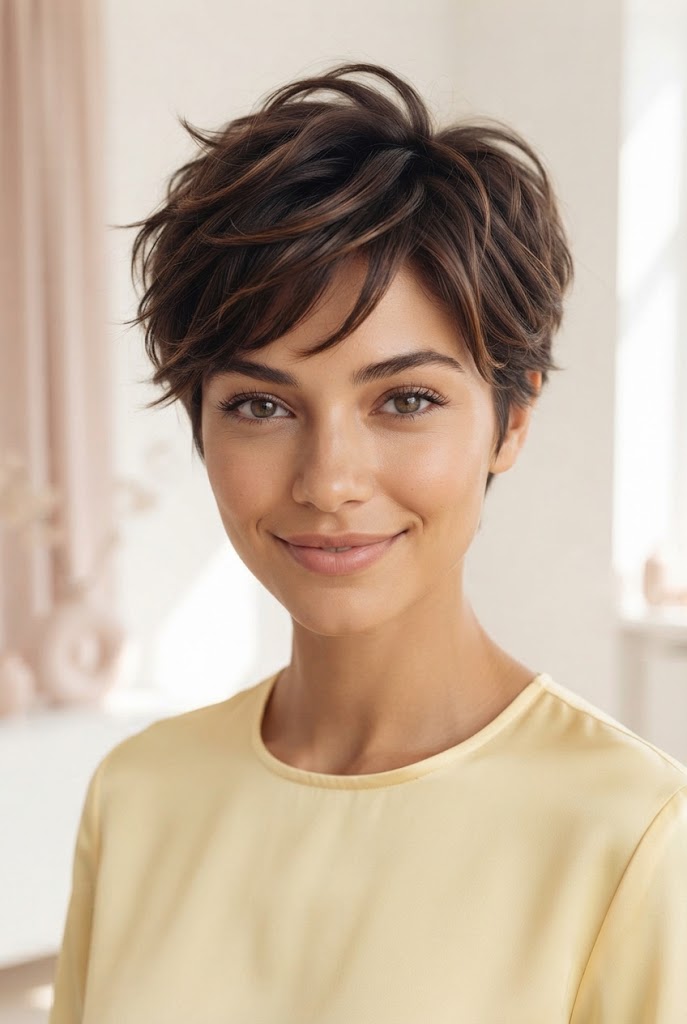
If a classic pixie feels too neat, a textured pixie adds movement through the top and fringe. Texture can help fine strands separate slightly rather than lying together in one flat layer.
The key is moderation. Fine hair can look thinner if too much bulk is removed, so texture should create movement without turning the ends into wisps.
A lightweight styling cream, mousse, or texture product can help the top pieces stand apart. You can also change the direction of the fringe for a different finish, which gives a short cut more versatility than its length might suggest.
Stylist request: Ask for soft texture through the crown and top, but tell your stylist you want to preserve enough weight to keep the hair looking substantial.
Best for: Fine straight or slightly wavy hair that responds well to styling.
9. Short Layered Crop
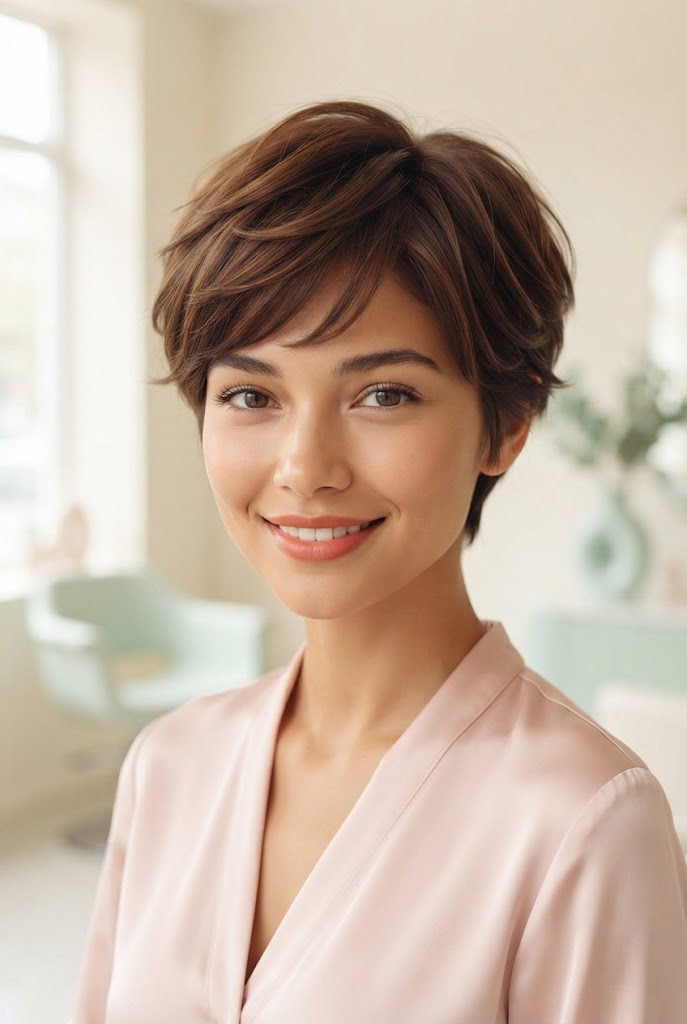
A short layered crop is a useful option when you want something shorter than a bob but less conventional than a classic pixie. The shape can be customized around the crown, fringe, sides, and nape.
For fine hair, short layers can help create lift because shorter sections don’t have as much length weighing them down. However, the layering should be strategically placed rather than scattered throughout the entire haircut.
A slightly longer fringe or side section can soften the overall shape, while a lifted crown gives the haircut more visual height. This makes the crop particularly adaptable to different face shapes.
Stylist request: Ask for a short crop with concentrated crown movement, a controlled perimeter, and enough length around the face to personalize the shape.
Best for: Fine hair that needs lift and a more modern, textured silhouette.
10. Short Shag
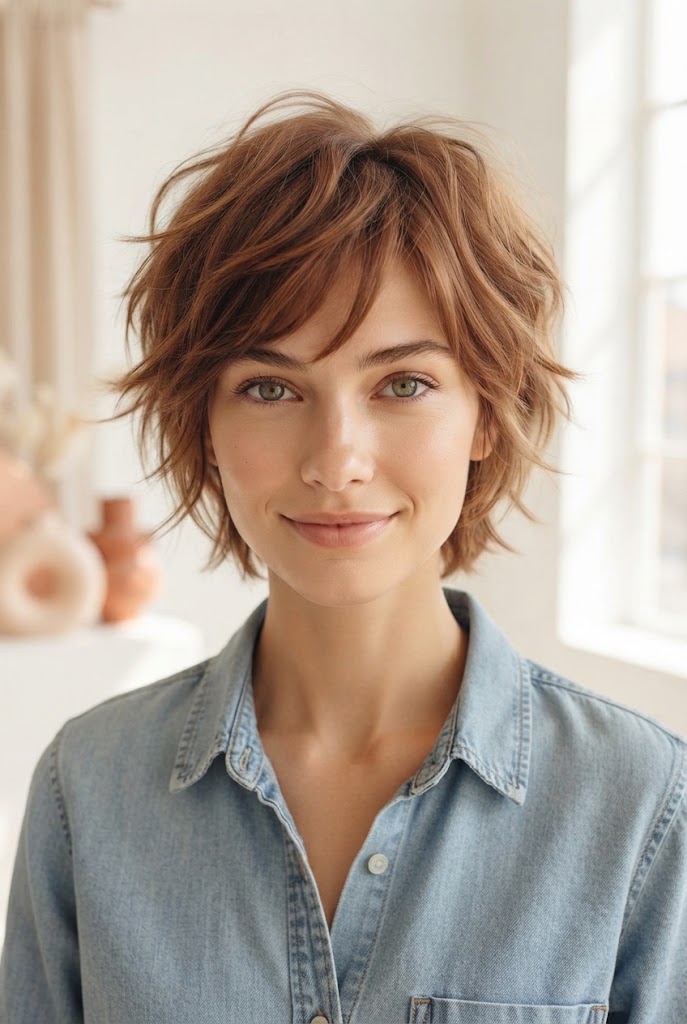
A short shag works differently from a blunt bob. Instead of relying mainly on a strong bottom line, it uses layers, movement, and texture to create an intentionally undone shape.
For fine hair, a short shag can be effective when the layers are tailored to your density. Too many layers can make sparse areas more noticeable, but strategically placed layers can create the appearance of movement and volume.
This cut is especially interesting for naturally wavy fine hair because the texture does some of the styling work. Straight hair can also wear it, although you may need a little texture spray or a quick styling routine to bring out the shape.
Stylist request: Ask for a short shag with controlled crown layers and face-framing pieces while keeping enough density through the ends.
Best for: Fine wavy hair or straight hair that enjoys a deliberately textured finish.
11. Bob With Wispy Bangs
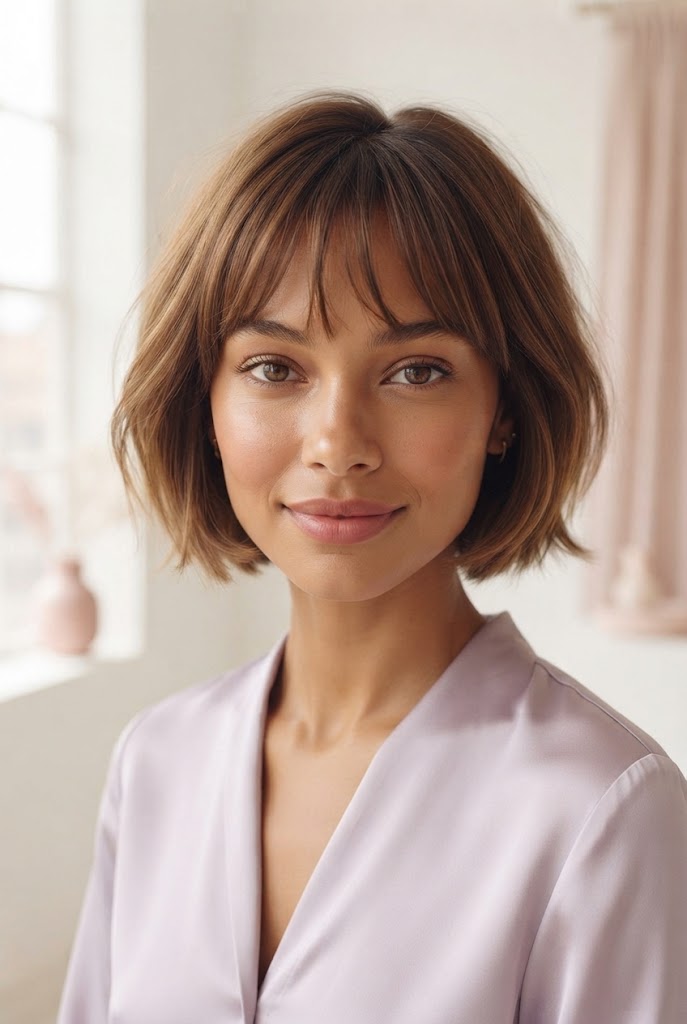
Adding wispy bangs to a short bob gives fine hair an easy way to introduce visual interest around the face. Because the fringe is lighter than a heavy blunt bang, it doesn’t necessarily require a large amount of hair from the front.
The bob itself should still carry enough weight to make the rest of the hair look full. The bangs then become a framing detail rather than the primary source of volume.
This can be a good choice if you want a noticeable update without shortening the rest of your hair dramatically. Keep in mind that bangs usually require more frequent shaping than the bob itself.
Stylist request: Ask for a strong bob perimeter with light, airy bangs that can be worn slightly parted.
Best for: Fine hair with enough front density for fringe and anyone who wants facial framing.
12. Wavy Bob
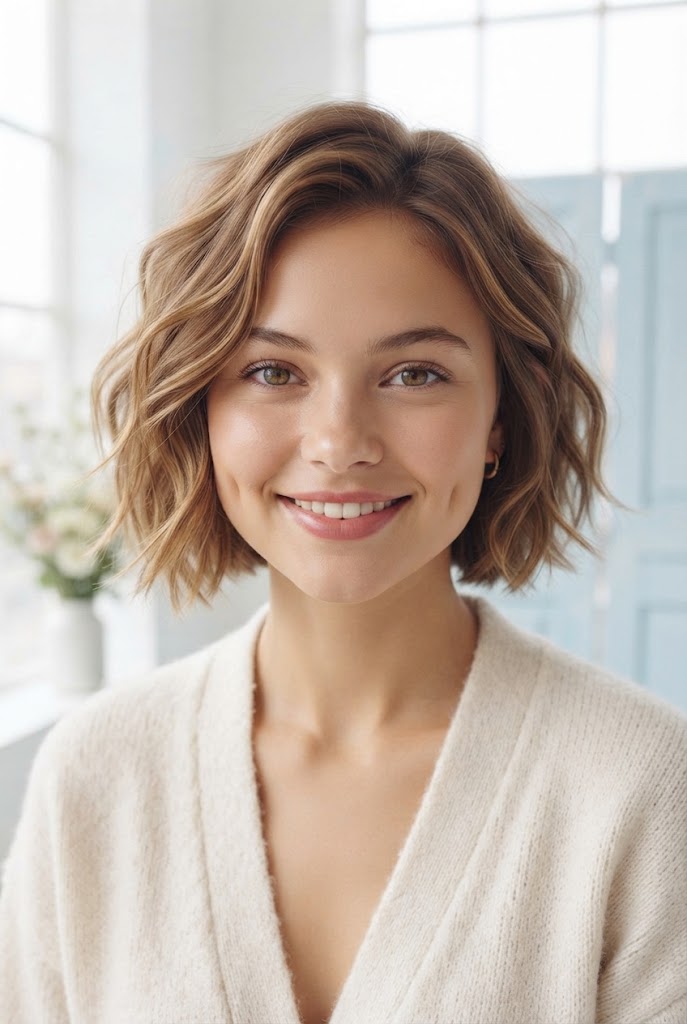
A wavy bob can make fine hair look fuller by introducing bends, separation, and movement. Natural waves are particularly helpful because the texture creates dimension without requiring a complicated cut.
The ideal length depends on your wave pattern. A bob that is too short can cause stronger waves to spring upward, while a slightly longer jaw-to-neck shape can provide a more predictable result.
For styling, avoid coating the hair in heavy creams or oils that can flatten delicate strands. A lightweight mousse or texture product can enhance natural movement without making the roots feel weighed down.
Stylist request: Ask for a bob that respects your natural wave pattern, with enough perimeter weight to keep the ends looking full.
Best for: Fine wavy hair and anyone who prefers an airy, less polished finish.
13. Short Curly Bob
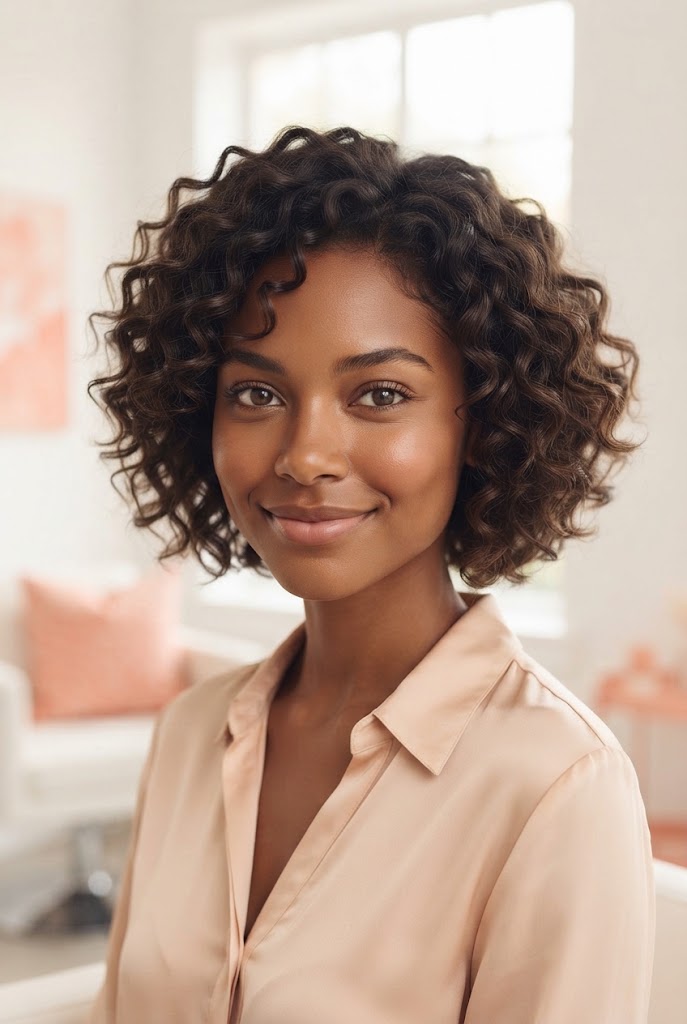
Fine curly hair has a different set of needs because the individual strands may be delicate even when the overall shape looks full. A short curly bob can preserve that volume while giving the curls a defined outline.
The cut should account for shrinkage. A stylist familiar with curly hair can help determine where the finished length will actually sit once the curls return to their natural pattern.
Avoid assuming that more layers are always better. Fine curls can lose density visually if too much is removed. Instead, focus on creating a balanced shape that lets curls stack naturally without leaving the perimeter too thin.
Stylist request: Ask for a curl-aware bob shaped around your natural shrinkage, while preserving enough weight at the perimeter.
Best for: Fine curly hair that benefits from a compact, defined silhouette.
14. A-Line Bob
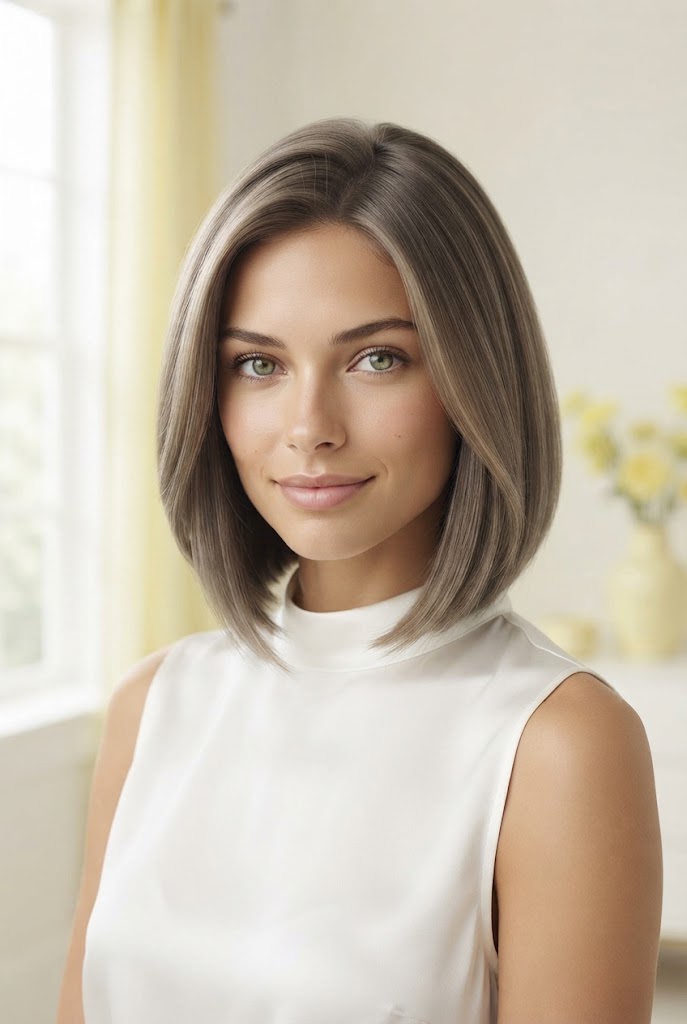
An A-line bob is shorter in the back and gradually becomes longer toward the front. The angled shape gives fine hair a defined profile and can create the impression of more structure than a completely uniform cut.
It is particularly useful if you want the appearance of a fuller back while retaining more length around the face. The front pieces can reach the jaw or slightly below, depending on how dramatic you want the angle.
For fine hair, keep the ends substantial rather than heavily texturized. A little beveling can soften the line without destroying the density effect.
Stylist request: Ask for a subtle A-line shape with a clean perimeter and slightly longer front pieces.
Best for: Fine straight hair and anyone who wants a structured bob with a little more visual interest.
15. Choppy Bob
A choppy bob brings texture into an otherwise classic short haircut. It can make fine hair look more dimensional because the pieces don’t all fall into exactly the same visual line.
The trick is distinguishing “choppy” from “thin.” If the ends are aggressively razored or excessively thinned, fine hair can appear more sparse. A better approach is to create visible movement while retaining enough bulk through the lower portion.
This haircut also works well with a slightly messy finish. Instead of trying to make every strand perfectly smooth, use a small amount of lightweight texture product and allow individual pieces to move.
Stylist request: Ask for a textured bob with visible movement but a preserved perimeter, rather than heavily thinned ends.
Best for: Fine straight or wavy hair that needs a more casual, modern finish.
16. Side-Swept Bob
A side-swept bob uses the direction of the part to create height and movement at the roots. For fine hair that naturally separates flat against the scalp, changing the part can sometimes create an immediate visual difference.
The haircut itself can remain relatively simple. A chin-length or slightly shorter bob with a side part can look fuller on one side while giving the face a softer diagonal frame.
This is also a useful choice if you’re unsure about committing to bangs. The longer front section can sweep across the forehead without permanently cutting a fringe.
Stylist request: Ask for a bob that works with a deep or soft side part, with enough front length to sweep naturally across the face.
Best for: Fine straight or wavy hair and anyone who wants volume without heavy layering.
17. Grown-Out Pixie
A grown-out pixie is worth considering if you like short hair but don’t want the maintenance schedule of a very precise cropped cut. The extra length around the sides, crown, and fringe creates more styling options while retaining the lightweight feel of a pixie.
Fine hair can benefit from this stage because the additional length provides enough material to sweep, part, or texture. It can also be an intentional haircut rather than simply an awkward transition.
The main challenge is shape. Without regular reshaping, a grown-out pixie can become bulky in some areas and flat in others. Strategic trimming keeps the silhouette deliberate.
Stylist request: Ask for a reshaped grown-out pixie with longer crown and fringe pieces and controlled bulk around the sides.
Best for: Fine hair when you want short-hair volume but are gradually moving toward a bob.
18. Feathered Short Crop
A feathered short crop offers a softer alternative to a blunt bob or sharply defined pixie. The hair is shaped into lightweight pieces that can move away from the face and create a sense of height around the crown.
For fine hair, the feathering needs to be controlled. Too much removal can make the ends appear transparent. Done thoughtfully, however, short feathered pieces can create enough movement to keep the haircut from looking flat.
This style works especially well if you prefer a softer, slightly retro-inspired finish rather than a geometric haircut. A round brush or fingers can direct the shorter pieces upward and outward during drying.
Stylist request: Ask for a short crop with soft feathering concentrated around the crown and face, while preserving density through the main shape.
Best for: Fine straight or softly wavy hair that benefits from movement and face framing.
How to Choose the Right Short Hairstyle for Fine Hair
The biggest mistake is choosing a haircut based only on the word “fine.” Fine describes the diameter of an individual strand. Density describes how many strands you have. You can have fine hair with high density, or fine hair with relatively low density.
That distinction changes the haircut decision.
If you have plenty of fine strands, you may be able to wear controlled layers, texture, and even a shag. If your hair is both fine and low-density, protecting the perimeter and avoiding excessive thinning becomes more important.
If You Want Your Ends to Look Thicker
Choose a cut with a strong perimeter.
Blunt bobs, chin-length bobs, and carefully shaped A-line bobs are strong candidates because the bottom edge gives the eye a clear concentration of hair. Current professional beauty coverage similarly emphasizes blunt edges as one way to create a fuller-looking silhouette for fine or thin hair.
If Your Roots Go Flat
Look for a shorter shape with controlled crown lift.
A bixie, textured pixie, stacked bob, or short layered crop can create more room for the crown to lift. Styling direction matters too: drying the roots upward or changing your part can give fine strands more height.
If You Want to Keep Some Length
Start with a bob.
A chin-length bob is generally a less dramatic transition than a pixie while still removing a significant amount of length. A-line and French-inspired bobs provide additional shape if a standard bob feels too simple.
If You Want Minimal Styling
Choose a haircut that works with your natural texture.
Straight hair may suit a blunt bob that looks polished with little effort. Wavy hair can work beautifully with a textured bob or short shag. Curly hair often benefits from a curl-specific shape rather than trying to force it into a straight-hair haircut.
Short Hairstyles for Fine Hair by Hair Type
Fine Straight Hair
Straight fine hair shows the haircut’s outline very clearly, so perimeter quality matters. Blunt bobs, A-line bobs, French bobs, and polished pixies can all work well. If your hair tends to separate into thin-looking sections, avoid excessive razor work or thinning at the ends.
A little root lift can make a significant visual difference. Try drying the roots in the opposite direction from their natural fall, then allowing the hair to settle into the desired part.
Fine Wavy Hair
Waves naturally introduce dimension, so you don’t necessarily need aggressive layering. A wavy bob, short shag, choppy bob, or textured bixie can work beautifully.
The goal is to enhance the existing wave rather than burying it under heavy products. Lightweight mousse or texture spray can encourage movement without flattening the roots.
Fine Curly Hair
Fine curls need shape without unnecessary weight removal. A short curly bob or carefully tailored crop can make curls appear compact and lively.
Talk to your stylist about shrinkage before deciding on the finished length. What looks like a chin-length cut while wet may sit considerably higher once your curls dry.
Fine Hair With Low Density
If you have fewer strands overall, focus on preserving the visual weight you do have. Strong perimeters, compact shapes, and carefully positioned layers are usually more useful than lots of texture.
If thinning or a noticeable change in density is new or progressing, a haircut is only a cosmetic styling choice—not a diagnosis or treatment. In that situation, professional medical advice may be appropriate.
Short Hairstyles for Fine Hair by Face Shape
Round Face
You don’t need to avoid short hair. Consider shapes that introduce some vertical movement, such as a side-swept pixie, angled bob, or bixie with crown lift. A slightly longer front can also create a useful vertical line around the face.
The goal is not to “hide” the face. It is simply to balance the haircut’s proportions with your natural features.
Oval Face
Oval faces can accommodate a wide range of short cuts, so hair texture and lifestyle can become more important than strict face-shape rules. A blunt bob, French bob, pixie, bixie, or textured crop can all work depending on the desired aesthetic.
Use the haircut to emphasize the features you like rather than trying to follow a rigid face-shape formula.
Square Face
Soft texture around the face can balance stronger jawline angles. A wavy bob, side-swept fringe, textured pixie, or softly layered crop can introduce movement.
You can also keep the perimeter slightly softer rather than choosing an extremely geometric line if you prefer a less structured appearance.
Heart-Shaped Face
A bixie, side-swept bob, or pixie with a longer fringe can work nicely when you want to create visual balance around the forehead and chin.
Face-framing pieces are particularly useful because their placement can be customized instead of following a one-size-fits-all haircut formula.
Long Face
A chin-length bob, French bob, or softly textured bob can create width around the sides of the face. Bangs can also change the apparent proportions by adding a horizontal visual element.
Avoid choosing a haircut solely because it is supposed to “correct” your face shape. Your natural texture and preferred styling routine matter just as much.
Diamond Face
Short cuts with controlled volume and soft face framing can highlight cheekbones while balancing the forehead and jaw. A side-swept fringe, textured bob, or tailored pixie can all be adapted.
The most important factor is where the stylist places volume and where the hair ends relative to your cheekbones and jaw.
How to Make Fine Hair Look Fuller Without Overdoing It
The haircut creates the foundation, but styling can either support or flatten it.
Start with lightweight products
Heavy oils, rich creams, and too much conditioner near the roots can make fine hair collapse. A lightweight volumizing mousse or root product is often easier to control.
Dry the roots before the ends
Lift the roots with your fingers or a brush while drying. Directing the hair upward rather than straight against the scalp can encourage more height.
Change your part
A slightly different part can instantly change where the hair sits. If your hair always falls in the same direction, moving the part can prevent the roots from looking compressed.
Don’t over-layer
More layers don’t automatically mean more volume. Current fine-hair guidance repeatedly points toward retaining enough weight while using strategic shaping rather than removing density indiscriminately.
Use texture strategically
Dry texture products can add separation and root lift, but they should be used sparingly. Recent beauty guidance notes that texturizing products work by adding grip between strands, which can make fine hair look more voluminous without necessarily requiring heavy styling.
Which Short Haircuts Are Lowest Maintenance?
If your priority is minimal daily styling, consider:
- Blunt bob
- Chin-length bob
- Grown-out pixie
- Classic pixie
- Simple French bob
If your priority is maximum texture, consider:
- Textured pixie
- Bixie
- Short shag
- Choppy bob
- Feathered short crop
If your priority is keeping the appearance of density, consider:
- Blunt bob
- Chin-length bob
- A-line bob
- Stacked bob
- French bob
The best haircut is the one whose maintenance level matches your actual routine. A highly styled haircut isn’t genuinely low-maintenance if you dislike blow-drying every morning.
Bob vs. Pixie vs. Bixie for Fine Hair
| Feature | Bob | Bixie | Pixie |
| Length | Short to jaw/neck | Between bob and pixie | Very short |
| Visual density | Excellent with strong perimeter | Good with controlled layers | Depends heavily on crown shape |
| Styling flexibility | Highest | High | Moderate |
| Grow-out | Easier | Moderate | More noticeable |
| Maintenance | Moderate | Moderate | Frequent shaping |
| Tie-back potential | Sometimes | Rarely | Usually no |
| Best advantage | Fuller-looking ends | Lift + versatility | Removes weight |
| Commitment | Lower | Medium | Highest |
If you are nervous about going very short, the bixie is a useful middle ground. If your biggest concern is making the ends look thicker, a bob is often the more logical starting point. If you want the shortest possible style and don’t mind regular trims, a pixie can be transformative.
What to Tell Your Stylist
Instead of simply saying, “I want my hair to look thicker,” be specific about the shape you want.
For a bob:
“I’d like a chin-length bob with a strong perimeter. Please keep enough weight through the ends so they don’t look wispy.”
For a bixie:
“I’d like a bixie with more length around the face and controlled crown layers, but I don’t want the ends over-thinned.”
For a pixie:
“I want a short pixie with enough length on top to create lift and texture while keeping the sides neat.”
For fine wavy hair:
“I’d like the cut to work with my natural wave, with enough weight at the perimeter to keep the ends looking full.”
It can also help to bring two or three reference photos showing the length, texture, and finish you like. A photo communicates the desired silhouette much more clearly than a haircut name alone.
Frequently Asked Questions
Is short hair better for fine hair?
Short hair can make fine hair appear fuller because there is less length pulling the strands downward. However, the haircut itself matters. A short cut with excessive thinning can still look sparse, while a well-shaped bob, pixie, or bixie can create a stronger silhouette.
What is the best short haircut for very fine hair?
A blunt or softly structured bob is a strong option when preserving the appearance of density is the priority. A pixie or bixie can work better when you want more crown lift and less overall length.
Does layering make fine hair look thicker?
Not necessarily. Strategic layers can create movement and lift, but excessive layering can remove too much visual weight. Fine hair usually benefits from a balance between controlled movement and a substantial perimeter.
Is a bob or pixie better for fine hair?
It depends on what you want. A bob generally preserves more length and gives you stronger-looking ends, while a pixie removes weight and can create crown lift. A bixie sits between the two.
Can fine hair look fuller with bangs?
Yes. Bangs can add visual detail and frame the face, but the type of fringe should match your density. Wispy bangs require less hair than a very thick, blunt fringe.
How often should short fine hair be trimmed?
The ideal schedule depends on the haircut. A precise pixie or stacked bob usually shows shape changes sooner than a longer bob. Rather than following a rigid calendar, schedule maintenance when the silhouette starts losing the shape you want.
Can fine curly hair have a short haircut?
Absolutely. The haircut should account for curl pattern and shrinkage. A short curly bob or carefully shaped crop can work particularly well when the stylist preserves enough weight and cuts with the natural curl pattern in mind.
What should I avoid if I have fine hair?
Avoid assuming that heavy layering, excessive thinning, or lots of product will automatically create volume. Fine hair often benefits more from an appropriate shape, controlled layering, and lightweight styling.
Can short hair be low maintenance and still look full?
Yes. A simple blunt bob or well-shaped pixie can require relatively little daily styling. The key is choosing a cut that naturally works with your hair texture instead of requiring a complicated styling routine every morning.
Final Takeaway
The best short hairstyles for fine hair don’t all look alike. Some rely on a strong blunt perimeter, others use crown layers, texture, graduation, or a shorter silhouette to create the impression of fullness.
If you’re unsure where to start, think about your priority first:
Want thicker-looking ends? Try a blunt or chin-length bob.
Want lift without going extremely short? Try a bixie or stacked bob.
Want maximum freedom from heavy length? Consider a pixie.
Want to embrace natural waves or curls? Choose a texture-aware bob or crop.
And before asking for “more layers,” ask a more useful question: Where does my hair actually need movement, and where does it need to keep its weight? That distinction can make the difference between a haircut that simply looks short and one that genuinely makes fine hair look fuller.