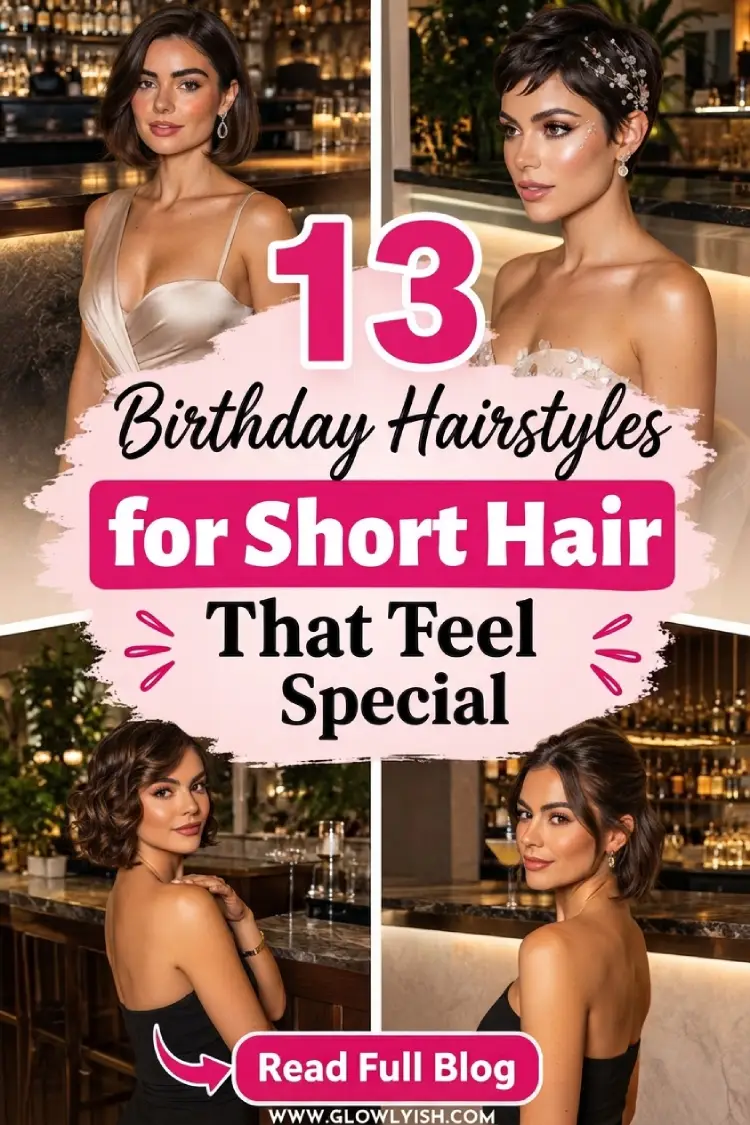
Short hair can be much easier to choose when you stop treating the haircut photo as the decision itself. A bob that looks effortless on straight, For delicate strands, short hairstyles for fine hair provide instant fullness may behave very differently on thick waves. A pixie can be quick to style for one person and surprisingly demanding for another.
That is why the best short hairstyles for women are not simply the most attractive cuts in a photo. The useful question is whether the shape works with your hair’s texture, density, growth pattern, face shape, daily routine, and willingness to style it.
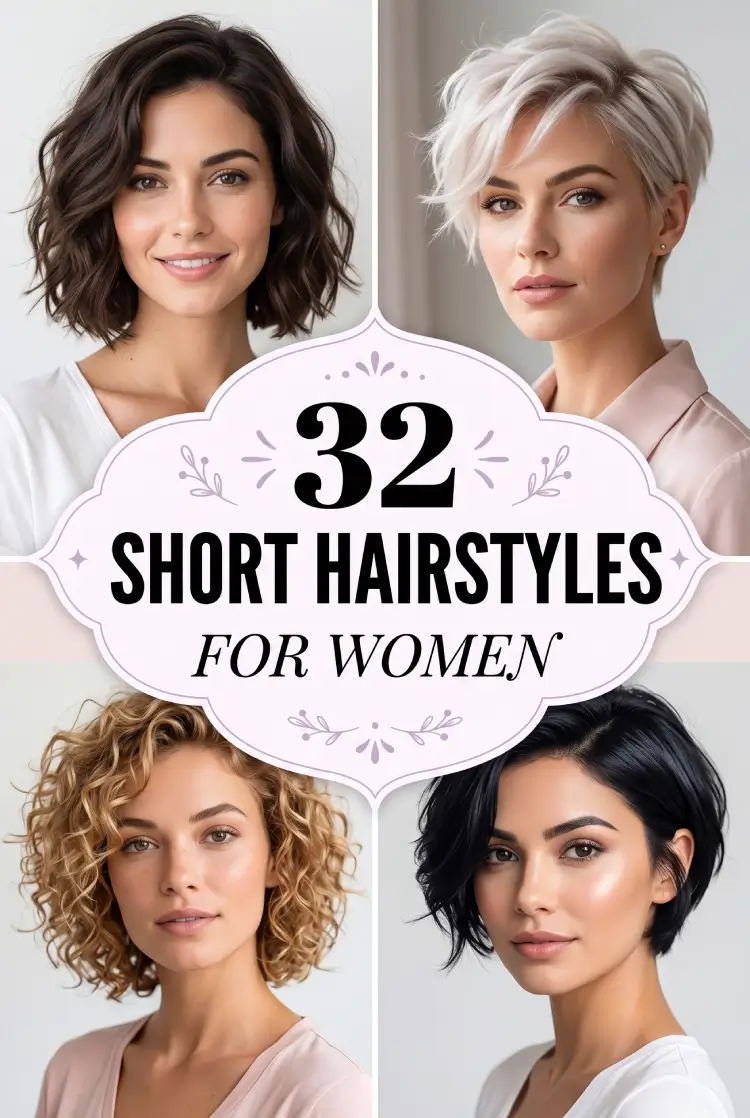
Below are 32 options ranging from polished bobs and bixies to curly crops and textured pixies. Each one includes practical considerations so you can narrow down the styles worth saving before your next haircut.
Quick Picks
Best for fine hair: Blunt bob
Best for Meanwhile, short haircuts for thick hair remove internal bulk: Layered bob
Best for natural waves: Wavy textured bob
Best for curls: Curly bob with bangs
Best for a very short cut: Classic pixie
Best middle ground between bob and pixie: Bixie
Best for a softer grow-out: French bob
Best low-maintenance option: Textured crop
Best if you want to keep some length: Chin-length bob
Best for an angular shape: Asymmetrical bob
Best for wearing hair up occasionally: Short lob
Best for natural volume: Curly tapered crop
1. Blunt Bob
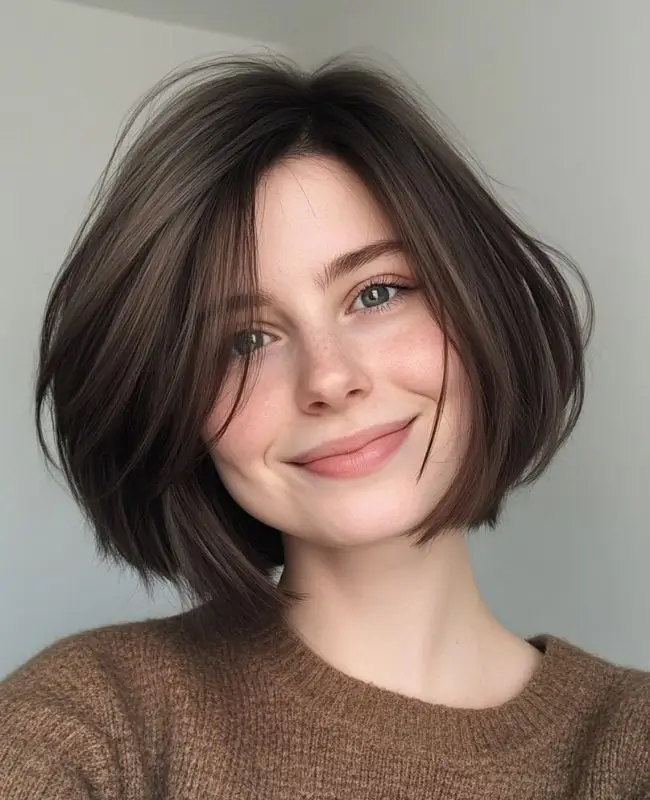
A blunt bob is one of the most useful short haircuts when you want a clean shape without committing to a pixie. The ends are cut with a relatively strong perimeter rather than heavily feathered layers, which can make fine or medium-density hair appear visually substantial. That does not mean a blunt bob automatically makes hair look thicker, but preserving weight at the ends can be helpful when you do not want excessive layering. The cut works especially well on straight hair because the perimeter is easy to see. On waves, a slightly longer version can prevent the shape from becoming too compact when the hair dries. For fine hair, ask for a chin- to jaw-length blunt bob with minimal internal layering. For thick hair, your stylist may need to remove some internal weight without destroying the strong outer line.
Maintenance: Moderate. The shape becomes noticeably different as the perimeter grows out.
Styling: Straightening is optional. A round brush or air-dried finish can work depending on texture.
Ask your stylist: “I want a clean, blunt perimeter around the jaw, but I don’t want the ends to feel overly heavy.”
2. Chin-Length Bob
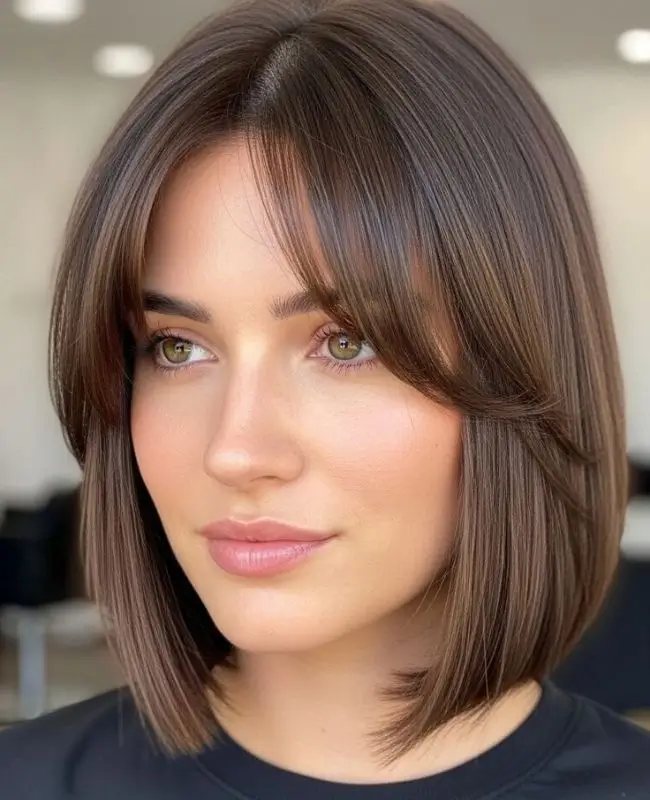
A chin-length bob sits around the jaw and gives you one of the most versatile versions of short hair. It is short enough to feel like a genuine change but long enough to retain some styling flexibility. Depending on the exact length, you may still be able to tuck it behind the ears, create loose waves, or pin sections away from the face.
The main consideration is where the perimeter lands. Hair that naturally expands at the sides can create a wider silhouette if the cut ends directly at the broadest part of the face. Moving the length slightly below the chin or adding subtle graduation can change the result.
Straight and wavy hair are particularly easy to adapt to this shape. Curly hair can also work beautifully, but the stylist should account for shrinkage before deciding the final dry length.
Maintenance: Moderate, with trims needed to preserve the intended shape.
Styling: Can be worn sleek, tucked behind the ears, softly waved, or naturally textured.
Ask your stylist: “I want the bob to finish around my chin, but please account for how my hair expands or shrinks naturally.”
3. French Bob
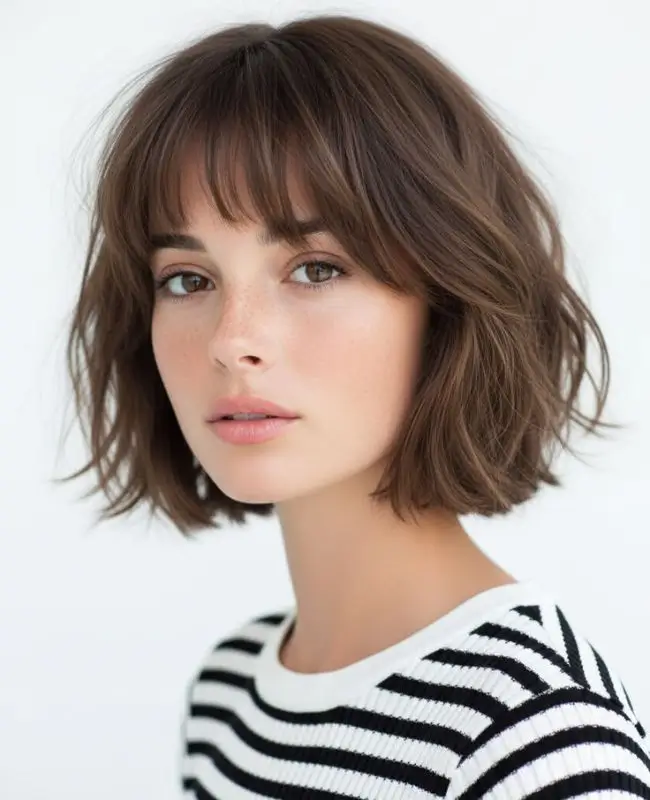
The French bob usually has a compact, jaw-skimming shape with a distinctly polished silhouette. It often works with a fringe or shorter front pieces, but the exact version can be adapted to the wearer rather than copied literally from one reference photo.
This cut is particularly appealing if you want short hair that still feels refined rather than heavily layered. Straight hair can show off the graphic shape, while naturally wavy hair can give it a softer, less precise finish. Curly hair requires more careful planning because the apparent length can change substantially once curls dry.
A French bob can be relatively simple day to day, but maintaining its compact shape requires regular trims. Bangs also introduce another maintenance schedule if you want them to remain short.
Maintenance: Moderate to moderately high when paired with a short fringe.
Styling: Works sleek or naturally textured. A small amount of styling cream can help control flyaways.
Potential challenge: A strong jaw-length shape may need adjustment if your hair becomes very wide at the sides.
Ask your stylist: “I want a compact French bob around the jaw with a soft, wearable fringe rather than an extremely blunt helmet shape.”
4. Textured Bob
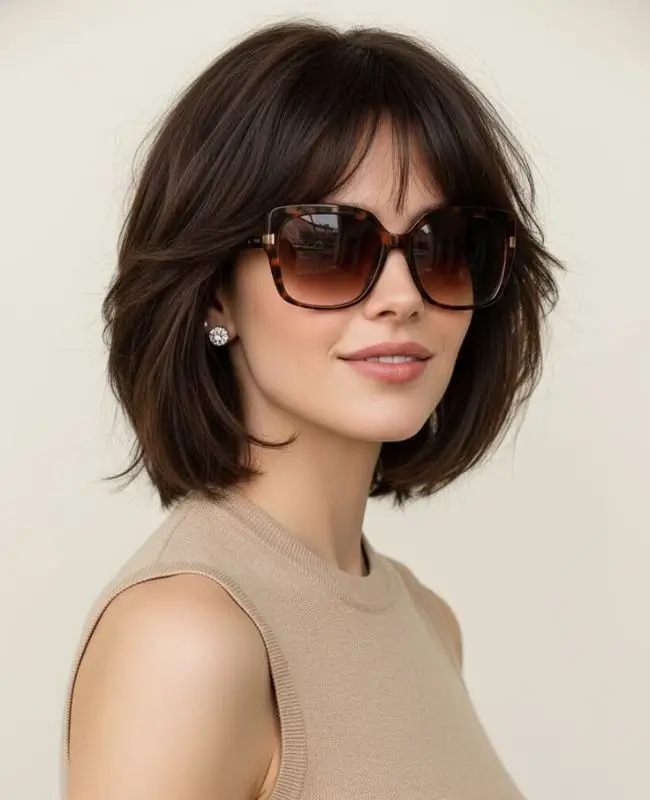
A textured bob is a good choice when you like the structure of a bob but do not want perfectly polished ends. Texture can be created through carefully placed layers, point cutting, or other techniques chosen by the stylist for the individual’s hair.
It can work particularly well with naturally wavy hair because the haircut can cooperate with the hair’s movement rather than forcing every strand into a smooth shape. Fine hair can also benefit from strategic texture, although excessive thinning or over-layering may leave the ends looking sparse.
Thick hair may need internal weight removal so the bob does not become triangular or overly bulky. Curly hair can use a similar concept, but the stylist should cut with curl behavior and shrinkage in mind.
Maintenance: Moderate. The intentionally imperfect finish can make grow-out less obvious than a highly geometric bob.
Styling: Scrunching, air-drying, or adding a small amount of texturizing product can emphasize movement.
Ask your stylist: “I want a textured bob with movement, but I still want enough weight at the perimeter to keep the shape full.”
5. Layered Bob
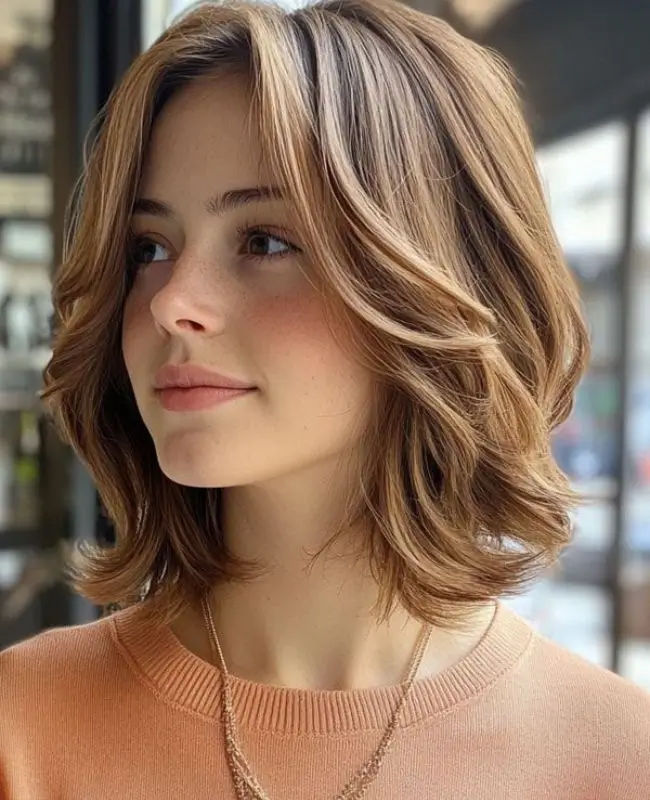
A layered bob gives a classic short shape more movement and can be especially useful for medium-to-thick hair. Instead of leaving the entire haircut at one heavy perimeter, the stylist introduces layers to control weight and create a more flexible silhouette.
For thick hair, the placement of layers matters. Removing too much weight from the wrong area can create unwanted puffiness or make the ends difficult to control. For wavy hair, layers can help encourage natural movement. Straight fine hair can also wear a layered bob, although subtle layering is often more useful than aggressive thinning.
This cut can suit several face shapes because the layers can be customized around the cheekbones, jaw, or neckline.
Maintenance: Moderate. Layers can grow out gracefully, but the overall bob shape still benefits from regular trimming.
Styling: Blow-drying with a round brush creates polish; air-drying can reveal natural movement.
Potential challenge: Very thick hair may require a stylist comfortable with internal weight management.
Ask your stylist: “I want a layered bob that removes bulk without making the perimeter thin.”
6. Inverted Bob
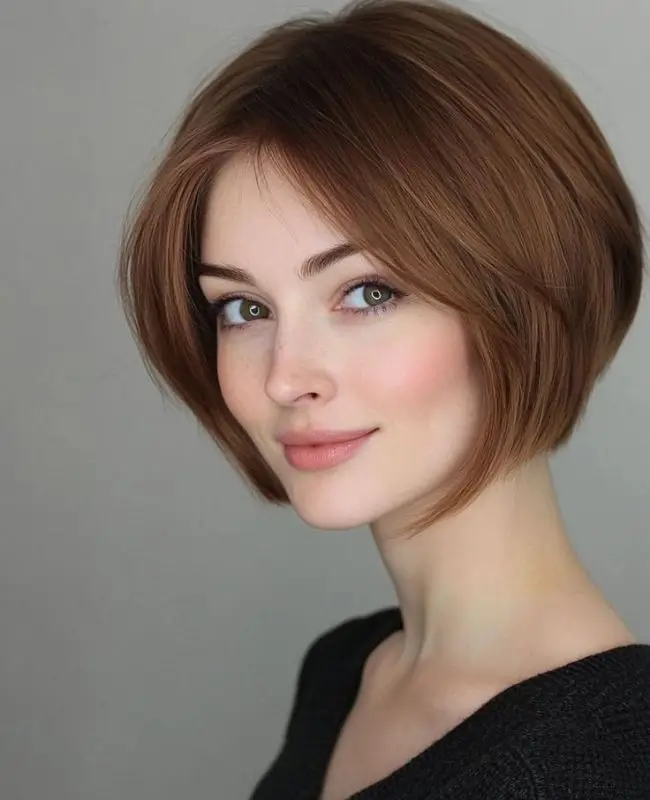
An inverted bob is shorter at the back and gradually longer toward the front. The difference can be subtle or dramatic, making the cut adaptable to different tastes. It creates a structured shape without requiring the very short sides associated with a pixie.
The cut can be useful for thick hair because the graduated shape gives the stylist a framework for controlling weight around the back of the head. Straight hair shows the angle clearly, while waves can soften it.
If you have a Flattering short haircuts for round faces help elongate natural facial features, a longer front section can create visual direction toward the chin, although the best length depends on your individual proportions. For curly hair, the graduation needs to be carefully planned because curls can change the visible angle.
Maintenance: Moderate. The graduated shape becomes less defined as it grows.
Styling: A smooth blowout emphasizes the graduation, while waves make it softer.
Ask your stylist: “I want a softly graduated bob that is shorter at the nape and gradually longer toward the front.”
7. Asymmetrical Bob
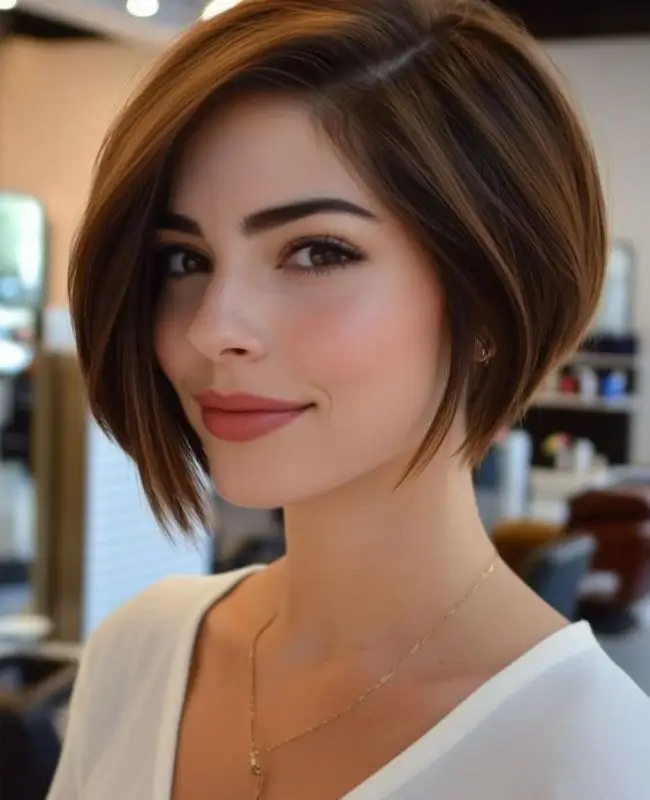
An asymmetrical bob intentionally uses unequal lengths to create a stronger visual angle. One side may be only slightly longer than the other, or the difference can be much more noticeable.
This is an appealing option if you like the manageability of a bob but want something less conventional. The asymmetry can also create directional lines that change how the haircut frames the face. It does not have a single universally flattering formula, so the length difference should be chosen around your hair density, parting pattern, and preferred styling.
Straight hair displays the asymmetry clearly. Wavy hair gives the cut a softer interpretation, while curls can make the difference in length less visually obvious.
Maintenance: Moderate to high if you want the asymmetry to remain precise.
Styling: A side part usually emphasizes the shape.
Potential challenge: Natural cowlicks or a strong part can affect how the two sides fall.
Ask your stylist: “I want an asymmetrical bob with a noticeable but wearable difference in length between the two sides.”
8. Side-Parted Bob
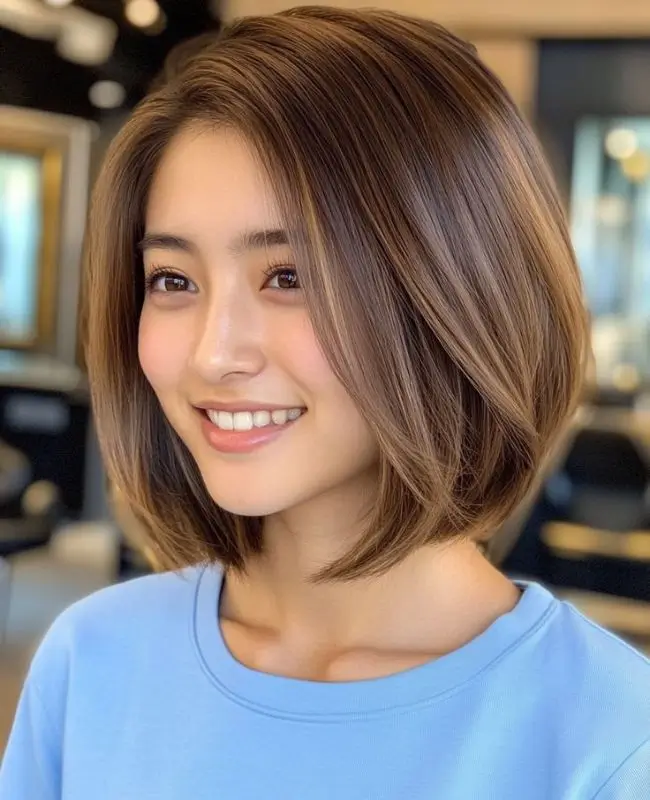
A side-parted bob is less about a completely different haircut and more about how the shape is styled. Moving the part away from the center can create a diagonal line through the front and change the balance of the haircut.
It is particularly useful if you like short hair but do not want a highly symmetrical appearance. On fine hair, a side part can also change where volume sits. On rounder facial proportions, a diagonal fringe or longer front section may create more directional movement, although the result depends on the complete haircut.
Straight hair makes the part easy to define. Wavy and curly textures can make the look softer and more irregular.
Maintenance: Moderate.
Styling: A comb, brush, or fingers may be enough to establish the part, depending on texture.
Ask your stylist: “Please design the front so the bob works naturally with my preferred side part.”
9. Micro Bob
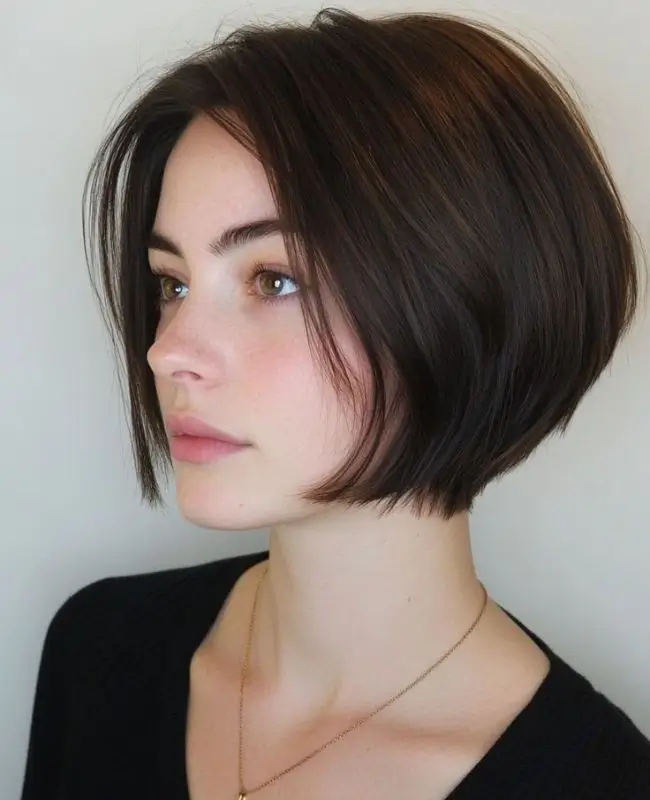
A micro bob is shorter than a conventional bob, often ending around the cheekbone, jaw, or upper jaw depending on the version. It is a stronger commitment because there is less length available for tying, tucking, or disguising an uneven grow-out.
The benefit is a crisp, fashion-forward shape that can look especially striking on straight hair. Fine hair can also work well with a compact perimeter. Thick hair may need careful internal weight removal so the cut does not become too wide.
For wavy or curly hair, the stylist should account for how much the hair contracts as it dries. A micro bob that looks appropriately short when wet can become substantially shorter once dry.
Maintenance: Moderate to high because small changes in length can alter the silhouette.
Styling: Sleek finishes are easy to see, but natural texture can make the cut softer.
Ask your stylist: “I want a very short bob, but please show me where the dry length will sit before cutting.”
10. Wavy Bob
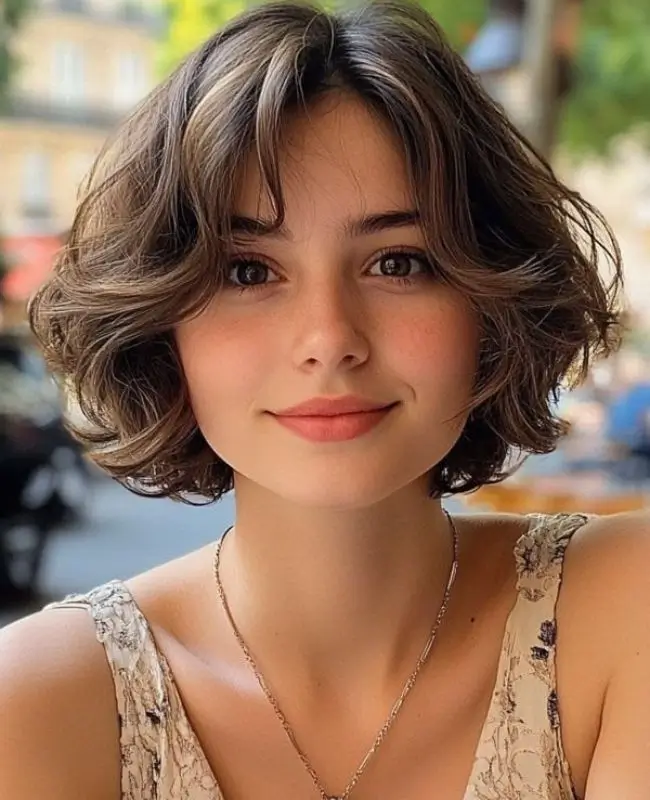
A wavy bob works with the natural bend of the hair rather than trying to eliminate it. The ideal length depends on how strongly the hair waves, because shorter hair can sometimes spring upward and become more compact.
This style can be especially practical if you prefer air-drying. A small amount of styling cream or mousse may be enough to define waves, although coarse or frizz-prone hair may need additional conditioning and hold.
Layering should be deliberate. Too many short layers can increase volume around the sides, while a completely solid perimeter may feel heavy. The right balance depends on density and wave pattern.
Maintenance: Moderate, with styling effort ranging from very low to moderate.
Styling: Apply product to damp hair, scrunch gently, and let it dry naturally or diffuse.
Potential challenge: Humidity can change the finished shape.
Ask your stylist: “I want a bob that works with my natural wave pattern rather than requiring daily straightening.”
11. Curly Bob
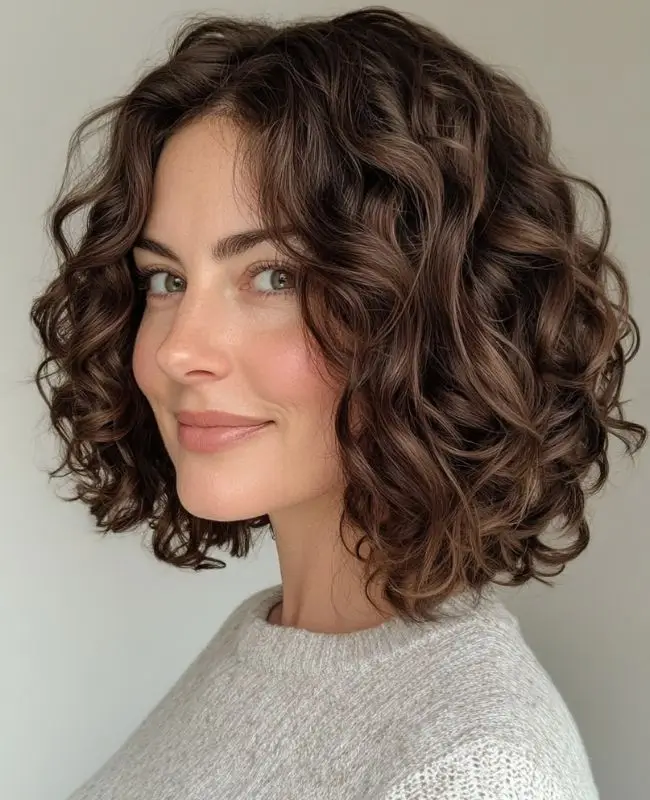
A curly bob can be a strong choice when you want to keep your natural curl pattern while reducing overall length. The most important part of the cut is not simply the length but how the stylist distributes weight.
Curly hair can shrink considerably, so the final dry shape should be considered before the cut is finished. Density also matters. A dense curl pattern may need layers or carefully removed internal weight, while finer curls may benefit from preserving enough perimeter to prevent the haircut from looking sparse.
The bob can be worn naturally with curl cream or gel, or stretched and styled differently when desired.
Maintenance: Moderate. The cut may grow out attractively, but shape adjustments are useful as curls change length.
Styling: Usually works best with a curl-supporting product and minimal manipulation while drying.
Ask your stylist: “Please cut with my natural curl pattern in mind and account for shrinkage at my usual dry length.”
12. Curly Bob With Bangs
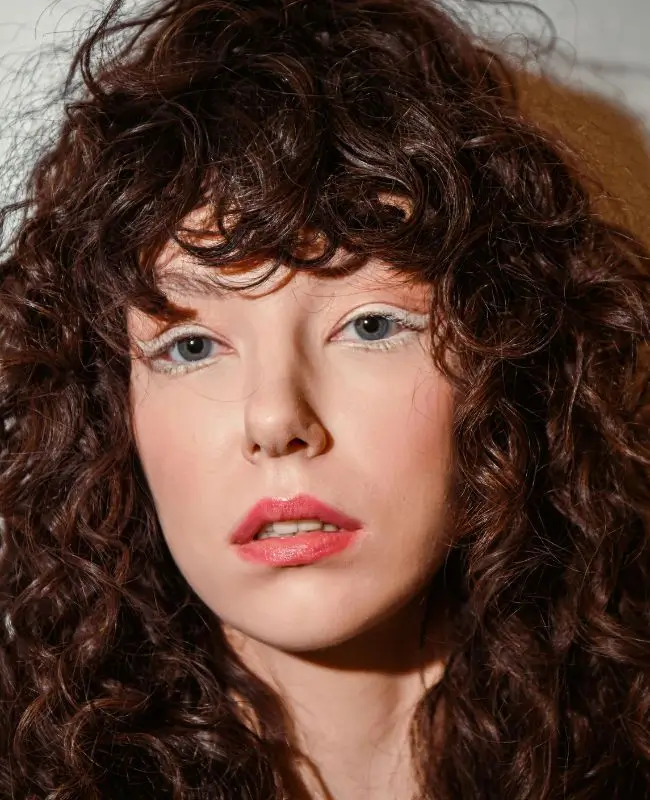
A curly bob with bangs adds another layer of shape to a short haircut. The fringe can be rounded, tapered, curly, or deliberately separated depending on the curl pattern and desired appearance.
This style is particularly important to discuss in terms of shrinkage. Curly bangs can appear dramatically shorter once dry, so a stylist familiar with textured hair should determine the final shape accordingly.
The combination can work with many curl densities, but styling expectations matter. If you want a defined fringe every morning, you may need more styling than someone who prefers an intentionally irregular natural finish.
Maintenance: Moderate. Bangs may require more frequent reshaping than the bob itself.
Styling: Apply curl product to damp bangs and allow them to form naturally rather than repeatedly brushing them straight.
Potential challenge: Humidity can alter fringe shape.
Ask your stylist: “I want curly bangs that sit naturally above my eyebrows without becoming too short when my curls dry.”
13. Shaggy Bob
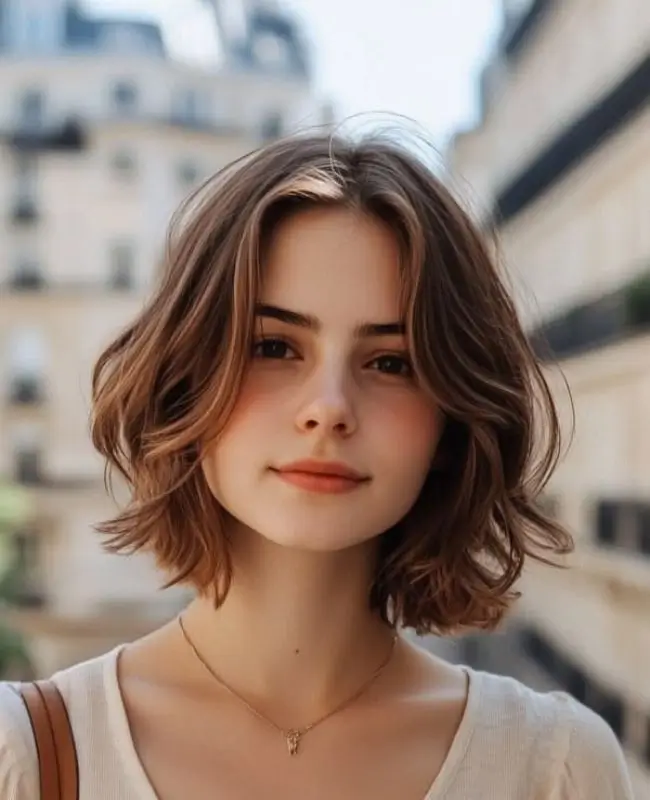
A shaggy bob combines the compactness of a bob with more layers and a deliberately undone finish. It can be a useful option if you dislike the precision of a classic bob and prefer movement.
Wavy hair is particularly well suited because the layers can encourage natural bends. Straight hair can also wear the cut, but it may need texturizing product or light styling to make the layers visible.
Thick hair often benefits from thoughtful weight removal, while fine hair needs restraint so the ends do not become too thin. The best shaggy bobs still have an intentional outline rather than simply being heavily chopped.
Maintenance: Moderate. The cut can tolerate some grow-out because the texture is part of the design.
Styling: Air-drying, scrunching, or using a texturizing spray can enhance the shape.
Ask your stylist: “I want a shaggy bob with movement, but I don’t want the ends to become wispy or disconnected.”
14. French Layered Bob
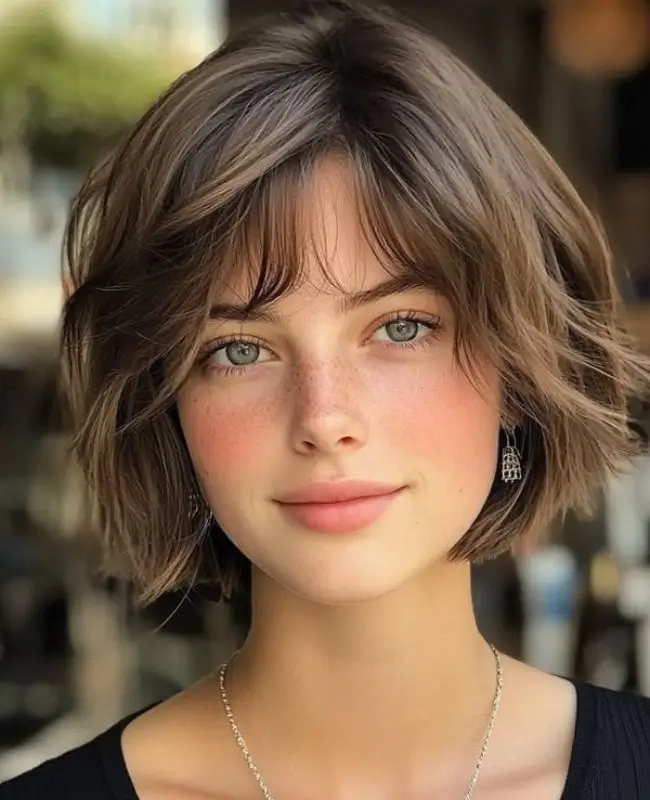
A French layered bob takes the compact feel of a French bob and introduces softer layering. This can make the cut easier to wear if your hair has natural movement or if a completely blunt silhouette feels too severe.
Fine to medium hair can benefit from restrained layering that creates movement without removing too much density. Wavy hair can make the style look naturally relaxed. Thick hair may require internal weight reduction.
The fringe is optional. Without bangs, the haircut becomes more adaptable for someone who wants a French-inspired shape but does not want frequent fringe trims.
Maintenance: Moderate.
Styling: Works with a smooth finish, loose bend, or natural texture.
Potential challenge: Very thick hair may expand around the sides unless the internal weight is managed carefully.
Ask your stylist: “I want a French-inspired bob with subtle layers and a soft, natural shape rather than a heavily layered cut.”
15. Jaw-Length Bob

A jaw-length bob is particularly useful when you want the haircut to frame the lower face. The exact position can be adjusted slightly above or below the jaw depending on face proportions, hair density, and how the hair behaves.
On straight hair, the clean line can look very polished. On waves, the same length becomes more relaxed. Curly hair requires a shrinkage-aware approach because a nominal jaw-length cut may sit much higher once dry.
The shape is also useful as a transition for someone moving from long hair to genuinely short hair. It still offers enough length to experiment with clips and tucked styles.
Maintenance: Moderate.
Styling: Can be sleek, tucked, waved, or worn naturally.
Ask your stylist: “I want the shortest point around my jaw, but I’d like the dry length checked before you finalize the perimeter.”
16. Short Lob
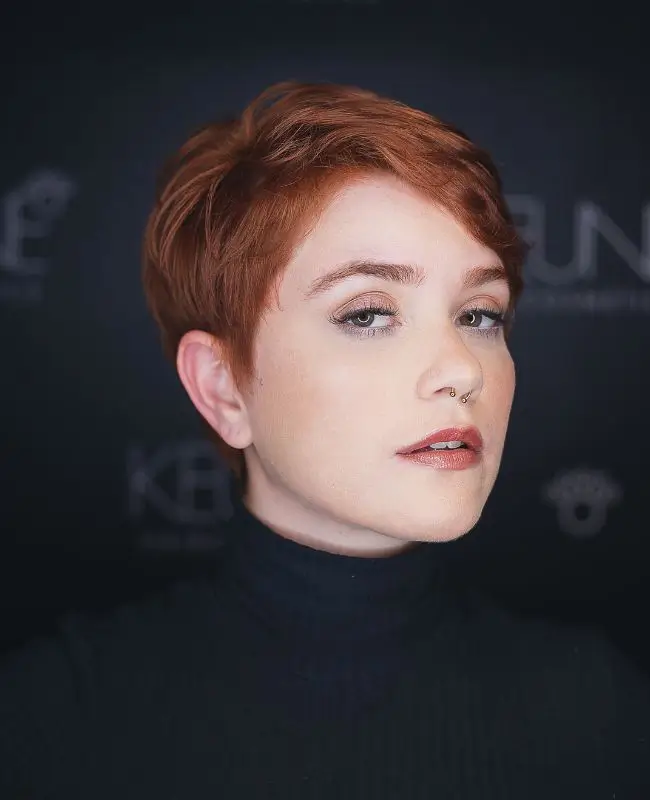
A short lob is the compromise cut for someone who wants shorter hair without giving up much styling flexibility. It generally sits around the shoulders or slightly above them, making it longer than most classic bobs but still noticeably shorter than long hair.
This is one of the easiest short styles for someone nervous about a major chop. Depending on the exact length, you can often still create a ponytail, small bun, braid, or clipped style.
Fine hair can benefit from a blunt or softly layered perimeter. Thick hair may need internal weight control. Wavy hair can work beautifully at this length because the added length gives the wave room to fall.
Maintenance: Lower than a very short bob because the shape is less dependent on precise length.
Styling: Highly versatile.
Ask your stylist: “I want a short lob that sits above my shoulders but still leaves enough length for a small ponytail.”
17. Classic Pixie
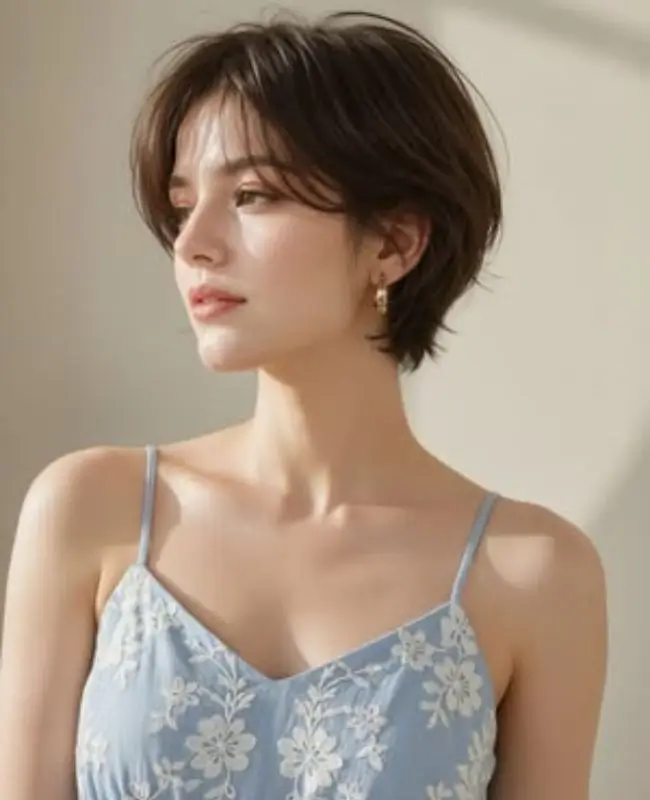
The classic pixie is a genuine short haircut rather than a shortened bob. The sides and back are cropped while the top may retain enough length for texture, direction, or a fringe.
It can be a practical option if you want less hair to manage, but “short” does not automatically mean maintenance-free. The shape can lose its intended structure as it grows, and some hair types need daily styling to sit correctly.
Fine straight hair may be easy to shape with lightweight products. Thick or strongly textured hair can require more precise cutting and sometimes additional styling. A pixie also exposes more of the face and neckline, so the placement of the top length and fringe can significantly change the overall look.
Maintenance: Moderate to high for regular trims.
Styling: Can range from finger-styled texture to a smooth finish.
Ask your stylist: “I want a classic pixie with enough length on top to change the direction and styling.”
18. Long Pixie
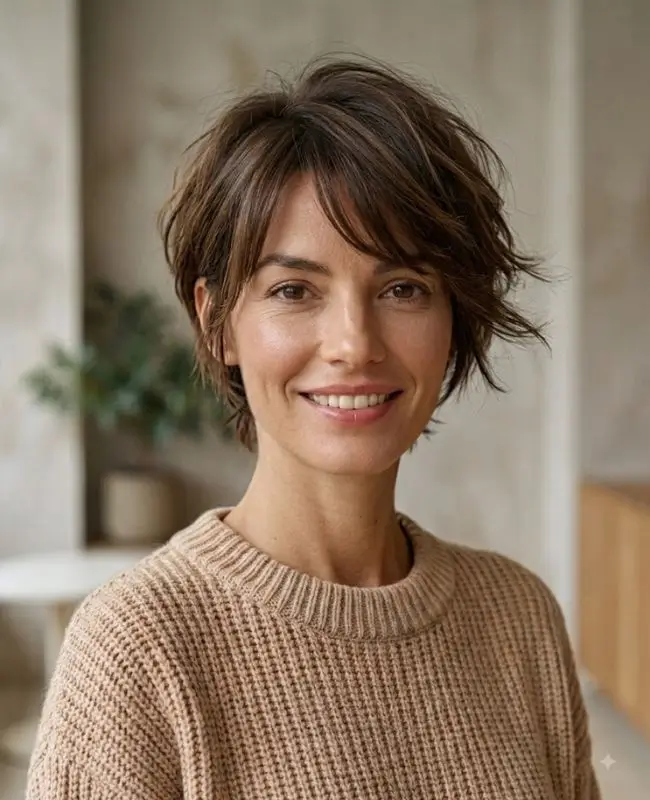
A long pixie keeps more length through the crown and front than a traditional pixie. That extra length makes it easier to experiment with side-swept bangs, texture, volume, or a softer silhouette.
It is a good transitional choice for someone who likes pixie cuts but is concerned about going extremely short. The longer top also provides more options for adapting the haircut to face shape and hair texture.
Fine hair can benefit from the ability to create height and direction. Wavy hair can make the top naturally textured. Thick hair may need internal weight control to keep the cut from becoming bulky.
Maintenance: Moderate to high, depending on how precisely you want the shape maintained.
Styling: A small amount of mousse, cream, or paste can change the finish significantly.
Ask your stylist: “I want a long pixie with extra length through the top and front so I can sweep or texture it.”
19. Textured Pixie
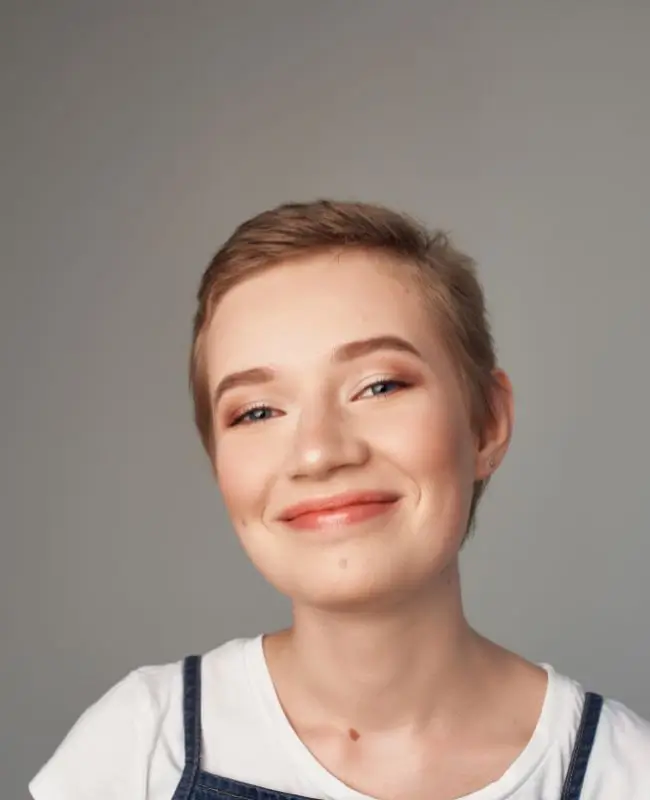
A textured pixie uses variation in length to create separation and movement rather than a smooth, uniform crop. It can be particularly useful for fine or medium-density hair because texture gives the stylist ways to create visual dimension.
The important distinction is between useful texture and excessive thinning. Fine hair may look less substantial if too much is removed. Thick hair may need more aggressive internal weight control to keep the silhouette manageable.
A textured pixie is also forgiving stylistically. You can use your fingers to create piecey sections, smooth the hair down, or add volume at the crown.
Maintenance: Moderate.
Styling: Usually quick, but product choice affects the result. Lightweight paste or texturizing cream can define pieces without making fine hair greasy.
Potential challenge: Very straight hair may need product or heat to hold separation.
Ask your stylist: “I want visible texture through the top, but please keep enough density at the ends.”
20. Side-Swept Pixie
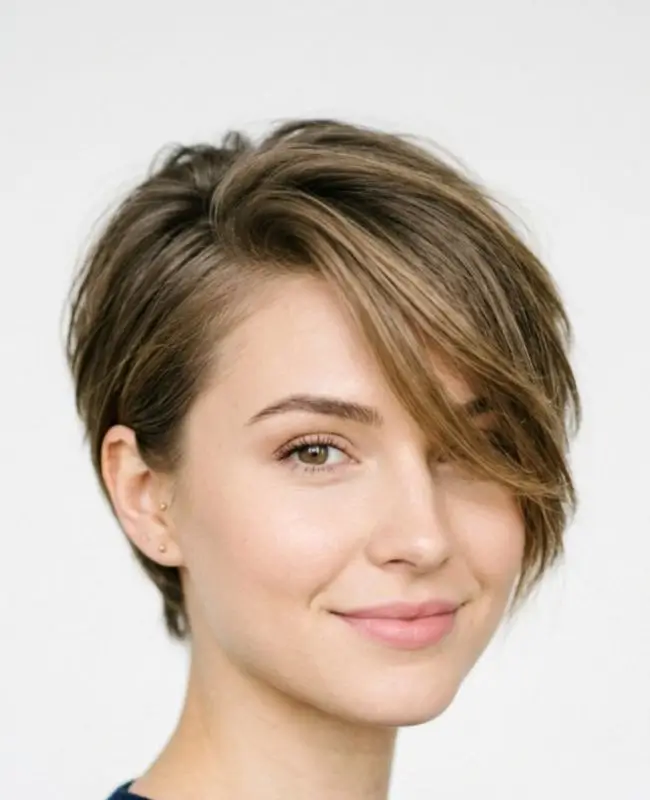
A side-swept pixie retains enough front length to create a diagonal fringe across the forehead. The direction of the fringe gives the cut a softer, less uniform appearance than a very short crop.
It can be useful for someone who likes pixie practicality but wants more styling flexibility around the face. Fine hair can often carry the swept section without much effort. Thick hair may need careful weight control around the fringe so it does not become too dense.
The style is especially dependent on your natural part. If your hair strongly wants to separate in another direction, daily styling may be needed.
Maintenance: Moderate to high for keeping the fringe and sides in shape.
Styling: Blow-dry or comb the front in the desired direction, then use a small amount of product.
Ask your stylist: “I want a pixie with enough length in front for a soft side-swept fringe.”
21. Curly Pixie

A curly pixie allows natural curls to become the defining feature of a very short haircut. Instead of trying to straighten the texture, the shape is built around the curl pattern.
This can reduce the amount of hair you need to manage, but the result depends heavily on curl density, shrinkage, and growth pattern. A curl that appears to sit several centimeters longer when wet may spring much higher when dry.
The top can be left longer to preserve curl definition, while the sides and back can be tapered. Fine curls may need a shape that preserves density; dense curls may need more internal control.
Maintenance: Moderate.
Styling: Curl cream or gel can be enough for many textures. Avoid excessive manipulation while drying.
Ask your stylist: “Please shape the pixie around my natural curl pattern and show me how the dry shrinkage will affect the final length.”
22. Tapered Pixie
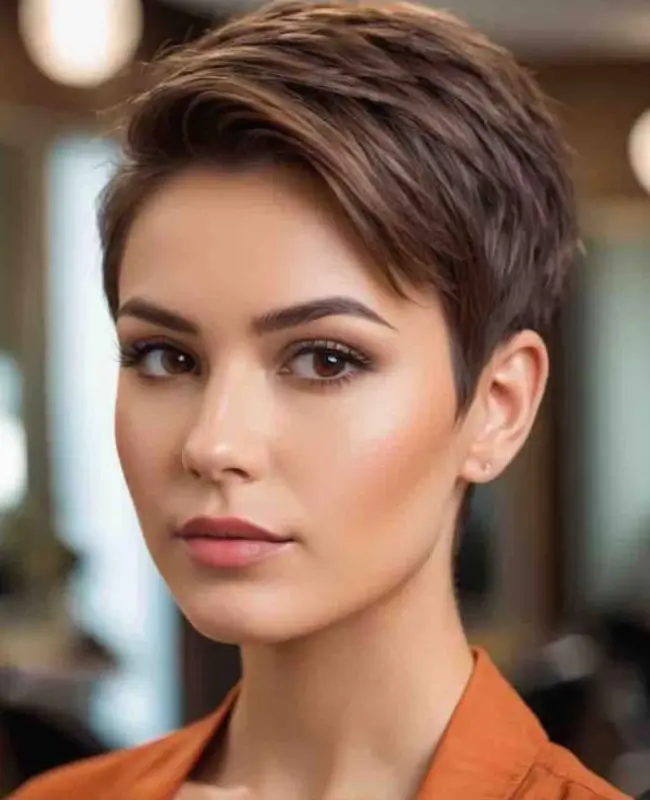
A tapered pixie gradually becomes shorter toward the neckline and sides while retaining more length through the top. The result is clean around the perimeter but flexible on top.
This can be particularly useful for thick hair because tapering and controlled weight removal can reduce bulk around the lower sections. Curly and coily textures can also work beautifully with a tapered shape when the stylist understands how the hair contracts.
For fine hair, the top can be kept fuller to create a stronger silhouette. Regular trims become important because the taper is one of the defining features.
Maintenance: Moderate to high because the neckline and sides need regular reshaping.
Styling: The top can be brushed forward, upward, or sideways.
Ask your stylist: “I want a tapered pixie with a clean neckline and enough length on top to style.”
23. Undercut Pixie
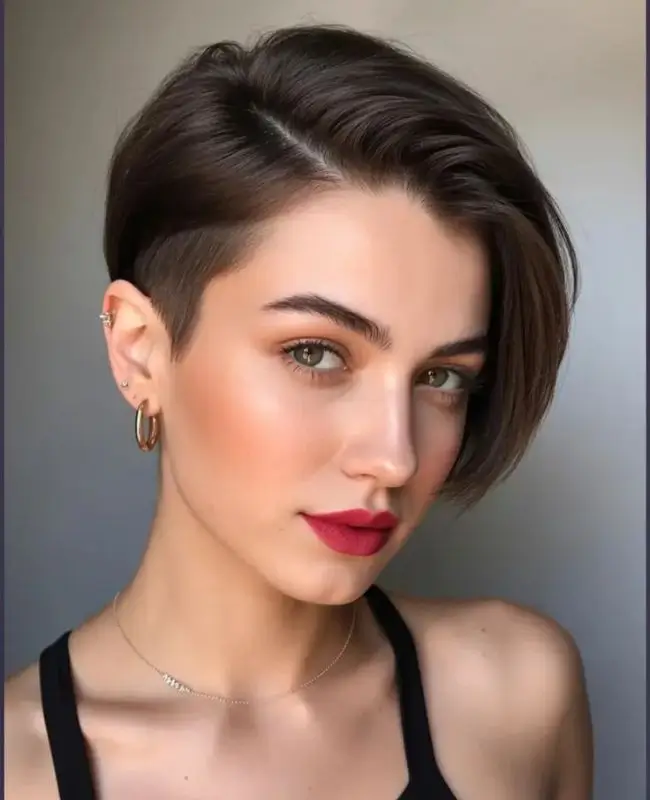
An undercut pixie combines a longer top with a deliberately shorter or clipped section underneath. The contrast can reduce bulk while creating a stronger, more graphic shape.
This is particularly useful for dense hair that becomes difficult to control around the sides or nape. However, the undercut is a commitment: as it grows out, the contrast becomes less defined and may require reshaping.
Straight hair displays the contrast clearly, while textured hair creates a softer transition. The top can be styled in several directions, giving the cut more versatility than its short sides might suggest.
Maintenance: Moderate to high.
Styling: The top can be slicked, textured, swept sideways, or left naturally tousled.
Potential challenge: Growing out an undercut takes patience because the shorter section needs time to catch up.
Ask your stylist: “I want the sides and nape undercut enough to reduce bulk, but I want the top long enough to style in different directions.”
24. Bixie
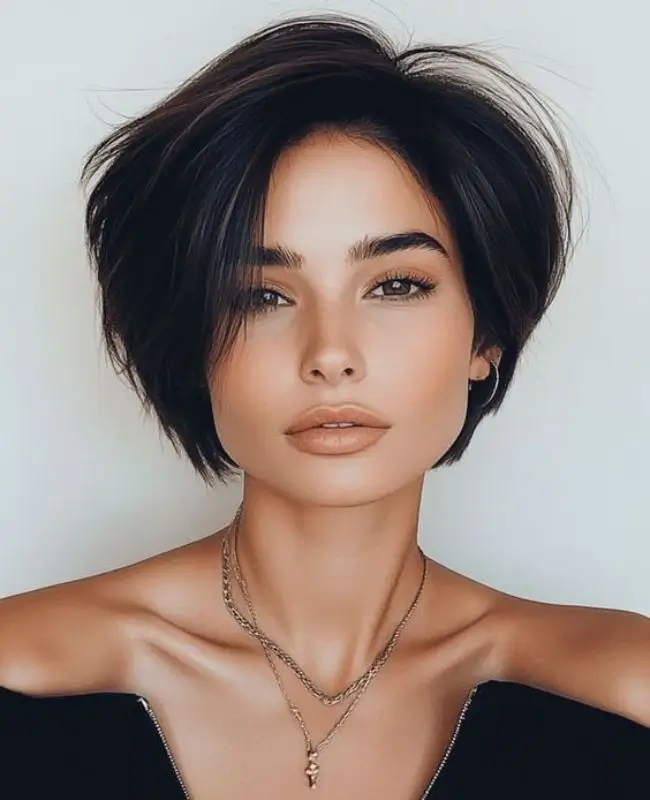
The bixie sits between a bob and a pixie, combining the length and movement of a short bob with the layered shape of a pixie. It is useful if you want to go shorter without committing to the tightest crop.
The shape can be customized significantly. More length around the jaw creates a bob-like impression, while shorter layers through the crown push it toward pixie territory.
Fine hair can work well with a bixie if the stylist avoids removing too much density. Thick hair may need internal weight management. Wavy hair can give the cut natural movement, while curls require careful shrinkage planning.
Maintenance: Moderate to high.
Styling: More versatile than a very short pixie and often workable with air-dried texture.
Ask your stylist: “I want a bixie that sits between a bob and pixie, with enough length around the front to keep the shape soft.”
25. Short Shag
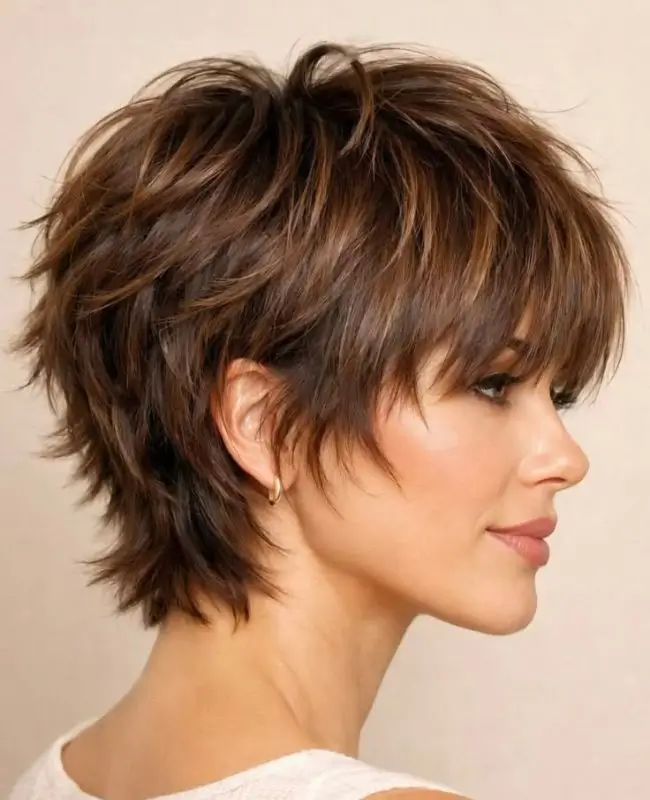
A short shag uses layers, texture, and a less structured outline to create movement. It can be a particularly good match for naturally wavy hair because the haircut does not demand a perfectly smooth finish.
Fine hair can wear a lighter version with strategically placed layers. Thick hair can benefit from more internal weight removal. Curly hair can also work with a shag-inspired shape, although the cut should be designed around curl behavior rather than copied from a straight-haired reference.
A short shag is generally less dependent on precise daily styling than a geometric bob, but it still benefits from product that encourages separation.
Maintenance: Moderate.
Styling: Scrunching and air-drying can work well on naturally textured hair.
Potential challenge: On very straight hair, the layers may need styling to become visible.
Ask your stylist: “I want a short shag with movement and face-framing layers, but I don’t want the crown to become overly bulky.”
26. French Crop
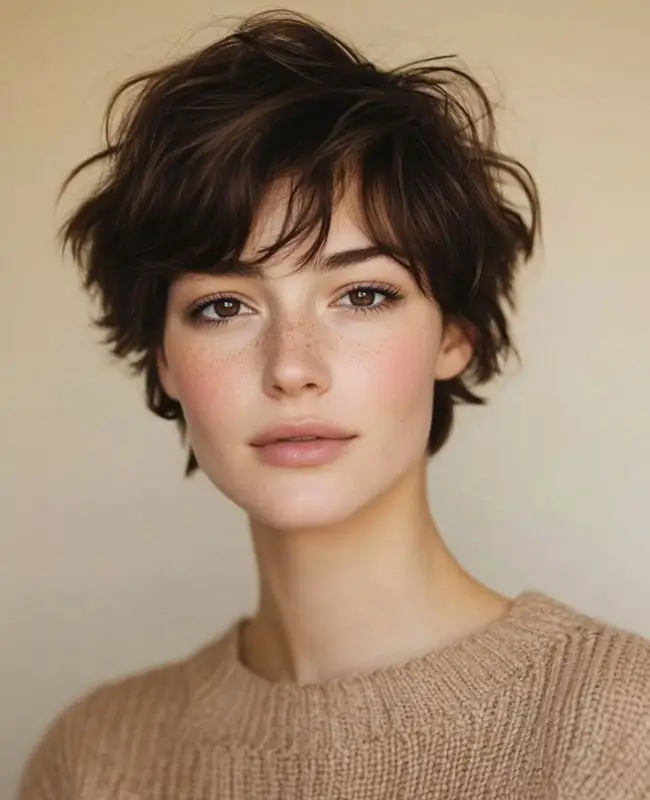
A French crop is a compact cut featuring shorter sides and a defined front section, often with a fringe that sits across or near the forehead. For women who prefer a short, graphic haircut, it offers a different silhouette from the softer pixie.
Straight hair makes the shape easy to see. Fine hair can benefit from the compact outline, while thick hair may need weight control around the fringe and crown.
The fringe is an important commitment. If you prefer pulling your hair away from your face, choose a longer version that can be swept aside rather than a very short straight fringe.
Maintenance: Moderate.
Styling: Usually quick. A small amount of matte product can separate the top.
Ask your stylist: “I want a short crop with a defined fringe, but I need enough length to move the fringe aside when I want.”
27. Textured Crop
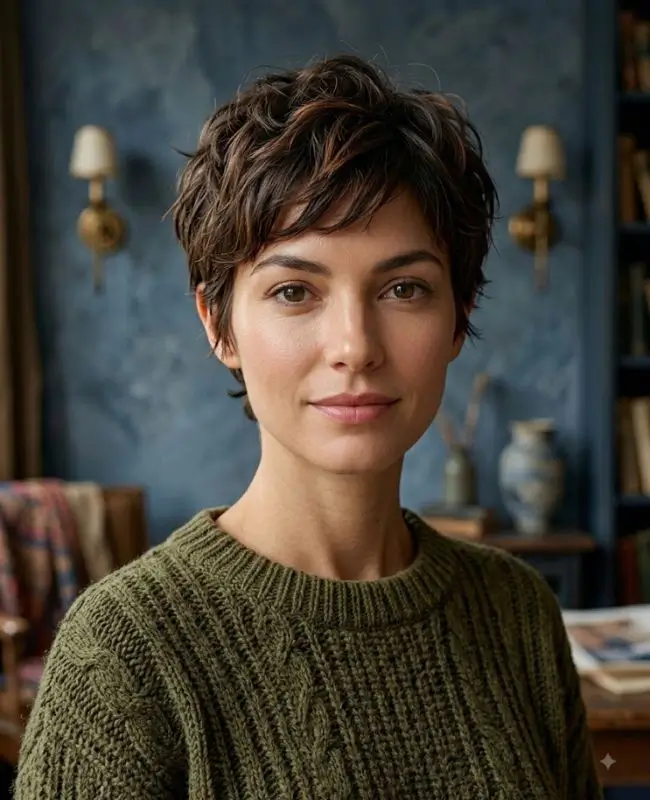
A textured crop is one of the easiest options to consider if you want a short haircut without a highly polished finish. The shape usually relies on short layers and piecey texture rather than a long, smooth silhouette.
It can work particularly well for fine to medium hair because the styling is focused on separation and direction rather than elaborate volume. Thick hair can also work, but the stylist needs to remove enough internal weight to keep the crop from becoming too dense.
This is a good option for someone who wants a quick morning routine. You can often refresh the shape with your fingers rather than using a brush.
Maintenance: Moderate.
Styling: Rub a small amount of lightweight styling product between your hands and work it through the dry hair.
Ask your stylist: “I want a short textured crop that I can style with my fingers without needing a full blow-dry.”
28. Curly Tapered Crop
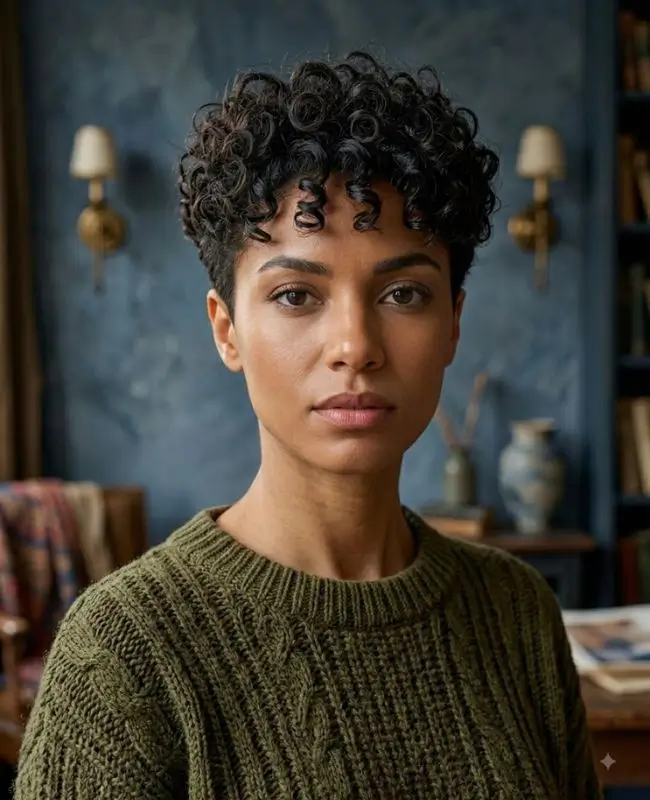
A curly tapered crop combines natural curls on top with shorter sides and a more controlled neckline. It can work especially well when you want to preserve the personality of your curl pattern while keeping the overall shape compact.
The biggest consideration is shrinkage. The stylist should understand how your curls behave at different lengths and should not rely solely on the wet appearance.
Dense curls may need selective weight removal, while fine curls often need more density preserved. The top can be left longer for definition, while the sides gradually become shorter.
Maintenance: Moderate.
Styling: Curl cream or gel can define the top, while the tapered sides need little daily attention.
Potential challenge: Uneven curl patterns may require individualized shaping.
Ask your stylist: “I want a tapered crop that keeps my natural curl pattern visible on top and accounts for shrinkage.”
29. Buzz Cut
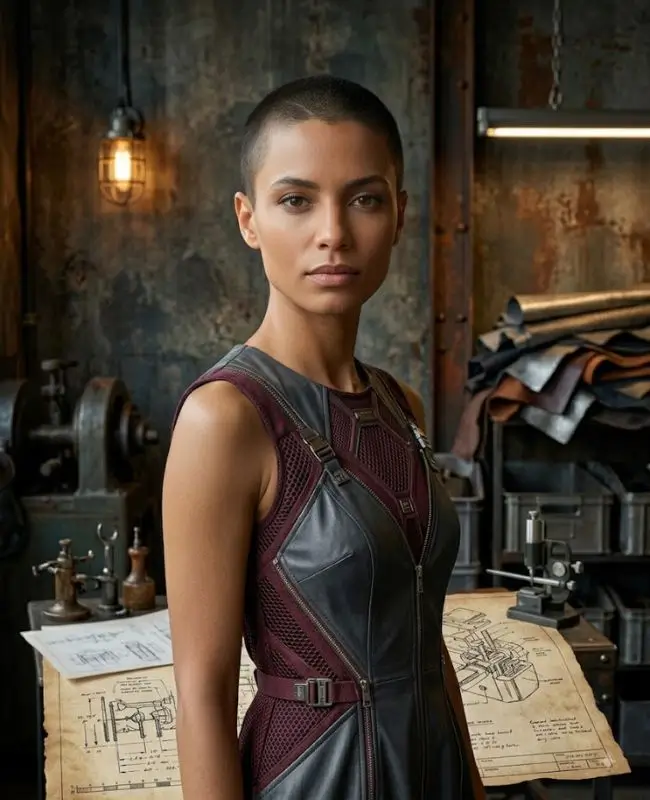
A buzz cut is the most minimal option in this collection. Hair is clipped very short and generally kept at a relatively uniform length, although different guard lengths can be used to create subtle variation.
The appeal is obvious: there is very little styling required. The trade-off is that the haircut provides almost no length to manipulate, hide, tuck, or reshape around facial features. The head and neckline become central to the overall appearance.
It can be especially practical for someone who genuinely wants an extremely short routine rather than someone simply looking for a haircut that feels easy.
Maintenance: Very low styling effort but frequent clipping if you want the length to remain uniform.
Styling: Essentially none.
Potential challenge: Grow-out is visible quickly because even a small amount of new length changes the feel of the cut.
Ask your stylist: “I want a uniform buzz cut at a specific guard length, with a clean but natural neckline.”
30. Side-Parted Crop
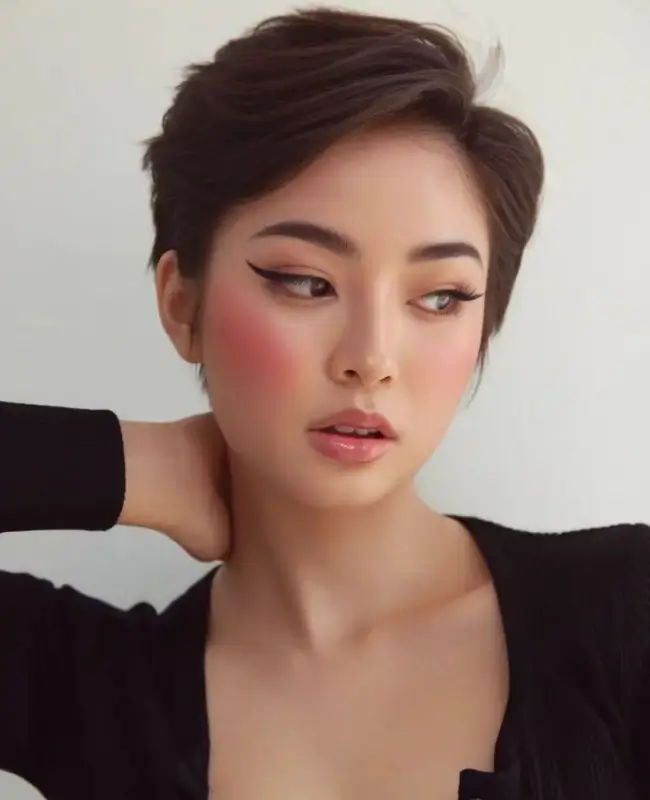
A side-parted crop combines short overall length with a little extra length through the top so the hair can be directed to one side. It is a practical option if you want a short cut but prefer some styling movement around the forehead.
Fine and straight hair can be especially easy to direct into the part. Wavy hair adds texture, while thicker hair may need weight reduction around the top.
The part can also be changed over time, although a strong natural growth pattern may make one direction easier than another.
Maintenance: Moderate.
Styling: A quick blow-dry or comb-through can establish the direction.
Ask your stylist: “I want a short crop with enough top length to create a natural side part.”
31. Short Feathered Cut
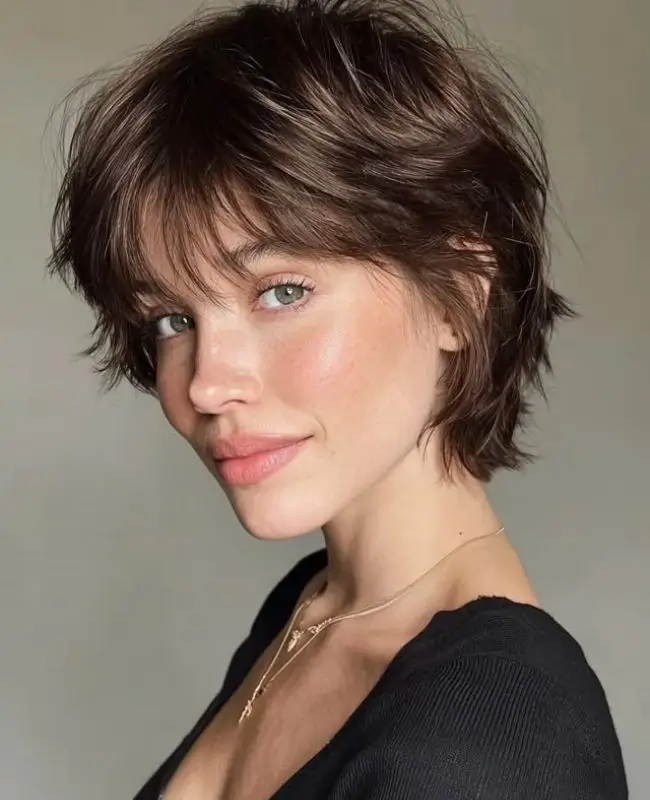
A short feathered cut uses graduated, softly layered sections to create movement rather than a blunt shape. It can be a useful choice for someone who wants short hair that feels lighter and more fluid.
The layering needs to match density. Fine hair may benefit from gentle feathering around the face but can look thin if over-layered. Thick hair often has more room for layers, particularly through the sides and crown.
Wavy hair can make the feathering look naturally soft. Straight hair may show the layers more clearly and may require a little styling to direct the ends.
Maintenance: Moderate.
Styling: A round brush can create a polished feathered finish, while natural drying gives a softer result.
Ask your stylist: “I want soft feathered layers that create movement without removing too much density from my ends.”
32. Short Cut With Curtain Bangs
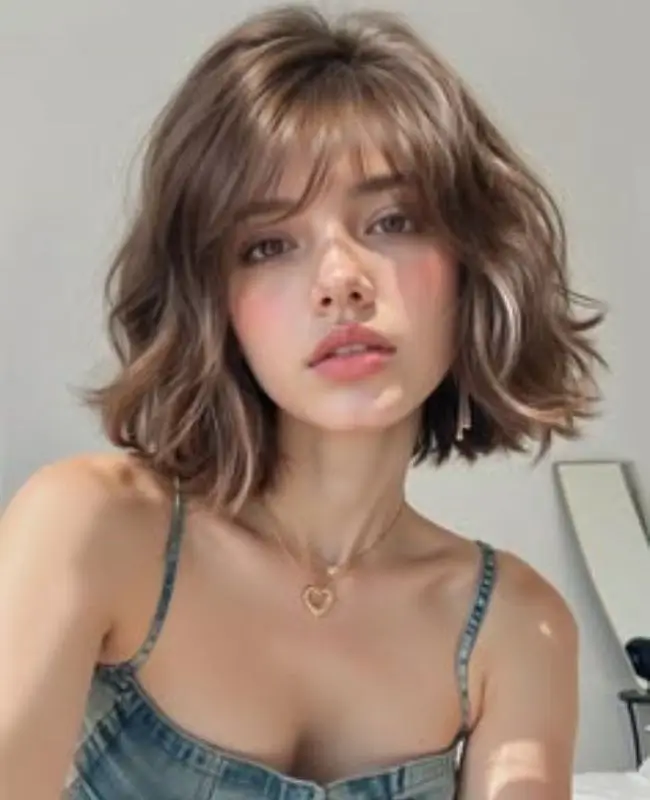
Curtain bangs can soften a short haircut by creating longer pieces that part around the forehead. They can be paired with a bob, bixie, shag, or other short shape, so the overall haircut can be adjusted to your hair type.
They work particularly well when you want face-framing without committing to a solid straight fringe. Fine hair may need careful sectioning so the bangs do not consume too much density from the rest of the haircut. Thick hair may need weight removed from the fringe.
The main styling requirement is direction. Curtain bangs often look best when blow-dried or trained away from the face, although naturally wavy hair can produce a more relaxed version.
Maintenance: Moderate.
Styling: A small round brush or velcro roller can help establish the center-opening shape.
Ask your stylist: “I want curtain bangs that blend into my short haircut and can be worn away from my face.”
How to Choose the Right Short Hairstyle
The best short haircut is the one that fits the way your hair actually behaves. Before choosing a reference photo, consider five things: texture, density, face shape, daily styling, and grow-out.
A photo can show you the silhouette, but it cannot show how many minutes the person spent styling it, how frequently they visit the salon, whether the hair was blow-dried, or what the cut looks like after several weeks of growth.
Start With Hair Density
Hair density and strand thickness are different. Fine hair can still be very dense, while coarse hair can be relatively sparse.
If your hair is fine, think carefully before requesting heavy thinning. A strong perimeter or restrained layers may preserve a fuller-looking outline.
If your hair is thick, ask about internal weight removal rather than automatically requesting lots of visible layers. The goal is to control bulk without destroying the haircut’s shape.
Think About Your Natural Texture
Straight hair often displays geometric cuts clearly.
Wavy hair can make layered bobs and shags look naturally textured.
Curly hair requires attention to shrinkage and curl-by-curl behavior.
Coily hair needs a stylist who understands how the hair’s natural pattern affects the dry shape.
There is no single “best” short haircut for each texture. The better question is how much of your natural texture you want to keep.
Consider Your Styling Ability
If you rarely use heat, a haircut that depends on a smooth blowout may become frustrating.
If you enjoy styling, you can choose a shape with more versatility and movement.
If your ideal morning routine is wash, product, and go, prioritize cuts that cooperate with your natural texture.
A haircut should fit your actual routine rather than the routine you imagine adopting after the salon visit.
Short Hair by Hair Type
Fine Hair
Fine hair has a smaller strand diameter, but fine hair is not necessarily low-density hair. That distinction matters when choosing a short haircut.
A strong perimeter can help preserve the visual weight of the ends, which is why blunt and softly blunt bobs are often worth considering. A compact bob can also prevent the ends from becoming too wispy. Short pixies can work as well, particularly when the cut uses controlled texture rather than excessive thinning.
Be cautious about asking for aggressive layers simply because you want volume. Removing too much hair can make the ends look less substantial. Instead, ask where volume should be created and where density should be preserved.
Styling also matters. Fine straight hair may need lightweight mousse, root lift, or a small amount of texturizing product. Heavy creams and oils can flatten it.
For fine hair, useful options from this list include the blunt bob, chin-length bob, textured pixie, long pixie, French crop, and side-parted crop.
Current hairstyle coverage similarly emphasizes bobs, pixies, lobs, and strategic texture for fine hair rather than treating one cut as universally best.
Thick Hair
Thick hair gives you plenty of density to work with, but short hair can expose unwanted bulk if the cut is not designed carefully.
Layering, graduation, and internal weight removal can all help, but they should serve the shape. Too much thinning can create frizz, uneven texture, or ends that are difficult to control.
A layered bob, inverted bob, tapered pixie, undercut pixie, and short shag can all be adapted to thick hair. The best option depends on whether you want to preserve volume or reduce it.
If your hair is thick and wavy, consider how the texture expands when dry. A haircut that looks sleek immediately after the appointment may become substantially fuller after washing.
At the salon, explain what you dislike about your current density. “My hair feels bulky behind my ears” is more useful than simply saying “make it thinner.”
Straight Hair
Straight hair is excellent for showing the exact architecture of a haircut. Blunt bobs, micro bobs, asymmetrical bobs, French crops, and sleek pixies can all display their lines clearly.
That precision can be an advantage, but it also means uneven growth may become noticeable quickly. If your hair is very straight, discuss how frequently you are willing to return for trims.
Fine straight hair may benefit from preserving a solid perimeter. Thick straight hair may need internal weight removed without disturbing the outer line.
Straight hair can also make texture cuts appear less textured than they do in naturally wavy reference photos. If you save a tousled bob, ask your stylist what styling will be necessary to recreate that finish.
Wavy Hair
Wavy hair can make short cuts look naturally dimensional, but the amount of wave matters. A loose wave and a strong S-shaped pattern can behave very differently at the same length.
Wavy bobs, textured bobs, short shags, layered bobs, and longer pixies can all work well when the cut respects the wave pattern.
If you want to air-dry, tell your stylist. A haircut designed around a daily blowout may not behave the same way when left natural.
Avoid choosing a length solely from a straight reference image. Ask where the cut will sit after the wave pattern returns.
For styling, scrunching with a suitable mousse or curl-supporting cream can encourage definition. Diffusing is optional if you want more volume or faster drying.
Curly Hair
Curly hair changes shape substantially as it dries, so short haircuts require particularly careful planning.
A curly bob, curly bob with bangs, curly pixie, and curly tapered crop can all work, but the haircut needs to be designed around the actual curl pattern.
Shrinkage is one of the most important considerations. If you want the bob to reach your chin when dry, show the stylist exactly where you want it to sit in its finished state.
Density matters too. Dense curls may require strategic internal shaping, while fine curls may need more weight preserved.
If your goal is a low-manipulation routine, say so. The stylist can then prioritize a shape that works with your natural curl rather than one that requires repeated heat styling.
Coily Hair
Coily hair can look striking in very short shapes, from tapered crops to sculpted pixies and close cuts. The key is understanding how the curl pattern contracts and how density is distributed across the head.
A tapered shape can create a clean neckline while leaving more texture through the top. A short crop can offer definition without requiring a large amount of daily styling.
If you wear your hair in its natural texture, communicate that clearly before the cut. A stylist needs to understand the finished dry shape you want rather than simply the length measured on stretched hair.
Also consider maintenance at the neckline and sides. A sharp taper may require regular cleanup even if the top is easy to manage.
Short Hair by Face Shape
Face shape can be useful as a starting point, but it should never be treated as a rigid haircut rule. Hair texture, density, proportions, parting, and personal preference all influence the finished result.
Round Face
For a round face, you may prefer short cuts that introduce direction, height, or longer vertical lines rather than creating maximum width at the cheeks.
A side-parted bob, side-swept pixie, inverted bob, longer pixie, and textured crop can all be adjusted to create directional movement. Longer front sections can also change how the haircut frames the jaw.
That does not mean round faces should avoid bobs or curls. The shape simply needs to be considered. A compact bob ending exactly at the widest part of the cheeks may create a different effect from a slightly longer bob with an angled front.
Current hairstyle resources frequently emphasize asymmetry, side direction, texture, and controlled height when discussing short hair for round faces.
Useful salon wording: “I’d like the front to create some vertical movement rather than adding width directly at my cheeks.”
Oval Face
An oval face offers considerable flexibility because the proportions are often relatively balanced, but that does not mean every haircut behaves identically.
You can experiment with bobs, pixies, crops, shags, bangs, and asymmetrical cuts. The more important question becomes what you want the haircut to emphasize.
If you want your cheekbones visible, a shorter or tucked bob may work. If you prefer more softness, choose face-framing layers or a longer fringe.
Hair texture should still guide the decision. A curly bob may need a different length from a straight bob even if both are intended to create the same overall silhouette.
Useful salon wording: “I want the cut to emphasize my natural face shape while keeping enough length to work with my texture.”
Square Face
Square faces often have more defined angles around the jaw and forehead. Short hair can emphasize those lines or soften them depending on the cut.
A textured bob, wavy bob, layered bob, side-swept pixie, or soft shag can introduce movement around a strong jawline. That does not mean angular bobs are off limits. A blunt bob can look intentionally graphic if that is the aesthetic you want.
If your hair is thick, ask how the cut will behave around the jaw. Extra density at exactly the wrong point can make the silhouette feel heavier.
Useful salon wording: “I’d like movement around the face so the haircut doesn’t create one solid horizontal line at my jaw.”
Heart Face
A heart-shaped face often has a broader upper face and a narrower lower section. Short hairstyles can work well when the front and sides are balanced thoughtfully.
A bob with soft face-framing pieces, longer pixie, side-swept fringe, or textured crop can be adapted to distribute visual weight.
Very short styles are not automatically unsuitable. The important detail is where volume and length are placed. A longer side-swept fringe can create a different balance from a very short straight fringe.
Useful salon wording: “I’d like some softness through the front and sides while keeping the haircut short and easy to style.”
Long Face
With a longer face shape, the haircut can be designed to create width and movement rather than emphasizing excessive height.
A chin-length bob, wavy bob, textured bob, curly bob with bangs, or short shag may work well depending on your hair texture. Bangs can also change the visual proportions by creating a horizontal element across the forehead.
Very tall crown volume is not automatically necessary. If your goal is balance, discuss where you want volume rather than asking for maximum height.
Useful salon wording: “I’d like the shape to create some width and movement rather than adding a lot of height on top.”
Diamond Face
A diamond face shape typically has more prominence around the cheekbones with comparatively narrower forehead and jaw areas.
Short hair can emphasize those cheekbones, soften them, or create additional balance depending on where the perimeter and layers sit. A side-parted bob, textured pixie, soft fringe, or layered bob can all be adapted.
Avoid thinking in terms of rules such as “never cut above the jaw.” The right length depends on your features and hair behavior.
Useful salon wording: “I’d like the cut to frame my cheekbones without making the sides feel too wide or too narrow.”
Low-Maintenance Short Hairstyles
“Low maintenance” can mean two different things: little daily styling or infrequent salon appointments. They are not always the same.
A buzz cut requires almost no daily styling but needs frequent clipping if you want to keep the length consistent.
A textured crop may be easy to style but still need regular trims.
A short lob may require more daily styling than a crop but can go longer between precise shape corrections.
If you want the easiest possible routine, prioritize a haircut that works with your natural texture. Air-drying a suitable wave or curl is usually easier than repeatedly forcing naturally textured hair into a sleek shape.
The strongest low-maintenance candidates from this list are the textured crop, curly tapered crop, curly pixie, short shag for naturally wavy hair, and short lob for someone who wants more versatility.
Short Hairstyles You Can Tie Back
The ability to tie short hair back depends more on actual length than the haircut name.
A short lob is the most practical option if a ponytail or small bun matters to you. A longer bob may allow a tiny ponytail depending on density and hair texture.
A chin-length bob usually cannot form a secure full ponytail without loose pieces. A pixie, bixie, and crop generally cannot be tied back in the conventional sense.
Curly and coily hair can behave differently because shrinkage reduces the apparent length. A person with shoulder-length stretched curls may have less practical tie-back length when wearing the hair in its natural state.
If you work out frequently or need your hair off your face for work, mention this before choosing a short cut.
Useful salon wording: “I need enough length to secure my hair for workouts, so please show me the shortest practical length for a small ponytail.”
Pixie vs Bob
| Factor | Pixie | Bob |
| Overall length | Very short | Short to medium |
| Tie-back ability | Usually none | Possible with longer versions |
| Styling flexibility | Moderate | High |
| Grow-out | More noticeable | Usually easier |
| Trim frequency | Often higher | Moderate |
| Fine hair | Can work well | Blunt versions can work well |
| Thick hair | Requires careful weight control | Layering can help |
| Curly hair | Can be excellent | Also highly adaptable |
| Commitment | Higher | Lower |
A pixie is better if you genuinely want to remove most of your length and enjoy a compact shape. It can be quick to style, but regular trims matter.
A bob is better if you want more options. You can tuck it, wave it, clip it, and in longer versions sometimes tie it back.
If you are unsure, the bixie or short lob can provide a useful middle ground.
What to Tell Your Stylist
A good salon consultation should be more specific than showing one photo and saying, “I want this.”
Bring the photo, but also explain:
- Your natural texture
- Whether you air-dry or heat-style
- How often you wash your hair
- How often you are willing to get trims
- Whether you need to tie it back
- What you dislike about your current haircut
- Where your hair tends to become bulky
- Any cowlicks or strong growth patterns
- Whether you want to preserve your natural texture
Useful phrases include:
For a bob:
“I want a jaw-length bob with a strong perimeter and only subtle internal layering.”
For thick hair:
“I want the bulk reduced internally, but I don’t want the ends to become thin.”
For fine hair:
“I want to preserve density through the perimeter rather than heavily thinning the ends.”
For curls:
“Please account for my natural shrinkage and show me where the dry length will sit.”
For a pixie:
“I want the sides short, but enough length on top to change the direction and styling.”
For bangs:
“I want the fringe to blend into the haircut and be wearable without daily heat styling.”
For a low-maintenance cut:
“I want a shape that works with my natural texture when air-dried.”
The more clearly you describe how you live with your hair, the easier it is for the stylist to translate a reference photo into something practical.
Frequently Asked Questions
What is the most versatile short hairstyle for women?
A bob is usually the most versatile category because it offers several lengths and shapes while retaining more styling options than a very short crop. A short lob or chin-length bob is especially flexible.
What is the easiest short hairstyle to maintain?
The easiest depends on whether you mean styling or salon maintenance. A buzz cut requires almost no styling but needs frequent clipping. A textured crop can be quick to style while still needing periodic trims.
Are short hairstyles good for fine hair?
They can be. Blunt bobs, compact bobs, and carefully textured pixies can work well with fine hair. The key is preserving useful density rather than automatically removing weight.
Can thick hair be cut short?
Yes. Thick hair can work with bobs, pixies, shags, and crops. The important issue is controlling bulk while maintaining the intended shape.
What short haircut works well with curly hair?
Curly bobs, curly pixies, tapered crops, and short shags can all work. The cut should account for shrinkage, density, curl pattern, and the way the hair is normally worn.
Can a short bob be tied back?
A short lob is usually more practical for tying back than a chin-length bob. A conventional bob may only allow a small ponytail or partial tie, depending on the person’s actual hair length and texture.
How often should short hair be trimmed?
There is no single schedule. Highly precise pixies, undercuts, and geometric bobs usually need more frequent maintenance than textured cuts or longer lobs. Your preferred grow-out appearance matters as much as the haircut itself.
Is a pixie cut low maintenance?
A pixie can be low maintenance in daily styling but higher maintenance in terms of salon visits. Very short sides and necklines lose their intended shape relatively quickly as they grow.
Should I choose a haircut based on my face shape?
Face shape can be useful, but it should not be the only factor. Hair texture, density, growth patterns, lifestyle, and personal styling preferences can be equally important.
What should I bring to a haircut consultation?
Bring two or three reference photos showing the shape you like. Also tell the stylist how you normally wear your hair, how much styling you are willing to do, whether you need to tie it back, and what you dislike about your current cut.