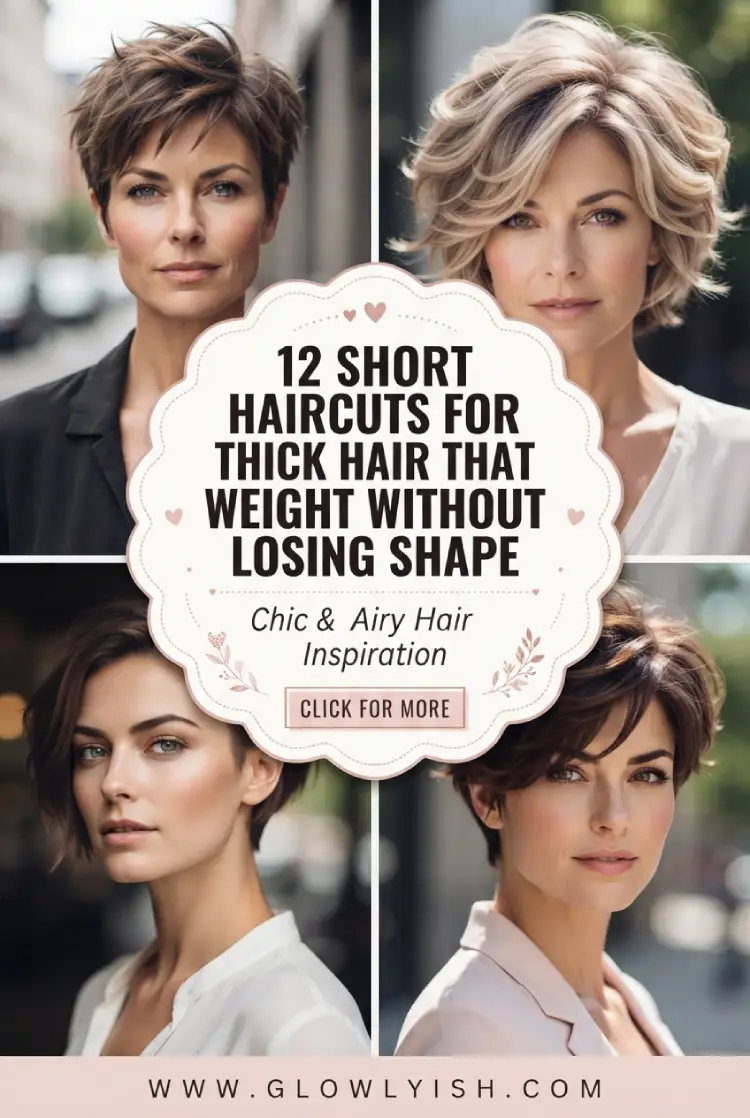
Thick hair gives you plenty to work with, but going short can make that density feel more obvious if the cut is not shaped carefully. A haircut that simply removes length may leave you with bulky sides, a heavy nape, or the dreaded triangular silhouette. The better approach is to remove weight strategically while keeping the outside shape intentional. For related styling inspiration, explore short hairstyles for fine hair.
That is why the best short haircuts for thick hair are not necessarily the shortest ones. Layered bobs, textured pixies, bixies, shags, tapered cuts, and graduated shapes can all make dense hair feel lighter without stripping away the fullness that makes it attractive. The right technique depends on your natural texture, density, face shape, and how much styling you are willing to do.
Below are 12 short haircut ideas worth discussing with your stylist, followed by practical guidance for choosing between them.
Quick Answer: Which Short Haircuts Work Best for Thick Hair?
If your main goal is to remove weight without losing shape, start with a short Versatile bob layer cut hairstyles provide structured movement, textured pixie, bixie, stacked bob, short shag, or tapered crop. These shapes give a stylist room to control density through layering, graduation, tapering, and internal weight removal rather than relying only on a blunt perimeter.
For thick straight or wavy hair, a layered bob or textured bob is often an easy starting point. If you want a much shorter result, a long textured pixie or tapered pixie can take considerably more weight away. Curly and coily hair needs more attention to shrinkage and curl pattern, so the final shape should be planned around how the hair actually dries.
The important distinction is this: removing weight is not the same as removing all the volume. Thick hair can still look full and healthy after bulk is reduced. In fact, strategic weight removal is widely recommended for keeping thick hair mobile rather than heavy or helmet-like.
1. Short Layered Bob

A short layered bob is one of the most versatile short haircuts for thick hair because it can take out bulk while keeping a recognizable bob silhouette. Instead of leaving all the density packed into one solid perimeter, a stylist can introduce soft layers or internal weight removal so the ends move more naturally. The result can still look polished and substantial without feeling like one heavy block of hair.
This cut works particularly well around the chin or slightly below the jaw because there is enough length to create movement while still feeling genuinely short. Straight and wavy thick hair can both work beautifully with this shape. For naturally wavy hair, softer layering helps the texture form instead of forcing the hair into a rigid outline.
A short layered bob can also be adapted to different face shapes. A slightly longer front can visually lengthen a rounder face, while softer face-framing pieces can balance a square or heart-shaped face. Maintenance is generally moderate because the haircut benefits from keeping its shape, but it can be forgiving as it grows.
Best for: Thick straight, wavy, or lightly curly hair; women who want a short cut without committing to a pixie.
Ask your stylist: “I want a short layered bob with the outer shape kept clean, but I need internal weight removed so my thick hair doesn’t sit too heavily.”
2. Textured Bob
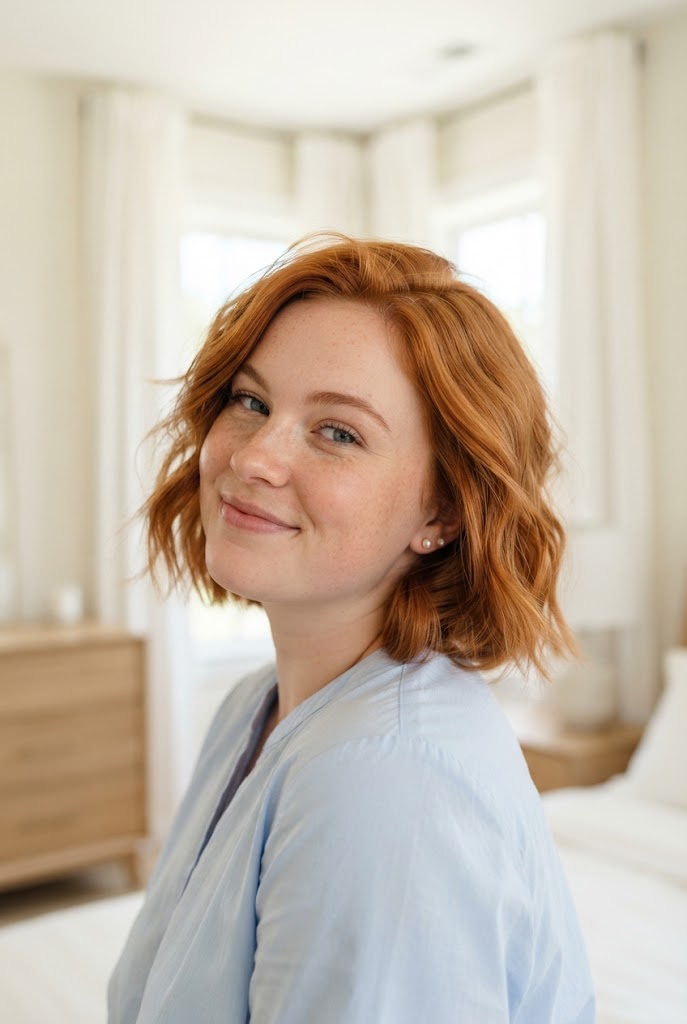
A textured bob is a strong option if your thick hair feels dense through the ends but you still want a modern, relatively simple haircut. Unlike a completely blunt bob, texture gives the hair room to separate and move. This can be especially helpful when thick hair tends to form a solid, overly dense shape after a traditional one-length cut.
The texture should be intentional rather than excessive. Too much aggressive thinning can make the ends look uneven or fluffy, particularly if the hair is coarse or naturally wavy. A skilled stylist can instead use selective internal layering, point cutting, or other weight-removing techniques according to your texture.
This haircut is particularly attractive on wavy thick hair because the natural bend can become part of the shape. Straight hair can look cleaner and more graphic, while slightly curly hair may need additional room through the perimeter to accommodate its pattern.
For round faces, a bob that sits slightly below the widest part of the cheek can create a more elongated effect. For oval and heart-shaped faces, you have more flexibility with length.
Best for: Thick straight or wavy hair, especially if you want movement without a heavily layered appearance.
Maintenance: Moderate; the texture usually grows out more softly than a sharply graduated bob.
Ask your stylist: “Keep the bob shape recognizable, but remove enough internal weight that my thick ends don’t form a heavy block.”
3. Short Stacked Bob
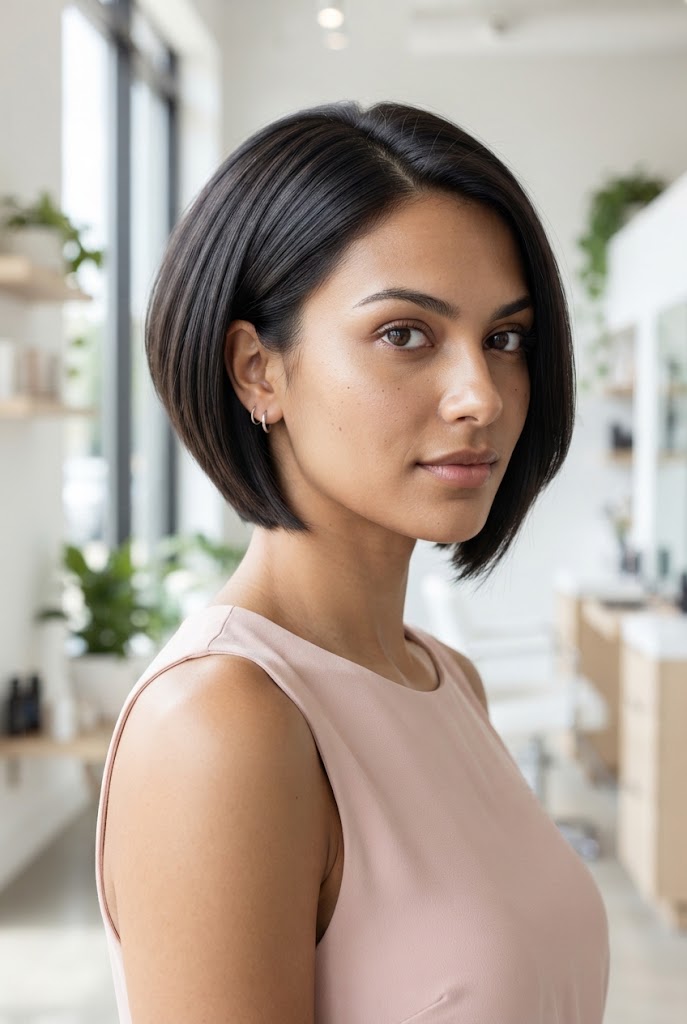
A short stacked bob is designed to create a controlled shape through the back while keeping some length toward the front. That structure makes it particularly useful when thick hair becomes heavy around the nape. Rather than letting the entire back section sit at one length, graduation creates a more deliberate contour.
The key for thick hair is avoiding excessive stacking that creates too much density in one area. The graduation should work with your natural growth pattern and density. Internal weight removal can make the shape feel lighter without making the exterior look thin or disconnected.
This cut can be especially useful if you like a polished hairstyle but want your neck and back to feel less covered. Straight thick hair tends to show the graduated shape clearly, while wavy hair can give the silhouette a softer, more relaxed finish.
A stacked bob can suit oval, heart, and round faces particularly well, but the front length should be customized rather than copied exactly from an inspiration photograph. If your face is fuller around the jaw, a longer front can prevent the haircut from creating unnecessary width there.
Best for: Dense hair that feels especially heavy around the nape.
Maintenance: Medium to high because the graduated shape becomes less precise as it grows.
Ask your stylist: “I want a softly graduated stacked bob that controls the weight at the back without creating a bulky shelf.”
4. Bixie
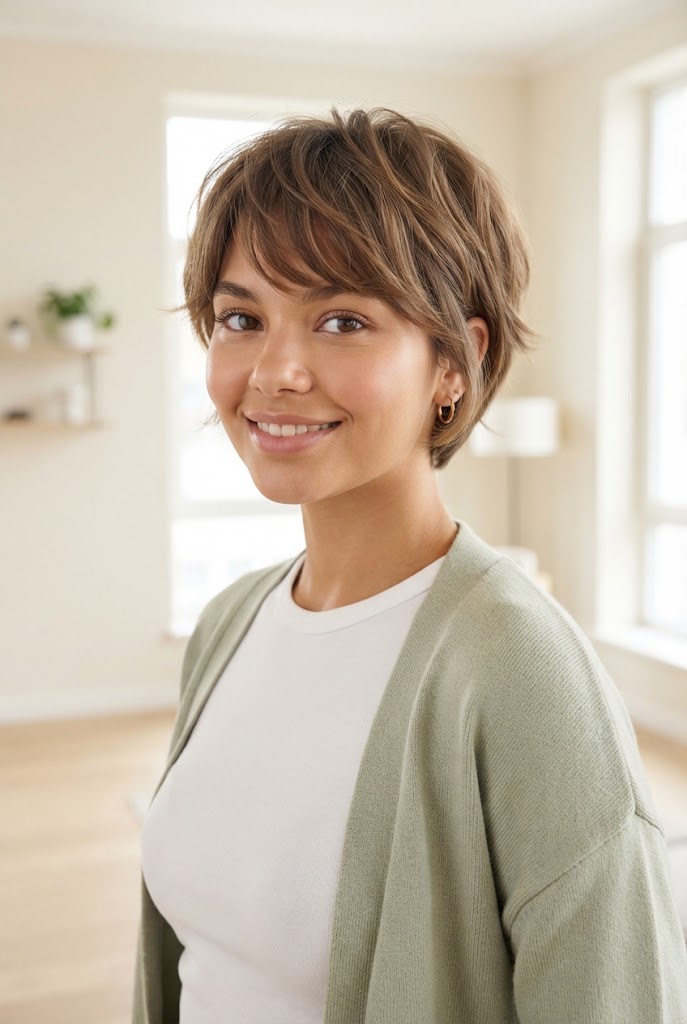
The bixie combines some of the softness of a bob with the shorter structure of a pixie. For thick hair, that combination is useful because you can remove considerable weight while retaining enough length around the crown and face to keep the result from feeling extremely cropped.
A bixie is particularly appealing if you are unsure about jumping directly from a bob to a traditional pixie. The extra length provides styling flexibility and makes the transition feel less dramatic. Thick hair can hold the layered shape well, although the cut needs enough internal movement to prevent it from becoming too round.
The front can be left longer, swept to one side, or shaped into a soft fringe. Around the back and sides, controlled layering can reduce bulk. This gives you several ways to personalize the haircut without changing its basic identity.
A bixie can work on straight, wavy, and some curly textures, but curl pattern should be considered before cutting. Strongly curly hair may need more length than appears necessary when dry because shrinkage changes the final silhouette.
Best for: Anyone who wants a substantial weight reduction without going as short as a classic pixie.
Maintenance: Medium.
Ask your stylist: “I want a bixie that removes internal bulk but keeps enough length around the face and crown for movement.”
5. Long Textured Pixie
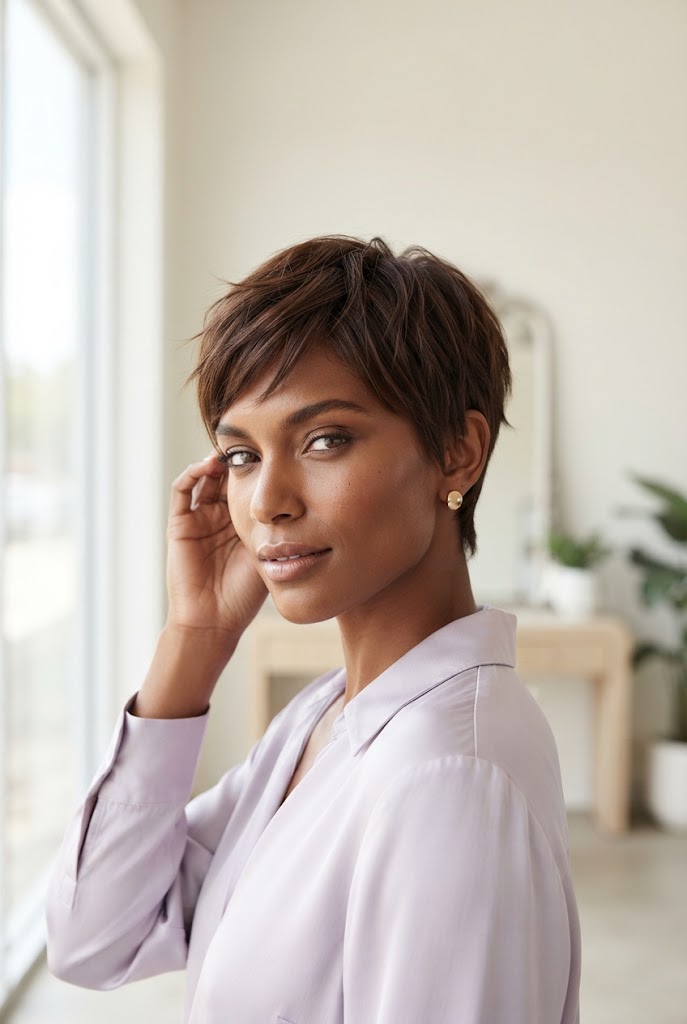
A long textured pixie is one of the best choices if you want to make thick hair dramatically lighter while retaining enough length on top for styling. The sides and nape can be shortened while the crown and fringe remain longer, creating contrast without requiring the entire head to be clipped close.
Texture is particularly important here. Thick hair naturally has plenty of body, so leaving the top completely solid can make the haircut puff outward. Selective layering and weight removal help the top sit closer to the head while maintaining a deliberately full appearance.
This style is also more forgiving than an ultra-short pixie if you are nervous about making a major change. The longer top can be swept sideways, pushed forward, separated into pieces, or styled with a slightly tousled finish.
Straight and wavy hair can both work well. Curly hair can also be beautiful in a longer pixie, but the stylist should account for curl contraction and the direction in which your hair naturally grows.
Best for: Thick hair that feels heavy but for which you still want some styling versatility.
Maintenance: Moderate to high, depending on how short the sides are.
Ask your stylist: “Keep the top long enough to move, but remove internal weight so my thick hair doesn’t create a rounded cap.”
6. Tapered Pixie
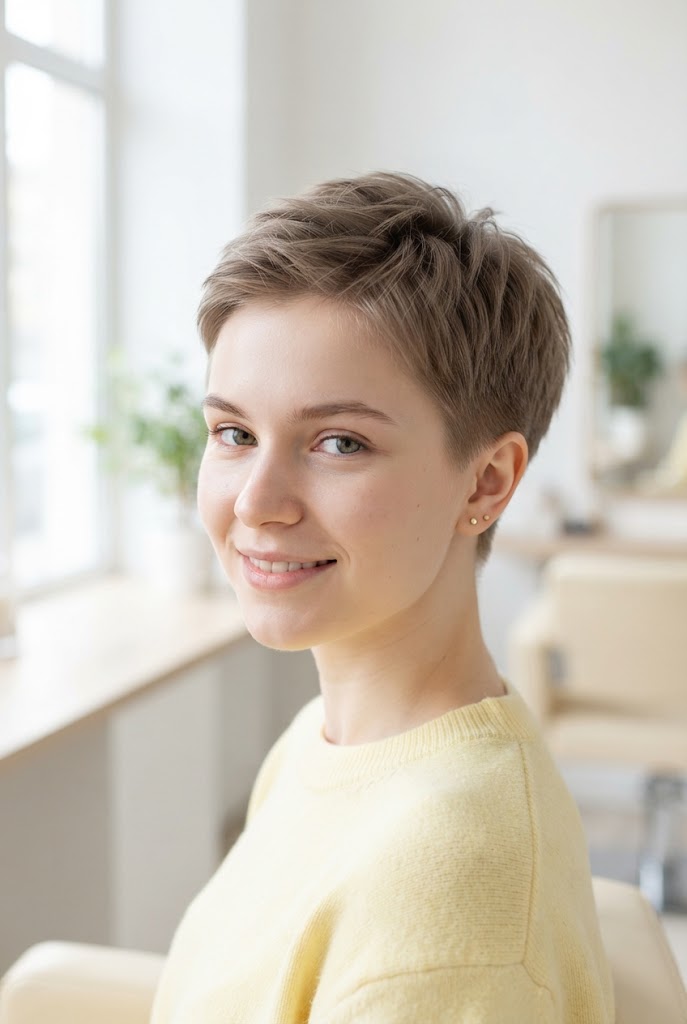
A tapered pixie is a practical answer for very dense hair around the sides and nape. The taper gradually reduces length in those areas, allowing the haircut to sit closer to the head while leaving enough length through the top to create the desired personality.
This can be especially helpful if your thick hair becomes hot or bulky around the ears and neckline. A tapered nape also creates a cleaner transition between the haircut and the neck rather than allowing dense hair to accumulate at the bottom.
The top can be textured, swept sideways, or kept slightly longer for contrast. If you have a Much like flattering short haircuts for round faces, thick hair benefits from controlled shapes, a little height through the crown can create more vertical movement. For square faces, a softer fringe or textured top can prevent the haircut from looking overly severe.
A tapered pixie requires more commitment to regular trims than a bob because small amounts of growth can quickly change the proportions.
Best for: Very dense hair, especially when the sides and nape are the main problem areas.
Maintenance: High if you want the taper to remain crisp.
Ask your stylist: “I want the sides and nape tapered enough to control my density, but I don’t want the top to become too short or flat.”
7. Short Shag

A short shag is a particularly good match for thick hair because the haircut is built around layers, separation, and movement. Instead of trying to make dense hair behave like a sleek one-length cut, the shag gives that density somewhere to go.
The best short shags for thick hair are not simply piles of random layers. The stylist should create a balanced relationship between the crown, sides, and perimeter. Internal weight can be removed where the hair feels too dense while leaving enough length at the ends to maintain a recognizable silhouette.
This cut is excellent for naturally wavy hair because texture becomes part of the finished style. Straight thick hair can also work, particularly if you like a more piecey or intentionally undone finish. Curly hair may require a curl-aware version with careful attention to shrinkage.
A short shag tends to have a forgiving grow-out compared with a sharply geometric bob. That makes it appealing if you prefer haircuts that do not require constant precision.
Best for: Thick wavy or textured hair and anyone who likes an undone, layered look.
Maintenance: Low to medium.
Ask your stylist: “I want a short shag with controlled layers that remove bulk but don’t leave the ends overly thin.”
8. Short Curly Crop
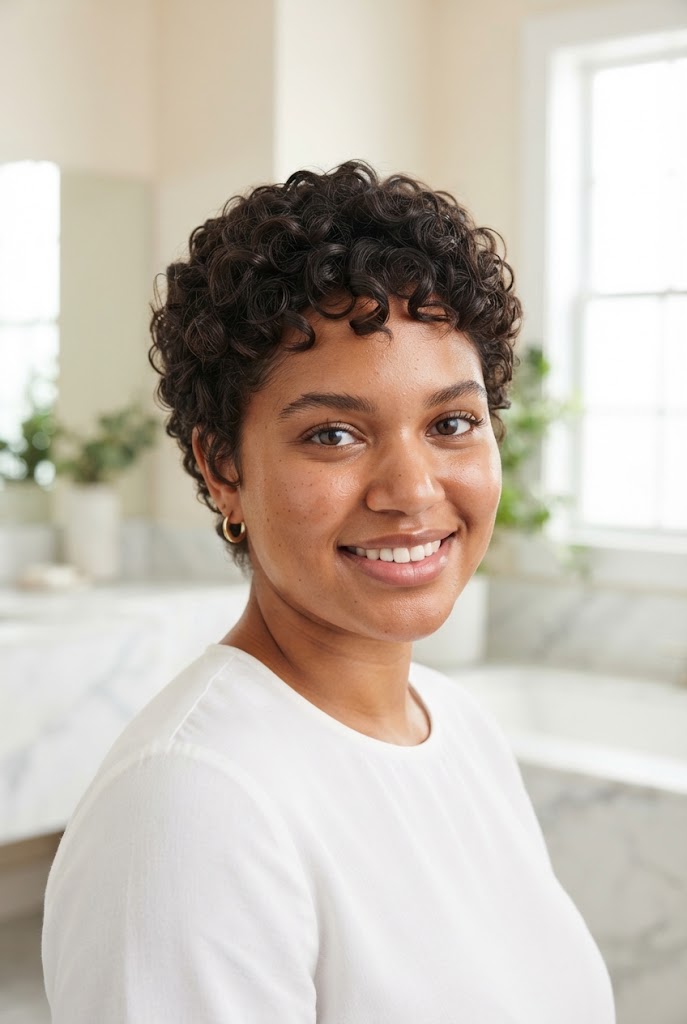
Thick curly hair can look fantastic when cut short, but the shape has to respect the curl pattern. A short curly crop works by reducing the overall length and allowing the curls to form a deliberate silhouette rather than carrying all of their weight at the bottom.
The main mistake to avoid is cutting curly thick hair according to how straight hair behaves. Curl contraction can make a haircut appear significantly shorter after it dries. A stylist should consider your natural curl pattern, shrinkage, density, and the direction in which individual sections spring.
A curly crop can be rounded, tapered, softly layered, or more structured depending on the desired result. For a softer appearance, leave enough length through the crown for curls to retain their shape. For maximum weight reduction, a closer taper around the sides and nape can make the haircut feel substantially lighter.
Styling can be simple: a lightweight curl cream or mousse may be enough, followed by air-drying or diffusing.
Best for: Thick curly hair that feels heavy at longer lengths.
Maintenance: Medium.
Ask your stylist: “Please shape this around my natural curl pattern and shrinkage, and remove bulk without disrupting the curl formation.”
9. Short Curved Bob
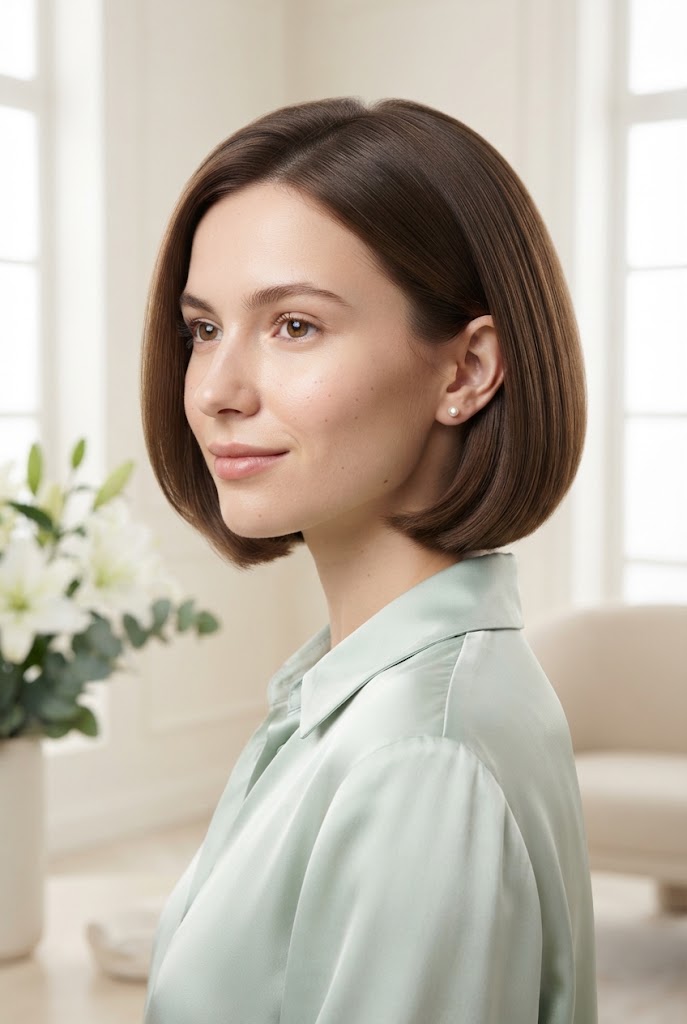
A curved bob uses the perimeter to create a softer, rounded silhouette rather than a completely straight line. On thick hair, that shape can be flattering because it gives the density an intentional direction while internal weight removal keeps the haircut from becoming too heavy.
This style can be particularly useful if you like the polished appearance of a bob but find blunt, one-length cuts too dense. The curve can be subtle, with the front slightly longer than the back, or more noticeable depending on your preference.
Thick straight hair will display the shape most clearly. Wavy hair can soften the curve and create a more relaxed result. If your hair is very curly, the cut needs to be adapted because shrinkage can dramatically alter the apparent perimeter.
Face shape can also influence the ideal length. A slightly longer front can help create length around a rounder face, while a jaw-skimming version can emphasize the cheekbones and jawline on other face shapes.
Best for: Thick straight or softly wavy hair when you want a polished but not overly blunt bob.
Maintenance: Medium.
Ask your stylist: “I want a softly curved bob with enough internal weight removed that the perimeter stays smooth rather than bulky.”
10. Short A-Line Bob
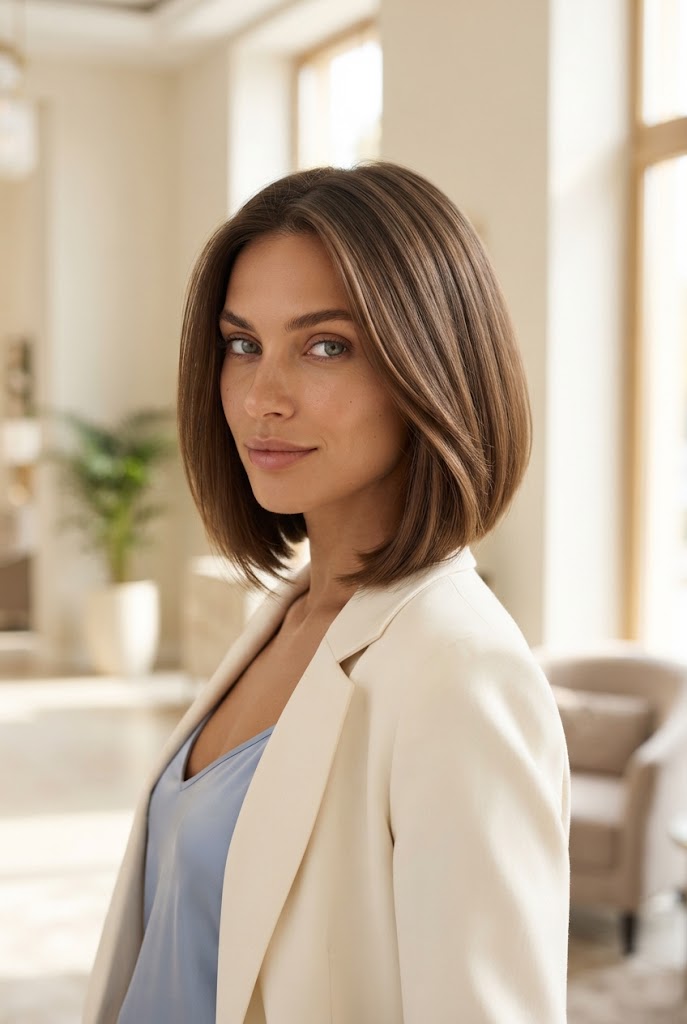
A short A-line bob is shorter in the back and gradually longer toward the front. That difference in length creates a natural sense of direction and can help thick hair feel less visually heavy around the nape.
The A-line shape is particularly useful when you want a short haircut but still like having face-framing length. The front can be tucked behind the ears or allowed to fall forward, depending on how dramatic the angle is.
For thick hair, the angle alone does not solve every density problem. A stylist may need to remove weight internally so the shorter back does not become overly dense. The goal is a clean transition rather than a visibly stacked or bulky effect.
Straight hair will show the geometry clearly, while wavy hair gives it a softer appearance. If you have a round face, keeping the front below the widest point of the cheeks can create a more elongated visual line.
Best for: Thick straight or wavy hair and anyone who wants a defined shape with longer front pieces.
Maintenance: Medium.
Ask your stylist: “I want a soft A-line bob with a controlled back and enough internal weight removal to keep the angle from becoming bulky.”
11. Short Layered Crop

A short layered crop takes the weight-removing benefits of a cropped haircut and adds enough texture to prevent thick hair from sitting like a solid cap. The sides and back can be kept relatively short while the top remains longer and layered.
This makes it a useful middle ground between a pixie and a very short bob. It feels light around the neckline but still gives you enough hair on top to experiment with direction and texture.
Thick straight hair can look particularly polished with a piecey finish, while wavy hair can make the crop appear softer. For coarser or very dense hair, the stylist may need to use internal weight removal carefully so that the hair sits closer without producing fuzzy or uneven ends.
The cut is also practical for active lifestyles because there is less hair to dry and manage. However, short layers can require regular shaping if you want the original silhouette to remain obvious.
Best for: Thick hair that needs significant weight reduction without committing to a very close pixie.
Maintenance: Medium to high.
Ask your stylist: “I want a short layered crop with a lightweight top and controlled sides, but I still want enough length to style the texture.”
12. Tapered Short Cut With Side-Swept Bangs
A tapered short cut with side-swept bangs combines weight control around the sides and nape with a softer, longer section across the forehead. It is a useful option when you want the practicality of a short haircut without the severe appearance that can sometimes come with an extremely close crop.
The taper removes density where thick hair tends to accumulate, while the side-swept fringe provides movement and a face-framing element. The fringe can also be adjusted to suit your features. A longer sweep can visually lengthen a rounder face, while a softer, shorter fringe can work with oval or heart-shaped proportions.
This haircut works particularly well with straight and slightly wavy thick hair. Strong curls require more consideration because the fringe may shrink and spring away from the intended direction.
Because the haircut is short, regular trims help preserve the balance between the tapered areas and the longer top. If you like styling flexibility, ask for enough length in the fringe to sweep it across rather than cutting it extremely short.
Best for: Thick straight or wavy hair, especially when you want a short cut with a softer front.
Maintenance: Medium to high.
Ask your stylist: “Keep the sides and nape tapered to reduce bulk, but leave enough length in the front for a soft side-swept fringe.”
How to Choose the Right Short Haircut for Thick Hair
The most important question is not simply, “Which short haircut looks best?” It is where does your hair actually feel too heavy?
Some people have dense sides. Others have a heavy nape, a bulky crown, or thick ends that form a triangular outline. The haircut should address your specific density pattern rather than treating all thick hair the same.
Current professional guidance also distinguishes hair thickness from overall density: the feel and appearance of individual strands matter, while the amount of hair growing across the scalp affects how much bulk a haircut has to control.
Before choosing a cut, consider these five factors.
1. Your Natural Texture
Straight thick hair tends to reveal the haircut’s outline clearly. That can make a bob look sleek, but it also means any unwanted bulk may be obvious.
Wavy hair benefits from movement-focused layers because the natural bend can soften the silhouette.
Curly hair requires attention to shrinkage and curl formation. A haircut that looks perfect when wet may become much shorter and wider once dry.
2. Where Your Hair Feels Heaviest
Run your fingers through your hair and notice where the density bothers you most.
Is it:
- Around the ears?
- At the nape?
- Through the crown?
- At the ends?
- Around the sides of the face?
This information is more useful to your stylist than simply saying, “My hair is too thick.”
3. How Short You Actually Want to Go
If you’re nervous about short hair, a layered bob or bixie gives you more length to work with.
If you want the biggest reduction in drying time and physical weight, a pixie or tapered crop will make a much more noticeable difference.
If you want something between those extremes, a short shag or layered crop can be a good compromise.
4. How Often You Want Salon Maintenance
Short geometric shapes usually show growth sooner.
A stacked bob, sharply tapered pixie, or precise A-line bob may need more frequent shaping.
A short shag or softly layered bob can be more forgiving as it grows.
5. Whether You Need to Tie Your Hair Back
A pixie removes the ability to pull most of the hair into a conventional ponytail.
A bixie may allow some sections to be tucked or clipped.
A chin-length or slightly longer bob offers considerably more flexibility.
If you work out frequently or prefer putting your hair up, mention that before the cut.
Best Short Haircuts for Thick Hair by Hair Texture
Thick Straight Hair
Straight thick hair can support highly defined silhouettes, including bobs, A-line cuts, stacked shapes, and sleek crops. The challenge is that straight hair can also make excess density very visible.
If your hair tends to form a heavy block, ask about internal weight removal rather than automatically requesting aggressive thinning. The goal is to preserve the polished outer line while reducing unnecessary mass underneath.
Best options: Short layered bob, textured bob, A-line bob, stacked bob, tapered pixie.
Thick Wavy Hair
Wavy thick hair has natural movement, so haircuts that encourage that movement tend to work particularly well. A short shag, textured bob, bixie, or layered bob can make the wave pattern part of the haircut instead of something you have to fight.
Avoid creating too much width through the sides. The stylist should consider how your waves expand when dry.
Best options: Short shag, textured bob, bixie, layered bob, long textured pixie.
Thick Curly Hair
Curly thick hair needs a curl-aware cutting strategy. The most important consideration is shrinkage: the hair can appear considerably shorter once it dries and the curls contract.
A short curly crop or longer curly pixie can work beautifully when the shape is designed around the natural curl pattern.
Best options: Short curly crop, curly pixie, curly bixie, layered curly bob.
Thick Coily Hair
Coily hair can support striking short shapes, but the haircut needs to respect both shrinkage and density. A tapered crop can create a clean outline while retaining texture on top. A stylist familiar with coily hair can help determine whether the hair should be shaped wet, dry, or using a combination of techniques.
The objective is not to make coily hair look less full. It is to distribute the fullness intentionally.
Best options: Tapered crop, tapered pixie, short rounded cut, textured cropped shape.
Best Short Haircuts for Thick Hair by Face Shape
Round Face
Look for shapes that create some vertical direction instead of adding excessive width at the cheeks. A longer pixie with height at the crown, side-swept fringe, or an A-line bob can help create a more elongated visual line.
Be cautious with a very short, rounded shape that adds equal fullness around the sides of the face.
Oval Face
Oval faces generally offer plenty of flexibility. You can experiment with pixies, bobs, shags, crops, and asymmetrical shapes.
The more important consideration is your hair texture and density rather than trying to correct facial proportions.
Square Face
Soft texture can work particularly well when you want to balance a stronger jawline. A textured pixie, wavy bob, or layered crop can prevent the haircut from appearing too rigid.
If you prefer a sharp geometric bob, consider a slightly softened perimeter rather than excessive bluntness.
Heart-Shaped Face
Longer front pieces and side-swept bangs can help balance a narrower chin with a wider upper face. A bixie or longer pixie can be particularly adaptable because the front retains enough length to frame the face.
Long Face
Avoid automatically adding excessive height at the crown if your goal is to visually balance a longer face. A textured bob, side-swept fringe, or fuller shape around the sides may create better proportion.
Diamond Face
Face-framing pieces around the cheekbones can work beautifully. A textured bob or bixie can emphasize the cheekbones while softening the transition toward the forehead and jaw.
Which Short Haircut Removes the Most Weight?
If physical weight is your biggest concern, the shortest cuts generally create the largest overall reduction simply because there is less hair left.
A rough progression looks like this:
| Haircut | Weight Reduction | Styling Flexibility | Maintenance |
| Tapered Pixie | Very high | Medium | High |
| Long Textured Pixie | High | High | Medium-high |
| Short Layered Crop | High | Medium-high | Medium-high |
| Short Shag | High | High | Low-medium |
| Bixie | Medium-high | High | Medium |
| Stacked Bob | Medium-high | Medium | Medium-high |
| A-Line Bob | Medium | High | Medium |
| Short Layered Bob | Medium | High | Medium |
| Textured Bob | Medium | High | Medium |
| Curved Bob | Medium | High | Medium |
| Short Curly Crop | High | Medium | Medium |
| Side-Swept Tapered Cut | High | Medium | Medium-high |
The most important point is that weight reduction does not require making every section extremely short. Strategic internal removal can make a bob substantially lighter while preserving the length and silhouette that you actually like. Professional hairstyle guidance repeatedly emphasizes this distinction.
Is Thinning Thick Hair Always a Good Idea?
No.
Thinning can be useful in the right hands and in the right location, but removing too much weight can create unwanted texture, frizz, or wispy ends. This is especially important for coarse, wavy, curly, or coily hair.
Instead of simply saying, “Thin my hair,” explain the result you want.
For example:
“I want the haircut to feel lighter, especially through the sides and underneath, but I want the outside shape and ends to remain full.”
That gives your stylist a clearer objective.
The best technique depends on your texture, density, haircut, and how the hair behaves after drying.
What to Tell Your Stylist
Bring two or three reference photographs showing the haircut from different angles rather than relying on one front-facing picture.
Then explain:
- Where your hair feels too heavy
- How much length you are comfortable losing
- Whether you air-dry or blow-dry
- Whether you regularly exercise
- Whether you need to tie your hair back
- How often you can realistically get trims
- What your natural texture does without heat
A useful request for thick straight or wavy hair might be:
“I want a short shape that removes weight from the interior and heavy areas, but I don’t want the ends to look overly thinned out. Please keep the outer silhouette intentional and show me how the cut will grow out.”
For curly or coily hair:
“Please shape the haircut around my natural curl pattern and shrinkage. I want less bulk, but I still want the texture to form properly.”
Common Mistakes When Cutting Thick Hair Short
Cutting Everything to One Length
A single-length short haircut can work for some thick hair, but when density is high, it may create a heavy or boxy result.
Removing Too Much Weight
More thinning is not automatically better. Over-removing density can compromise the shape and make the ends look weak.
Ignoring the Grow-Out
A haircut can look excellent on day one and become difficult six weeks later if the stylist does not consider how the layers, taper, or graduation will grow.
Choosing a Cut Only From the Front
Thick hair needs to be considered from the back and sides too. Ask to see references that show the complete silhouette.
Forgetting Your Natural Texture
A straight-haired reference will not necessarily behave the same way on thick wavy or curly hair.
Short Haircuts for Thick Hair: Quick Decision Guide
Choose a short layered bob if you want the safest balance of length, movement, and weight reduction.
Choose a textured bob if you dislike the solid appearance of a blunt bob.
Choose a stacked bob if most of your bulk sits around the back and nape.
Choose a bixie if you want to move toward shorter hair without committing to a traditional pixie.
Choose a long textured pixie if you want significant weight reduction but still want styling options.
Choose a tapered pixie if the sides and nape are especially dense.
Choose a short shag if your hair is naturally wavy or you prefer an undone finish.
Choose a short curly crop if your curls are dense and you want to make them easier to manage.
Choose a curved bob if you want a polished shape without a heavy straight perimeter.
Choose an A-line bob if you want shorter hair at the back with longer face-framing pieces.
Choose a short layered crop if you want something lighter than a bob but longer and softer than a very short pixie.
Choose a tapered cut with side-swept bangs if you want the practical feel of short hair with a softer, feminine front.
Frequently Asked Questions
What is the best short haircut for very thick hair?
There is no single best cut for every head of thick hair. A short layered bob, textured pixie, tapered pixie, bixie, or short shag can all work well because they provide ways to distribute or remove excess weight. The best choice depends on where your density is concentrated and how your hair behaves naturally.
Is short hair good for thick hair?
Yes. Thick hair can work extremely well with short cuts because the density provides natural body and helps many shapes hold their form. The important part is controlling weight in the right places so the hair does not become excessively wide or bulky.
What short haircut makes thick hair look thinner?
A haircut does not literally make the hair thinner, but layered, tapered, graduated, and internally textured shapes can make dense hair appear and feel less bulky. The goal is controlled distribution of volume rather than eliminating all fullness.
Should thick hair be layered?
Often, yes, but the amount and placement of layering matter. Strategic layers can create movement and remove weight. Too many short layers, however, may create unwanted width or frizz, particularly in textured hair.
Is a bob good for thick hair?
Absolutely. Bobs can look excellent on thick hair when the shape is customized to the density. A layered, textured, stacked, curved, or A-line bob may be easier to manage than a completely solid one-length bob.
Is a pixie good for thick hair?
A pixie can be excellent for thick hair because it removes a substantial amount of length and weight. Thick hair also gives the top natural body. A textured or tapered pixie is usually easier to control than a completely solid short shape.
How often should thick short hair be trimmed?
It depends on the haircut. Highly tapered or geometric cuts may need frequent appointments to preserve their proportions, while soft shags and layered bobs can usually tolerate more grow-out. Your desired shape matters as much as your hair growth rate.
Can thick curly hair be cut short?
Yes, but the haircut needs to account for curl contraction and the natural curl pattern. A stylist should consider how the hair behaves when completely dry rather than relying only on its wet length.
What should I ask my stylist if my short hair feels too bulky?
Tell them exactly where the bulk bothers you and ask whether internal weight removal, graduation, tapering, or selective texturing would help. Avoid simply requesting “lots of thinning” without discussing the final shape.
Can I tie back a short haircut for thick hair?
That depends on the length. Pixies and very short crops generally cannot form a conventional ponytail. A bixie may allow some sections to be clipped, while chin-length and longer bobs provide more tie-back flexibility.
What is the lowest-maintenance short haircut for thick hair?
A softly layered short shag can be relatively forgiving because its texture and layers can grow out naturally. A short layered bob can also be practical if the shape is designed around your natural texture. Very precise bobs and tapered pixies generally require more regular maintenance.
Final Takeaway
The best short haircuts for thick hair are not about getting rid of as much hair as possible. They are about deciding where the density is useful and where it is getting in the way.
A layered bob keeps the familiar bob silhouette while opening up the interior. A bixie offers a softer route into shorter hair. A pixie or tapered crop can make a dramatic difference when physical weight is the main problem. A short shag works with natural movement, while curly and coily crops can turn dense texture into part of the design.
Before your appointment, think beyond the word “thick.” Identify where your hair feels heavy, how it behaves when dry, how much styling you actually do, and how often you are willing to maintain the haircut. Then ask your stylist to remove weight strategically while protecting the outer shape.
That approach gives you the best chance of leaving the salon with hair that feels lighter without looking like you simply cut off a lot of length.