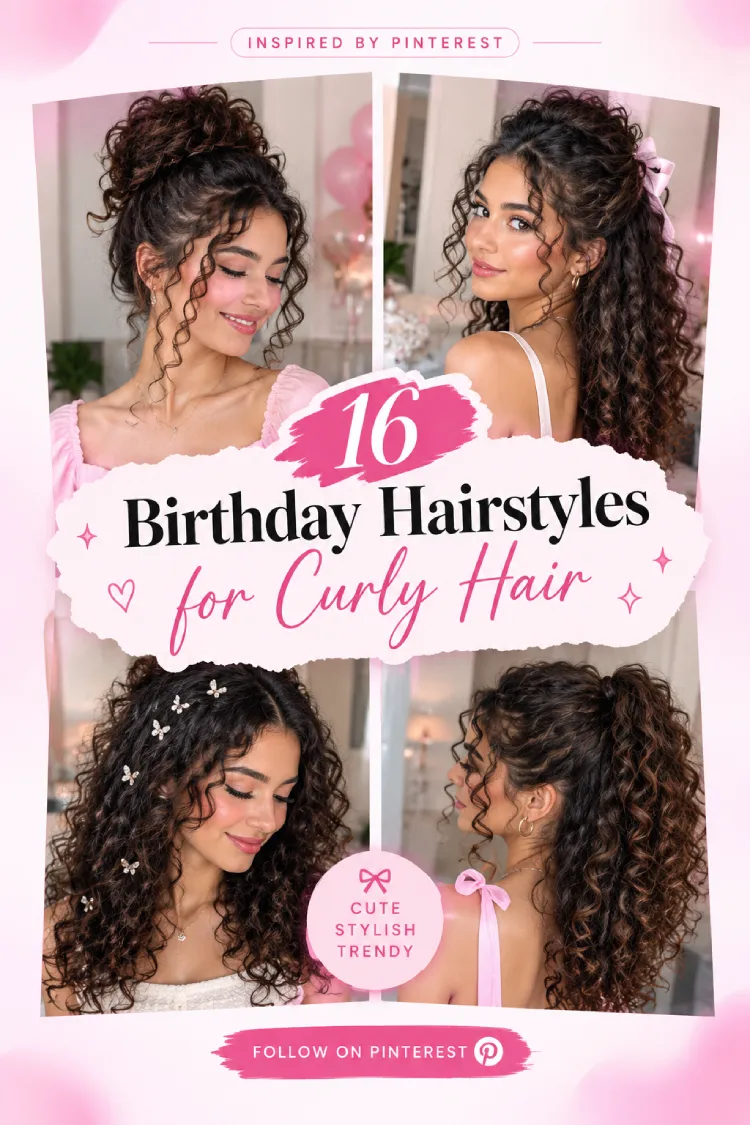
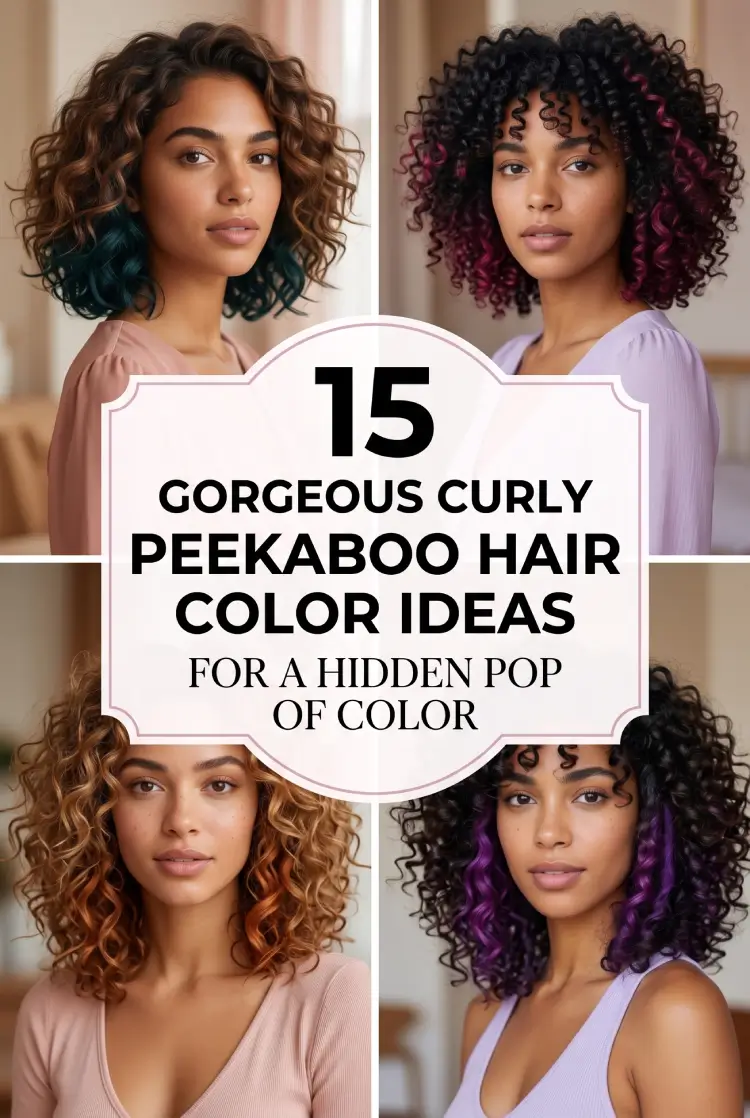
Curly peekaboo hair color is a smart way to experiment with color without turning your entire head into a high-maintenance project. The technique places a contrasting shade underneath the upper layer of curls, so the color appears when the curls move, separate, or are styled into a ponytail, bun, half-up look, or clip.
The reference article covers 15 curly peekaboo variations: honey blonde, copper, burgundy, caramel curly bob, platinum blonde, auburn, pink, purple, blue, rose gold, ginger, teal, ash brown, red, and multi-tone curls. Those same 15 color concepts are retained here, while the guide adds practical information about curl pattern, density, face shape, maintenance, grow-out, styling, and salon communication. Show off your colorful curly strands with these party-ready birthday hairstyles for curly hair.
The biggest decision is not simply which color you like best. Think about how visible you want the color to be, how much lightening your curls need, whether you want warm or cool tones, and how you normally wear your hair. A hidden underlayer can be remarkably subtle when your curls are down and much more noticeable when you pull them up.
Quick Picks: Which Curly Peekaboo Color Should You Choose?
- Softest option: Ash brown or honey blonde
- Warm and wearable: Caramel, auburn, or copper
- Rich and dramatic: Burgundy or deep red
- Playful: Pink or rose gold
- Cool-toned: Blue, purple, or teal
- High contrast: Platinum blonde underneath dark curls
- Natural-looking dimension: Honey blonde or caramel
- Best for a short curly cut: Caramel peekaboo curly bob
- Most creative: Multi-tone peekaboo curls
- Best for a first experiment: A small underlayer rather than a full lower section
1. Honey Blonde Peekaboo Curls
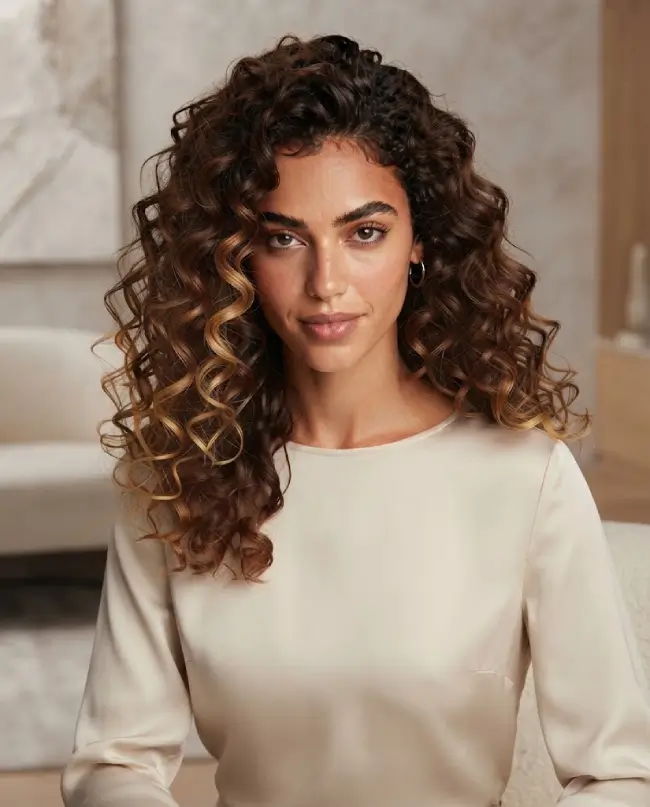
Honey blonde peekaboo curls are a strong starting point when you want hidden color without a dramatic neon effect. The warm blonde sits underneath the darker outer layer, creating flashes of brightness whenever the curls separate. The result can look especially dimensional on layered curly hair because different curls reveal different amounts of the lighter shade.
This color tends to suit people who like warmth and want their peekaboo section to blend more naturally with brunette or dark-blonde hair. Fine curls can benefit from strategically placed lighter sections because the contrast can make individual curls easier to see, while dense curls can support a wider hidden panel.
For round or fuller facial proportions, placing the brightest sections slightly lower can keep the emphasis away from the widest part of the face. If you want the color around the front, smaller face-framing sections create a brighter effect.
Honey blonde usually requires lightening when the base is significantly darker. That means the condition of the curls matters before the appointment. Ask for warm honey-blonde peekaboo panels underneath your natural curls, and specify whether you want the color concentrated at the back, sides, or around the lower perimeter.
Best for: Warm brunette bases, natural-looking contrast, and first-time color experiments.
Maintenance: Moderate. Root growth is less noticeable because the color is underneath, but lightened curls still need care.
2. Copper Peekaboo Curly Hair
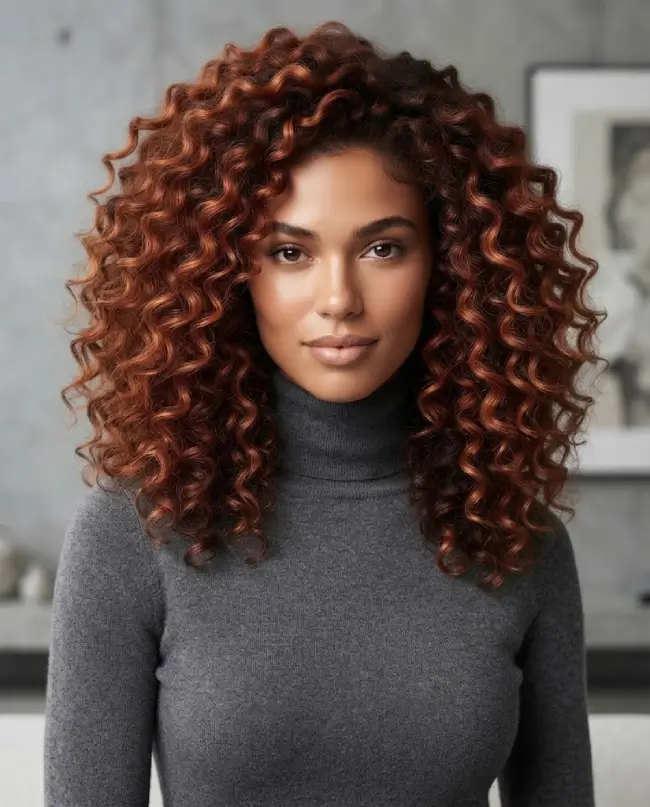
Copper peekaboo curls bring warmth and intensity without covering the whole hairstyle in orange or copper. The darker top layer keeps the overall appearance grounded, while the copper underneath becomes visible as the curls bounce and separate.
This shade is particularly effective on thick, dense curls because there is enough movement and layering for the copper to appear in scattered ribbons rather than one solid block. On finer curls, a smaller number of carefully positioned panels can create the same effect without visually overwhelming the hairstyle.
Copper can be adjusted from muted auburn-copper to brighter orange copper, so bring a reference photo rather than relying on the word “copper” alone. The difference between a brown-based copper and a highly saturated copper can be substantial.
For a softer result, keep the color mostly underneath the occipital area and lower sides. If you want the color to frame the face, place a few copper curls toward the front.
A salon request could be: “Keep my top layer dark and natural-looking, but add warm copper panels underneath that become visible when my curls move.” If your hair is already lightened, ask whether the desired copper can be deposited without additional bleaching.
Best for: Warm undertones, thick curls, and people who want noticeable but wearable color.
Maintenance: Moderate, with additional upkeep if substantial lightening is necessary.
3. Burgundy Peekaboo Curls
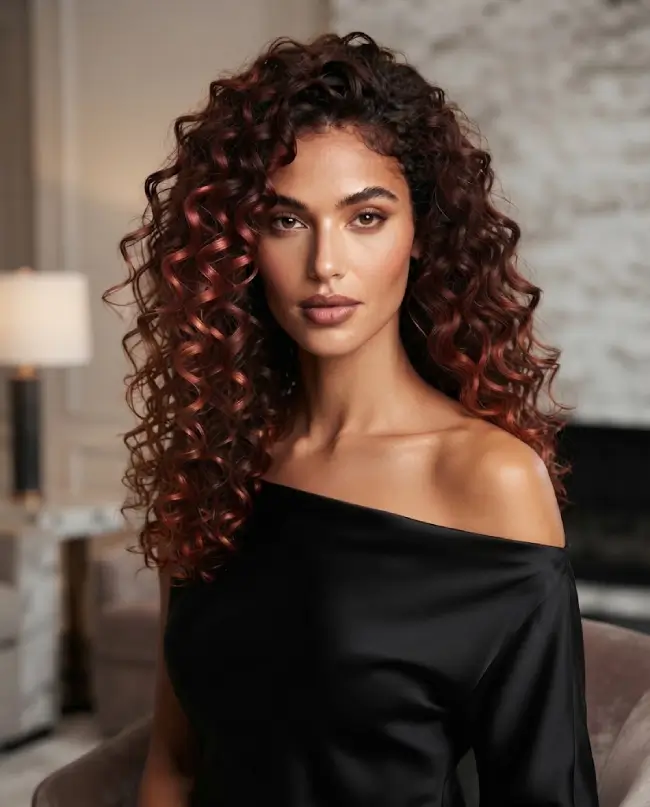
Burgundy peekaboo curls offer a deeper alternative to bright red. The wine-like tone can sit underneath black, dark brown, or deep brunette curls, creating color that is visible without becoming overwhelmingly bright.
The shade works particularly well on dense or long curls because the darker red can appear in rich flashes throughout the lower layers. On shorter curls, the color placement needs to be more deliberate because there is less length available to hide the underlayer.
Burgundy is also useful when you want a fashion color that feels relatively sophisticated. It can be vivid in direct light while appearing much darker indoors. That changing appearance is part of what makes the shade work well as peekaboo color.
For a round face, consider keeping the strongest burgundy concentration below the cheekbone area. For longer or narrower facial proportions, face-framing burgundy pieces can create more visual width around the sides.
If your natural hair is very dark, ask your stylist how much lightening is actually needed to achieve the burgundy you want. You may not need to take the hair as light as you would for pastel or bright colors.
Best for: Dark curls, deeper color lovers, and people who want a dramatic but relatively subdued result.
Maintenance: Moderate.
4. Caramel Peekaboo Curly Bob
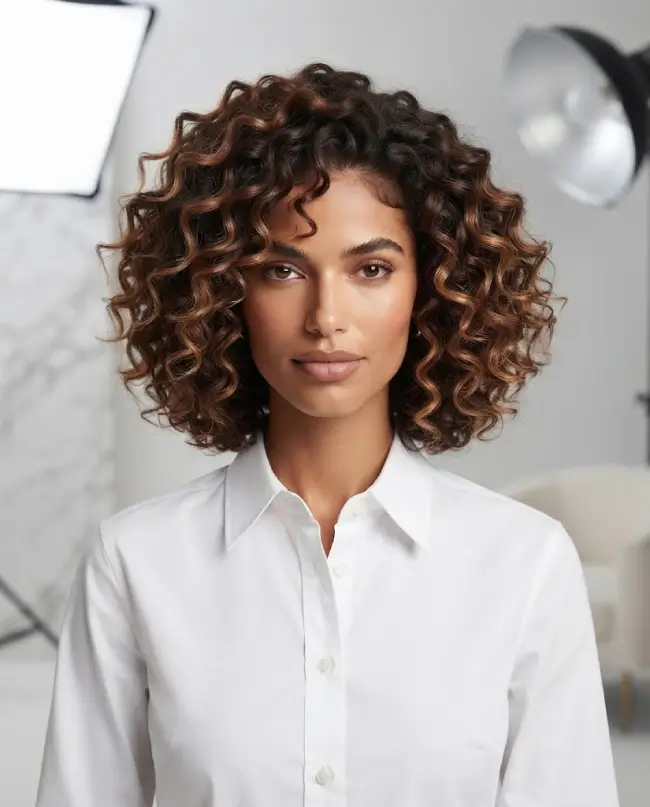
A caramel peekaboo curly bob combines a compact haircut with warm hidden color. Because the bob is shorter, the caramel sections can become much more visible than they would on very long curls.
The rounded shape of a curly bob naturally exposes sections as the curls spring outward. Caramel underneath dark brown curls gives the cut warmth and dimension without requiring a highly saturated fashion color.
This version can work particularly well for medium-density curls because the haircut itself provides shape. Thick curls may need internal weight management so the bob does not become too wide, while fine curls may benefit from preserving enough perimeter weight to maintain the rounded silhouette.
Face shape should influence the bob’s length and volume more than the color itself. A bob that ends around the chin emphasizes that area, while a slightly longer curly bob can create a softer vertical line.
If you want a polished everyday result, ask for a curly bob with a defined perimeter and caramel peekaboo panels underneath, concentrated toward the lower sides and back. Keep the color placement consistent with your natural curl pattern rather than asking for perfectly straight horizontal panels.
Best for: Short-to-medium curly hair and warm, wearable color.
Maintenance: Moderate because both the haircut shape and color placement need attention.
5. Platinum Blonde Peekaboo Curls
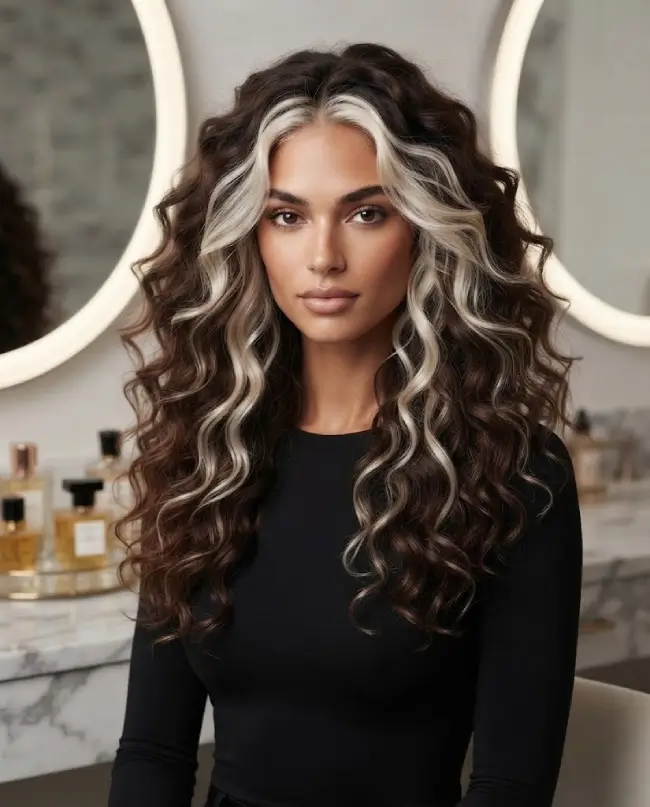
Platinum blonde underneath dark curls creates one of the strongest contrasts in this collection. The light underlayer becomes immediately visible whenever the curls separate, giving the hairstyle a high-impact finish without making the entire head platinum.
This is a more demanding option because dark hair generally needs significant lightening to reach a clean platinum result. Curly hair deserves particular consideration before this type of transformation because excessive processing can affect how the curls behave.
The strongest contrast works well on dense curls and layered shapes. Fine curls can also wear platinum peekaboo color, but a smaller placement may be easier to manage.
For face framing, platinum sections around the sides can brighten the front considerably. If you want the color to remain more discreet, keep the brightest panels toward the lower back.
A stylist consultation should include your color history, especially previous bleaching or chemical services. Ask for an icy platinum underlayer with the natural darker top preserved, and discuss whether a shadowed transition is preferable to a hard boundary.
Best for: High-contrast looks and naturally dark or deep brunette curls.
Maintenance: High compared with darker peekaboo shades because reaching and maintaining platinum requires substantial lightening.
6. Auburn Peekaboo Curls
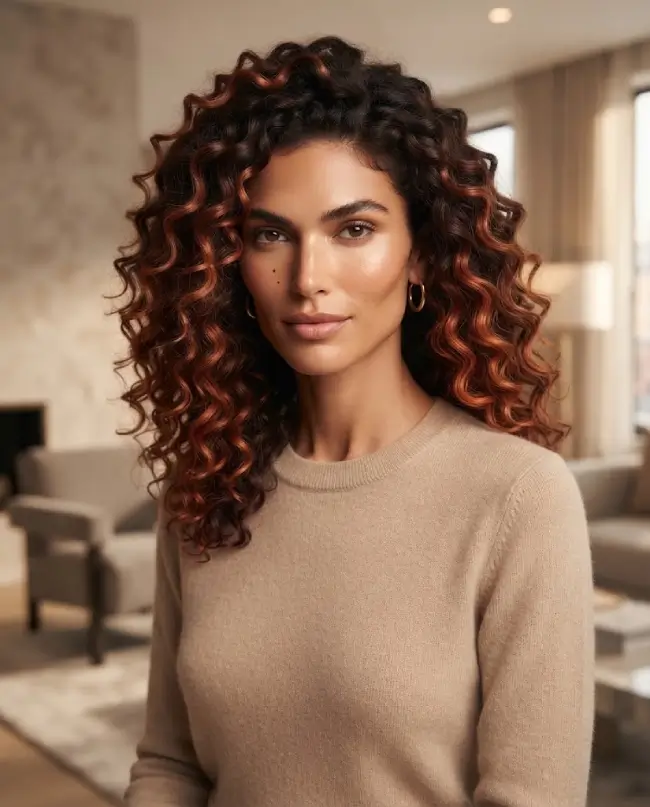
Auburn peekaboo curls sit between brown and red, making them a useful choice when you want warmth without committing to a clearly vivid red. The underlayer can be subtle enough to resemble natural dimension or intensified for a more obvious color effect.
This shade works beautifully with curls because the curved surfaces reflect the warm red-brown tone differently from strand to strand. Thick curls can display the color through many small sections, while finer curls may look better with fewer, broader panels.
Auburn is also relatively adaptable to different haircuts. It can work under a curly bob, shoulder-length curls, long layers, or a rounded natural shape.
For a lower-maintenance look, keep the color concentrated underneath and avoid taking it all the way to the hairline. If you want a stronger face-framing effect, a few auburn curls near the temples can make the color much more visible.
At the salon, ask for a warm auburn underlayer that remains darker and richer than bright copper. If your hair is already brunette, ask whether the desired result can be achieved with minimal lightening.
Best for: Brunettes who want warm hidden color without a very bright fashion shade.
Maintenance: Low to moderate depending on the starting color.
7. Pink Peekaboo Curly Hair
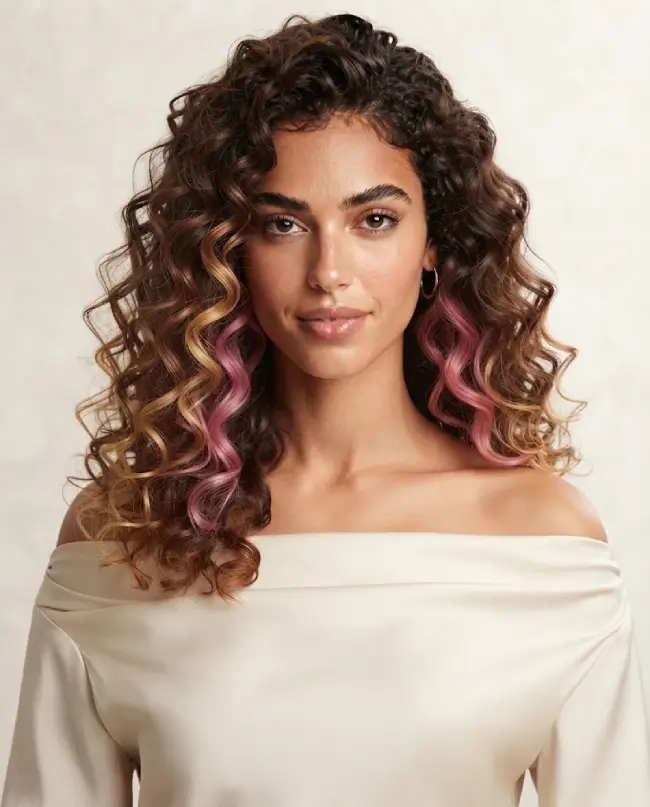
Pink peekaboo curls are a playful choice when you want fashion color without turning the entire hairstyle pink. The darker upper layer provides contrast, while pink curls appear underneath in small flashes.
The exact pink shade makes a major difference. Soft rose or dusty pink creates a gentler effect, while brighter bubblegum or hot pink produces a much stronger contrast. Pastel pink generally requires a lighter base, so it may involve more processing than a deeper pink.
On curly hair, placement is especially important because curl shrinkage can cause the colored section to appear shorter than expected. A stylist familiar with curly cutting and coloring can account for the way the curls sit naturally.
Pink works particularly well with playful hairstyles such as half-up curls, claw clips, high ponytails, and puffs because these styles expose the hidden layer intentionally.
For a salon consultation, say “I want pink underneath my natural curls, but I want most of the top layer to stay dark.” Then show the exact pink you prefer.
Best for: Playful fashion color and creative styling.
Maintenance: Moderate to high for pastel shades; moderate for deeper pinks.
8. Purple Peekaboo Curls
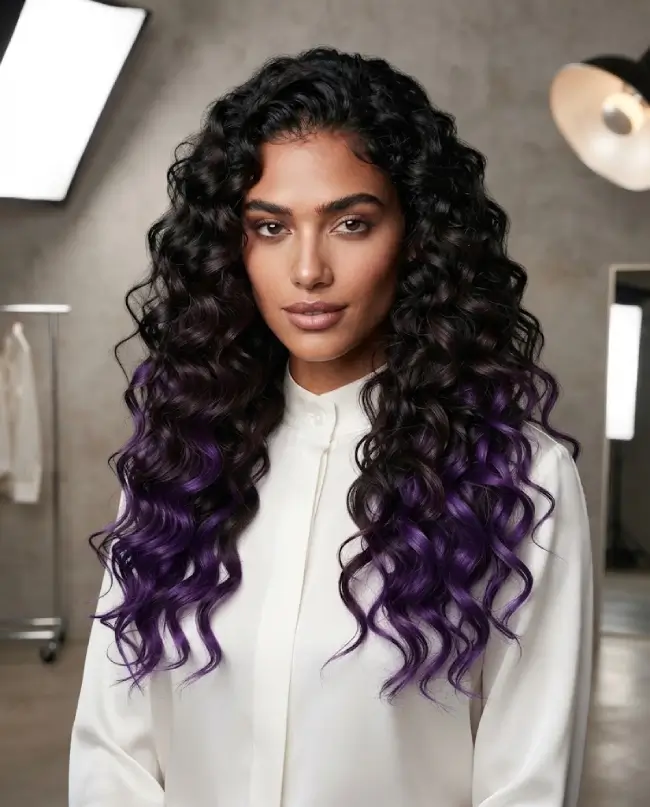
Purple peekaboo curls give dark hair a cool, saturated flash of color. Deep violet works particularly well under black or dark brown curls because the shade remains relatively discreet until the hair moves into the light.
This is a useful option when you want something more noticeable than brown but less warm than copper or red. A deep purple can feel dramatic, while lavender or lilac creates a much lighter and softer effect.
Curly density affects the final result. Thick hair gives the purple plenty of room to appear in scattered sections. With fine curls, narrower panels may produce a more balanced look.
Layered curls can enhance the peekaboo effect because the purple appears at multiple depths. A side part can also expose more of one side, giving you control over how much color is visible.
Ask your stylist for deep violet peekaboo panels underneath your natural dark curls, and specify whether you want a blue-based purple or a warmer reddish violet. Those undertones can change how the color interacts with your existing hair.
Best for: Dark curls and cool-toned fashion color.
Maintenance: Moderate to high depending on the depth of purple and starting base.
9. Blue Peekaboo Curly Hair
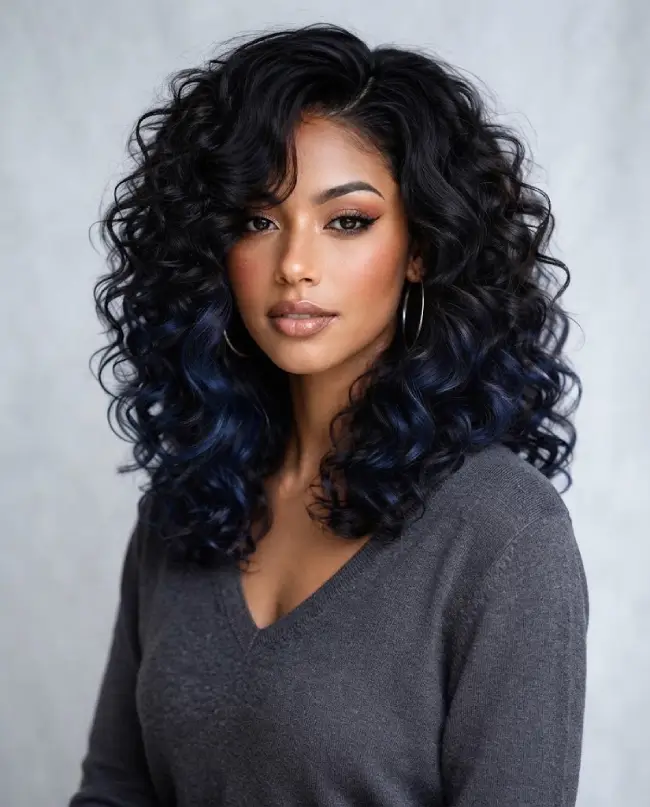
Blue peekaboo curls create a cooler, more understated alternative to bright warm colors. Midnight blue, navy, blue-black, and brighter cobalt all produce different levels of contrast.
A dark blue underlayer is especially easy to integrate with black or very dark brown curls because the color may appear almost black indoors and reveal its blue tone in brighter light. That makes it a useful option for someone who wants creative color without a constantly vivid appearance.
Brighter blues require more noticeable lightening, while deep blue formulas may work with less preparation depending on the starting hair. Curly hair should always be assessed for condition before extensive bleaching.
The color placement can be adjusted around the face. Keeping blue toward the back creates a more hidden result, while placing it around the sides makes the color easier to see.
Tell your stylist “I want a dark blue peekaboo underlayer that still reads blue in natural light, rather than a black color with only a slight tint.” If you prefer brighter cobalt, bring a reference image.
Best for: Cool-toned color lovers and dark hair.
Maintenance: Moderate, with more upkeep for brighter blues.
10. Rose Gold Peekaboo Curls
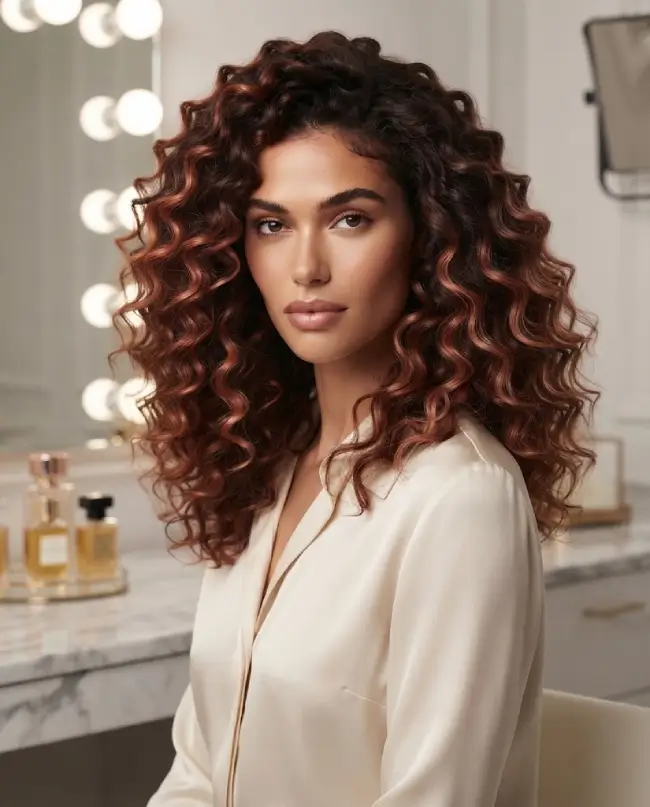
Rose gold combines pink and golden warmth, creating a softer fashion-color option than pure pink or red. Under brown curls, the shade can look like a warm rosy glow that appears mainly when the hair moves.
This color suits people who want something feminine and creative without a very high-contrast result. On lighter brown hair, rose gold can blend relatively softly. Against very dark hair, the contrast becomes stronger.
The curl pattern is important because rose gold can look especially dimensional on defined curls. Fine curls may need a more restrained placement, while thick curls can carry multiple panels without losing the hidden effect.
For a more natural finish, use rose gold on the lower layers and keep the top close to the natural base. If you want a bolder look, bring the color farther around the sides.
At the salon, ask for a muted rose-gold underlayer with a warm golden base rather than a bright pink. Mention whether you prefer the pink or gold side of the color to dominate.
Best for: Soft fashion color, warm brown curls, and subtle contrast.
Maintenance: Moderate to high if a pale base is required.
11. Ginger Peekaboo Curls
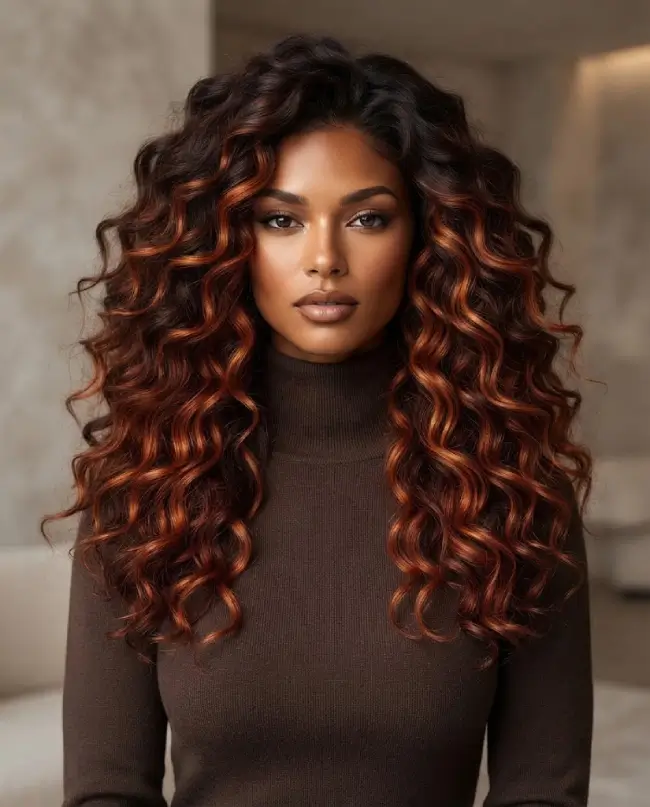
Ginger peekaboo curls add a lively orange-red warmth underneath darker curls. The shade can range from muted ginger-brown to brighter copper-orange, so it can be customized to suit the level of intensity you want.
This color works especially well with thick curls because the ginger sections can appear in scattered flashes rather than creating one solid block. Long layers also give the color room to move through the hairstyle.
On shorter curls, keep the placement deliberate. Too much color in a small haircut can quickly stop looking like peekaboo and start looking like an all-over transformation.
Ginger can complement warm brown bases particularly well. If your natural hair is already warm, the transition may require less contrast than a cool-toned blue or purple.
A practical salon request is: “Keep my outer curls dark, but add warm ginger panels underneath. I want them brighter than auburn but not as orange as a vivid copper.”
Best for: Warm brunette curls and people who want energetic color without neon intensity.
Maintenance: Moderate.
12. Teal Peekaboo Curly Hair
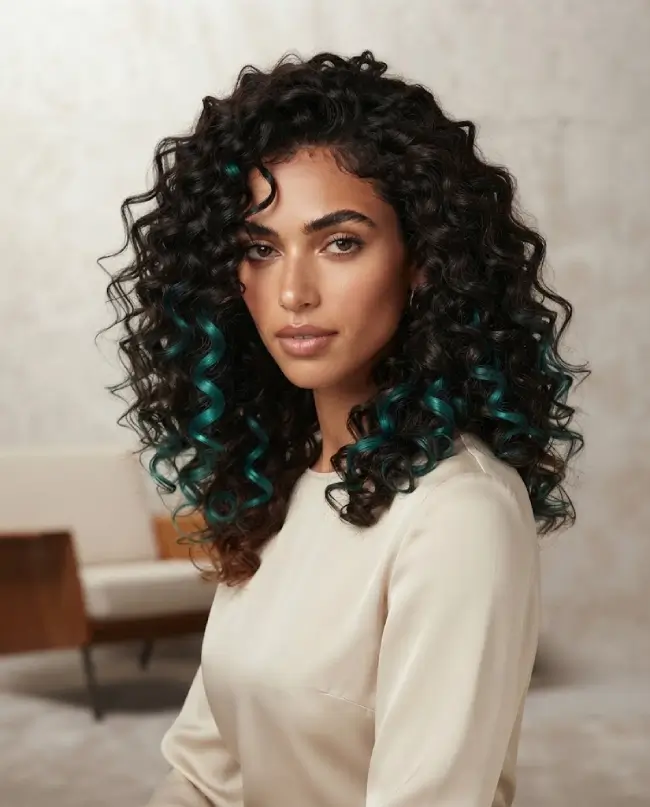
Teal combines blue and green, making it one of the more distinctive choices for a hidden curly underlayer. Against dark curls, teal can look especially striking because the darker outer hair provides a strong visual frame.
This shade is best suited to people who are comfortable with fashion color and willing to accept more visible maintenance. Brighter teal generally requires a sufficiently light base, and the final tone can shift as it fades.
The placement should be planned around the curl pattern. Layered curls can reveal teal at multiple levels, while a rounded dense shape can conceal much of the color until the hair moves.
Teal can also be positioned strategically for different lifestyles. A lower-back placement is easier to conceal at work, while side panels or a higher underlayer make the color more visible in everyday styling.
Ask your stylist for a rich teal underlayer with the top curls left close to your natural color. If you want a greener teal or a bluer teal, say so specifically.
Best for: Bold fashion-color lovers and dark curly hair.
Maintenance: High compared with natural-looking brown or auburn peekaboo shades.
13. Ash Brown Peekaboo Curls
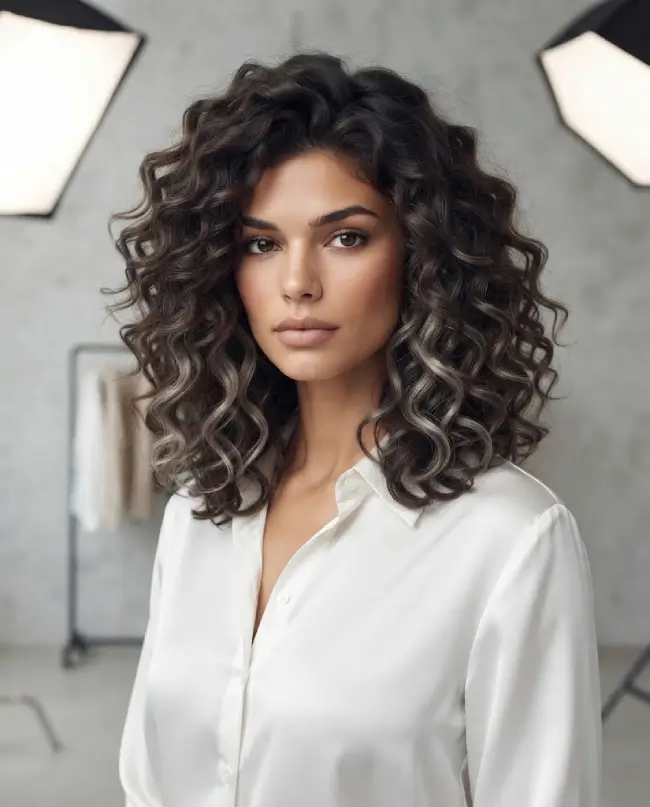
Ash brown peekaboo curls are the understated option in this collection. Instead of creating a dramatic color contrast, the cool brown underlayer adds tonal depth beneath a darker brunette base.
This is especially useful if you want the peekaboo technique but do not necessarily want people to immediately notice that your hair has been colored. The effect becomes clearer in movement and natural light.
Fine curls can benefit from subtle tonal variation because the color can make the shape easier to distinguish without relying on bright contrast. Thick curls can use broader ash-brown sections while maintaining a relatively natural appearance.
Ash brown can work with a variety of face shapes because it does not create a strong focal point around the face unless the color is deliberately brought forward.
Tell your stylist “I want a cool ash-brown underlayer that is only slightly lighter than my top layer.” If your hair naturally pulls warm, ask how the stylist plans to keep the finished brown from becoming overly orange. Looking for flattering undertone combinations? Explore these bold spring hair colors for warm skin tones.
Best for: Subtle color, brunettes, and conservative workplaces.
Maintenance: Low to moderate.
14. Red Peekaboo Curls
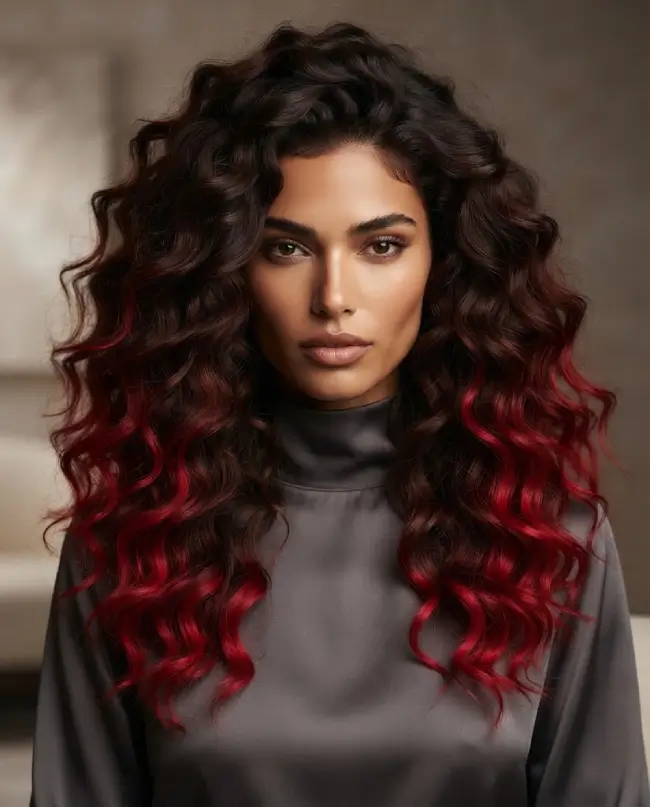
Red peekaboo curls are the high-impact warm option. Bright red underneath dark curls creates a noticeable flash whenever the curls separate, making the color especially effective on dense, layered, or long hair.
Unlike burgundy, which can remain deep and muted, vivid red is designed to be seen. That means placement becomes important. A lower underlayer creates a more controlled effect, while red panels around the sides and front can make the color much more prominent.
The shade can also be customized from true red to cherry, scarlet, or red-orange. Bring a reference image because these differences are significant.
Curly hair needs careful handling if lightening is required. Ask about the current condition of your curls before pursuing a very bright red.
For everyday practicality, a lower red underlayer can remain relatively discreet when your hair is worn down but become dramatic in a ponytail or half-up style.
A good salon request is: “I want a saturated red underlayer that stays hidden when my curls are down but shows clearly when they move.”
Best for: Bold color lovers, thick curls, and statement-making styles.
Maintenance: Moderate to high.
15. Multi-Tone Peekaboo Curls
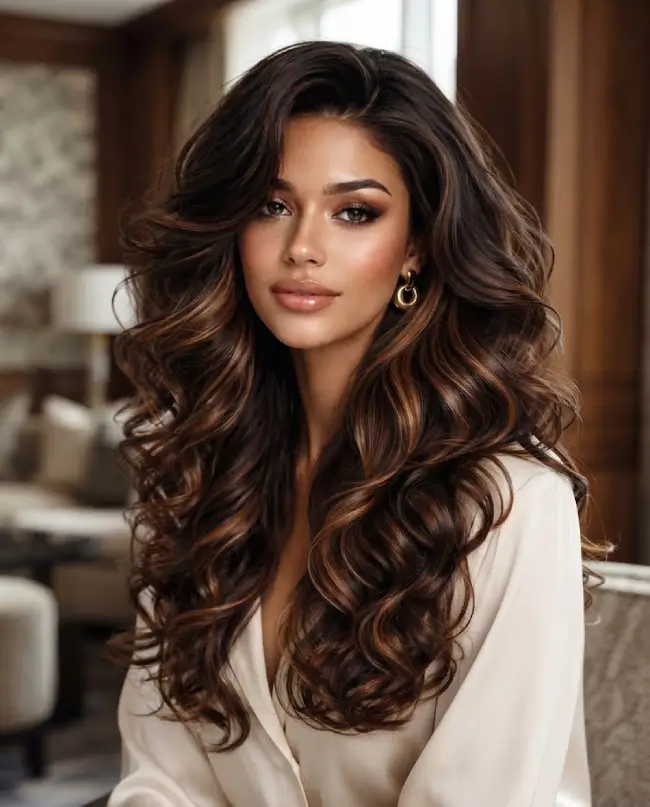
Multi-tone peekaboo curls combine several related shades underneath the outer layer. The reference example uses caramel, auburn, and honey blonde, creating dimension without relying on one uniform color.
The key to making this work is choosing colors that belong to a coherent palette. Three completely unrelated shades can make the underlayer look busy, while neighboring tones can create depth and movement.
Warm combinations such as caramel, honey, copper, and auburn are especially easy to blend visually. Cool combinations might use ash brown, violet, blue, and teal. You can also create a high-contrast palette, but the placement needs to be more deliberate.
This technique suits dense curls particularly well because the texture naturally separates the shades. Fine curls may need fewer colors and larger, cleaner sections so the result does not become visually muddled.
For a salon appointment, bring a palette rather than a single photo and explain which shade should dominate. Ask for a multi-tone peekaboo underlayer using three related colors, with the brightest tone concentrated where you want the most attention.
Best for: Creative color enthusiasts who want dimension rather than one hidden shade.
Maintenance: High because several colors need to remain balanced as they fade.
How to Choose the Right Peekaboo Color for Curly Hair
The easiest way to narrow the options is to decide how visible you want the color to be.
For subtle color
Choose:
- Ash brown
- Auburn
- Honey blonde
- Caramel
These shades can create dimension without making the color the dominant feature.
For warm contrast
Choose:
- Copper
- Ginger
- Burgundy
- Red
These shades add noticeable warmth and work particularly well beneath dark curls.
For cool contrast
Choose:
- Purple
- Blue
- Teal
These give the hairstyle a more fashion-forward direction.
For soft fashion color
Choose:
- Pink
- Rose gold
These can be adapted from muted to bright depending on the base and desired finish.
For maximum contrast
Choose:
- Platinum blonde
- Bright red
- Bright teal
- Multi-tone color
These require more planning and generally create more visible maintenance.
Peekaboo Color Placement: Where Should the Color Go?
The lower back section is the most discreet placement. Most of the color stays hidden when your curls are worn down, but it becomes visible in ponytails, buns, and updos.
The lower sides create more movement. As curls shift around the shoulders, colored sections appear and disappear naturally.
The front underneath layer is much more noticeable. It can frame the face and make the color part of your everyday appearance.
A full underlayer creates the strongest peekaboo effect. This can be beautiful on thick curls but may become quite visible when the hair is tied back.
The right placement depends on your lifestyle. Someone who wants color that can be concealed at work may prefer the back. Someone who wants the color visible every day may prefer the sides and front.
Peekaboo Hair by Curl Type and Density
Fine or Low-Density Curls
Fine curls can wear peekaboo color beautifully, but placement should be strategic. Because there is less hair covering the underlayer, a large colored section may show more than expected.
Smaller panels can create the desired surprise without making the style look divided into obvious blocks. Subtle shades such as caramel, auburn, ash brown, or honey can also produce dimension without requiring extreme contrast.
If significant bleaching is needed, discuss the condition of your hair first. Color placement should never be planned independently of the hair’s ability to tolerate the process.
For styling, lightweight curl products can preserve movement so the color continues to peek through rather than becoming weighed down.
Thick or High-Density Curls
Thick curls are excellent for peekaboo placement because the upper layers can conceal substantial amounts of color. You have more flexibility with bold shades, wider panels, and multi-tone designs.
However, dense hair can also require more time during coloring because there is simply more hair to section and process. If the underlayer is very large, maintenance can become closer to an all-over color appointment than a simple accent.
Layering can help reveal the color naturally. Ask your stylist to place the colored sections according to how your curls fall rather than using a perfectly straight horizontal division.
Wavy-Curly Hair
Wavy-curly hair can produce a softer peekaboo effect because the texture sits between defined curls and loose movement. This works particularly well with balayage-like underlayers and warm colors such as caramel, honey, copper, and auburn.
Because the pattern is looser, more of the color may remain visible when the hair is down. Keep this in mind if you want the color to be genuinely hidden.
Tight Curls and Coily Textures
Tighter curls can create a beautiful dimensional effect because the underlayer is revealed in small sections rather than large continuous panels. However, shrinkage can change where the color appears once the hair dries.
A stylist should consider the hair in its natural state when deciding placement. A section that looks low on stretched hair may sit considerably higher when the curls contract.
If extensive lightening is necessary, prioritize the condition of the hair. For a lower-commitment alternative, colored extensions, braiding hair, or a wig can create a similar visual effect without permanent color on the natural strands.
Peekaboo Hair for Different Face Shapes
Round Face
Placement can be used to control where the eye is drawn. Keeping most of the strongest color below the cheekbone area can create a more elongated visual flow, while bright front panels naturally emphasize the face.
A longer curly bob with a lower underlayer can be a softer choice than a very rounded short cut with bright color concentrated around the cheeks.
Oval Face
Oval proportions offer considerable flexibility. You can focus less on rules and more on the color and haircut you actually enjoy.
Front-facing peekaboo sections, full underlayers, or bold color around the sides can all work. The more important considerations are curl pattern, density, and maintenance.
Square Face
Soft curls already introduce movement around a stronger jawline. If you want to emphasize that softness, place the color through moving side sections rather than creating a hard horizontal line at the jaw.
A curly bob with caramel or auburn underneath can provide warmth without making the haircut look overly graphic.
Heart-Shaped Face
For a heart-shaped face, consider where the colored sections sit relative to the forehead and chin. A lower underlayer can bring more visual interest toward the lower half of the hairstyle.
If you love face-framing color, use smaller sections rather than broad panels so the result remains integrated with the curls.
Long Face
Width and movement can be more important than color itself. Fuller curls around the sides can create a different visual balance from long, narrow curls.
Peekaboo sections placed through the sides can become more noticeable when the curls expand outward. A soft, layered shape can complement this approach.
Diamond Face
A diamond-shaped face can work with both subtle and vivid peekaboo color. Consider where your curls naturally have the most volume and decide whether you want the color to reinforce or contrast with that area.
A multi-tone underlayer can be particularly effective when the colors are distributed rather than concentrated in one large block.
Low-Maintenance Curly Peekaboo Color Options
Not every peekaboo style is automatically low maintenance.
The easiest options tend to be:
Ash brown: Usually requires the least dramatic color change when applied over a suitable brunette base.
Auburn: Can be relatively manageable when the desired tone is close to the existing base.
Caramel: Moderate maintenance, especially when the hair needs lightening.
Honey blonde: More processing may be required on darker hair.
Deep burgundy: Often easier to maintain than pastel shades, although fading still occurs.
Platinum: High maintenance because the underlying hair needs to stay very light.
Pastel pink or rose gold: Higher maintenance because pale shades generally need a very light base and can shift quickly.
Teal and bright blue: More demanding when a bright, clean result is desired.
A natural or darker top layer is one of the biggest advantages of peekaboo color because root regrowth is not immediately visible throughout the entire hairstyle.
Can You Tie Curly Peekaboo Hair Back?
Yes, provided your hair is long enough.
A ponytail can reveal the underlayer dramatically because the upper hair gathers and exposes the colored sections. A low ponytail creates a softer reveal, while a high ponytail can expose more of the lower sides.
A bun works similarly. Twisting the hair can make multiple colored sections appear through the hairstyle.
Half-up styles are particularly useful because they allow you to control exactly how much color is visible. This is one reason peekaboo color works well for people who want a hairstyle that can look relatively conservative one day and more colorful the next.
Short curly bobs may have limited tie-back ability. In that case, the placement should be designed around how the hair actually falls rather than assuming you will use a ponytail to reveal the color.
Peekaboo vs. Traditional Highlights
Traditional highlights usually place lighter or brighter strands throughout the visible upper layers of the hairstyle. Peekaboo color intentionally hides much of the color underneath.
Choose traditional highlights when you want color to be visible consistently.
Choose peekaboo color when you want the ability to control how much color appears.
Peekaboo can also be more visually dramatic because the contrast is concentrated. A few vivid panels underneath dark curls can create a stronger surprise than many subtle highlights.
For someone concerned about workplace styling, peekaboo may offer more flexibility. You can wear the curls down for a subdued appearance and reveal the color with a half-up style later.
Peekaboo vs. Money Pieces
Money pieces sit around the front of the face, so they are designed to be seen. Peekaboo color is generally positioned underneath the top layer and can remain hidden.
Choose money pieces when you want color framing the face. For statement sunny tones and vibrant peekaboo highlights, check out these bold yellow hair color ideas.
Choose peekaboo when you want the color to appear through movement.
You can also combine the techniques, but doing so increases the overall visibility and maintenance of the color.
What to Tell Your Hairstylist
A good consultation should describe the base color, the hidden color, the placement, and how visible you want the result.
For subtle caramel:
“I want caramel underneath my dark curls, mostly through the lower layers. I want it to show when my curls move but remain fairly subtle when my hair is down.”
For bold red:
“Keep the top layer dark and natural-looking, but make the underlayer a saturated red that becomes obvious when I wear my curls up.”
For platinum:
“I want a high-contrast platinum underlayer underneath my dark curls. Please assess whether my hair can safely reach the required lightness before we decide on the final shade.”
For multi-tone:
“I want three warm colors underneath—caramel, auburn, and honey blonde—with the brightest shade placed where my curls naturally open up.”
It also helps to describe your usual styling routine. If you wear your curls down most days, placement should be designed for that. If you regularly wear ponytails, buns, claw clips, or half-up styles, the stylist can place the color so those hairstyles reveal it intentionally.
How to Maintain Curly Peekaboo Hair
Color maintenance begins with the condition of the curls. If the underlayer was lightened, those sections may need more careful conditioning and handling than untreated hair.
A practical routine includes:
- Washing according to your scalp and curl needs rather than excessively.
- Using products compatible with color-treated hair when appropriate.
- Limiting unnecessary heat styling.
- Using heat protection whenever heat is used.
- Detangling gently, especially when the hair is wet.
- Keeping the curl pattern defined so the color remains visible.
- Scheduling color refreshes based on fading rather than an arbitrary calendar.
- Trimming when the ends become difficult to manage.
The hidden placement helps with grow-out, but it does not prevent the colored hair itself from fading. Bright reds, pinks, purples, blues, teals, and pastels may require more frequent refreshing than deeper brown-based tones.
Frequently Asked Questions
What is peekaboo hair color?
Peekaboo hair color places a contrasting shade underneath the upper layer of hair. With curls, the hidden color appears naturally as the curls move, separate, or are styled up.
Is peekaboo color good for curly hair?
Yes. Curl movement can make the hidden color appear in scattered, dimensional sections. The main consideration is choosing placement that works with the natural curl pattern and accounting for shrinkage.
What is the best peekaboo color for dark curly hair?
There is no single best shade. Honey blonde, caramel, copper, burgundy, red, purple, blue, and teal can all work. The right choice depends on how much contrast and maintenance you want.
Is curly peekaboo hair high maintenance?
It depends on the color. Ash brown and auburn can be relatively manageable, while platinum, pastel pink, bright teal, and other vivid shades usually require more preparation and refreshing.
Does peekaboo color damage curly hair?
The technique itself does not determine damage. The amount of lightening and the condition of the hair matter more. A hidden section still needs to be treated carefully if it has been chemically lightened.
Can I get peekaboo color without bleaching?
Sometimes, depending on your starting color and the desired shade. Deeper reds, burgundies, browns, and some darker fashion colors may require less lightening than pale blonde, pastel, or bright colors.
Can peekaboo hair be hidden at work?
Often, yes. A lower underlayer can remain relatively discreet when the hair is worn down. However, visibility depends on the haircut, curl density, placement, and chosen color.
How long does curly peekaboo color last?
There is no single timeline because fading depends on the color formula, starting hair, washing routine, lightening, and maintenance. Vivid and pastel shades generally need more refreshing than deeper tones.
Should peekaboo color go underneath or around the face?
Underneath is more discreet. Bringing the color around the sides or front makes it more visible. Choose the placement based on how much attention you want the color to receive.
Is peekaboo color better than full-head color?
For someone who wants experimentation with less visible commitment, it can be. A full-head color creates a completely different maintenance routine, while peekaboo keeps much of the natural base intact.
What is the easiest curly peekaboo color to start with?
Auburn, ash brown, caramel, or honey blonde can be good starting points when they are reasonably close to your existing color. A small underlayer is also easier to test than coloring a large section.
Final Takeaway
Curly peekaboo hair color works because it gives you control. You decide how much color is visible, where it appears, how dramatic the contrast is, and whether the hairstyle can look relatively natural when the color is hidden.
For a softer transformation, ash brown, auburn, caramel, or honey blonde are strong choices. For warmth, look toward copper, ginger, burgundy, or red. If you prefer cool tones, purple, blue, and teal create a stronger fashion direction. Pink and rose gold add a softer playful element, while platinum and multi-tone color offer the biggest visual statement.
The most important part is designing the underlayer around your actual curls—not around how straight hair looks in a reference photo. Curl shrinkage, density, layering, and your normal styling habits all affect where the color will appear.
A well-planned peekaboo section should feel intentional when your curls are down and even more interesting when you move, clip, braid, or tie them up.