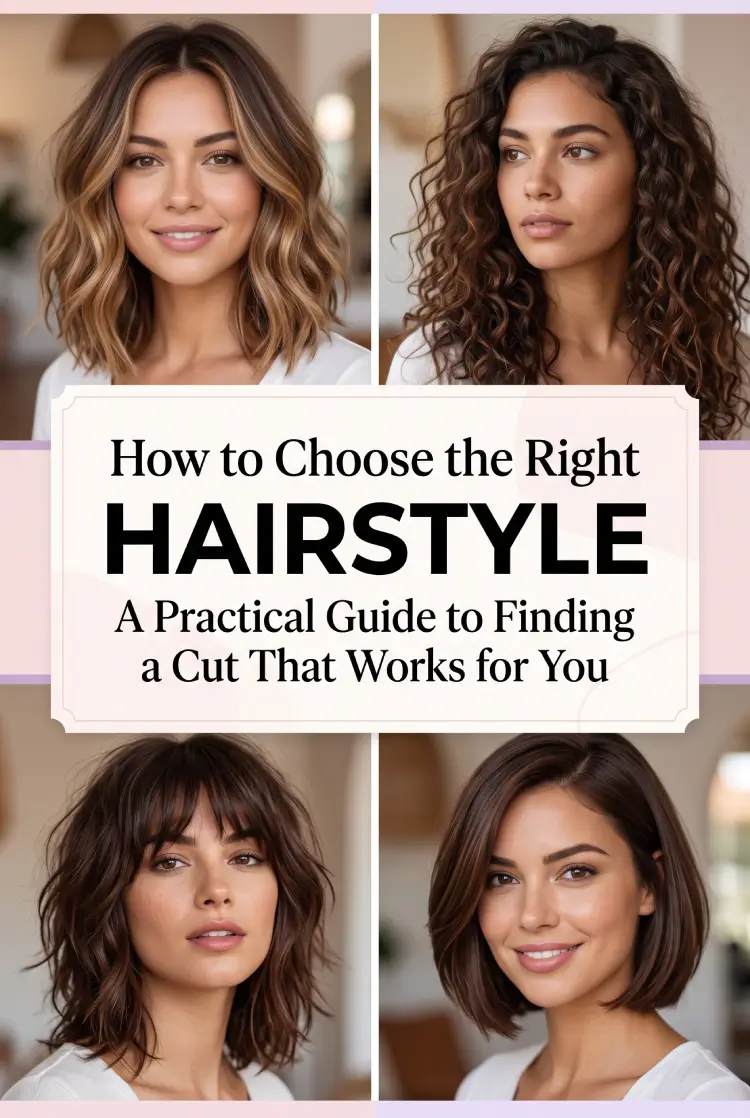
Choosing a hairstyle is easy when you are only asking, “What looks pretty?” It becomes much harder when the real question is, “Will this haircut actually work with my hair, face, routine, and lifestyle?” For related styling inspiration, explore short hairstyles for women.
A haircut that looks fantastic in a Pinterest photo may behave completely differently on fine straight hair, dense curls, or a naturally wavy texture. A short bob may look wonderfully simple but require more frequent trims than a longer layered cut. Bangs may transform the way a haircut frames the face while also becoming the part of the style that demands the most daily attention.
The better approach is to treat a hairstyle as a decision rather than a trend.
The right haircut should make sense for your hair length, natural texture, density, face shape, styling habits, maintenance tolerance, lifestyle, and personal preferences. Face shape can help guide proportions, but it should not be treated as a rigid set of rules. Current hairstyle guidance increasingly emphasizes combining facial proportions with texture, lifestyle, and the amount of work a person is realistically willing to do.
This guide walks through that process step by step so you can narrow hundreds of haircut ideas down to a few realistic options before you sit in the salon chair.
How Do I Choose a Hairstyle That Suits Me?
Start with your real hair, not your inspiration photo.
Before choosing a haircut, work through these questions:
- How much length do I actually want? Short, medium, or long?
- What does my hair naturally do? Straight, wavy, curly, or coily?
- How fine, medium, or dense is my hair?
- Where does my hair naturally have volume, movement, or bulk?
- What proportions of my face would I like the haircut to emphasize or balance?
- How much styling am I willing to do on an ordinary morning?
- How often am I willing to return for trims?
- Do I need to tie my hair back?
- Can I live with the grow-out phase?
- Will I actually wear the haircut in my natural texture?
If you can answer those questions honestly, your shortlist becomes much smaller—and much more useful.
The goal is not to find a haircut that is supposedly “perfect” for your face shape. It is to find a haircut whose shape, length, texture, and maintenance requirements match the person who will actually wear it.
The 5-Minute Hairstyle Decision Checklist
If you are short on time, use this quick filter before saving another haircut photo.
Your length
Choose the general category first:
- Short: pixie, bixie, cropped cuts, short bob
- Medium: bob, lob, shoulder-length cuts, medium layers
- Long: long layers, one-length cuts, long shag shapes, long face-framing cuts
Your natural hair
Identify whether your hair is:
- Straight
- Wavy
- Curly
- Coily
Then separately consider whether it is:
- Fine
- Medium
- Thick or dense
These are different characteristics. More on that distinction below.
Your maintenance tolerance
Ask yourself:
- Do I want to air-dry most days?
- Do I enjoy blow-drying?
- Will I use a curling iron or straightener?
- Am I willing to style bangs?
- Am I comfortable using mousse, cream, gel, spray, or other products?
- How often will I realistically book a trim?
Your practical requirements
Consider:
- Can I tie my hair back?
- Do I exercise frequently?
- Do I wear helmets or hats?
- Do I need hair away from my face at work?
- Do I travel often?
- Do I want a haircut that survives rushed mornings?
Your inspiration
Keep only photos that resemble your:
- Hair texture
- Hair density
- Desired length
- Face proportions
- Styling habits
Then narrow your collection to three to five realistic haircut directions.
That is enough inspiration for a useful stylist consultation.
Start With the Length You Actually Want
Length is one of the biggest decisions because it affects styling options, maintenance, grow-out, and how much weight your hair carries.
Do not begin with “Which haircut suits my face?” if you already know that you do not want short hair. Start with the boundaries you are comfortable with.
Short Hair: More Shape, Less Length
Short hair can include pixies, bixies, cropped cuts, short shags, French bobs, jaw-length bobs, and other cuts that sit above or around the chin.
A short haircut can make the haircut itself the main visual feature. That can be useful if you like a defined shape or want to reduce the physical amount of hair you have to wash and dry.
But short does not automatically mean low maintenance.
A very structured short haircut can require regular trimming because small changes in length can alter its silhouette. Shorter hair also gives you fewer options for ponytails, buns, or simply putting the hair out of your face.
Short may suit you if:
- You enjoy wearing your hair down.
- You like a clearly defined haircut shape.
- You do not mind more noticeable grow-out.
- You are comfortable losing the ability to tie most or all of your hair back.
- You want less length to wash and dry.
Think twice if:
- You rely on ponytails every day.
- You dislike frequent salon visits.
- You want to hide your hair under a bun when busy.
- You are choosing short hair only because it looks low-effort in a photograph.
Medium Hair: The Flexible Middle Ground
Balanced medium-length hairstyles for women offer exceptional styling versatility hair typically gives you more styling flexibility than a short cut while avoiding some of the weight and drying time associated with very long hair.
A shoulder-length or slightly longer cut can often be worn down, clipped back, placed into a ponytail, or adapted into waves and other styles.
Medium hair is especially useful if you are undecided between short and long. A lob, shoulder-length layered cut, or collarbone-length style can let you change the silhouette without committing to a dramatic crop.
Medium may suit you if:
- You want versatility.
- You occasionally tie your hair back.
- You like both polished and casual styling.
- You want enough length for different hairstyles.
- You want a transition point between short and long.
Its trade-off is that medium hair can still require styling, especially if the haircut contains layers, bangs, or a deliberately shaped finish.
Long Hair: Maximum Length, Maximum Weight
Long hair offers the widest range of styling possibilities. Ponytails, buns, braids, half-up styles, waves, curls, and updos become easier when enough length is available.
But long hair can also take more time to wash, dry, detangle, and style. Dense hair may become physically heavy, while fine hair may not necessarily look fuller simply because it is long.
Long hair also changes how layers behave. Removing too much weight can produce a completely different shape from the one you imagined.
Long may suit you if:
- You regularly wear ponytails or buns.
- You enjoy styling your hair.
- You want maximum versatility.
- You are willing to spend more time washing and drying.
- You like the visual weight of longer hair.
The important question is not whether long hair is “better.” It is whether the benefits of the length are worth the additional time and weight for your routine.
Match the Haircut to Your Natural Hair Type
One of the most common hairstyle-selection mistakes is treating every head of hair as though it behaves the same way.
It does not.
Straight, wavy, curly, and coily hair can respond very differently to the same haircut. Texture changes how layers fall, how much a haircut expands, how much shrinkage occurs, and whether a shape remains recognizable without heat styling.
Straight Hair
Straight hair often shows the outline of a haircut very clearly.
That can make blunt bobs, clean one-length shapes, structured layers, and sharply defined perimeter lines especially noticeable. But straight hair can also expose unevenness or unwanted bulk more readily.
If your straight hair is fine, too many layers can sometimes reduce the visual weight at the ends. If it is thick or dense, shaping may be useful to control heaviness.
Before choosing a heavily layered haircut, ask:
Do I want the layers to be visible every day, or only when I style my hair?
That answer can change the best version of the cut.
Wavy Hair
Wavy hair has natural movement, so the haircut needs to cooperate with that movement rather than constantly fight it.
A layered shape can help waves form more naturally, but the amount and placement of layers matter. Removing too much weight may increase expansion, while keeping everything one length may leave dense waves feeling heavy.
If you normally air-dry, look specifically for reference photos showing hair that appears naturally wavy rather than professionally blow-dried.
Curly Hair
Curly hair requires a different way of thinking about length.
The hair’s wet length and dry length can be noticeably different because of curl contraction. A stylist needs to understand how the curl pattern behaves when the hair dries rather than relying only on what the hair looks like while wet.
Layers can help distribute weight and allow curls to form with more movement, but the ideal shape depends on curl pattern, density, and how the wearer styles the curls.
If you bring a curly haircut reference, ask:
- How will this shape look at my natural curl length?
- Where will my curls sit when dry?
- Will the layers create the amount of volume I want?
- Can I maintain this shape without straightening?
Coily Hair
Coily hair can have significant shrinkage, density, and volume, so the visible length of the finished haircut may be very different from its stretched length.
Shape, moisture routine, shrinkage, curl pattern, and styling method all matter.
Rather than asking a stylist to reproduce a photograph exactly, explain the shape you want and how you normally wear your hair. A reference showing similar density and curl characteristics will usually communicate more than a photograph of a completely different hair type.
Hair Type, Texture, and Density Are Not the Same Thing
These terms are often mixed together, but they describe different things.
Hair Type
In this guide, hair type refers primarily to the broad natural pattern:
- Straight
- Wavy
- Curly
- Coily
Hair Texture
Texture commonly describes the feel and diameter of individual strands, such as:
- Fine
- Medium
- Coarse
Texture affects how easily the hair holds shape, how much weight it can visually carry, and how different cutting techniques may appear.
Hair Density
Density refers to how much hair you have overall.
Two people can both have fine strands but completely different density. One may have relatively sparse-looking hair, while another may have many fine strands and appear quite full.
That distinction matters enormously when choosing layers.
Fine Hair
If your strands are fine and you want the appearance of fuller ends, a haircut with a strong perimeter or strategically placed layers may be more useful than removing large amounts of weight.
Very aggressive layering can make the ends appear lighter if there is not much density to support them.
That does not mean fine hair should never have layers. It means the placement and amount of layering matter.
Medium-Density Hair
Medium-density hair gives a stylist a broad range of options. The goal is usually to decide how much movement, weight, and structure you want rather than simply trying to add or remove bulk.
Thick or Dense Hair
Dense hair may carry substantial visual and physical weight.
Layering, graduation, internal shaping, or other weight-distribution techniques may help create movement without simply shortening everything.
If you dislike bulk, do not just ask for “lots of layers.” Explain where the hair feels too heavy and what kind of silhouette you want.
A stylist may choose a different cutting strategy depending on whether you want to preserve fullness at the ends, create movement through the interior, or reduce heaviness around particular areas.
Use Face Shape as a Guide, Not a Rule
Face shape is useful, but it should never be the only filter.
Current hairstyle guides commonly distinguish shapes such as oval, round, square, heart, long or oblong, and diamond. The useful part is not memorizing a list of “approved” haircuts. It is understanding how length, width, volume, layers, bangs, parting, and face-framing can change visual balance.
Think of face shape as a map.
Oval Face Shape
Oval faces tend to have relatively balanced length and width, with a softly rounded jaw.
This shape offers considerable flexibility. Long layers, bobs, waves, pixies, side-swept bangs, and many other silhouettes can work.
The more useful question is what you want the haircut to emphasize.
For example:
- Want to highlight cheekbones? Consider face-framing that opens around the cheek area.
- Want a softer appearance? Consider movement and rounded layering.
- Want a sharper look? A structured bob or clean perimeter can create more definition.
You do not need to avoid a style simply because it does not appear on a traditional “oval face” chart.
Round Face Shape
A round face often has similar width and length with softer facial contours.
Instead of automatically deciding that long hair is required, look at where the haircut creates width and where it creates length.
Potentially useful characteristics include:
- Vertical movement
- Longer face-framing pieces
- Strategic crown volume
- Diagonal or side-swept fringe
- Bobs that do not place all the visual weight at the widest part of the cheeks
A short haircut can absolutely work. The important issue is its shape, not simply the number of inches.
Square Face Shape
Square faces often have a stronger jawline and relatively broad forehead.
If you want to soften that structure, movement can help:
- Soft layers
- Loose waves
- Side-swept fringe
- Face-framing pieces
- Rounded or less rigid lines
If you love blunt geometry, you do not have to avoid it. A strong jaw can also be an attractive feature to emphasize. The decision depends on whether you want the haircut to soften, balance, or highlight your natural angles.
Heart Face Shape
Heart-shaped faces often have a wider forehead and narrower chin.
Haircuts that introduce visual weight around the lower half of the face can help create balance, depending on the individual.
Possibilities include:
- Chin-length or slightly longer bobs
- Layered lobs
- Side-swept bangs
- Soft waves around the jaw
- Face-framing that does not place all the volume at the crown
Again, these are starting points rather than restrictions.
Long or Oblong Face Shape
A long face generally has more vertical length relative to width.
The useful question becomes: Do you want the hairstyle to add visual width or emphasize the length?
If you want more balance, consider:
- Soft waves
- Side volume
- Fuller bobs
- Bangs or fringe
- Layers that create movement around the sides
A very long, flat hairstyle can emphasize vertical length, while volume and horizontal movement can create a different proportion.
Diamond Face Shape
Diamond faces commonly have prominent cheekbones with narrower forehead and jaw areas.
You can use the haircut to decide where visual width should sit.
Potentially useful characteristics include:
- Side-swept fringe
- Soft face-framing
- Layers positioned away from the widest part of the cheekbones
- Chin-area movement
- Bobs or medium-length shapes that balance the upper and lower portions of the face
The goal is not to hide your cheekbones. It is to decide whether you want to emphasize them or create a softer transition around them.
The Better Face-Shape Question
Instead of asking:
“What haircut is allowed for my face shape?”
Ask:
“What do I want this haircut to do to my proportions?”
Do you want:
- More width?
- More length?
- Less volume around the cheeks?
- More movement near the jaw?
- A softer frame?
- More definition?
- Your cheekbones emphasized?
- Your jawline softened?
That question produces more useful answers than a rigid face-shape chart.
Decide How Much Styling You Are Willing to Do
This is where many haircut decisions fail.
People often choose a haircut based on how it looks after a professional blowout rather than how it will look at 7:30 on a weekday morning.
Be honest about your routine.
If You Prefer to Air-Dry
Choose a haircut designed to work with your natural texture.
That may mean:
- Fewer styling-dependent layers
- A shape that accommodates natural movement
- A fringe that does not require constant straightening
- A cut that still looks intentional without a round brush
Ask your stylist to explain how the haircut will look when air-dried.
If You Enjoy Heat Styling
You have more flexibility.
You can consider haircuts whose shape changes significantly depending on whether the hair is:
- Straightened
- Blow-dried
- Curled
- Volumized
But make sure you are genuinely willing to perform that routine.
A haircut that requires a 30-minute styling process is not low-maintenance just because washing it takes less time.
If You Want Minimal Product
Avoid choosing a hairstyle that depends on product for its definition.
For example, some highly textured looks may rely on styling cream, mousse, gel, spray, or other products to create the intended shape.
That does not make the hairstyle bad. It simply changes its maintenance level.
If You Love Styling
You can prioritize shape versatility.
You might deliberately choose enough length for:
- Ponytails
- Buns
- Braids
- Waves
- Curls
- Half-up styles
Your ideal haircut may be different from someone who wants to wash, air-dry, and leave the house.
Maintenance Reality Check
Maintenance should be treated as part of the haircut itself.
A haircut is not just the shape you receive on appointment day. It is the shape you will maintain for weeks or months afterward.
Low-Maintenance Haircuts
A low-maintenance haircut generally means the style does not demand much daily manipulation or highly frequent precision work.
Look for:
- A shape compatible with your natural texture
- Flexible grow-out
- Minimal styling requirements
- No fringe if you do not want to manage fringe
- A cut that still looks intentional when slightly grown out
Low maintenance does not mean zero maintenance.
Medium-Maintenance Haircuts
Medium-maintenance cuts may require occasional styling or regular attention but do not necessarily demand a detailed routine every day.
Examples might include:
- Layered medium cuts
- Some lobs
- Soft Graceful long layered haircuts with curtain bangs frame the face beautifully
- Textured bobs
- Shape-focused cuts that benefit from occasional styling
The exact maintenance level depends on your hair and the way the cut is designed.
High-Maintenance Haircuts
A haircut becomes more demanding when it depends on precision, frequent trimming, daily styling, or several products and tools.
Potential examples include:
- Very short structured cuts
- Precision bobs
- Short fringe
- Highly defined layered shapes
- Styles designed to look polished only after heat styling
There is nothing wrong with choosing a high-maintenance haircut.
The mistake is choosing one while believing it will behave like a low-maintenance haircut.
Think About Grow-Out Before You Cut
Ask not only:
“How will this haircut look today?”
Also ask:
“How will it look six weeks from now?”
Grow-out can be especially noticeable with:
- Short pixies
- Micro bangs
- Blunt bobs
- Strong geometric shapes
- Highly precise layers
A softer haircut may tolerate growth more gracefully.
If you dislike frequent salon appointments, tell your stylist before the cut begins. They can help you choose a shape where a little extra length does not completely change the silhouette.
Match the Hairstyle to Your Lifestyle
Your lifestyle does not determine what you are “allowed” to wear. It determines what will be practical.
If You Are a Busy Professional
Consider how your hair needs to behave on mornings when you have little time.
You may prefer:
- Easy-to-style lengths
- Haircuts that work with your natural texture
- Flexible face-framing
- A length that can be clipped back
- Softer grow-out
If your workplace requires hair to be secured, make sure the cut still gives you enough length for that.
If You Are a Student
You may want versatility because your schedule changes.
A medium or longer cut can provide options for:
- Quick ponytails
- Casual buns
- Braids
- Natural texture
- More polished styling when desired
That does not mean students should avoid short hair. It simply means you should consider how much flexibility you need.
If You Exercise Frequently
Think about:
- Whether you need your hair off your face
- Whether you wash frequently
- Whether you wear it tied back
- Whether sweat and humidity change your texture
- Whether you wear helmets or headwear
A beautiful haircut that cannot be secured comfortably may become frustrating very quickly.
If You Travel Frequently
Travel often rewards versatility.
Consider whether the haircut:
- Looks good without salon-level styling
- Can be air-dried
- Can be clipped back
- Works with limited products
- Can tolerate different weather conditions
If You Rarely Style Your Hair
This should strongly influence your haircut.
Your natural texture should be one of the first things you discuss with your stylist.
If you rarely use heat, do not choose a haircut whose reference photos all depend on blowouts.
Make Sure the Reference Photo Matches Your Real Hair
A reference photo is useful evidence, not a guarantee.
Two people can have the same haircut name and still get very different results because of:
- Hair density
- Strand thickness
- Curl pattern
- Natural volume
- Hairline
- Cowlicks
- Growth direction
- Styling products
- Blow-drying
- Flat ironing
- Curling
- Lighting
- Camera angle
This is why “Can I have this exact haircut?” is often less useful than:
“What elements of this haircut can work with my hair?”
For example, perhaps you love the movement of a layered cut but your hair is much finer than the model’s. Your stylist may adjust the number, length, or placement of layers rather than simply copying the photograph.
A current hairstyle guide similarly emphasizes that inspiration should be personalized to texture, face shape, lifestyle, and the individual’s styling routine rather than copied literally.
How to Choose Better Reference Photos
Before your appointment, look for photographs that resemble your actual hair.
Compare the Texture
A photo of straight hair is a weak reference if you have tightly coiled hair and intend to wear it naturally.
Likewise, a heavily curled image may not accurately show how a haircut behaves on naturally straight hair.
Compare Density
Look for someone with a similar amount of hair.
Dense hair can create fullness that fine hair cannot reproduce without styling. Fine hair can also create a different silhouette even when the cut is technically the same.
Compare Length
A reference photo can be deceptive if the model’s hair is significantly longer than yours.
Pay attention to where the haircut actually sits:
- Jaw
- Chin
- Neck
- Shoulders
- Collarbone
- Chest
- Mid-back
Compare Styling Level
If you want an air-dried haircut, collect air-dried examples.
If you are willing to blow-dry and style it daily, you can use more polished examples.
Bring More Than One View
Ideally, save references showing:
- Front
- Side
- Back
One front-facing Pinterest image may hide how the haircut is constructed around the sides and back.
Your stylist needs to understand the shape from more than one angle.
Build a 3–5 Hairstyle Shortlist
Do not walk into a salon with 47 screenshots.
You want enough references to communicate your taste without creating confusion.
Step 1: Choose Your Length
Decide whether you are considering:
- Short
- Medium
- Long
If you are flexible, choose two categories.
Step 2: Identify Your Natural Texture
Write down what your hair does without heat styling.
Step 3: Consider Density
Ask:
- Does my hair feel sparse?
- Does it feel average?
- Does it feel very full?
- Where does it become bulky?
Step 4: Identify Your Face-Shape Considerations
Do not obsess over an exact label.
Instead, identify your strongest proportions:
- Longer face
- Wider cheeks
- Strong jaw
- Wider forehead
- Prominent cheekbones
- Narrow chin
Step 5: Choose Your Maintenance Level
Pick:
- Low
- Medium
- High
Then be honest.
Step 6: Save 3–5 References
Choose photos that resemble your real hair.
Step 7: Remove the Unrealistic Options
Delete anything that requires:
- Daily styling you will not perform
- A length you do not want
- Texture you do not naturally have
- Maintenance you do not want
- A salon schedule you will not follow
Step 8: Take the Final Shortlist to Your Stylist
Ask which version is most realistic and what adjustments would make it work.
This turns Pinterest inspiration into a practical consultation.
If This Sounds Like You, Start Here
If You Want Minimal Daily Styling
Prioritize a haircut that works with your natural texture.
Look for:
- Easy grow-out
- Flexible layers
- Natural movement
- Minimal dependence on heat tools
Avoid choosing a style because it looks effortless in a professionally styled photograph.
If You Want Maximum Styling Flexibility
Keep enough length to create different looks.
Medium-to-long hair often gives you more options for:
- Ponytails
- Buns
- Braids
- Waves
- Curls
- Half-up styles
The exact best length depends on your density and styling preferences.
If You Have Fine Hair and Want More Visual Fullness
Think about preserving useful weight.
A very heavily layered haircut can sometimes make the ends appear less substantial.
Depending on your density and desired look, a stronger perimeter, carefully placed layers, or a shorter length may create a fuller-looking silhouette.
Discuss the result you want rather than simply requesting “more layers.”
If You Have Thick Hair and Dislike Bulk
Do not automatically ask for the shortest possible haircut.
The issue may be weight distribution rather than overall length.
Ask your stylist how the cut can:
- Remove unwanted bulk
- Preserve useful fullness
- Create movement
- Prevent the shape from becoming triangular or overly heavy
If You Have Curly or Coily Hair
Think about the haircut in its dry, natural state.
Discuss:
- Shrinkage
- Curl pattern
- Density
- Desired volume
- Styling method
- Dry length
- How frequently you refresh your curls
The reference should ideally resemble your natural curl behavior.
If You Wear Your Hair Up Every Day
Make tie-back ability a non-negotiable requirement.
Tell your stylist before choosing the length.
You may love a short haircut visually but dislike it practically if you cannot secure it during work, exercise, or errands.
If You Hate Frequent Salon Visits
Prioritize a shape with forgiving grow-out.
You may want to avoid extremely precise silhouettes or very short fringe if you know that visible growth will bother you.
A Practical Hairstyle Decision Guide
| Your Priority | What to Look For | What to Check First |
| Minimal daily styling | Shape compatible with natural texture | Air-dried reference photos |
| More visual fullness | Strategic weight and layering | Hair density and strand thickness |
| Less bulk | Thoughtful weight distribution | Where your hair feels heaviest |
| Easy ponytail | Sufficient length around the back | Your daily tie-back needs |
| Maximum styling options | Medium-to-long length | Whether you actually style it |
| Minimal trims | Forgiving shape and grow-out | How the haircut changes with length |
| Strong haircut shape | More structured perimeter or silhouette | Willingness to maintain it |
| Natural curls | Shape designed around curl pattern | Dry length and shrinkage |
| Soft face framing | Strategic layers or fringe | Where you want movement |
| More definition | Shape, angles, or controlled volume | Which facial features you want emphasized |
| Low product use | Natural-texture-friendly haircut | How the reference looks without product |
| Frequent workouts | Secureable, practical length | Ponytail or clip requirements |
| Frequent travel | Flexible, easy-to-style shape | Air-drying and product needs |
The table is a starting point, not a promise that one haircut characteristic will produce a specific result for every person.
Questions to Ask Your Hairstylist
A good consultation should be a conversation about your real hair, not just a request to copy an image.
Ask:
- Will this haircut work with my natural texture?
- How will it look without heat styling?
- How much styling will I realistically need?
- How often should I expect to trim it?
- How will this haircut grow out?
- Can I still tie my hair back?
- Where should the layers start?
- How much weight should be removed?
- Will this shape make my hair look fuller or flatter?
- Will my natural volume change the shape?
- What will this look like when my hair is air-dried?
- What happens if I decide not to style it every day?
- Which part of this reference photo is most realistic for my hair?
- Is there a lower-maintenance version of this haircut?
How to Explain What You Want
Instead of saying:
“I want exactly this.”
Try something more specific:
“I like the length and the movement around the face, but I normally air-dry my hair and I do not want to spend much time styling it. I also need to be able to tie it back. Can we create a version of this shape that works with my natural texture and has an easier grow-out?”
That gives your stylist actual information to work with.
What Not to Choose
Do Not Choose a Haircut Solely Because It Looks Good on a Celebrity
A celebrity haircut may involve a completely different:
- Hair density
- Texture
- Face shape
- Styling routine
- Professional styling schedule
Use celebrity photos for inspiration, not as proof that the same cut will behave identically on you.
Do Not Choose a Haircut Only Because It Is Trending
Trends can be useful for discovering new ideas, but popularity does not tell you whether the haircut matches your routine.
Ask:
Would I still want this haircut if it stopped trending tomorrow?
If yes, it is probably worth considering.
Do Not Trust One Highly Styled Photo
A photo may represent the haircut after:
- Blow-drying
- Curling
- Flat ironing
- Product application
- Professional finishing
Find additional photos or ask the stylist how the shape will behave naturally.
Do Not Confuse Hair Color With Haircut
Sometimes you love a photo because of its:
- Blonde tone
- Brunette shade
- Balayage
- Highlights
- Gloss
- Contrast
Separate the color from the cut.
Ask yourself:
If this photograph had my current hair color, would I still want the haircut?
Do Not Ignore Natural Texture
If you rarely straighten your hair, do not choose a haircut whose entire appeal depends on perfectly straight styling.
Likewise, if you normally wear your curls naturally, make sure your reference reflects that.
Do Not Ignore Maintenance
A haircut that requires more work than you are willing to give it is not the right haircut for your lifestyle, even if it looks fantastic on appointment day.
Do Not Assume Short Means Easy
Some short cuts are incredibly simple. Others require frequent trims and daily styling.
Length alone does not determine maintenance.
Do Not Assume Long Means Low Maintenance
Long hair may allow you to skip precision trims for a little longer, but it can require more time for washing, drying, detangling, and styling.
The Final Checklist Before You Book the Haircut
Before making the appointment, run through this list:
- I know approximately how much length I want to keep.
- I understand my natural hair pattern.
- I have considered my hair density.
- I know whether my strands are fine, medium, or coarse.
- I have considered my face proportions.
- I know how much daily styling I am willing to do.
- I know whether I need to tie my hair back.
- I have considered my workout, work, travel, or daily routine.
- I know how often I am willing to visit the salon.
- I have thought about the grow-out period.
- My reference photos resemble my actual hair.
- I have looked at the haircut from more than one angle.
- I have narrowed my options to three to five directions.
- I know what I like about each reference.
- I know what I do not like about each reference.
- I am prepared to tell my stylist how I normally style my hair.
If you can check most of these boxes, you are much more prepared than someone who simply walks into a salon with one saved photograph.
The Best Hairstyle Is the One You Can Actually Live With
There is no single haircut that universally suits a particular face shape, hair type, or age.
The most useful hairstyle decision comes from combining several pieces of information:
Your desired length + natural hair behavior + density + face proportions + styling habits + maintenance tolerance + lifestyle + personal taste.
Face shape can help you understand balance. Hair texture tells you how the haircut may behave. Density affects weight and fullness. Length determines versatility. Lifestyle determines practicality. Maintenance determines whether you will still enjoy the haircut after the first week.
That is why the best reference photo is not necessarily the most beautiful one you find online.
It is the one that helps you communicate a haircut that can be adapted to your hair.
Before you book, ask yourself one final question:
“Would I still like this haircut if I wore it in my normal routine rather than the model’s styling routine?”
If the answer is yes, you are probably looking at a much stronger choice.
FAQ: Choosing the Right Hairstyle
How do I know which hairstyle suits me?
Start with your desired length, natural hair pattern, density, face proportions, maintenance tolerance, and lifestyle. Then compare several haircut references that resemble your actual hair. A hairstyle is more likely to work when its structure fits both your hair and your daily routine.
Should I choose a haircut based on face shape?
Face shape is useful, but it should not be the deciding factor by itself. Use it to understand proportions and decide where you want length, volume, layers, bangs, or face-framing to sit. Texture, density, styling habits, and personal preference can be equally important.
How do I choose a haircut for my hair type?
First identify whether your hair is straight, wavy, curly, or coily. Then consider strand texture and overall density. The same haircut can look substantially different on fine straight hair and dense curly hair, so reference photos should resemble your natural characteristics as closely as possible.
What haircut is easiest to maintain?
There is no universal low-maintenance haircut. The easiest haircut is usually one that works with your natural texture, does not require styling you dislike, and has a grow-out period you can tolerate. A simple-looking haircut can still be high maintenance if its shape requires frequent precision trims.
How do I know if a haircut will work with my natural texture?
Look for reference photos showing hair with a similar natural texture and styling level. Then ask your stylist how the cut will behave when air-dried or worn naturally. This is especially important for wavy, curly, and coily hair.
Should I bring a reference photo to my stylist?
Yes. Multiple good reference photos can make a consultation much easier. Choose images with similar hair texture, density, length, and styling. Front, side, and back views are especially helpful because a single image rarely communicates the complete haircut shape.
How often should I get my haircut?
It depends on the haircut, your growth rate, and how much change in shape you tolerate. Precision short cuts and structured fringe can become visibly different with relatively little growth, while softer shapes may remain wearable for longer. Ask your stylist what maintenance schedule the specific haircut is likely to need.
What should I tell my hairstylist?
Explain your desired length, natural texture, styling routine, maintenance tolerance, tie-back requirements, and what you like about your reference photos. Also mention what you do not want—for example, excessive bulk, difficult grow-out, daily heat styling, or loss of ponytail ability.
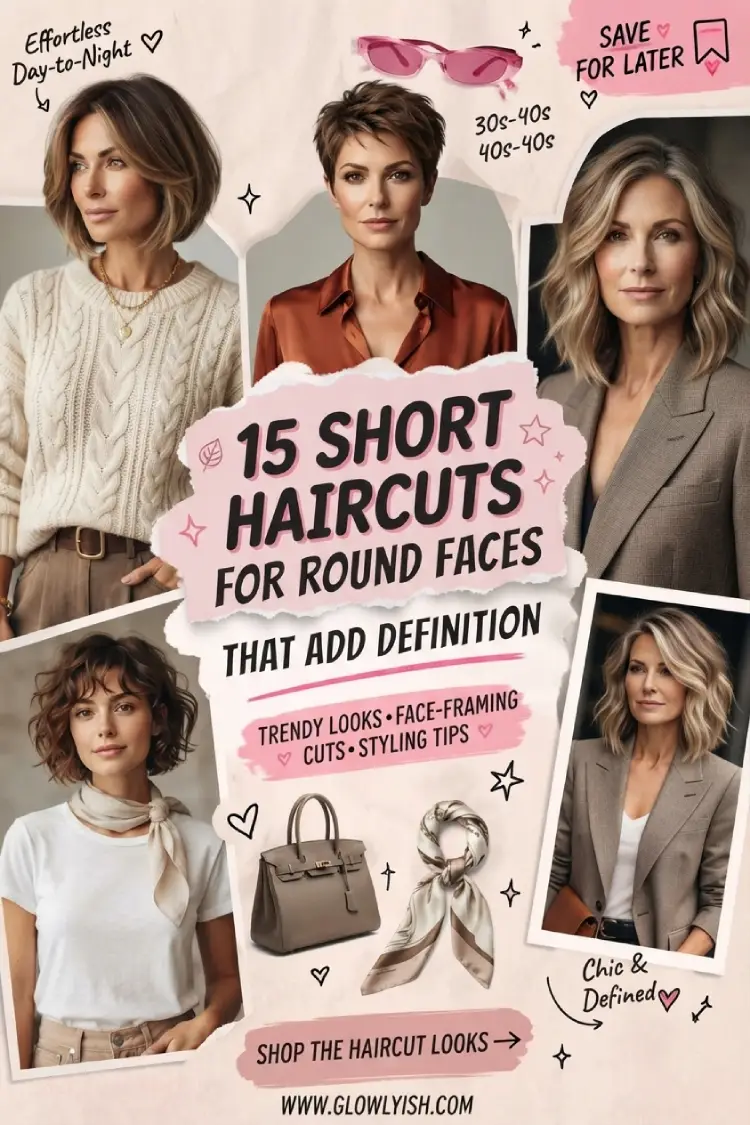
Can a round face wear short hair?
Absolutely. Short hair is not automatically unsuitable for a round face. The placement of volume, length, fringe, angles, and face-framing can change the overall balance. The better question is whether the specific short haircut creates the proportions you want.
Can fine hair have layers?
Yes, but the amount and placement matter. If you want your hair to appear fuller, preserving useful weight may be important. Your stylist can determine whether subtle, strategic layers or a stronger perimeter will better support the shape you want.
Should curly hair be cut differently from straight hair?
Often, yes, because curls change the way length, volume, and layers behave. Shrinkage and curl pattern can affect the finished silhouette. A stylist should consider how your curls behave in their natural dry state rather than treating them like straight hair.
What if I cannot decide between two hairstyles?
Compare them using practical criteria instead of appearance alone. Ask which one better matches your preferred length, natural texture, maintenance level, tie-back needs, and grow-out expectations. If both still work, choose the one that gives you more flexibility or the one you are genuinely more excited to wear.