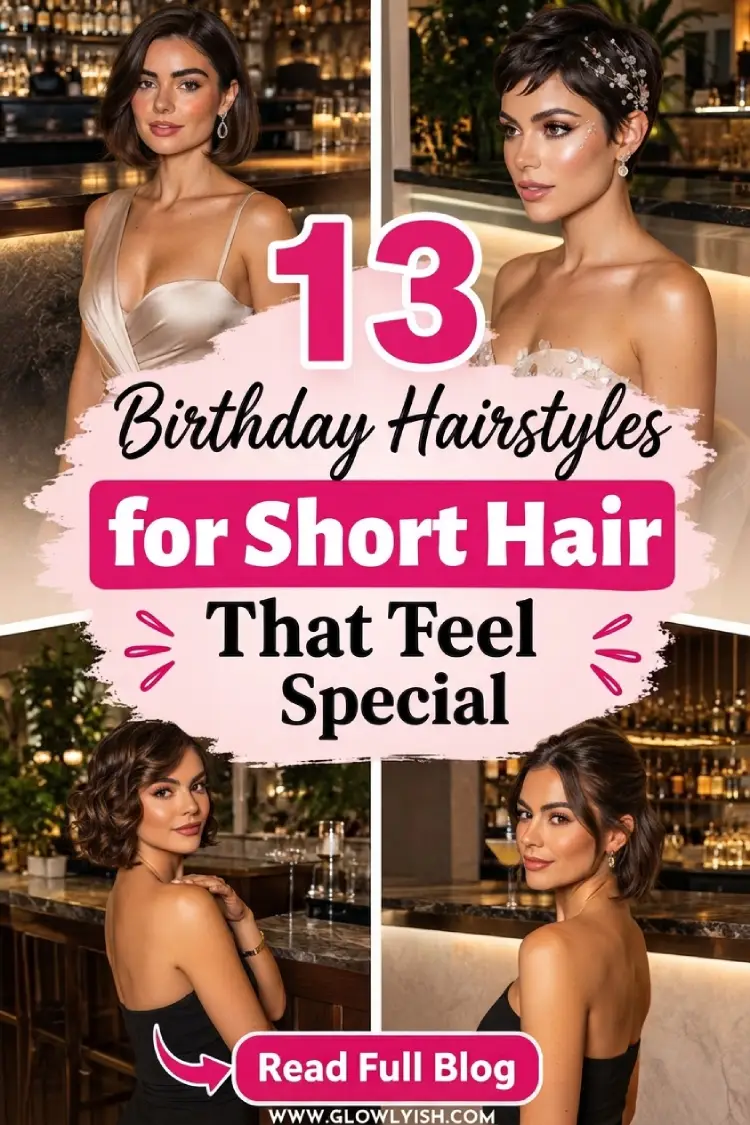
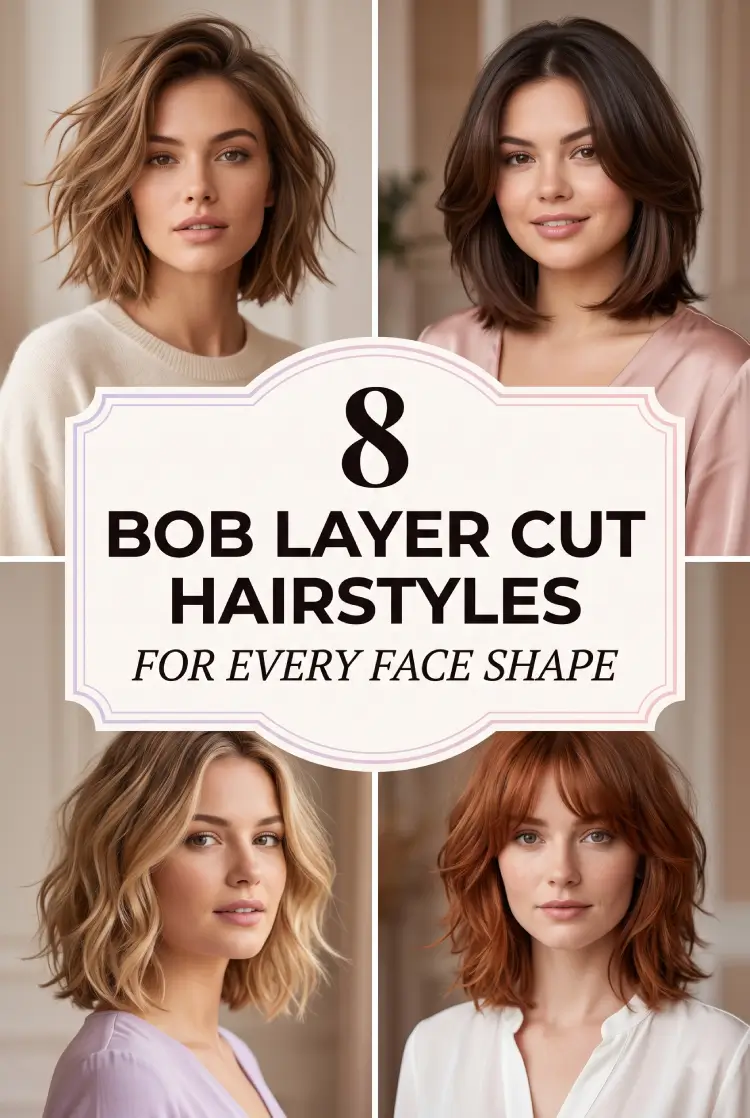
A layered bob gives you more room to customize a short haircut than a single-length bob does. Layers can soften a strong perimeter, release weight from thick hair, create movement in fine hair, or help a wavy texture fall into a more natural shape. The important part is not simply choosing a “layered bob,” but deciding where the layers begin, how much weight stays at the ends, and where the finished length sits.
The eight bob layer cut hairstyles below cover the main variations in the reference guide, but each one is approached with a little more practical detail. Some are better suited to straight hair and polished styling, while others make more sense if you want to air-dry or work with your natural wave. For extra movement and textured ends, explore these chic short bobbed hairstyles with layers.
Your face shape matters, but it should not be treated as a strict rule. Hair density, texture, neck length, styling habits, and the amount of time you want to spend with a blow-dryer can be just as important.
Quick Picks: Which Layered Bob Should You Consider?
- For a classic everyday cut: Soft Layered Classic Bob
- For a short, textured look: Chin-Length Choppy Bob
- For keeping more length: Long Layered Textured Bob
- For natural waves: Wavy Shoulder-Grazing Bob
- For crown volume: Stacked-Back Layered Bob
- For instant asymmetry and lift: Side-Part Layered Bob
- For a sharper silhouette: Inverted Layered Angle Bob
- For undone texture: Tousled Shag Layered Bob
The original reference uses these same eight variations as its core outline.
1. Soft Layered Classic Bob Hairstyle

The soft layered classic bob is the easiest starting point if you want the recognizable shape of a bob without the severity of a completely blunt perimeter. The length generally sits around the jaw, while subtle layers create movement through the interior and keep the outline from looking too solid. This makes the cut particularly adaptable for fine-to-medium hair because you can introduce movement without aggressively removing the weight that gives the ends their appearance of fullness.
For a round face, a slightly longer front and a gentle side part can create more vertical movement. Oval and heart-shaped faces can usually accommodate a wider range of lengths and partings. Straight hair will show the clean architecture of the cut most clearly, while slightly wavy hair gives it a softer finish.
Fine hair usually benefits from restrained layering. Too many short pieces can make the perimeter appear sparse. Thick hair can handle more internal weight removal, provided the stylist avoids creating an overly rounded shape.
Daily styling can be as simple as blow-drying with a small round brush and turning the ends slightly inward. Air-drying is possible on naturally cooperative textures, although the result will be less polished. Because the cut depends on a clean outline, expect regular trims if you want to preserve its original shape. For a salon appointment, ask for a jaw-length bob with soft internal layers and a full-looking perimeter rather than obvious step layers. The reference similarly recommends invisible layers for a softer grow-out.
Best suited to: Fine to medium straight or slightly wavy hair; oval, round, and heart-shaped faces.
Watch out for: Excessive layering on fine hair, which can make the ends look thinner.
2. Chin-Length Choppy Bob Hairstyle

A chin-length choppy bob takes the structure of a short bob and deliberately loosens it with piecey ends and visible texture. Instead of aiming for a perfectly smooth silhouette, the haircut uses varied lengths around the perimeter and interior to create a more casual, broken-up appearance. It is especially appealing if you like your hair to look styled without requiring a polished blowout every morning.
The chin placement makes this cut quite noticeable around the jaw, so small adjustments can change the overall effect. If you have a round face, slightly longer front pieces and an off-center part can help introduce length and reduce excessive width around the cheeks. On an oval face, the chin-length shape can be worn more symmetrically. Heart-shaped faces may benefit from keeping some softness around the jaw rather than making the ends excessively short.
Fine-to-medium hair can look fuller when the texture is controlled rather than over-thinned. Thick hair needs more careful weight distribution; otherwise, short layers can create unwanted width. Wavy hair can be particularly attractive in this shape because the natural bends emphasize the choppy ends, although curly hair may need a more individualized cut to account for shrinkage.
Styling is relatively simple. A texture cream followed by rough drying can be enough, with a few flat-iron bends added where needed. A sea-salt or dry texture spray can enhance separation, but use it selectively because too much product can make fine hair feel gritty or flat. The reference also recommends keeping texturizing products concentrated through the mid-lengths and ends.
This is not the easiest bob to grow out if the layers are highly disconnected. If you want future length, ask for soft choppy texture that remains blended into the perimeter.
Best suited to: Fine-to-medium straight or wavy hair; round and oval faces.
Watch out for: Over-thinning, overly short layers, and excessive product at the roots.
3. Long Layered Textured Bob Hairstyle

The long layered textured bob, often called a lob, is the practical choice for someone who likes the bob family but is not ready for a chin-length or jaw-length cut. The shape generally falls somewhere between the collarbone and shoulders, giving you enough length to experiment with waves, ponytails, clips, and other styling options while still retaining the lighter feel of a bob.
This length is particularly useful for people with medium or thick hair because the layers can remove some visual weight without making the haircut feel extremely short. Fine hair can also work well with a long layered bob, but the layering should be conservative. Keeping the perimeter relatively substantial prevents the ends from becoming wispy.
Face framing becomes more important as the bob gets longer. Layers beginning around the cheekbones or lips can create movement around the face without sacrificing too much length. For a long face, softer width around the cheeks can be useful. Heart-shaped faces often work well with a longer front that balances the narrower chin area.
Straight hair can be worn sleek and polished, while wavy hair makes the textured layers more obvious. Loose curls can also work, although the stylist should account for how much the curl pattern contracts.
A lob is one of the more flexible choices for busy lifestyles. It can be worn down, clipped back, half-up, or gathered into a small ponytail if enough length remains. It also tends to offer a gentler grow-out than a sharply graduated bob.
For the salon, explain exactly where you want the bottom edge to sit and whether you need enough length to tie it back. A useful request is: “Keep the perimeter around the collarbone, add long face-framing layers, and remove enough internal weight for movement without making the ends thin.” The reference identifies this style as a collarbone-to-shoulder-length option and recommends face framing around the lips or cheekbones.
Best suited to: Medium-density straight, wavy, or loosely curly hair; oval, long, and heart-shaped faces.
Watch out for: Too many layers in fine hair and insufficient weight removal in very thick hair.
4. Wavy Shoulder-Grazing Bob Hairstyle

The wavy shoulder-grazing bob is designed around natural movement rather than a perfectly controlled finish. Its length brushes the shoulders, which gives waves enough room to form while keeping the overall silhouette distinctly shorter than traditional medium-length hair. Light layering prevents the ends from becoming excessively heavy and helps natural texture move through the haircut.
This is one of the strongest options if you prefer air-drying. Wavy hair can often be encouraged with a curl cream, mousse, or lightweight wave product, followed by gentle scrunching. Diffusing on low heat can add definition without requiring a full blowout. The goal is not to make every wave identical; a little variation is part of the appeal.
Round faces may benefit from a part that creates a little height and from waves that begin slightly below the widest part of the cheeks. Heart-shaped faces can use the shoulder-grazing length to add balance around the jaw. Oval faces have plenty of flexibility with the part and wave placement.
Fine wavy hair should not be overloaded with rich creams or oils because too much weight can pull the wave pattern down. Thick wavy hair may need more internal shaping so the ends do not form a triangular silhouette.
The cut is also useful for people who occasionally need to pull their hair back. At shoulder length, a ponytail or low tie is much more realistic than with a chin-length bob, although shorter face-framing pieces may fall free.
If you want to preserve your natural texture, tell the stylist “I want a shoulder-grazing bob with light layers that follow my natural wave, without removing too much weight from the ends.” The reference specifically positions this variation as a natural-wave-friendly option that can be partly air-dried before diffusing.
Best suited to: Wavy and loose-curly hair; round, heart, and oval faces.
Watch out for: Heavy products, excessive thinning, or a shape that ignores natural shrinkage.
5. Stacked-Back Layered Bob Hairstyle

A stacked-back layered bob creates its volume primarily through shorter layers at the back of the head, with longer pieces extending toward the front. The result is more sculpted than a soft layered bob and often gives the neckline a clean, lifted appearance. It is a strong option when you want your haircut to have a defined shape even before you add much styling.
The stacking technique can be particularly helpful for fine-to-medium straight hair because the shorter back sections create a sense of elevation. However, the amount of graduation matters. A dramatic stack creates a very specific silhouette, while a softer graduation is easier to wear and generally easier to grow out.
Round faces can work well with a graduated shape when the front remains slightly longer, creating a directional line toward the jaw. Oval faces can accommodate both softer and stronger versions. If your neck is shorter, a lifted nape can visually open up the area, although the final result depends on the relationship between your haircut, neck length, and shoulder width.
Thick hair can also benefit from this shape, but internal weight should be controlled carefully. Removing too much bulk at the wrong point can cause the back to spring outward.
Styling usually involves a round brush and root-lifting product. Straight hair will showcase the graduation most clearly. Wavy hair can work, but the stylist should design the shape around the natural wave rather than forcing it into a completely straight structure.
This is a higher-maintenance bob if you want the stacked shape to remain precise. The back grows out visibly and can lose its architecture faster than a longer, softer layered cut.
At the salon, say: “I want a graduated bob with a softly stacked nape, shorter in back and longer toward the front, but I don’t want an exaggerated shelf.” The reference likewise recommends keeping the stacking soft when a dramatic angle is not desired.
Best suited to: Fine-to-medium straight hair, especially when extra crown or back volume is desired.
Watch out for: Very aggressive graduation, which can be difficult to grow out smoothly.
6. Side Part Layered Bob Hairstyle

The side-part layered bob changes the character of a layered bob largely through the parting. A deeper or softer side part creates an asymmetrical visual balance, giving one side more volume and allowing the front layers to sweep away from the face. It is a useful option if you want a haircut that can look different simply by changing the direction of the part.
Fine hair can benefit from this approach because moving the part away from its usual position can create temporary root lift. Medium and thick hair can also carry the look well, especially when longer layers are allowed to sweep across the forehead and cheek area.
For round faces, the diagonal direction of the side part can add visual length. Heart-shaped faces can use the sweeping front section to soften the forehead and transition toward the chin. Oval faces can generally wear a deep or subtle side part without needing significant modification.
Straight hair gives the cut a sleek finish, while wavy hair creates a softer, more romantic sweep. Curly hair can use a side part successfully too, but the stylist should consider curl direction, shrinkage, and where the shorter layers will sit when dry.
This style is also practical if you like to tuck one side behind your ear or use a small clip. It does not require an elaborate styling routine: mousse or foam at the roots, a round brush, and a few minutes of directional blow-drying may be enough.
If your hair tends to collapse at the roots, try drying the part in the opposite direction first and then returning it to your preferred side. The reference recommends this technique for added lift.
Ask your stylist for “a layered bob with a soft side part, longer sweeping pieces on the heavier side, and enough length to tuck the lighter side behind my ear.”
Best suited to: Fine through thick straight or wavy hair; oval, heart, and round faces.
Watch out for: A part that is too deep for your natural growth pattern or excessive weight on the sweeping side.
7. Inverted Layered Angle Bob Hairstyle

The inverted layered angle bob is defined by a shorter back and longer front, creating a diagonal line when viewed from the side. Layers keep the shape from becoming too heavy, while the angled perimeter gives the haircut a more deliberate, graphic appearance. It is a good choice when you want a bob that looks noticeably structured rather than soft and casual.
Straight hair shows off this haircut particularly well because the front-to-back angle remains easy to see. Slightly wavy hair can soften the shape and make it feel less architectural. Curly hair requires more caution because natural shrinkage can change the apparent difference between the front and back lengths.
The front length is especially important for face shape. A longer front can create a visually extended line for round or fuller facial proportions. Heart-shaped and oval faces often provide plenty of flexibility. For longer faces, an extremely steep front angle may emphasize vertical length, so a gentler graduation and more width through the sides may be preferable.
Fine-to-medium hair can carry this shape well, particularly when the perimeter remains full. Thick hair may require internal weight removal so the shorter back does not become bulky.
Maintenance is moderate to high if you want the angle to remain crisp. As the back grows, the contrast between the nape and front becomes less defined. The upside is that the haircut can transition into a more conventional bob as it grows.
For a salon consultation, try: “I want an inverted bob with the back shorter than the front, a softly rounded nape, and blended layers so the angle looks clean rather than harsh.” The reference similarly recommends a softly rounded nape for a less boxy result.
Best suited to: Medium-density straight or slightly wavy hair; heart, oval, and selected longer-face proportions.
Watch out for: Very steep angles on long faces or heavy graduation in thick hair.
8. Tousled Shag Layered Bob Hairstyle

The tousled shag layered bob is the most relaxed option in this group. It combines the compact outline of a bob with shorter shag-inspired layers around the crown and face. Rather than creating a perfectly smooth silhouette, the haircut encourages separation, movement, and irregular texture.
This can be especially attractive on wavy, curly, or naturally textured hair because the layers give the texture space to move. Straight hair can wear the cut too, but it may need a texture spray, mousse, or styling paste to create the lived-in appearance associated with a shaggy bob.
Round faces can benefit from vertical movement through the crown and sides, while heart-shaped faces may look balanced when some texture remains around the jaw. Oval faces have considerable flexibility. With very thick hair, strategic weight removal can make the cut easier to manage, but over-thinning can create frizz or make the ends look sparse.
Fine hair needs a slightly different approach. Too many short layers can reduce the appearance of density, so a stylist may keep more weight through the perimeter and create texture selectively around the crown.
This is one of the better bob options for people who do not want to style every strand. Apply wave foam or lightweight curl cream to damp hair, rough-dry or air-dry, then use a dry texture spray after the hair is completely dry. Heavy shine products can flatten the separation that makes this style work. If you want to keep slightly more length past the collarbone, browse our top haircuts for medium hair.
Because the shape is intentionally relaxed, its grow-out can be more forgiving than a sharply stacked or inverted bob. Still, the shortest layers eventually become longer and can change the balance of the cut.
Ask for “a jaw-length shaggy bob with soft crown and face-framing layers, keeping enough weight through the ends so my hair doesn’t look thin.” The reference identifies this style as particularly compatible with wavy, curly, and highly textured hair.
Best suited to: Wavy, curly, and textured hair; also workable on straight hair with added texture.
Watch out for: Over-layering fine hair and overly heavy products that collapse natural texture.
How to Choose the Right Bob Layer Cut
The best layered bob is the one that works with your natural hair behavior, not just the photo you save.
Start with length. If you want to tie your hair back for workouts or work, a shoulder-grazing lob gives you considerably more flexibility than a chin-length bob. If you want a haircut that dries quickly and feels distinctly short, the chin-length or classic bob makes more sense.
Then consider density. Fine hair generally benefits from strategic layering rather than aggressive thinning. Thick hair often needs internal weight removal to stop the haircut from becoming too bulky. The same haircut can therefore require completely different cutting techniques depending on density.
Texture matters just as much. A straight-haired client may want precise graduation, while someone with curls needs the stylist to anticipate shrinkage and curl expansion. A wavy-haired client may prefer a cut that looks attractive when air-dried rather than one designed primarily for a flat-iron finish.
Finally, think about maintenance. A precise stacked or inverted bob needs more frequent reshaping than a soft, tousled bob. A haircut that looks beautiful in a salon photo may be frustrating if it requires 20 minutes of heat styling every morning and your normal routine takes five.
Layered Bob Hairstyles by Hair Type
Fine Hair
Fine hair usually benefits from a layered bob when the layers are placed strategically rather than scattered throughout the haircut. A strong perimeter can preserve the impression of density, while subtle internal layers add movement without making the ends look transparent. Chin-length and classic bobs can make fine strands feel lighter and easier to manage, while a lob offers more styling flexibility.
Be cautious with heavily razored or aggressively thinned finishes. They can create texture, but too much removal may make fine ends appear stringy. If you want volume, a side part, gentle crown layers, or controlled graduation can often do more than simply removing hair.
For styling, lightweight mousse or root foam is generally more useful than rich creams. Heat protectant is important whenever you use a blow-dryer, flat iron, or curling tool.
Thick Hair
Thick hair can make a bob look beautiful and substantial, but it may also create unwanted width if the shape is not designed around the density. Internal layers can remove weight while leaving the outer perimeter strong. Stacked, inverted, and textured bobs can all work well when the stylist understands where your hair naturally expands.
The goal is not necessarily to make thick hair thin. It is to distribute the weight so the haircut falls into its intended shape.
If your hair is coarse or highly textured, discuss how much shrinkage and expansion to expect before deciding on a very short length. A shoulder-grazing wavy bob may behave completely differently from the same haircut on straight hair.
Straight Hair
Straight hair makes layered bob architecture easy to see. A classic bob, stacked bob, side-parted bob, or inverted angle can all show clean lines and precise graduation.
The main consideration is whether you want polish or texture. If you prefer a sleek look, keep the perimeter cleaner and use subtle layers. If you prefer movement, ask for longer internal layers and face framing.
Straight fine hair may need volumizing products, while straight thick hair may need weight distribution to prevent the ends from becoming too heavy.
Wavy Hair
Wavy hair often pairs naturally with layered bobs because the layers allow the wave pattern to move rather than sit in one heavy block. Shoulder-grazing and shaggy bobs are especially useful if you prefer air-drying.
The biggest mistake is cutting a wavy bob solely for how it looks when straight. Your stylist should consider the hair in its natural state. Ask whether the cut will be shaped wet, dry, or with your natural wave visible, depending on the stylist’s technique and your texture.
Use lightweight curl or wave products and avoid brushing aggressively once the wave pattern has formed.
Curly Hair
Curly hair can absolutely work with a layered bob, but the haircut needs to account for shrinkage, curl pattern, and density. A chin-length curly bob may appear significantly shorter once dry than it does when wet. Longer layers can create shape while preserving enough weight to keep curls cohesive.
Curly hair often benefits from a stylist who understands how your specific curl pattern behaves rather than simply applying a generic “layered bob” formula.
A diffuser, curl cream, or lightweight gel may be more useful than a round brush. Avoid judging the final length solely from a straight-hair reference photo.
Coily Hair
Coily textures can create striking bob silhouettes, but shrinkage and density make consultation particularly important. A shape that looks symmetrical on stretched hair may behave differently once the coils return to their natural pattern.
Rounded, graduated, or softly stacked silhouettes can work beautifully when the layers are planned around the curl pattern. The goal should be a balanced shape that supports the natural texture rather than forcing it into a straight-haired bob template.
Ask the stylist how the finished shape will change as the coils dry and expand. If you regularly wear your hair stretched, mention that too, because the desired shape may need to accommodate both styling states.
Layered Bob Hairstyles by Face Shape
Round Face
With a round face, the most useful adjustment is often controlling where the haircut creates width. A slightly longer front, side part, or vertical layers can draw the eye along the length of the haircut rather than concentrating all the visual weight at cheek level.
An angled bob can work particularly well when the front extends below the widest point of the face. A shaggy bob can also work when its texture creates upward and downward movement rather than a broad, rounded silhouette.
This does not mean avoiding chin-length bobs altogether. A chin-length choppy bob with an off-center part can look completely different from a rounded chin-length bob with equal volume on both sides.
Oval Face
Oval faces generally offer plenty of flexibility because the proportions allow many bob lengths and partings to work. A classic layered bob can emphasize the jawline, while a side-parted bob introduces asymmetry and volume.
If you have an oval face and are unsure where to begin, focus less on “face-shape rules” and more on hair behavior. Fine hair might need a fuller perimeter, while thick hair may need internal layers. Wavy hair might look better with a shoulder-grazing cut than a precise stacked bob.
Curtain-style or side-swept face framing can also change the visual balance without changing the overall bob length.
Square Face
A square face often looks particularly interesting with softer movement around the jaw. A layered bob with gentle waves, side-swept pieces, or a less rigid perimeter can prevent the haircut from feeling overly geometric.
You do not need to avoid strong bob lines entirely. If you like a sharper aesthetic, an inverted or classic bob can still work; simply consider adding movement through the layers or styling the ends with a subtle bend.
For thick hair, internal weight removal may be useful to prevent the haircut from becoming too wide at the sides.
Heart-Shaped Face
Heart-shaped faces often have a broader upper face and narrower chin, so the lower portion of a bob can be an opportunity to create balance. A longer layered bob, wavy shoulder-grazing cut, or softly textured chin-length shape can all work depending on the rest of the proportions.
Side parts and sweeping face-framing pieces can soften the forehead area. If you prefer bangs, lighter or longer fringe can be easier to blend into the rest of a layered bob than a very dense, blunt fringe.
Long Face
For longer facial proportions, consider how much vertical length your bob emphasizes. A very sleek, sharply angled bob can create a strong vertical direction, while waves, fuller sides, or softer layering can introduce width.
A shoulder-grazing wavy bob is one useful option because texture naturally creates horizontal movement. A classic bob can also work when the ends are styled with some fullness rather than pulled completely flat.
The best choice depends on hair density and texture as much as facial proportions.
Diamond Face
Diamond-shaped faces often have prominent cheekbones with narrower forehead and jaw areas. Layered bobs can work well when the haircut creates controlled softness around the cheeks and jaw without adding excessive width directly at the widest point.
A side part can emphasize one side and create a sweeping line through the face. A softly layered lob provides another option if you want to maintain length while experimenting with face framing.
Avoid treating the face shape as a rigid template. Your natural part, hair density, and preferred styling routine should influence the final cut.
Which Bob Layer Cut Is Best for Low Maintenance?
A layered bob can be low maintenance in terms of daily styling while still requiring regular trims to preserve its shape.
The easiest options for minimal styling are generally the wavy shoulder-grazing bob and tousled shag layered bob, especially when your natural texture already supports the intended finish. A soft layered classic bob can also be simple if your hair naturally falls into place.
Stacked and inverted bobs require more maintenance if you want their architectural shape to remain obvious. The shorter back sections can show growth quickly.
If you want genuine wash-and-go potential, tell your stylist that during the consultation. A haircut designed for a daily blowout is not automatically low maintenance just because it is short.
A practical low-maintenance checklist is:
- Choose a shape that works with your natural texture.
- Avoid excessive layering if you do not want daily styling.
- Ask how the haircut will look after air-drying.
- Consider your usual part rather than the part in the inspiration photo.
- Keep enough length for a clip or ponytail if that matters to you.
- Ask how the cut will transition during grow-out.
Which Layered Bobs Can You Tie Back?
If tying your hair back is important, length becomes one of the biggest deciding factors.
A long layered bob or shoulder-grazing lob is the easiest option. Most people with enough density and length can gather at least a low ponytail, although face-framing pieces may escape.
A chin-length bob is more limited. You may be able to use a small elastic, claw clip, or half-up style, but a secure full ponytail is not always realistic.
A stacked bob can be especially difficult to tie back because the nape is intentionally shorter. The longer front may gather while the shortest back pieces remain loose.
A shaggy bob can be clipped or partially tied, but its shorter crown and face-framing layers are intentionally designed to create loose texture.
For workouts, work, or hot weather, tell your stylist that you need tie-back flexibility. It may change the ideal length more than your face shape does.
Layered Bob vs. One-Length Bob
A one-length bob emphasizes a solid perimeter and clean shape. A layered bob introduces movement and can distribute weight throughout the haircut. Discover versatile styling options across every face shape in our guide to medium-length hairstyles for women.
Choose a one-length bob if you want:
- A crisp, graphic outline
- Maximum-looking density through the ends
- Simple styling
- A clean, polished finish
Choose a layered bob if you want:
- More movement
- Easier wave definition
- Less visual weight
- Face framing
- More texture and styling variation
Fine hair can benefit from a hybrid approach: a strong perimeter with subtle internal layers. Thick hair may benefit from more internal weight removal while keeping enough perimeter density.
Layered Bob vs. Lob
The biggest difference is length and flexibility.
A bob generally feels shorter, lighter, and more structured. It dries quickly and puts more attention on the jawline, neck, and face.
A lob gives you additional styling options. You can often tie it back, create larger waves, use clips, or transition toward longer hair without a dramatic grow-out phase.
If you are nervous about cutting your hair short, the lob is usually the easier first step. If you want a noticeable change and do not mind losing tie-back ability, a classic or chin-length bob offers a stronger transformation.
Frequently Asked Questions
Is a layered bob good for thick hair?
Yes. Layering can help redistribute bulk and make thick hair easier to shape. The important distinction is between strategic internal layering and indiscriminate thinning. A stylist can remove weight while preserving enough density around the perimeter to keep the bob looking intentional.
Is a layered bob good for fine hair?
It can be, particularly when the layers are subtle. Fine hair often benefits from keeping the ends relatively full and using carefully positioned layers for movement. Too much texturizing can have the opposite effect and make the ends look sparse.
How often should a layered bob be trimmed?
There is no single schedule that suits every bob. A precise stacked or inverted cut generally needs more frequent reshaping than a soft shaggy bob. The reference uses roughly six to eight weeks as a general trim guideline, but your growth rate and desired shape should determine the actual schedule.
Can a layered bob air-dry?
Yes, especially when the haircut is designed around your natural wave or curl pattern. Wavy and shaggy versions are particularly suited to air-drying. Straight hair may need some directional styling if you want a polished finish.
Which bob is easiest to grow out?
Soft layered and longer bob shapes generally provide a gentler transition than sharply stacked or highly inverted cuts. Keeping layers blended and avoiding extreme differences between lengths can make the grow-out less awkward.
Can a bob make fine hair look fuller?
A well-designed bob can create the appearance of greater density by concentrating weight near the perimeter. This is not the same as changing the actual thickness of individual strands. The cutting pattern, length, styling, and natural density all influence the final visual effect.
Which bob is best for a round face?
There is no single best bob for every round face. A slightly longer front, side part, angled shape, or vertical movement can help if you want to visually lengthen the silhouette. A chin-length bob can also work when its shape and styling are chosen carefully.
Which layered bob is best for naturally wavy hair?
The wavy shoulder-grazing bob and tousled shag layered bob are strong starting points because they allow natural texture to contribute to the finished shape. A stylist should still adapt the layers to your particular wave pattern and density.
Can I put a layered bob in a ponytail?
It depends on the length. A shoulder-grazing lob is much easier to tie back than a chin-length bob. Stacked and heavily layered bobs may leave shorter pieces around the nape and crown even when the longer sections fit into an elastic.
Should I choose a bob based on my face shape?
Face shape can help, but it should not be the only factor. Hair texture, density, natural part, preferred length, styling time, and whether you need to tie your hair back are equally important when choosing a cut.
Final Takeaway
The best bob layer cut is not necessarily the most dramatic one. It is the version whose length, layering, and texture cooperate with the hair you actually have.
Choose the soft layered classic bob for an adaptable everyday shape. Go chin-length and choppy when texture matters more than polish. Pick a long layered bob if you want flexibility and some tie-back potential. Natural waves have an easy partner in the shoulder-grazing version, while stacked and inverted bobs offer stronger structure. If you prefer an undone finish, the tousled shag layered bob gives you the most relaxed silhouette.
Before your appointment, decide three things: where you want the perimeter to sit, how much styling you are realistically willing to do, and whether keeping your hair tied back matters. Those details will usually lead to a better haircut decision than choosing from a face-shape chart alone.