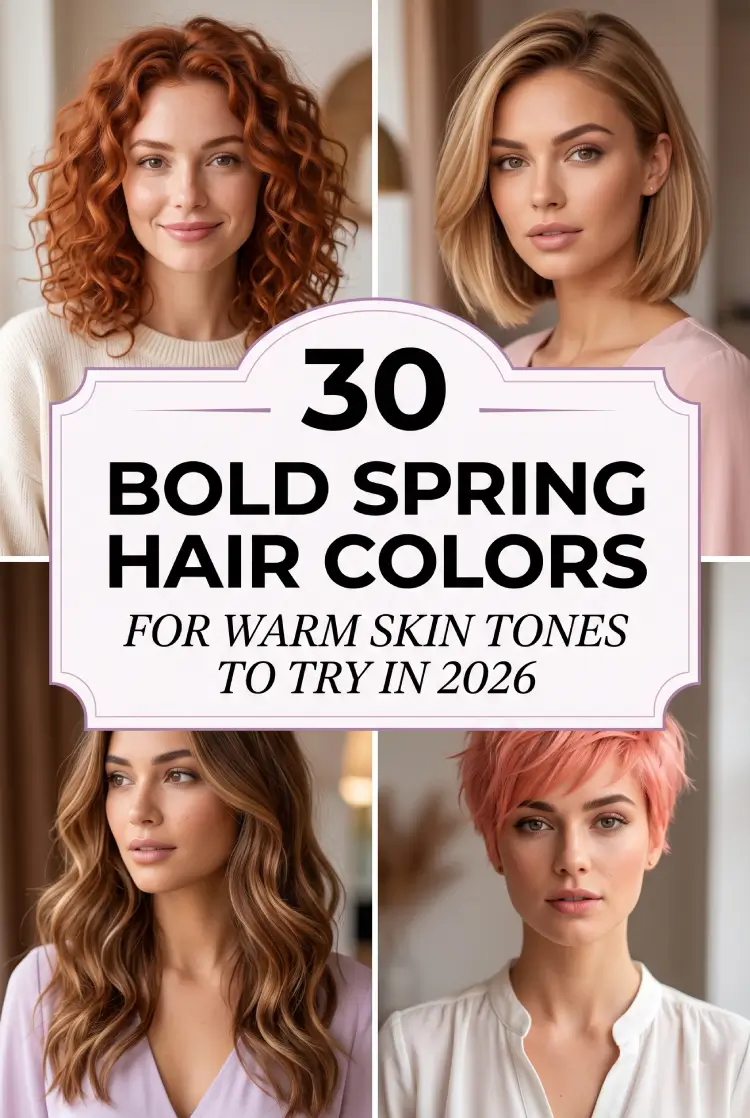
Spring is an easy excuse to change your hair color, but choosing a shade that actually works with your complexion takes more thought than picking the prettiest photo on a mood board.
Warm skin tones can range from golden and peachy to olive and rich warm brown, so there is no single “warm” shade that works for everyone. Honey, caramel, chestnut, chocolate, copper-brown, toffee, and warm blonde can all sit beautifully against warm undertones, but the depth, placement, and contrast matter just as much as the color name. Looking to go bold with luminous sunny tones? Discover these vibrant yellow hair color ideas.
The 30 ideas below cover the full spectrum, from subtle brunette dimension to noticeable blonde ribbons and richer seasonal shades. Each one includes practical considerations so you can decide whether a color makes sense for your natural base, hair texture, maintenance routine, and preferred level of change.
Quick Picks: The Best Directions for Warm Skin
If you want a fast starting point:
- Most versatile: warm chestnut with subtle highlights
- Best for brunettes: caramel or honey balayage
- Best low-maintenance option: rooted honey or toffee balayage
- Best bold brunette: cinnamon-hazelnut or berry-mocha
- Best blonde direction: honey-rooted blonde
- Best face-framing option: caramel or hazelnut contour highlights
- Best for curls: bronze-illuminated espresso
- Best for short hair: bronzed contour bob or textured chestnut bob
- Best for layered hair: warm contour highlights on classic layers
- Best for a darker transformation: glossy espresso or deep chocolate ribbons
Warm colors do not have to mean bright colors. A rich chocolate or espresso can be just as striking as a blonde balayage when the undertone, shine, and placement are right.
1. Golden-Ribbon Balayage Glow
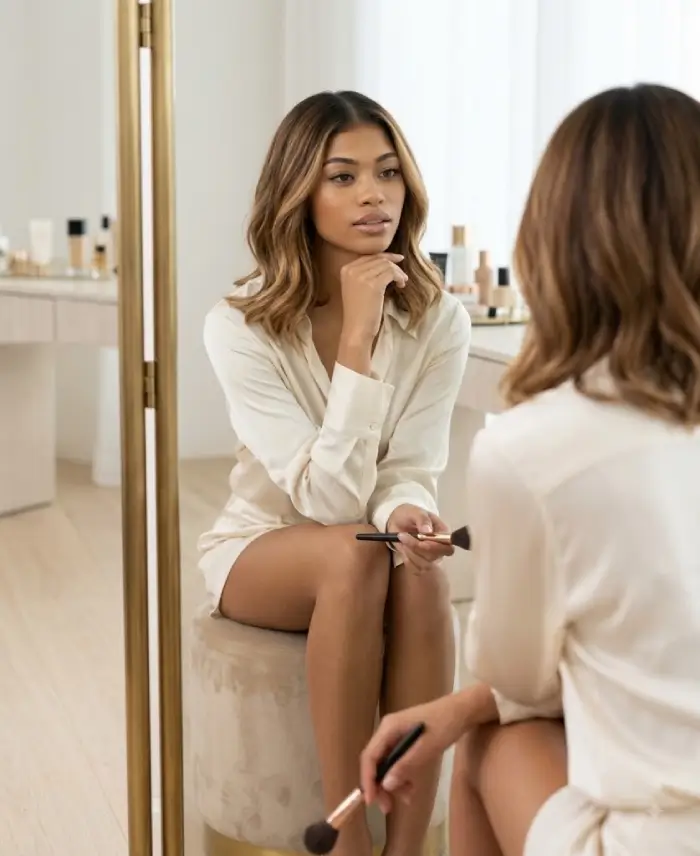
Golden-ribbon balayage uses hand-painted-looking ribbons of honey and golden blonde through a deeper base. Instead of turning the entire head lighter, the color creates selective brightness that becomes especially noticeable when the hair moves. This makes it a strong option if you want a visible spring refresh without abandoning your brunette roots.
The technique tends to work particularly well on medium to thick hair because the ribbons have enough density and movement to remain visible. Straight hair displays the placement clearly, while waves and curls make the highlights appear more dimensional. Fine hair can still wear the color, but overly numerous highlights can make the hair appear visually flatter, so fewer strategically placed pieces may be preferable.
For warm golden undertones, honey and gold generally harmonize naturally with the complexion. If your skin is warm olive rather than golden, ask for a slightly more neutral honey so the result does not become overly yellow.
Maintenance depends on how close the highlights begin to the scalp. A softer root allows a more forgiving grow-out. Ask your colorist for warm honey ribbons with a blended root and brighter pieces around the face rather than uniform highlights.
2. Soft Caramel Wavy Bob
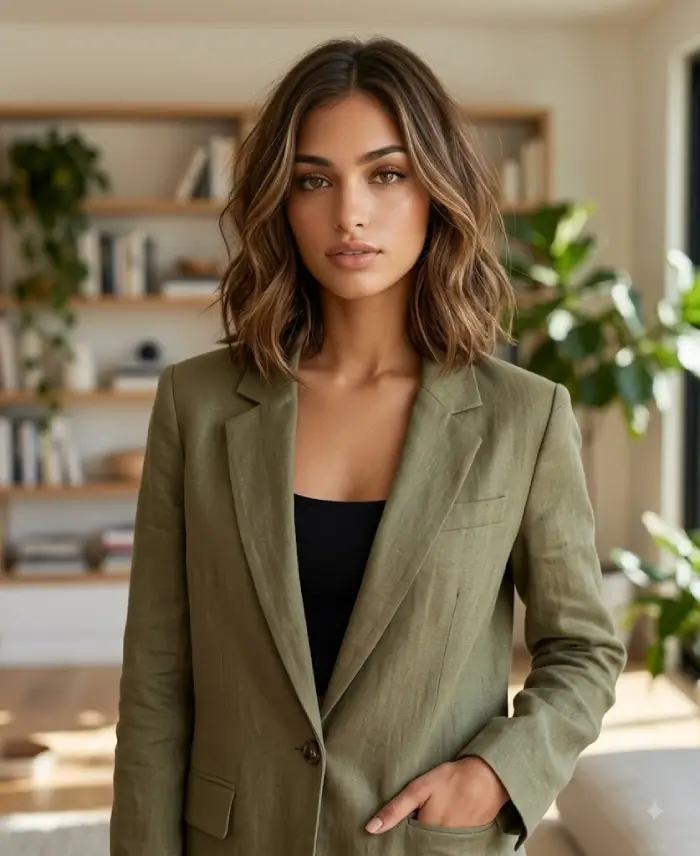
A caramel wavy bob combines a shorter haircut with warm, creamy brown-gold dimension. The bob gives the color more visual structure because every wave catches the light around the jawline and cheek area. Rather than looking like a traditional all-over caramel color, the variation works best when the highlights are distributed selectively through the movement of the cut.
This is especially appealing for medium-density wavy hair. Natural bends help reveal the lighter pieces without requiring a polished blowout. Straight hair can also wear the color, although loose bends may make the dimension more obvious. Thick hair provides plenty of canvas for tonal variation, while fine hair may benefit from fewer, slightly wider ribbons.
A short bob generally makes color maintenance more noticeable because the hair is trimmed frequently and the shape changes quickly. On the other hand, a root-blended caramel color can remain attractive between appointments. Styling can be as simple as scrunching in a lightweight wave cream. Tell your stylist that you want caramel dimension that follows the bob’s shape, with softer brightness around the face and no harsh stripe at the roots.
3. Rooted Chestnut Melt With Honey Ends
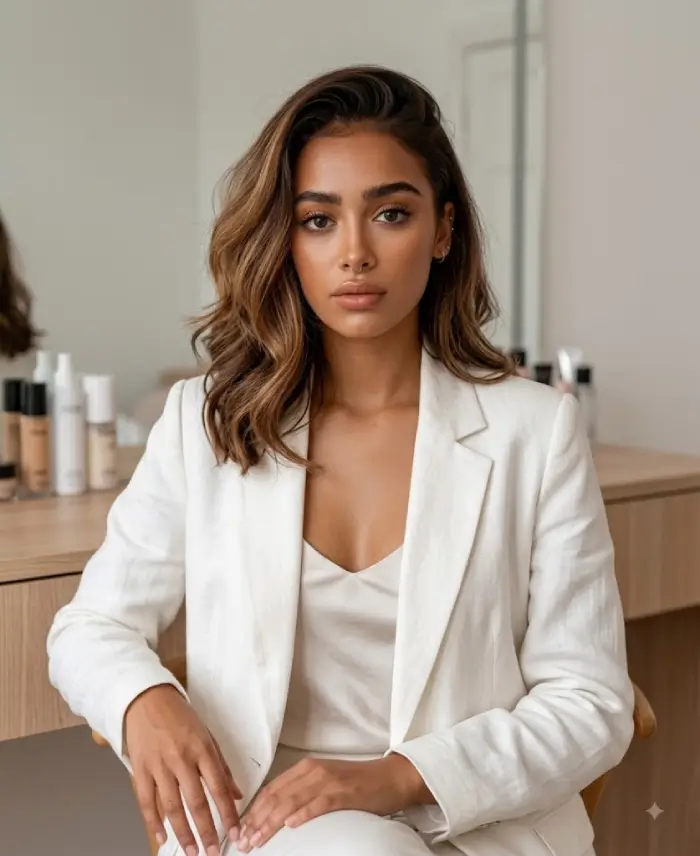
A chestnut melt creates a gradual transition from a deeper warm brown at the roots into lighter honey-toned ends. It is particularly useful for someone who wants dimension but does not want a dramatic blonde transformation. The deeper root preserves depth around the face, while the lighter ends give the hair a distinctly spring-like lift.
Chestnut is a useful middle ground for brunettes who find very dark hair too severe but do not want to maintain blonde. It can work across straight, wavy, and curly textures. Dense hair shows the transition beautifully, while fine hair can benefit from keeping the lighter sections concentrated toward the ends instead of creating too many separate highlights.
The main advantage is grow-out. Because the root remains intentionally deeper, new growth does not create the same obvious line associated with an all-over light color. A gloss or toner can periodically refresh the warmth and shine without requiring the entire color to be recreated.
Ask for a warm chestnut root melt that gradually transitions into honey through the mids and ends. If your natural hair is very dark, ask whether subtle lightening or a warmer brunette gloss would create enough contrast without excessive processing.
4. Dark Mocha Waves With Ember Highlights
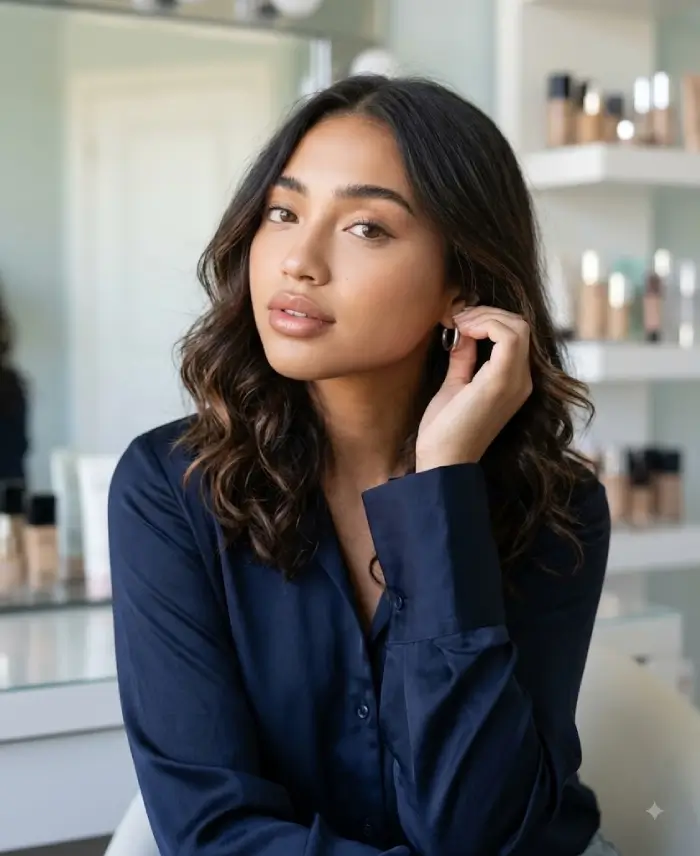
Dark mocha waves with ember-toned highlights are designed for someone who wants warmth without becoming noticeably blonde. The base stays deep and coffee-like, while reddish-brown or coppery pieces appear selectively through the waves. The effect is richer than a traditional caramel balayage and particularly attractive when you want contrast that remains dark overall.
Wavy and curly hair can make the color especially dynamic because the highlights follow the bends of the hair. Straight hair can wear the same palette, although the placement needs to be more carefully blended so individual pieces do not look overly graphic. Thick hair gives the color plenty of movement, while fine hair may benefit from a restrained number of highlights.
Because the base remains dark, this option can be relatively manageable between appointments. The warmer accent pieces may fade sooner than the brunette foundation, so a color-refreshing gloss can help maintain the intended tone.
For a salon consultation, describe the result as deep mocha with subtle ember or warm auburn ribbons rather than bright copper highlights. Ask for the lighter pieces to be concentrated where the natural texture moves so the color looks dimensional rather than striped.
5. Glossy Espresso Blowout
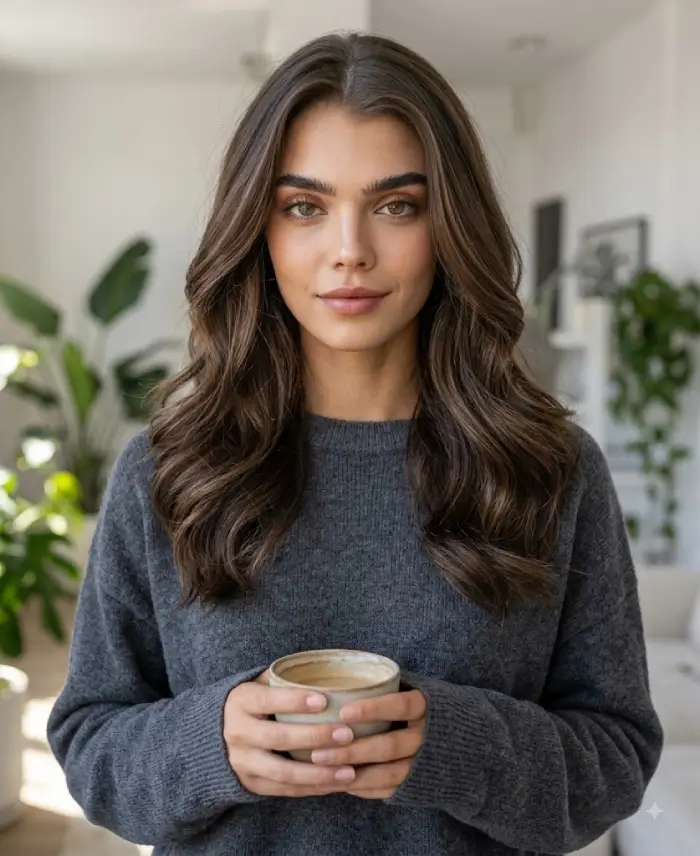
Glossy espresso is proof that spring hair color does not have to become lighter. This deep brown shade emphasizes richness, shine, and tonal depth rather than obvious highlights. Paired with a smooth blowout, it creates a polished look that can feel dramatic while remaining close to a natural brunette spectrum.
The color works particularly well on naturally dark brown hair because it often requires less structural change than blonde or highly contrasted balayage. Straight and wavy textures can both support the look, although the signature shine is easiest to see on smoother hair. Curly hair can wear espresso beautifully too, especially when the goal is rich, reflective color rather than a sleek finish.
The main maintenance issue is not necessarily the color itself but the condition of the hair surface. Dry, porous ends can make a deep brunette look dull. A color-safe cleansing routine, conditioner, occasional gloss, and heat protection are useful if you frequently blow-dry.
Ask for a deep espresso brown with a glossy, neutral-warm finish rather than a blue-black result. If you already have very dark hair, a demi-permanent gloss may be enough to create the richness you want without dramatically changing the base.
6. Berry-Mocha Velvet Bob
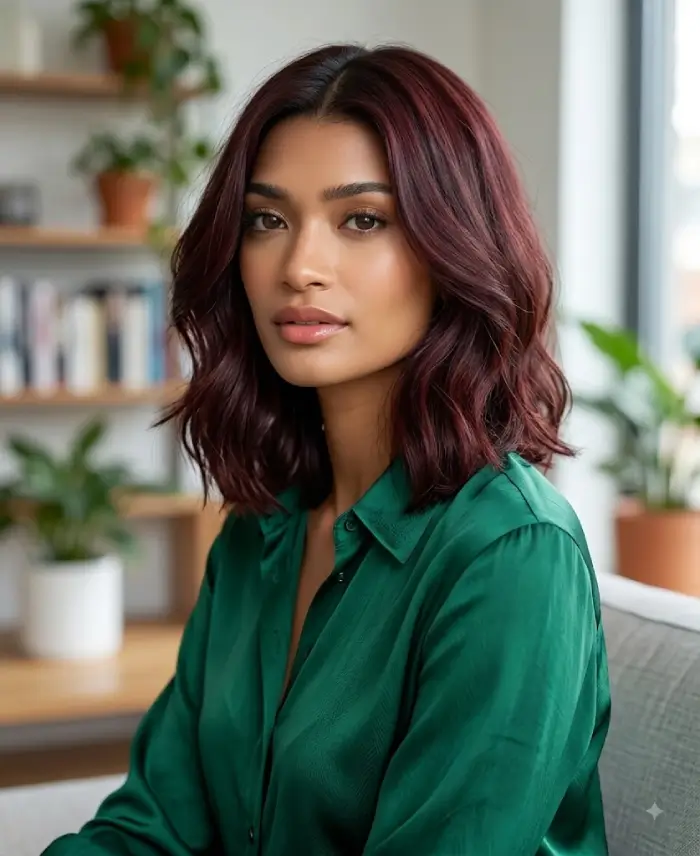
Berry-mocha combines deep brown with a restrained red or berry undertone, creating a brunette that becomes warmer and more noticeable in direct light. On a bob, the shorter shape makes the color feel particularly concentrated and polished.
This can suit warm complexions that enjoy richer red-brown tones, but it is worth distinguishing between a warm berry and a cool purple-red. If your undertone is golden or peachy, a brown-based berry is generally easier to harmonize than an icy violet version. Warm olive complexions may prefer a muted red-brown rather than an intensely red formula.
The bob itself can be blunt, softly layered, or wavy. Straight hair shows the richness of the shade clearly, while waves create flashes of berry as the hair moves. Fine hair can benefit from the visual depth of the darker color, while thick hair provides more room for tonal variation.
Red-based brunette colors can require more refreshing than ordinary brown because unwanted fading changes the character of the shade. Ask your colorist for a brown-dominant berry mocha if you want sophistication and easier maintenance, rather than an extremely saturated fashion-red finish.
7. Hazelnut Face-Frame on Jet-Black Lengths
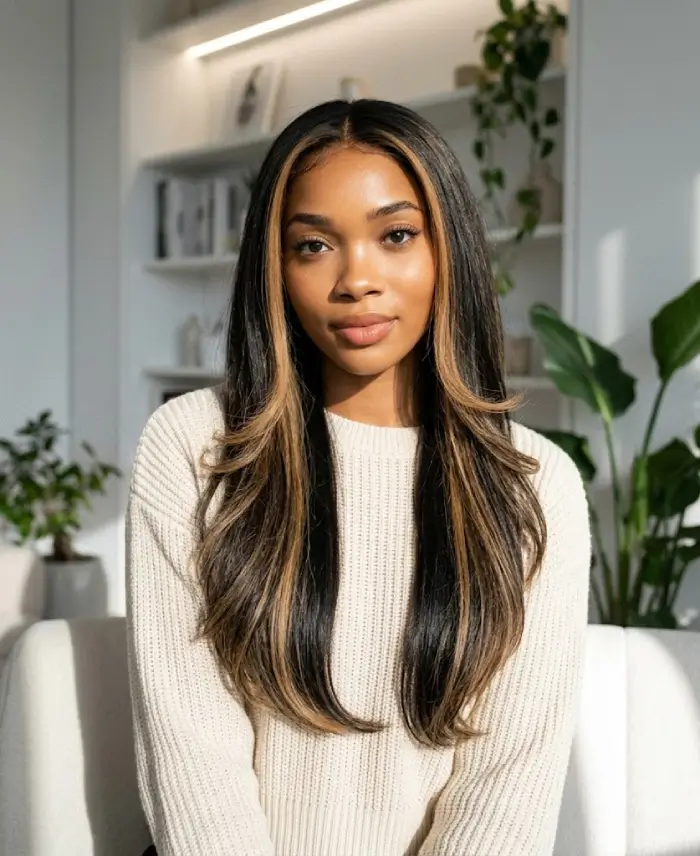
This high-contrast idea keeps the majority of the hair very dark while placing warm hazelnut pieces around the face. It creates immediate brightness without requiring a full head of highlights. The result can be especially striking on long, straight, or softly waved hair.
Face-framing color is useful when you want the visual impact concentrated where people naturally look first. Fine hair can benefit from a small number of carefully placed pieces, while thick hair allows a more substantial contour. On curly hair, placement should account for shrinkage and the way curls sit around the face.
The trade-off is contrast. Dark roots and lengths make the lighter pieces more obvious as they grow out, so this is less forgiving than a fully diffused balayage. The lighter sections may also require more care if substantial lightening is needed.
Ask your stylist for soft hazelnut face-framing pieces that blend into the dark lengths rather than two symmetrical blonde stripes. Bring a photo showing how much contrast you want, because “face framing” can range from extremely subtle to very bold.
8. Cinnamon-Swirled Hollywood Blowout
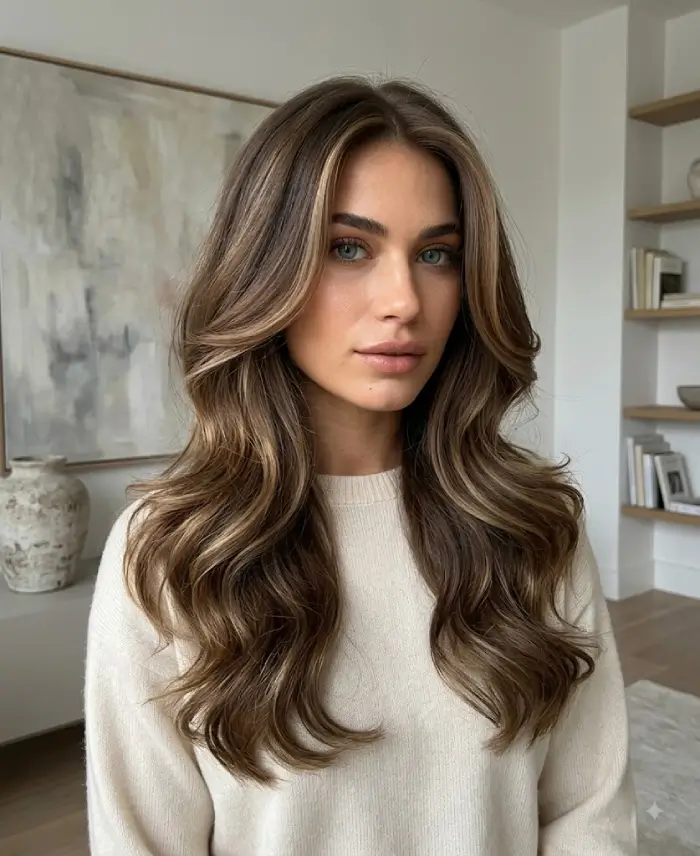
Cinnamon and caramel ribbons paired with a voluminous blowout create a glamorous version of warm spring color. The shade family sits between rich brunette and warm copper, while the styling emphasizes movement and shine.
This works particularly well on medium to thick hair because substantial density helps support the large, rounded waves associated with a classic blowout. Fine hair can still achieve the appearance with strategic root lift, velcro rollers, or a round-brush blow-dry, but the volume may require more styling effort.
Warm cinnamon can flatter golden and peachy undertones, while someone with warm olive skin may prefer a more brown-based cinnamon to prevent excessive orange. The color can also be adapted to naturally dark hair by concentrating brighter ribbons through the mids and ends.
Heat protection becomes especially important because the look relies on repeated blow-drying and potentially hot tools. Ask for dimensional cinnamon-brown with caramel ribbons rather than a flat copper shade. If you rarely style your hair, consider whether you love the color itself or mainly the finished blowout shown in your inspiration photo.
9. Soft Walnut Waves With Subtle Luminosity
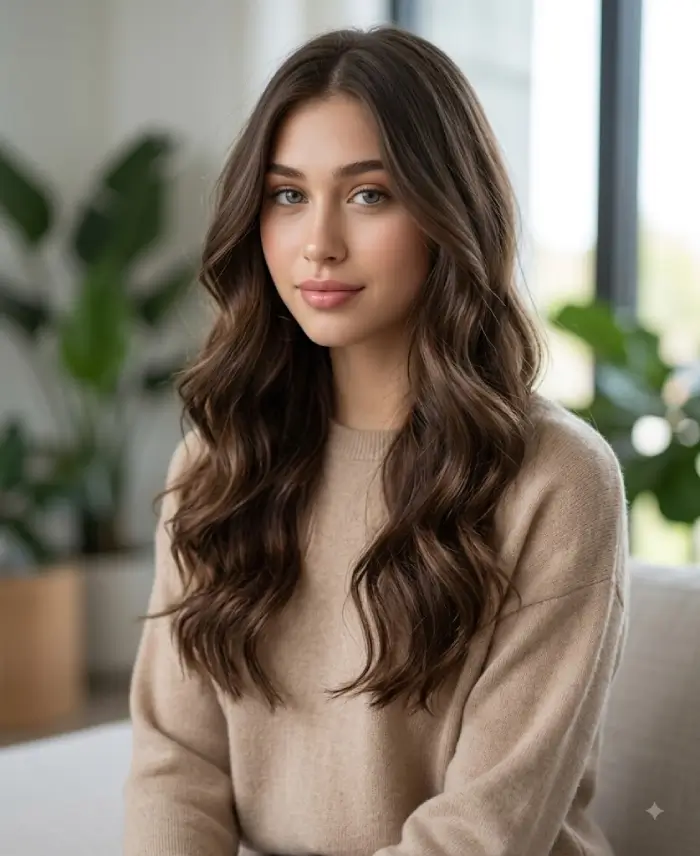
Walnut brown offers a quieter alternative to caramel or honey. It sits within a medium-to-deep brunette range and can include very subtle lighter pieces that become visible when the hair catches natural light. The effect is dimensional without looking heavily highlighted.
This makes it a strong choice for someone who wants a spring refresh but dislikes obvious color contrast. Straight hair can make the subtle tonal variation look polished, while waves reveal it through movement. Fine hair may benefit from the visual depth of multiple close brunette tones, whereas thick hair can carry slightly brighter ribbons.
Maintenance is generally easier when the color remains close to the natural base. A softly blended root reduces the visibility of new growth, and occasional glossing can restore shine when the ends begin to look dry.
Ask your stylist for a warm walnut base with very fine, low-contrast illumination rather than traditional chunky highlights. This is also a useful option if you are transitioning away from an overly light color and want to return gradually to a richer brunette.
10. Soft Brunette Melt With Curtain Fringe
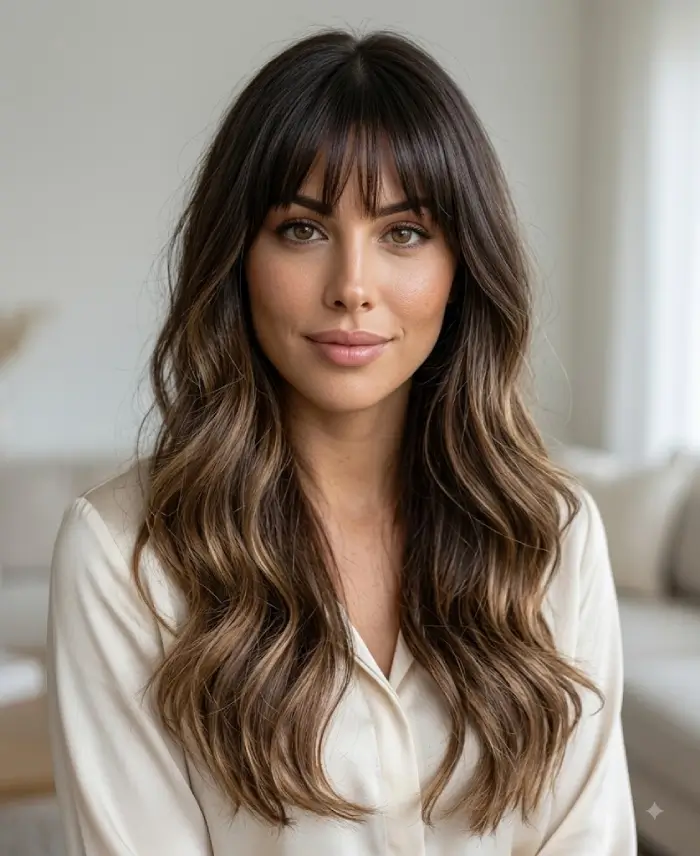
A brunette melt with curtain fringe combines warm dimensional color with a face-framing haircut. The base stays brunette while caramel or honey pieces are blended through the lengths, and the curtain fringe opens around the forehead and cheekbones.
The color is versatile across straight and wavy textures. Curly hair can wear a modified version, although the highlight placement needs to follow the curl pattern rather than being designed only for straight hair. Fine hair can benefit from restrained color placement because too much lightening can compromise the appearance of fullness. Thick hair provides more room for layered dimension.
Curtain fringe adds a styling consideration. It usually requires some shaping while drying, particularly if your natural hair falls forward. However, it tends to grow out more gracefully than very short blunt bangs.
Ask for a brunette root melt with soft caramel pieces concentrated around the face and through the movement of the hair. For the fringe, request a curtain shape that blends into the shortest face-framing layers instead of ending abruptly.
11. Midnight Brunette With Smoky Dimension
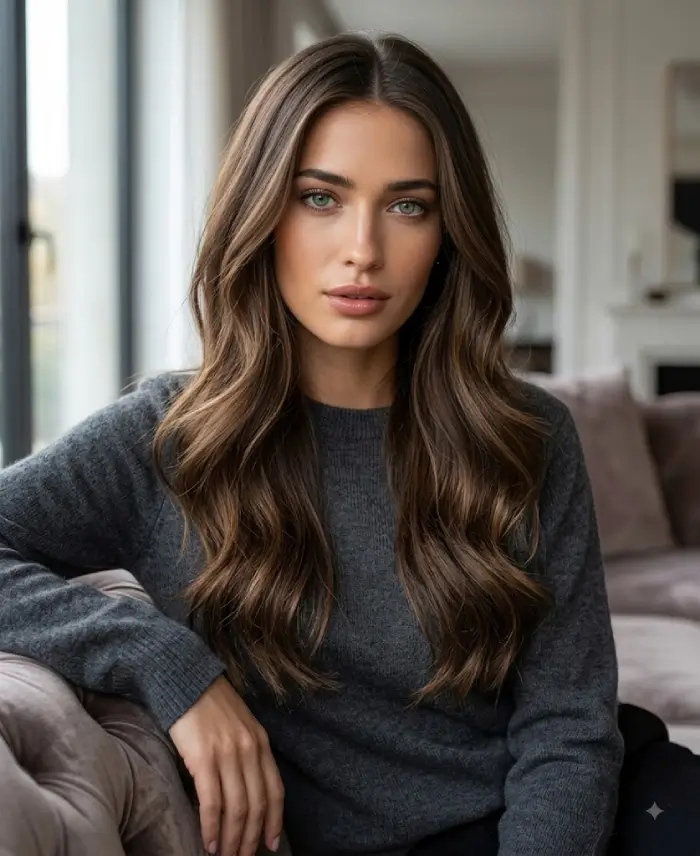
Midnight brunette uses an exceptionally deep brown base with softer brown ribbons that prevent the color from appearing completely flat. It is a good choice for someone who likes dark hair but wants more visual movement than an all-over black or single-tone brunette.
The shade works particularly well on thick, long hair because subtle tonal variation becomes visible as the hair moves. Straight hair gives it a sleek, refined quality, while waves make the smoky ribbons more noticeable. Fine hair can wear the color too, although the highlight contrast should remain restrained.
This is one of the lower-maintenance ideas when the dimensional pieces remain close to the base. The darker overall palette means small amounts of fading are less obvious than with pale blonde. A gloss can restore shine, particularly if the ends become porous.
When speaking to your stylist, ask for a deep brunette rather than true black, with subtle smoky-brown dimension. If your natural hair is already very dark, the stylist may be able to create the effect with minimal lightening.
12. Warm Sable Layers With Feathered Movement
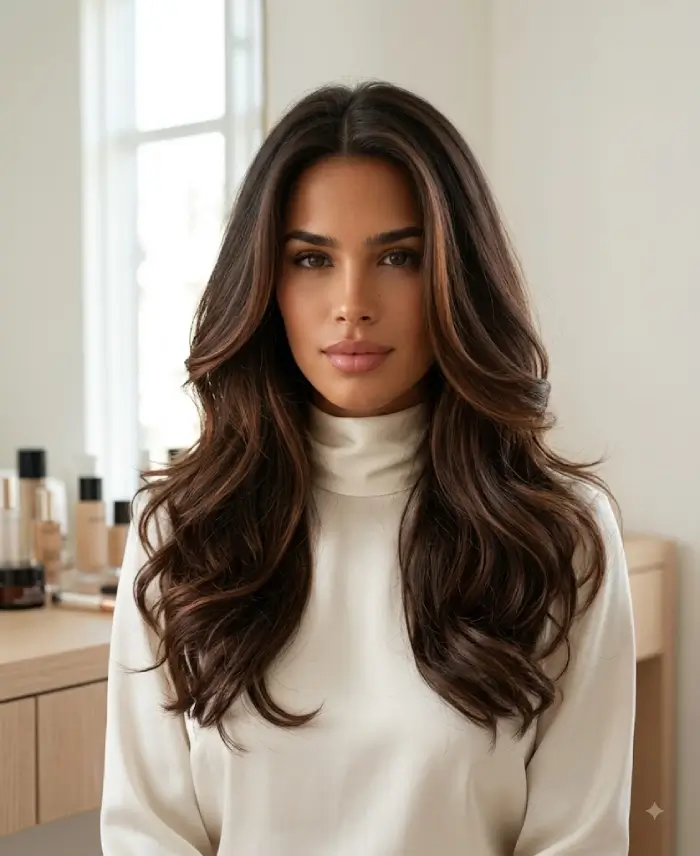
Warm sable layers pair a rich brown color with long, feathered layers. The haircut is important because the lighter and darker tones become visible as the layers overlap and separate. Instead of relying on dramatic highlights, the look gets much of its interest from movement.
This is especially attractive on medium to thick hair that can support long layers without losing too much density. Straight hair can be blow-dried into a smooth feathered shape, while waves create a softer, more casual interpretation. Fine hair should be layered with restraint because excessive removal can make the ends appear sparse.
The styling requirement is moderate if you want the classic feathered effect. A round brush can help direct the layers away from the face, while a lightweight styling product can control flyaways. Air-drying will produce a more natural result.
Ask for warm sable or golden-brown dimension with long, blended layers and soft face framing. If you prefer minimal styling, tell your stylist so the layers are designed to cooperate with your natural texture rather than requiring a daily blowout.
13. Honey-Rooted Blonde With Sunlit Swirls
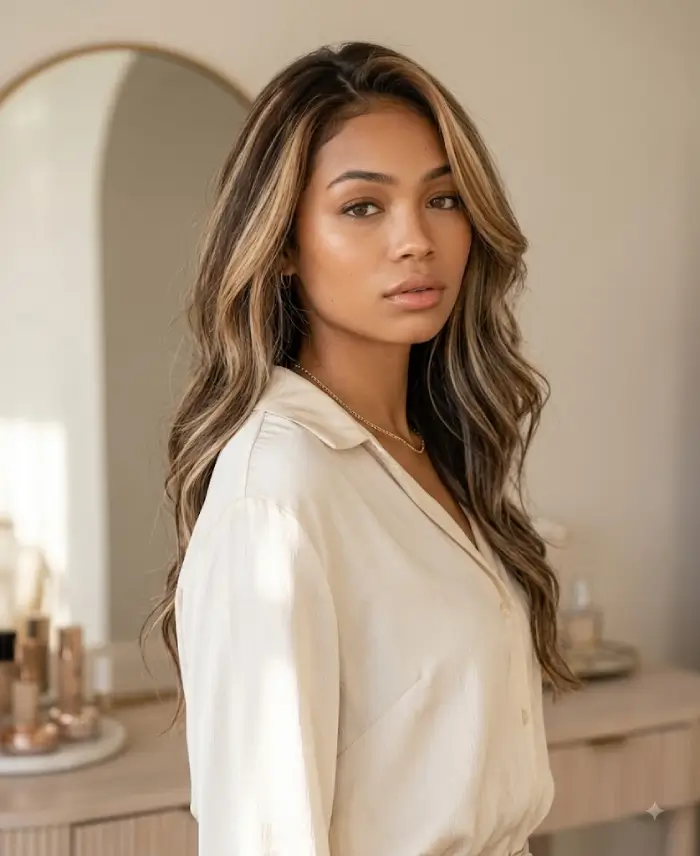
Honey-rooted blonde keeps some warmth and depth near the scalp while introducing brighter golden-blonde movement through the lengths. The darker root makes the transition less stark than an all-over light blonde and gives the color a softer appearance.
This is best suited to someone comfortable with a noticeable amount of lightening. Naturally light brown or dark blonde hair may reach the target more easily, while very dark brunette hair can require multiple stages to create a bright honey result. Hair condition should be considered before substantial lightening.
Straight, wavy, and curly hair can all wear the color, but textured hair often makes the dimensional placement particularly attractive. Fine hair needs careful processing because excessive lightening can make fragile ends feel rough.
The grow-out is more forgiving than a traditional solid blonde when the root is deliberately blended. Ask for a honey-beige or golden blonde that remains warm rather than overly yellow, with a soft root transition. If you want the brightness without constant root appointments, request the lightest pieces to begin slightly below the scalp.
14. Champagne Beige Waves With Polished Volume
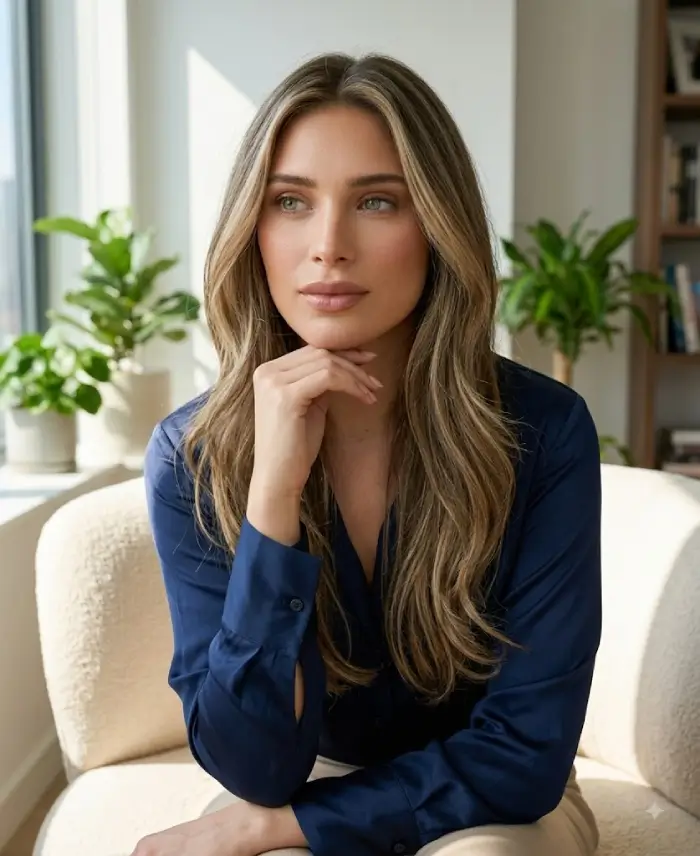
Champagne beige sits between warm blonde and neutral beige, making it useful when you like brightness but do not want an intensely golden result. The color can be particularly attractive on warm-neutral complexions because it introduces lightness while retaining some softness.
Waves and volume help reveal the subtle tonal variation. Straight hair can look equally sophisticated, although maintaining a polished finish may require more styling. Fine hair can use root-lifting products and large rollers to create volume, while thick hair generally has enough density to carry the shape naturally.
This is a more maintenance-intensive direction if your natural hair is significantly darker because reaching a light beige level can require substantial lightening. A toner or gloss may also be needed periodically to keep the shade balanced.
Ask your colorist for a champagne-beige blonde with a softly warm-neutral finish. Avoid simply requesting “ash blonde” if you have warm undertones and want the color to retain some golden softness. The exact formula should be adjusted to your starting color and the result you want in natural light.
15. Bronzed Contour Bob With Soft Edge
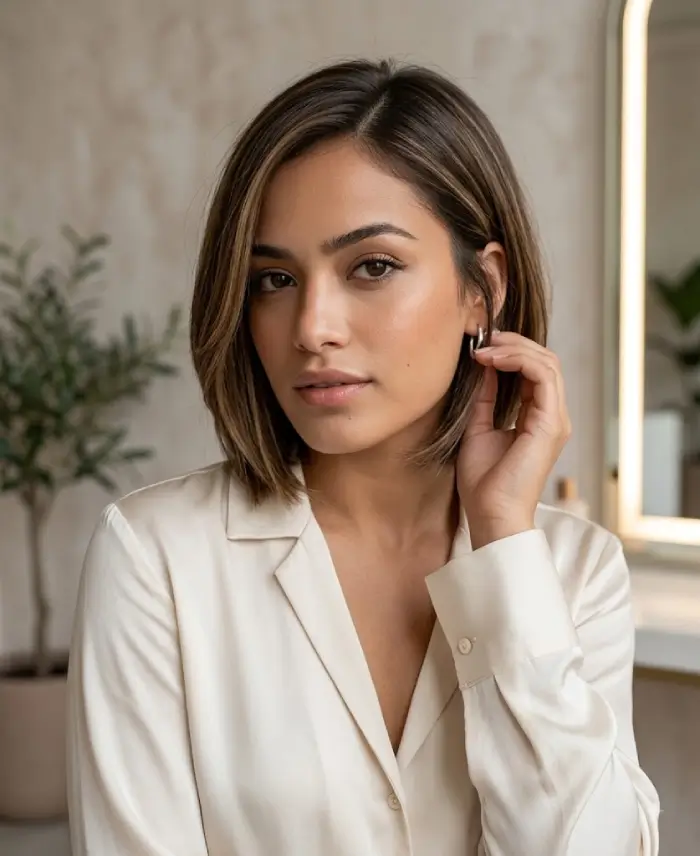
A bronzed contour bob combines a short haircut with warm highlights placed strategically around the face and outer shape. The highlights are not simply scattered throughout the hair; they are intended to emphasize the bob’s structure.
This can be particularly effective on straight or softly wavy hair because the shape of the cut remains visible. Fine hair can benefit from restrained highlights that create dimension without removing too much density, while thick hair can accommodate more variation. Curly hair can wear the idea too, but the contour placement should be designed around the curl pattern.
A short bob means regular trims are likely, but the color itself can remain relatively manageable if the roots are blended. Styling can range from air-dried texture to a sleek blowout.
Ask for a short bob with a clean but softened perimeter and bronzed face-framing pieces that follow the haircut. If you do not want obvious stripes, specifically request diffused transitions rather than high-contrast block color.
16. Bronze-Illuminated Espresso Curls
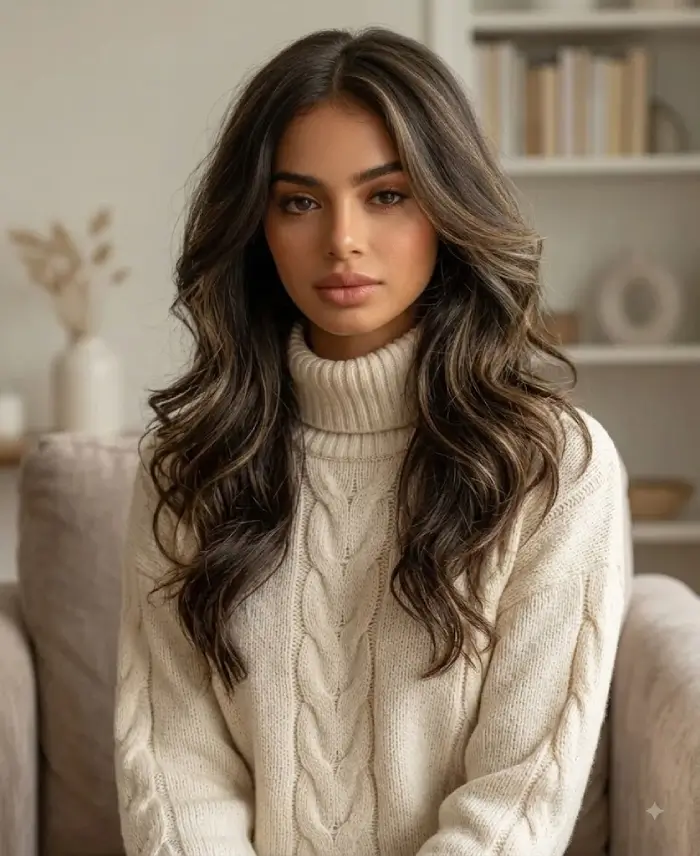
Bronze-illuminated espresso curls combine a deep brown foundation with warm bronze highlights distributed through the curl pattern. The darker base preserves richness, while the bronze pieces make individual curls easier to see.
Curly and coily hair can benefit visually from this type of placement because dimensional color can emphasize the shape and separation of the curl. However, lightening textured hair requires particularly thoughtful processing because dryness can become more noticeable when the hair is already prone to moisture loss. The goal should be healthy dimension rather than maximum brightness.
Fine curls may need only a handful of highlights, while dense curls can carry more pieces without the result becoming overwhelming. A moisturizing curl routine and gentle handling are important after color services.
Ask for bronze ribbons that follow the curl pattern rather than straight highlight placement designed for flat hair. If you want the color to remain dark overall, describe it as espresso with bronze illumination instead of asking for caramel or blonde highlights.
17. Toffee-Toned Fringe With Soft Mid-Length Waves
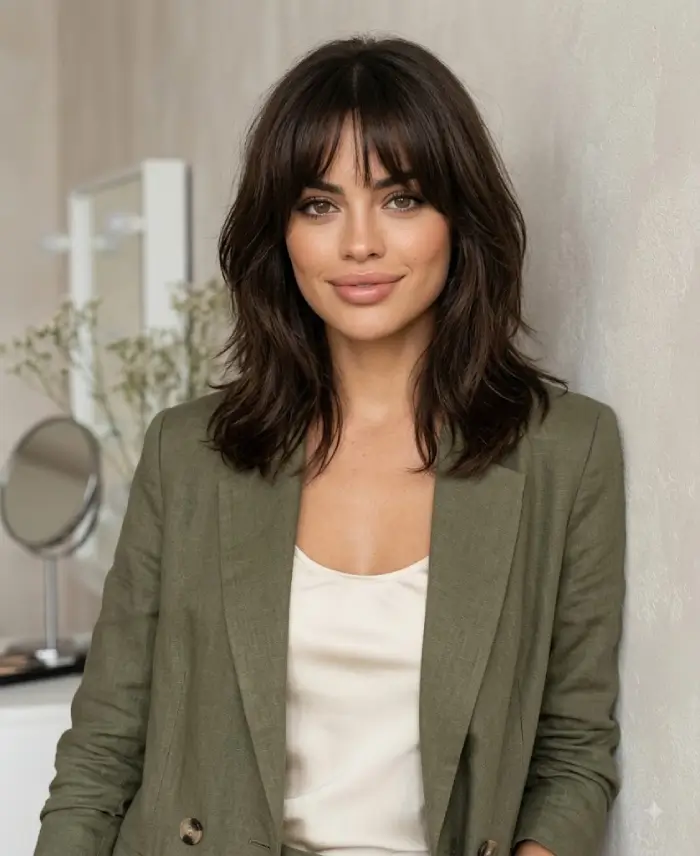
Toffee combines warm brown and caramel characteristics, making it a useful choice for someone who wants noticeable warmth without moving fully into blonde. Adding an airy fringe and mid-length waves gives the color a relaxed, approachable finish.
The shade works well across straight and wavy hair, while the fringe can be customized according to density and face shape. Fine hair should avoid an excessively heavy fringe because it may remove too much volume from the rest of the haircut. Thick hair may need some weight reduction so the fringe does not appear disconnected from the lengths.
Mid-length hair is convenient if you want enough length for ponytails, clips, or buns. The fringe is the portion that requires the most daily attention, particularly if your hair has a cowlick.
Ask for a warm toffee brown with subtle caramel dimension and an airy fringe that blends into the sides. If you want minimal maintenance, ask for longer curtain-style pieces rather than a very short straight fringe.
18. Rooted Honey Ombré With a Gentle Edge
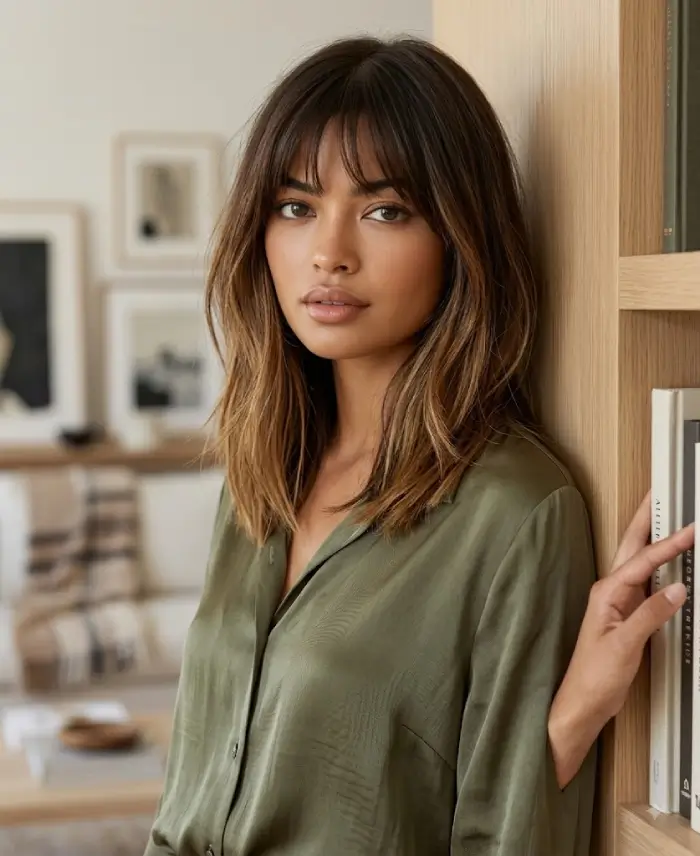
A rooted honey ombré transitions from a deeper brunette root into honey-toned ends. Unlike a heavily contrasted ombré, the modern version benefits from a gradual transition that avoids an obvious horizontal color line.
This can be a practical choice for someone who wants lighter ends but does not want frequent root coloring. The darker root allows new growth to blend naturally, while the lighter ends provide the spring refresh.
Straight hair reveals the color transition clearly, while waves make the blend appear softer. Thick hair gives the gradient plenty of room to develop, whereas fine hair may benefit from concentrating the lightest color toward the final few inches.
The ends will require more care than the roots because they carry the lightest color and are generally the oldest part of the hair. Ask your stylist for a soft honey transition with no abrupt line between brunette and blonde. If you regularly wear your hair in a ponytail, discuss where the lightest pieces should begin so the color remains balanced when the hair is pulled back.
19. Cocoa-Toned Shine Waves
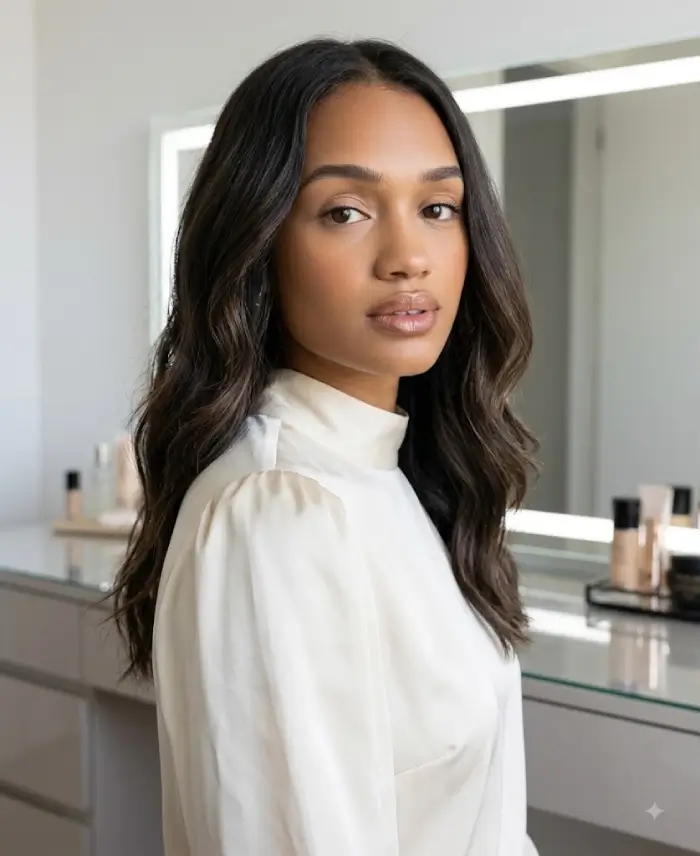
Cocoa brown is a rich brunette that can include subtle warm or neutral reflections rather than obvious highlights. It is a particularly useful choice when you want your spring change to feel refined instead of dramatically lighter.
The shade suits straight, wavy, and curly hair, and its simplicity can make it easier to maintain than highly contrasted balayage. Thick hair benefits from the reflective quality because the color can reveal movement across a large amount of hair. Fine hair can also look fuller when the ends remain a consistent, rich tone.
Shine is central to this look. Dryness or excessive buildup can make cocoa brown appear dull, so a lightweight conditioner and occasional gloss can help maintain its reflective quality. Heat protection matters if you regularly use hot tools.
Ask for a rich cocoa brown with warm-neutral dimension rather than a flat single-process brown. If you are nervous about dramatic color change, this is one of the safer directions because it can remain relatively close to many natural brunette bases.
20. Caramel Contour Highlights on Sleek Lengths
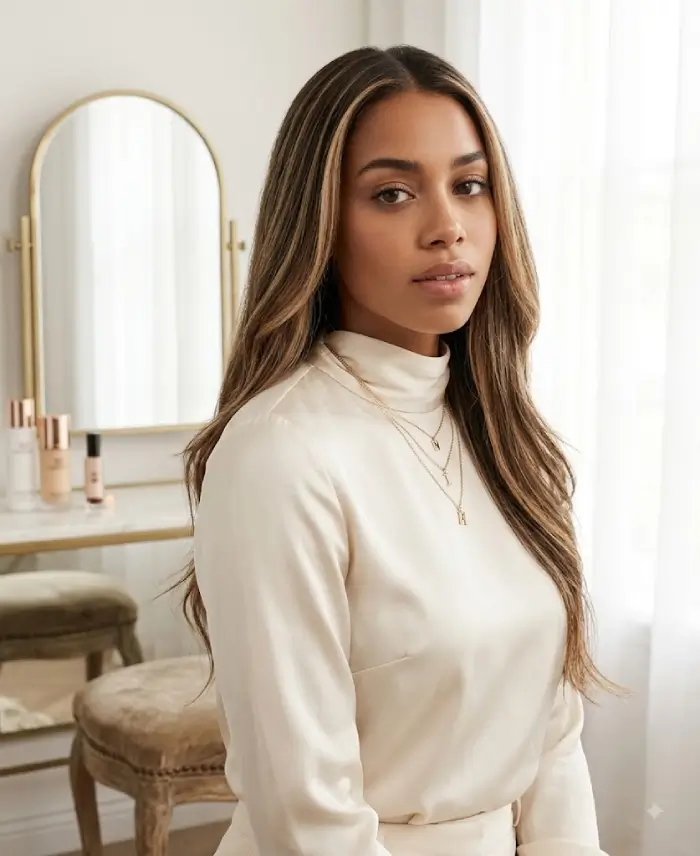
Caramel contour highlights concentrate warmth around the face and selected sections of the hair rather than covering the entire head. The technique can create a noticeable brightness boost without requiring a full blonde transformation.
This works especially well on medium to dark brown bases. Straight hair displays the contour placement with precision, while waves soften the transitions. Thick hair can carry several strategically placed pieces, whereas fine hair often benefits from fewer highlights placed where they will have the most visual impact.
Because the color begins near the face, regrowth can be more noticeable than with a very soft balayage. Ask for a root-smudged or diffused transition if you want longer intervals between appointments.
Heat styling is often part of a sleek version of this look, so use a heat protectant and avoid repeatedly passing a flat iron over lightened sections. In the salon, ask for caramel face-framing pieces that blend into the mids rather than two bright front streaks.
21. Soft Honey Balayage With Rounded Mid-Length Waves
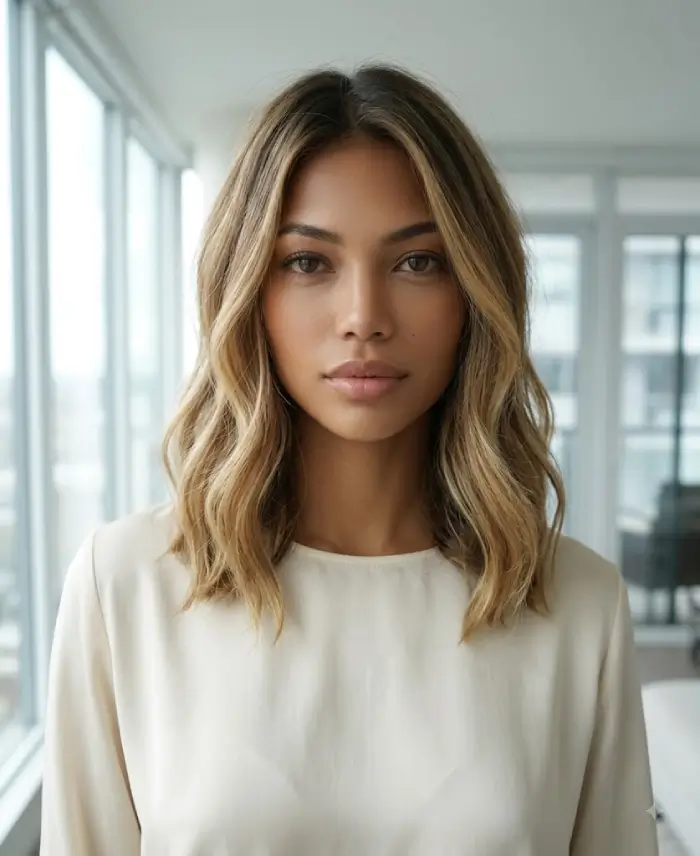
Soft honey balayage is a classic warm-toned choice because it creates brightness while retaining depth at the root. The rounded waves make the placement look especially dimensional as lighter pieces curve around the hair.
This option works across many brunette bases, although the starting depth affects how bright the final honey can become. Medium brown hair may need less lightening than very dark brown hair. Straight hair can still showcase the color, but loose waves often reveal more of the tonal variation.
It is a good choice for someone who wants visible change without committing to a fully blonde head. A blended root also makes the grow-out more forgiving. Fine hair should not be overloaded with highlights, while thick hair can carry broader ribbons.
Ask for soft honey balayage with slightly brighter pieces through the mid-lengths and ends and a natural-looking root. If you want the color to remain warm but not brassy, tell your colorist that you prefer golden honey rather than orange-gold.
22. Caramel-Glazed Blowout With Radiant Lift
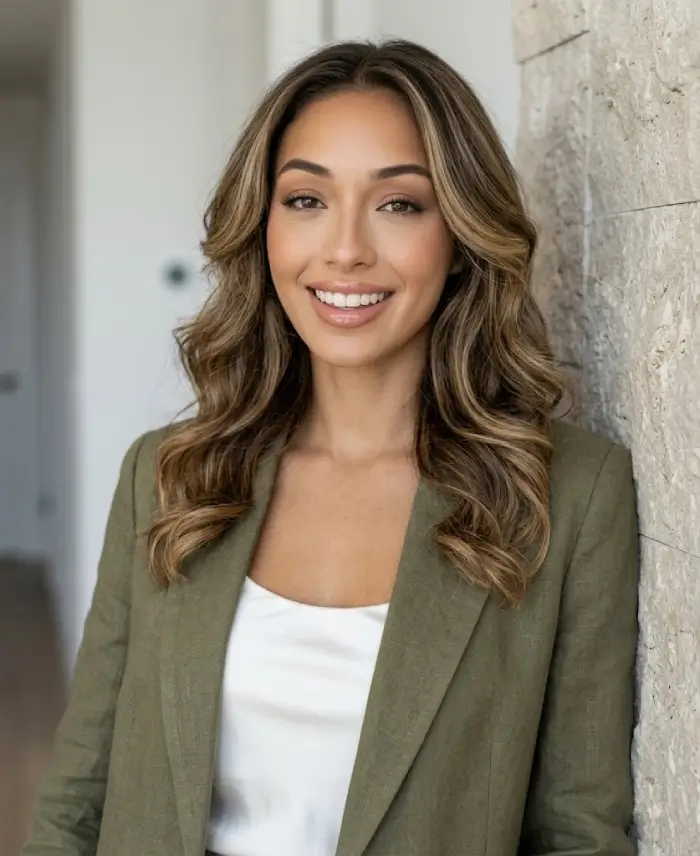
Caramel-glazed hair combines a warm brown or brunette base with glossy caramel dimension, while the blowout supplies the volume. The result is less about dramatic contrast and more about creating a polished surface where the lighter pieces reflect light. If you love multidimensional pops of color on textured locks, browse these curly peekaboo hair color ideas.
Medium to thick hair generally makes the blowout easier because it naturally supports volume. Fine hair can achieve the shape with root-lifting products, rollers, or a round brush, but the style requires more active styling.
The color itself can be relatively versatile. A softly blended caramel glaze is easier to maintain than a bright blonde transformation, although the exact upkeep depends on how much lightening is involved.
Ask for caramel dimension that looks soft and glossy rather than highly contrasted. If you rarely blow-dry, ask your stylist to create a cut and color that still looks attractive with your natural texture. The most useful inspiration photo is one that shows the color without a professional blowout hiding the actual haircut and placement.
23. Espresso Soft-Shag With Fluffy Curtain Fringe
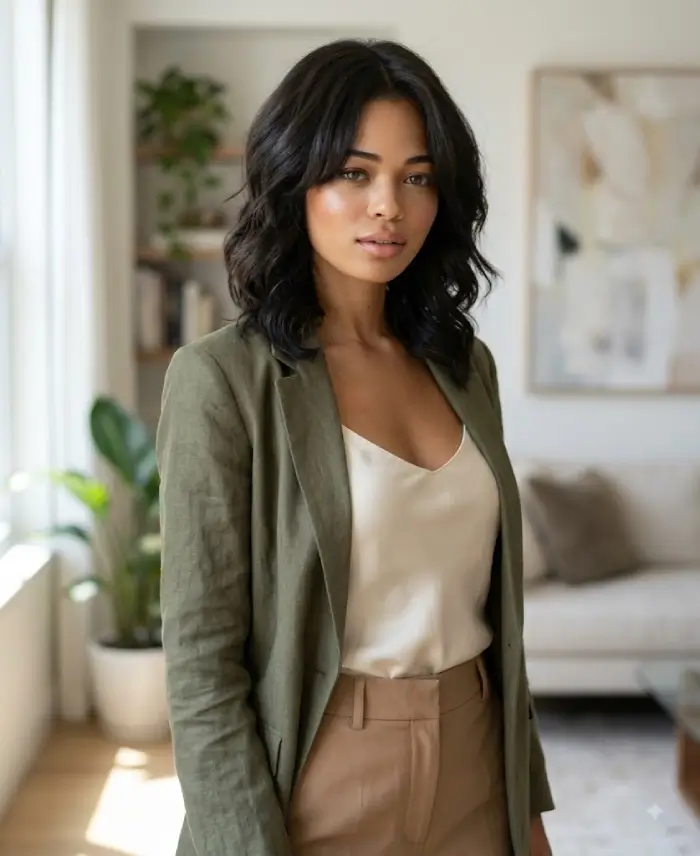
This variation combines a dark espresso color with a layered, relaxed shag and a soft curtain fringe. The darker color keeps the look sophisticated, while the haircut provides movement and separation.
Wavy and textured hair can make this style relatively easy because the layers are intended to move rather than sit perfectly. Straight hair can also wear it but may need texture spray, mousse, or a few loose bends to show the shag shape. Thick hair often responds well to strategic layering, while fine hair needs careful cutting so the ends do not become too sparse.
The curtain fringe requires some shaping, but it is generally more forgiving than a short blunt bang. The espresso color itself can be low maintenance when kept close to the natural base.
Ask for a soft shag rather than an aggressively choppy cut, especially if you want to preserve density. Tell your stylist that you want the curtain fringe to connect gradually into the layers and that the overall silhouette should remain wearable between styling sessions.
24. Deep Chocolate Ribbon Lights With Soft Waves
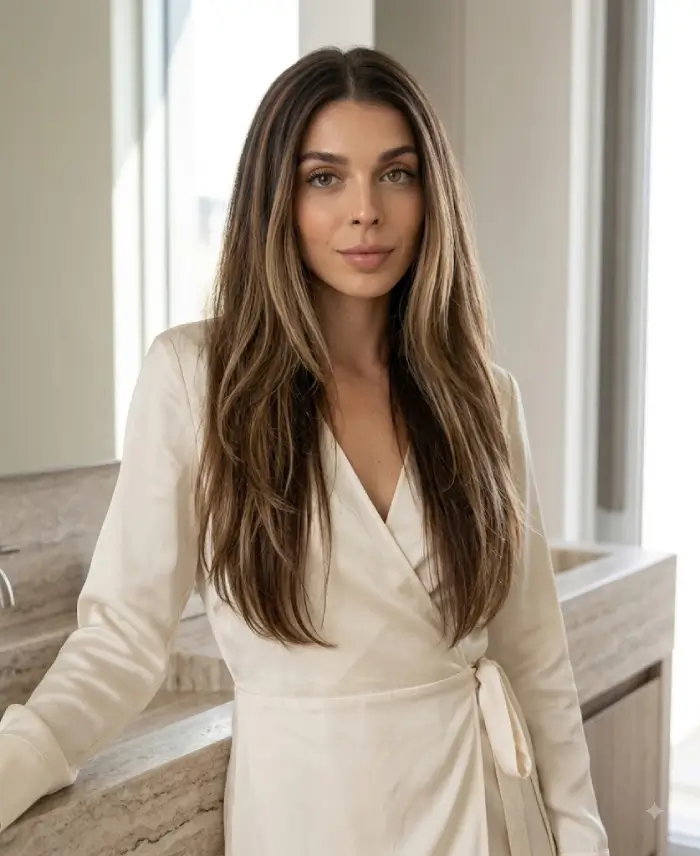
Chocolate ribbon lights create subtle dimension by placing slightly lighter warm-brown ribbons through a deep chocolate base. The contrast remains close enough that the result looks rich rather than heavily highlighted.
This is one of the more approachable options for someone with naturally dark brunette hair. Straight hair displays the ribbons cleanly, while waves create flashes of lighter brown as the hair moves. Thick hair can handle more ribbons, whereas fine hair often looks better with a smaller number of strategically placed pieces.
Because the color difference is subtle, grow-out can be relatively forgiving. A gloss can help maintain the richness of both the base and ribbons. If your hair is very dark and resistant to lightening, ask whether a tonal brunette gloss could provide enough dimension before committing to extensive highlights.
For the salon, request deep chocolate with soft ribbon lights in a slightly warmer brown. Avoid overly light caramel if your goal is subtle tone-on-tone dimension.
25. Warm Contour Highlights on Classic Layers
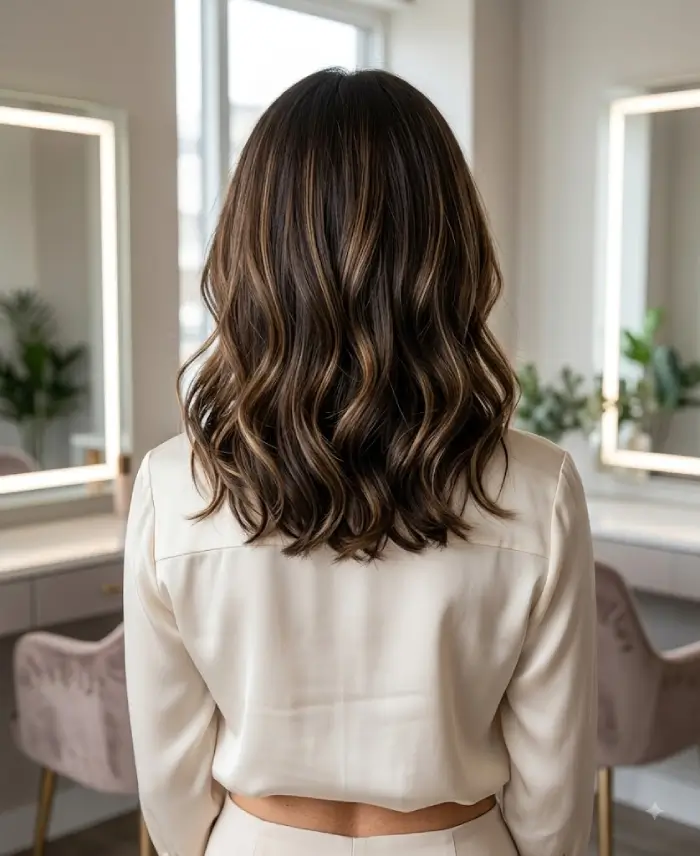
Warm contour highlights on classic layers use lighter pieces around the face and through selected layers to emphasize movement. The haircut itself does much of the work: every time a layer lifts or curves, the color becomes more visible.
This is especially effective on long or medium-length hair with visible layering. Straight hair shows the placement clearly, while waves and curls create more scattered flashes of brightness. Thick hair offers plenty of room for dimension, while fine hair should be highlighted selectively to preserve a sense of fullness.
The style can be adapted from subtle to bold. For a lower-maintenance result, keep the root area deeper and concentrate the lightest pieces around the face and lower layers. If the highlights begin close to the scalp, regrowth will be more apparent.
Ask for warm contour pieces that follow the existing layers rather than a uniform highlight pattern. If you already have face-framing layers, bring attention to them so the colorist can use the haircut to determine placement.
26. Textured Chestnut Bob With Sunlit Ribbons
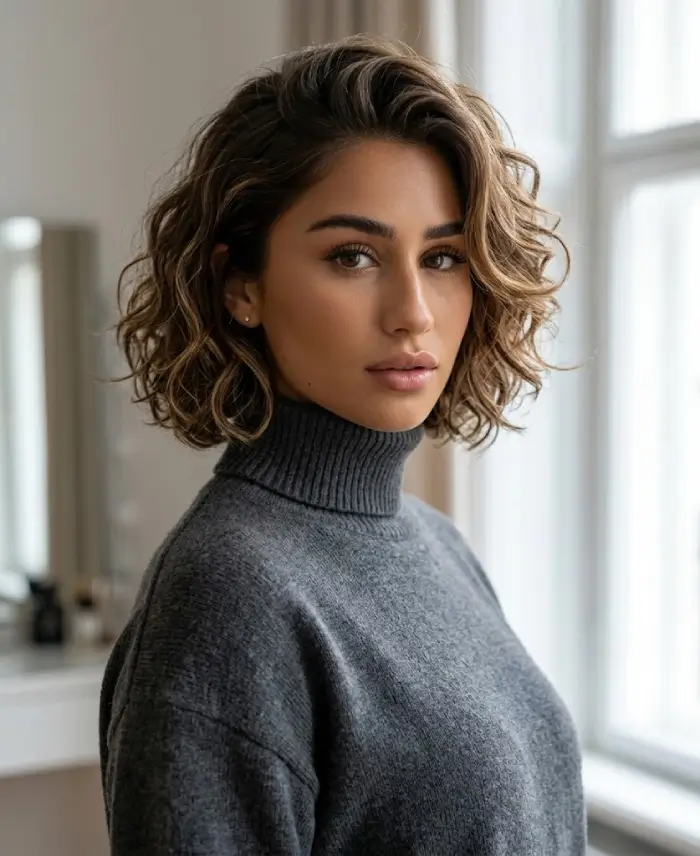
A textured chestnut bob combines warm brunette color with lighter ribbons and a deliberately relaxed haircut. The shorter shape gives the chestnut tone a strong presence, while texture keeps the overall effect modern rather than overly polished.
This can suit wavy and slightly textured hair particularly well. Straight hair can create a sleeker version, while fine hair benefits from restrained texturizing so the ends do not look too thin. Thick hair may need internal weight removal to keep the bob from becoming too bulky.
The lighter ribbons can be placed around the face and through the top layers so they remain visible even when the hair is air-dried. A short bob requires regular trimming, but a blended root keeps the color more forgiving.
Ask for a textured bob with a strong enough perimeter to preserve fullness and subtle chestnut-to-honey ribbons through the movement. If your hair is naturally straight, ask how the cut will look without daily curling before committing to a heavily textured version.
27. Shadow-Root Beach Waves With Taupe Highlights
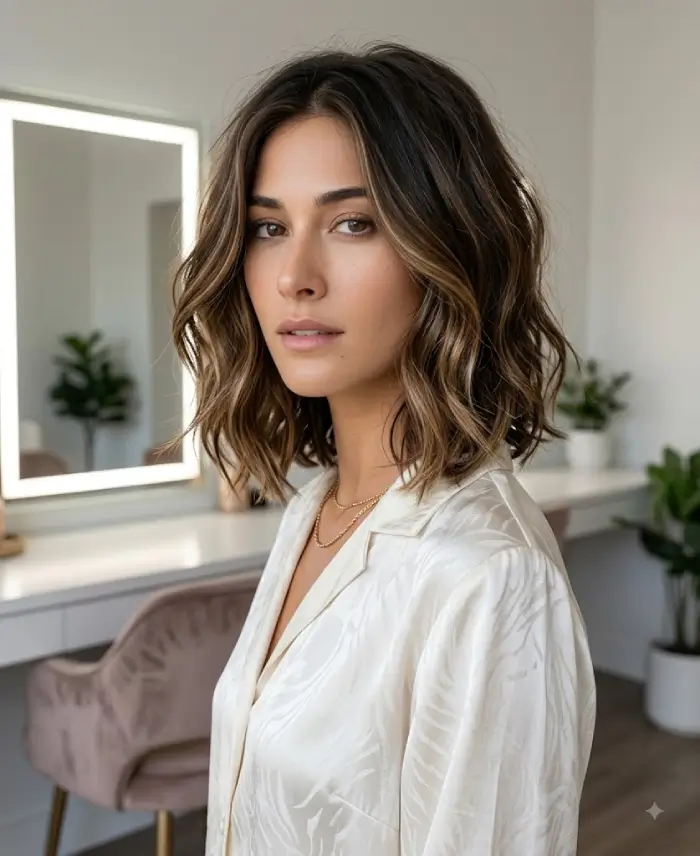
A shadow root keeps the natural-looking depth at the scalp while taupe highlights create a softer, slightly muted dimension through beachy waves. This is useful if you want something less golden than traditional honey or caramel.
Although warm skin tones often pair naturally with golden shades, warm undertone does not automatically mean every color needs to be strongly yellow or orange. A warm-neutral complexion can often support softened beige or taupe when the overall formula is balanced.
Waves make the color particularly attractive because the root depth and lighter sections move together. Straight hair can wear it too, but beach-wave styling may be necessary to reproduce the inspiration.
The shadow root improves grow-out because the darker base remains intentional. Ask for a soft root shadow and muted beige-taupe ribbons rather than an icy ash blonde. If your hair is naturally very warm, ask how the colorist will keep the result from turning excessively orange as the toner fades.
28. Cinnamon-Hazelnut Gloss With Sculpted Waves
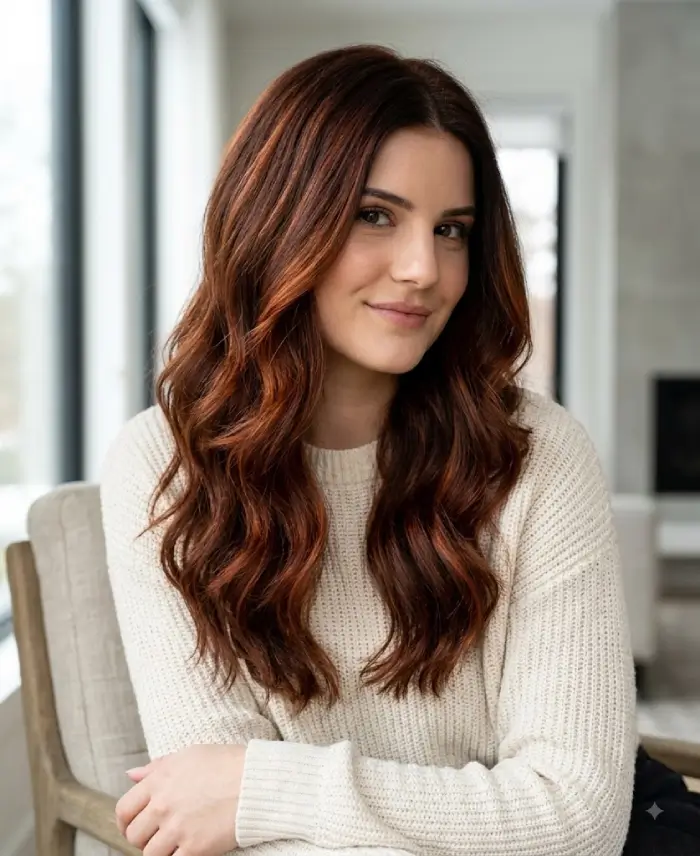
Cinnamon-hazelnut combines warm brown, reddish cinnamon, and nutty brunette tones. The result is richer than ordinary caramel and softer than a bright copper. A gloss finish makes the color look particularly dimensional when paired with waves.
This shade can suit golden, peachy, and warm-neutral complexions. Warm olive skin may benefit from keeping the cinnamon component brown-based rather than intensely orange. Straight hair can showcase the gloss, while waves make the tonal variation easier to see.
Red and copper-influenced brunette shades can require more refreshing than neutral brown because warmth may shift as the color fades. A color-preserving routine and occasional salon gloss can help keep the shade intentional.
Ask your stylist for a cinnamon-hazelnut brunette rather than a bright copper. If you want the color to remain professional and wearable, request a deeper brown foundation with cinnamon warmth concentrated through selected sections.
29. Warm-Toffee Cascade Balayage
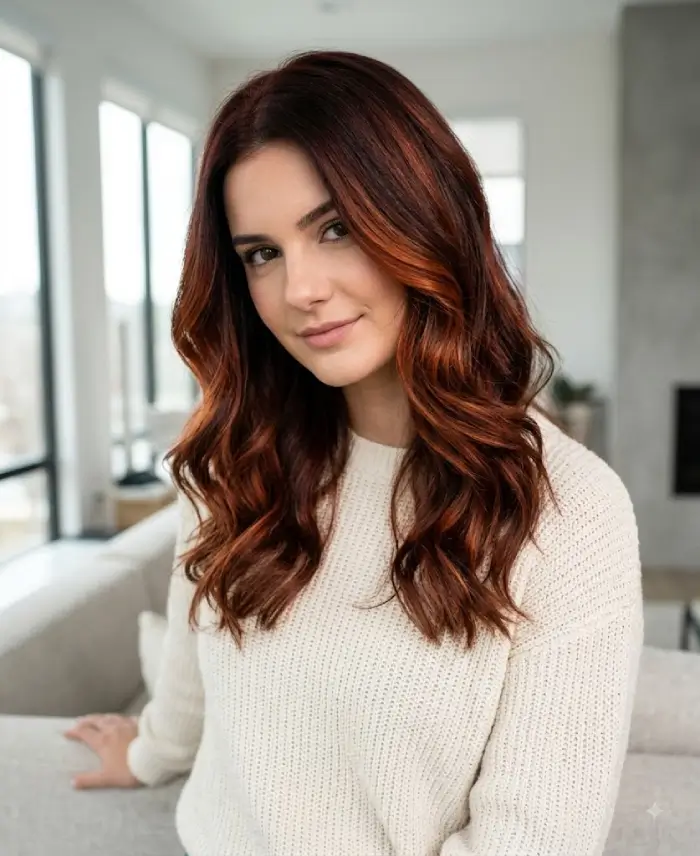
Warm-toffee cascade balayage creates a gradual movement from a deeper brunette base into toffee and bronze through the lengths. It offers more visible brightness than a chocolate ribbon but usually feels softer than a traditional blonde balayage.
Long hair is particularly suited to this placement because there is enough length for the color to transition gradually. Thick hair creates impressive movement, while fine hair can still wear it when the stylist keeps the lightest pieces strategically placed. Waves make the color look especially dimensional.
This is a good option for someone who wants lighter ends without constant root coloring. The main maintenance concern is the condition of the lightened sections. Heat protection, conditioning, and careful detangling can help preserve the finish.
Ask for a warm-toffee balayage with a deep root and a gradual transition rather than a hard ombré line. If your natural hair is very dark, discuss how light you realistically need the ends to become and whether a softer bronze-toffee target would require less processing.
30. Caramel-Shadow Layers With Airy Movement
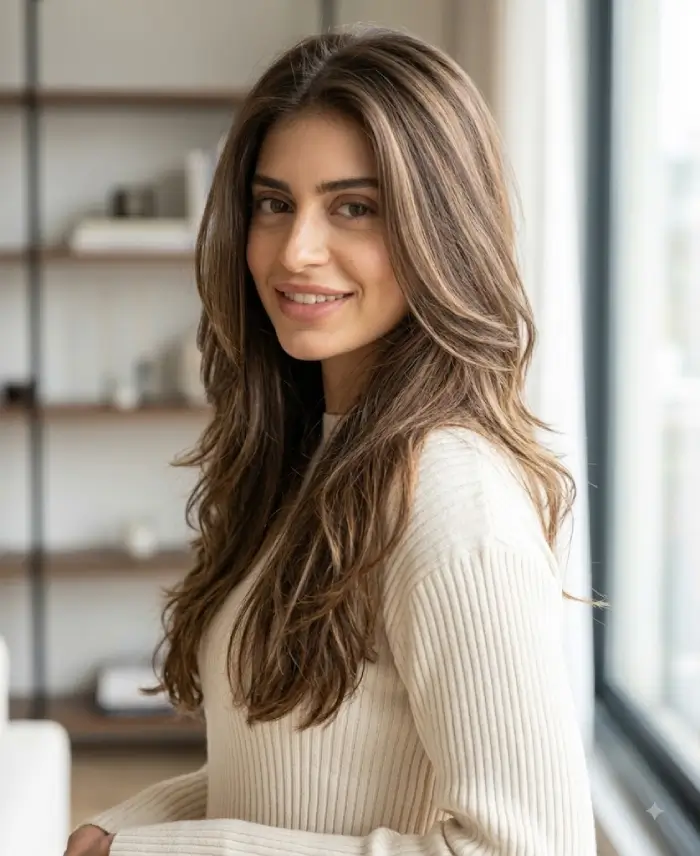
Caramel-shadow layers combine a deeper brunette foundation with strategically placed caramel pieces throughout long, airy layers. The darker areas provide depth while the lighter sections appear and disappear as the layers move.
This is a particularly useful approach for people who want dimensional color without a high-contrast, heavily highlighted appearance. Medium and thick hair can display the layers beautifully, while fine hair should be cut with enough weight at the perimeter to prevent the ends from becoming wispy.
Wavy hair can make this style naturally dynamic, but straight hair can also showcase it with a round-brush blowout or loose bends. A blended root makes the color easier to maintain, while occasional glossing can restore shine.
Ask your stylist for long, blended layers with caramel pieces placed where the layers naturally separate. If you want the lowest possible maintenance, keep the brightest pieces away from the scalp and let the natural root remain part of the design.
How to Choose a Spring Hair Color for Warm Skin
Start with undertone rather than skin depth. Warm skin can be fair, medium, deep, golden, peachy, or olive, and two people with similar skin depth can still respond differently to the same hair color.
Golden and peachy warm undertones often harmonize easily with honey, caramel, golden brown, cinnamon, and warm chestnut. Warm olive skin can be more nuanced; rich brown, chestnut, auburn-brown, and controlled golden highlights may work better than extremely yellow blonde.
Then consider contrast. If you naturally have very dark hair and want a subtle change, chocolate ribbons or espresso gloss may be enough. If you want a visible transformation, face-framing caramel, honey balayage, or honey-rooted blonde creates more contrast.
Finally, think about your maintenance tolerance. A beautiful color that requires a salon visit every few weeks may not be the right color for someone who wants a low-effort routine.
Warm Golden Undertones
Golden undertones generally have a yellow, peach, or sunlit quality. Honey, caramel, golden brown, warm chestnut, and warm beige-blonde families are natural directions to explore. The goal is not necessarily to make the hair as warm as possible; it is to choose a warmth that echoes the complexion without becoming overly yellow.
For a subtle change, consider chocolate brown with honey ribbons. For medium contrast, try caramel balayage or a chestnut melt. If you want something bolder, honey-rooted blonde or cinnamon-hazelnut can create a stronger seasonal shift.
If your natural hair is dark, remember that bright warm blonde usually requires more lightening than a caramel brunette. Ask your colorist what level can be reached while maintaining the condition of your hair.
Warm Olive Undertones
Warm olive skin often contains both golden warmth and a muted green quality, which can make extremely yellow or orange shades feel overpowering. Rich brunette families, chestnut, hazelnut, mocha, soft auburn-brown, and carefully balanced caramel can be useful starting points.
That does not mean olive skin has to avoid blonde. A muted honey, beige-gold, or soft toffee can work when the tone is customized rather than intensely yellow.
Placement matters as much as the shade. Face-framing highlights can create warmth exactly where you want it without turning the entire head golden. If you are unsure, ask your stylist to compare two swatches or formulas near your face before choosing a full transformation.
Warm-Neutral Undertones
Warm-neutral skin gives you more flexibility because it can often accommodate both warm and balanced shades. Chocolate, walnut, caramel, honey, beige blonde, toffee, and soft cinnamon can all be adapted depending on how much contrast you prefer.
This is a useful undertone for experimenting with dimensional color rather than committing to one obvious shade. For example, a neutral brunette can transition into caramel through the ends, or a honey balayage can be toned slightly more beige.
Tell your stylist whether you want the finished result to read golden, neutral, or slightly muted. Color names are not standardized between salons, so the visual target matters more than the label.
Best Spring Hair Colors by Natural Hair Type
Fine Hair
Fine hair often benefits from color placement that creates visual dimension without excessive processing. Tone-on-tone brunette ribbons, subtle caramel pieces, and strategically placed face-framing highlights can create movement while allowing the haircut to retain fullness.
Avoid automatically asking for the maximum number of highlights. Lightening every section can make fine ends look more transparent, especially if the hair is already fragile. A smaller number of carefully positioned pieces can have a stronger visual effect.
Glossy espresso, cocoa brown, chestnut melts, and subtle honey balayage are particularly practical directions. If you want blonde, discuss the condition and density of the ends first.
Thick Hair
Thick hair gives you plenty of room to play with dimensional color. Wider balayage ribbons, layered highlights, contour pieces, and deeper-and-lighter color combinations can remain visible without overwhelming the overall look.
The main challenge is placement. Too many highlights can make thick hair look visually busy, while too little contrast can disappear within the density. Layered hair can help reveal different shades as it moves.
Caramel, honey, cinnamon, chestnut, bronze, and chocolate combinations all work well as starting points. Ask your stylist to place lighter pieces according to the haircut rather than simply distributing them evenly.
Straight Hair
Straight hair displays color placement with exceptional clarity. Face-framing highlights, contour pieces, ombré transitions, and ribbon lights can look very precise because there is less natural movement to disguise the placement.
That also means blending matters. Any harsh transition can become more obvious on straight hair, so request soft edges if you do not want a graphic look.
Glossy espresso, cocoa brown, caramel contour highlights, honey balayage, and rooted blonde can all work. If you want a deliberately high-contrast appearance, straight hair can showcase it particularly well.
Wavy Hair
Waves are excellent for dimensional color because the bends naturally separate lighter and darker sections. Balayage, ribbons, contour highlights, and warm brunette combinations can look particularly lively without requiring a perfectly polished finish.
Choose products that support your wave pattern without leaving heavy buildup. If the hair is color-treated, maintaining moisture becomes especially important.
Caramel wavy bobs, walnut waves, bronze espresso, chocolate ribbons, and soft honey balayage are strong choices. Ask your stylist to place highlights where the wave naturally forms rather than treating the hair as if it were completely straight.
Curly Hair
Curly hair needs color placement that respects curl formation. Highlights should be designed around the way the curls coil, because straight-line placement can look completely different once the hair returns to its natural shape.
Warm bronze, chestnut, cinnamon-brown, honey, and espresso combinations can create beautiful dimension. If the hair is tightly curled or coily, discuss the lightening process and condition of the strands before choosing a significantly lighter color.
A few strategic highlights may be more effective than extensive lightening. Ask your stylist to assess the curls in their natural state and to place the brightest pieces where they will actually be visible.
Coily Hair
Coily hair can look especially striking with dimensional warm color because different sections of the pattern naturally catch light. Rich chocolate, chestnut, bronze, caramel, and warm auburn-brown can create depth without requiring an extremely light result.
Because coily hair can be vulnerable to dryness, chemical processing deserves particular attention. A bold color is not automatically better if achieving it requires excessive lightening.
Consider concentrated face-framing pieces, subtle ribbons, or a warm gloss if you want change without extensive bleaching. Ask your stylist how the chosen color will behave on your natural curl pattern and whether the target shade can be achieved gradually.
Best Spring Hair Colors by Face Shape
Round Face
Color cannot change the physical structure of a face, but placement can influence where the eye notices brightness and movement. For a rounder face, some people prefer lighter pieces that begin slightly below the widest part of the cheeks rather than very bright blocks directly beside them.
Longer layers, a side part, or vertical color placement can also create a more elongated visual rhythm. Caramel-shadow layers, warm contour highlights, and longer balayage transitions are useful directions to explore.
The important point is personalization. If you love a bright face frame, you do not need to avoid it; simply discuss where the lightest sections should begin.
Oval Face
Oval proportions are adaptable to many color placements, so your main decision can be how much contrast and maintenance you want.
A soft honey balayage can provide a subtle change, while hazelnut face framing or honey-rooted blonde creates more visible brightness. Shorter styles such as the bronzed contour bob can also work if you want the haircut and color to reinforce each other.
Use the color to emphasize the features you like rather than choosing it solely according to a face-shape rule.
Square Face
If you want to soften the appearance of strong facial angles, blended color can help create movement around the sides of the face. Warm ribbons through layered hair can prevent the overall look from appearing too solid or block-like.
Chestnut layers, caramel contour highlights, and cinnamon-toned waves are good examples. Face-framing pieces can be kept soft rather than sharply geometric.
If you prefer a crisp, graphic look, a sleek dark brunette with precise caramel pieces can work too. Face shape should guide customization, not dictate a strict list of colors you are supposedly allowed to wear.
Heart-Shaped Face
Heart-shaped faces often have more visual width around the forehead and a narrower jaw. Softly distributed color around the mid-lengths and lower face can help create balance.
Curtain fringe with a brunette melt, caramel-shadow layers, or a soft honey balayage can work well when the brighter pieces are blended rather than concentrated only at the temples.
If you want a bold face frame, ask your stylist to connect the lighter pieces into the lower layers so the color flows toward the jaw instead of stopping abruptly near the cheekbones.
Long Face
If you want to visually reduce emphasis on length, consider color and styling that create horizontal movement and fullness around the sides. Waves, rounded blowouts, and layered color can help create that effect. Before taking the plunge with a drastic new shade and cut, review our practical guide on how to choose the right hairstyle.
Cocoa waves, cinnamon-swirled blowouts, warm contour layers, and caramel-glazed styles are useful inspiration. A bright vertical streak from the roots through the ends may emphasize length more strongly, so discuss placement if that is not your goal.
Again, these are styling preferences rather than rules. The best color is the one that matches the effect you actually want.
Diamond Face
Diamond-shaped faces can often handle strong cheekbone definition, so strategic face-framing color can be particularly interesting. Warm hazelnut, caramel, honey, or chestnut pieces can be positioned around the temples and lower face depending on where you want brightness.
Layered cuts can help distribute color across the silhouette rather than concentrating it in one area. If you have pronounced natural texture, let the curl or wave pattern determine where highlights will appear.
Ask for a color map based on your haircut and natural parting rather than requesting generic “face-framing highlights.”
Which Warm Spring Colors Are Lowest Maintenance?
The easiest colors to maintain are generally those that remain relatively close to your natural base or deliberately incorporate a darker root.
Good low-maintenance directions include:
- Chocolate ribbon lights
- Cocoa brown
- Walnut brown
- Rooted chestnut
- Shadow-root balayage
- Rooted honey ombré
- Espresso
- Subtle caramel balayage
A color becomes more maintenance-intensive when the contrast between your natural root and the colored section is high. Very light blonde on naturally dark hair, for example, will usually require more attention than a warm brunette with subtle ribbons.
Balayage can reduce visible regrowth, but it does not make lightened hair maintenance-free. The ends may still need conditioning, glossing, toning, or trimming depending on the service.
Which Colors Create the Biggest Spring Transformation?
If you want people to immediately notice the change, concentrate on contrast and placement, not simply brightness.
Honey-rooted blonde creates a substantial shift for a brunette. Hazelnut face framing creates dramatic contrast without changing the entire head. Berry-mocha adds color while preserving a dark foundation. Cinnamon-hazelnut introduces a richer red-brown direction.
For the boldest result, ask your stylist to show you how the color will look both indoors and in direct daylight. Warm colors can appear significantly brighter in sunlight.
What to Tell Your Stylist
A useful salon consultation is more specific than saying, “I want caramel balayage.”
Instead, explain your starting point, the amount of change you want, and how much maintenance you can realistically handle.
For a subtle brunette transformation, you might say:
“I want to keep my natural depth but add warm chocolate and chestnut dimension that is blended enough to grow out softly.”
For caramel balayage:
“I want warm caramel ribbons through the mids and ends, with the brightness concentrated around the face but no obvious stripes at the root.”
For a brighter blonde:
“I want a honey-golden blonde rather than an icy blonde, with a soft root so I don’t need frequent root touch-ups.”
For a face frame:
“I want the front pieces to brighten my face, but I want them blended into the rest of the color rather than looking like two separate streaks.”
Also tell your stylist how often you wash your hair, whether you use heat, whether you normally wear it curly or straight, and whether you need to tie it back for work or exercise. Those details can change the most practical color placement.
Warm Hair Color vs Cool Hair Color
Warm hair colors contain golden, caramel, copper, red-brown, or honey-like reflect. Cool colors tend toward ash, blue, violet, or smoky reflect. Neutral shades sit somewhere between the two.
Warm undertones often pair naturally with warm color families, but there is no requirement to match warm skin with the warmest possible hair. A warm-neutral complexion can sometimes carry beige or muted tones, and personal contrast matters too.
If you are unsure, compare a warm and neutral swatch near your face in daylight. A good color should complement the complexion rather than making the skin appear unusually yellow, gray, or washed out.
Final Thoughts
The best spring hair color for warm skin is not necessarily the lightest, brightest, or most dramatic shade. It is the one that gives you the amount of contrast you want while working with your natural hair, maintenance routine, and preferred styling habits.
Caramel and honey remain easy choices for visible warmth, while chestnut, chocolate, mocha, espresso, and walnut offer richer alternatives for brunettes. Face-framing highlights can create impact without a full transformation, and rooted balayage or ombré can make grow-out considerably easier.
Before your appointment, save two or three photos that show the color in different lighting and be honest about how much upkeep you are willing to do. A skilled color consultation should turn that inspiration into a shade and placement that make sense for your actual hair.